
If you work with Hyvä Theme on Magento, you may have encountered a styling mismatch: an editor adds Tailwind classes to a CMS block, but those classes are absent from the theme’s compiled CSS. The content appears on the storefront without the intended styling.
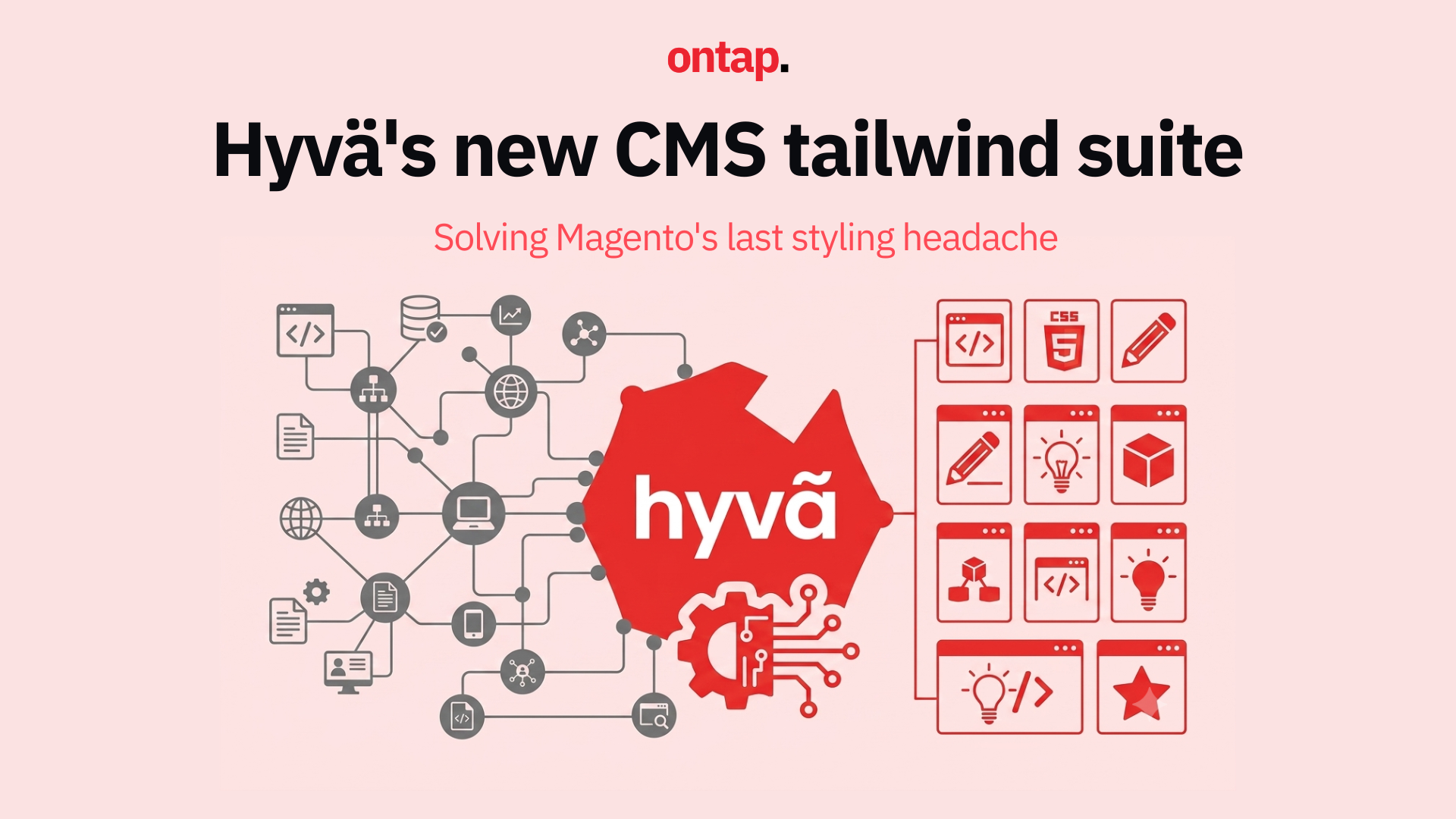
In late June 2026, Hyvä released packages for server-side Tailwind compilation in native Magento CMS content: magento2-cms-tailwind-compiler, magento2-cms-tailwind-jit-bridge and magento2-cms-tailwind-recompile. They extend the existing CMS Tailwind JIT workflow with an option to compile content styles using the theme’s Tailwind setup, without rebuilding the full theme stylesheet.
The distinction matters: these packages and the bridge discussed below concern content edited through Magento’s native CMS, including Page Builder and the WYSIWYG editor. Hyvä CMS’s Liveview Editor has its own bridge and configuration, although it can use the same server-side compiler.
The problem these packages solve
Hyvä Theme uses Tailwind CSS to generate styles from classes found in the theme’s source files. This helps keep the compiled theme stylesheet focused, but classes added only through the Magento admin may be absent from it.
For example, an editor might add bg-blue-500 or grid-cols-3 to a CMS page. If the relevant CSS has not been generated for that content, the page can display without the expected colour or grid layout.
Common approaches include adding expected classes to the theme build or rebuilding CSS after content changes. Hyvä’s CMS Tailwind JIT module also provides compilation for CMS content. The new packages add an optional server-side route to that existing workflow.
How the new suite works
The packages have distinct roles:
-
magento2-cms-tailwind-compilerruns a Node.js compiler service, which Hyvä calls a daemon. It uses the theme’s Tailwind setup to generate the additional CSS needed for CMS content. -
magento2-cms-tailwind-jit-bridgeconnects the native Magento CMS editing workflow to that daemon. When server-side compilation is selected, it routes compilation requests from the admin to the daemon instead of using the compiler in the admin browser. -
magento2-cms-tailwind-recompileis an optional bulk recompilation tool. Once the server-side compiler is set up, it can refresh stored CMS CSS through a command or scheduled queue, for example after a theme configuration change. It is not the trigger for each routine content edit.
The bridge depends on the compiler, so installing the bridge brings in both packages. The server-side option also requires the Node.js daemon to be set up and reachable in the environment where content is edited. If the daemon cannot be used in a particular environment, the existing browser-based compilation option remains relevant. Hyvä explains these choices in its server-side CMS Tailwind compilation guide.
For content teams, the benefit is the ability to edit supported CMS content and generate its styles without a full theme CSS rebuild for every routine change. Editors should still preview the resulting page, particularly when it uses custom utilities or components.
Why this matters for merchants
For merchants publishing seasonal campaigns or frequent content updates, CMS Tailwind compilation can reduce the need for a developer build solely to make supported utility classes available in content. Server-side compilation offers a further option for teams that want CMS styles generated against each theme’s Tailwind configuration.
It does require an implementation decision. Your development team needs to confirm which editor your site uses, whether browser-based compilation already meets your needs, and whether your hosting environment can run the server-side compiler. This is particularly relevant if your team edits content across multiple environments.
The broader Hyvä ecosystem context
This release builds on CMS Tailwind JIT functionality that Hyvä already offered. It adds a server-side compilation path and a way to recompile stored native CMS styles in bulk. It should not be read as the first time Hyvä supported Tailwind classes in CMS content, or as a change every Hyvä merchant needs to install.
Hyvä Theme became open source in November 2025. Mage-OS 3.0 was released on 18 May 2026, while the Magento Open Source 2.4.9 release notes document PHP 8.5 support. Those developments provide wider platform context; the packages discussed here address the more specific task of compiling CMS content styles.
What you should do
If you run Hyvä Theme on Magento, first identify how your team edits content:
-
Native Magento CMS, Page Builder or WYSIWYG: Ask your development team whether the CMS Tailwind JIT module is installed and whether its browser-based compilation meets your needs. If server-side compilation would help, assess the native CMS bridge, compiler daemon and hosting setup. The bulk recompile package is only needed if you also need to refresh stored CMS CSS in bulk.
-
Hyvä CMS Liveview Editor: Review Hyvä CMS’s own Tailwind compilation setup with your development team. Liveview uses a separate bridge and settings; do not treat the native Magento CMS bridge above as its installation guide.
On Tap’s recommendation is to test the chosen workflow on a representative page or block before adopting it across your content process. Check the generated styling, relevant store views and devices, and what happens in each environment where editors work. Your development team should also verify the package requirements against the versions installed on your site.
About On Tap
On Tap is a growth-focused eCommerce consultancy specialising in Magento and Hyvä implementations for mid-market and enterprise merchants. From Hyvä project setup and CMS workflow optimisation to theme upgrades and ongoing technical maintenance, On Tap helps merchants improve how their content teams work.
If you want to evaluate whether server-side CMS Tailwind compilation fits your Hyvä setup, get in touch.