

Traffic is the foundation of every eCommerce growth strategy. No matter how optimised a store is, conversions and revenue cannot happen without the right visitors coming in consistently. As competition increases and acquisition costs rise, merchants are under growing pressure not just to drive more traffic, but to invest in channels that attract high-intent audiences and create sustainable growth.
In this guide, we break down the most effective traffic channels, explain their trade-offs, and show you how to choose the right ones based on your stage. You will also learn how to prioritise quick wins, build long-term traffic sources, and implement each channel in a practical, step-by-step way.
Key principles for sustainable eCommerce traffic growth
Many store owners assume that more traffic will automatically lead to more sales. In reality, not all traffic delivers value. Without the right foundation and the right target audience, increasing traffic often leads to higher costs without meaningful revenue growth.
To grow effectively, follow these 2 fundamental principles that successful eCommerce stores apply before scaling any channel:
-
Traffic quality is determined by source and intent: Not all visitors are equally likely to convert. High-intent traffic from users actively searching for your products typically drives stronger engagement, higher purchase intent, and better revenue outcomes than low-intent or discovery-based traffic. Where your traffic comes from, and why users land on your site, play a major role in overall performance.
-
A strong website foundation is essential before scaling traffic: Driving traffic to a poorly structured or slow-loading site leads to high bounce rates and wasted acquisition cost. Before scaling, ensure your site has a fast loading speed, a mobile-friendly design, clear navigation, high-quality product pages, trust signals, and a smooth checkout process. If users cannot find products easily or trust what they see, they leave. A clear structure, fast performance, and strong product pages ensure traffic can actually convert into revenue.
Master these principles first, and every tactic you apply later, whether SEO, paid ads, social, or email, will deliver stronger, more sustainable results.
How to choose the right traffic channel for your eCommerce business
One of the most effective ways to improve traffic quality is by choosing the right channels. It is not about picking the most popular option, but selecting channels that match your business stage, budget, and growth goals. This section breaks down each major channel, from SEO to paid social, so you can clearly see what each one does, what it costs, and which type of eCommerce business it actually fits at each stage of growth.
|
Channel |
Traffic source |
Best suited for |
Pros |
Cons |
|
SEO (- Agencies: $3,209/mo on average - Freelancers: $1,348/mo on average - In-house team: $20,8k–$41,7k+/month on average) |
Organic search across search engines via optimised pages, blog content, and backlinks |
▸ Long-term brand builders ▸ Products with clear search demand |
▸ Zero cost per click at scale ▸ Compounds over time ▸ High purchase intent traffic |
▸ Slow to show results ▸ Needs consistent content effort ▸ Vulnerable to algorithm updates |
|
AI Search (GEO) ( Mostly bundled with existing SEO spend) |
Brand citations inside AI-powered answer engines like ChatGPT, Perplexity, Google AI Overviews, etc. |
▸ Businesses already investing in SEO ▸ Considered-purchase products ▸ Brands wanting early-mover advantage |
▸ Extends the value of existing content ▸ Reaches high-intent researchers ▸ Early mover advantage ▸ Direct checkout inside AI engines (early-stage) |
▸ No reliable way to track referral traffic from AI engines yet ▸ Lower click-through than search ▸ Playbook still evolving |
|
Communities & Forums (Flexible; mostly time-consuming) |
Participation in forums like Reddit, Quora, Facebook Groups, where your audience already gathers |
▸ Interest/hobby/problem-based products ▸ Early-stage with no ad budget ▸ Brands that can engage authentically |
▸ Highly targeted audience ▸ Builds trust via peer validation ▸ Can drive traffic from a single post |
▸ Hard to scale ▸ Promotional posts get rejected ▸ Time-intensive; hard to attribute |
|
Google Search & Shopping Ads ($1,000 - $5,000+/mo to start, scaling to $10,000 - $50,000+) |
Paid placement on Google for keyword-based search queries and product listing ads |
▸ Products with proven search demand ▸ Healthy margins to absorb CPC ▸ Businesses that need to scale revenue quickly |
▸ Faster traffic generation ▸ High purchase intent ▸ Easy to measure and optimise |
▸ Requires ongoing spend ▸ Higher CPC in competitive niches ▸ Feed setup required (Shopping) |
|
Social Media Ads ($850 - $2,000/mo ad spend on average) |
Paid placements on Meta, TikTok, Pinterest; interest- and behaviour-based targeting |
▸ Visually driven products ▸ New product launches & awareness ▸ Brands that can produce creative consistently |
▸ Scalable audience targeting ▸ Strong for awareness & new products ▸ Works well with retargeting |
▸ Needs constant creative refresh ▸ Longer path to conversion ▸ Tracking limited post-iOS 14 |
|
Influencers & Creators (~$90 - $4,000/mo as average cost to keep content live for a week) |
Sponsored content on social, YouTube, blogs via creators with trusted niche audiences |
▸ Products needing demonstration or lifestyle fit ▸ Brands wanting UGC for the ads pipeline ▸ Niche markets with clear creator fit |
▸ High trust & social proof ▸ UGC can feed paid ad creatives ▸ Reduces content production cost |
▸ ROI can be unpredictable ▸ Time needed to find the right fit ▸ Limited control over messaging |
Quick way to choose your starting channel:
-
If you are just starting with a little budget, start with communities + basic social
-
If you need immediate sales, start with Ads
-
If you want long-term growth, start SEO early (alongside other channels)
-
If your product is visual, prioritise social ads + creators
|
Not sure how to plan the right strategies to drive qualified traffic? Our experts analyse your store, identify the right channels, and recommend a tailored strategy to drive high-intent traffic and sustainable growth. |
How to get traffic from SEO and content marketing (organic search traffic)
Make your website discoverable and indexed by search engines
Search engines can only send traffic to pages they have found, crawled, and indexed. Without a solid technical foundation, everything else is wasted effort.
-
Submit sitemap & request indexing: Submit your sitemap.xml to Google Search Console and Bing Webmaster Tools, then request indexing for high-value pages.
-
Optimise crawl budget: Review and clean robots.txt, fix redirect chains, and remove thin or duplicate content to avoid wasting crawl budget.
-
Add structured data markup: Implement schema.org (Organisation, BreadcrumbList, Product) to help search engines better understand your pages and enhance visibility in search results.
Optimise category and product pages for commercial keywords
Category and product pages are critical for capturing high-intent search traffic, as they target searchers who are actively looking to buy.
-
Target commercial keywords: Focus on mid-to-high intent terms that reflect how users search when ready to buy (e.g. “wireless noise-cancelling headphones”). Use broader commercial keywords for category pages, and more specific product-focused queries for individual product pages.
-
Write unique page copy: Craft compelling descriptions with benefits, guidance, and FAQ sections (avoid generic supplier text).
-
Structure filter navigation: Create indexable pages for high-demand filters while preventing duplicate or thin content issues in SEO.
-
Enhance product information: Include detailed specs, pricing, availability, and reviews to improve relevance, capture more search queries, and increase qualified organic traffic.
Create blog articles and guides to capture research-stage traffic
Most buyers research extensively before purchasing. High-quality informational content positions your brand early and builds trust that converts later.
-
Research informational topics: Identify questions and research-stage queries your audience is searching for through Google Search, “People also ask”, Reddit, or keyword tools, focusing on “how to”, “best”, and comparison-based searches within your niche.
-
Build content calendar: Start with a consistent publishing cadence (e.g. 2-4 posts per month) and scale over time, targeting informational and comparison keywords.
-
Create in-depth articles: Produce word pieces that fully cover the topic with original data, comparison tables, images, and strong internal CTAs to product pages.
-
Promote & repurpose content: Share new articles via email list and repurpose into short-form formats with backlinks to accelerate visibility and support SEO performance for wider reach.
This helps your site rank for a wider range of informational queries and brings in consistent, compounding organic traffic over time, with many leads coming from content published months or even years earlier.
Strengthen topical authority with internal linking and content clusters
To rank consistently across a wider range of keywords, your site needs to demonstrate clear expertise in a specific topic area. Content clusters combined with strategic internal linking are one of the most effective ways to achieve this.
-
Build content clusters around key topics: Create one comprehensive guide (pillar content) for each core topic, then support it with related blog articles that target specific questions and search intents.
-
Build strategic internal links: Add multiple relevant internal links per article (around 3-6 URLs) using descriptive anchor text.
-
Audit linking structure: Use SEO tools (such as Screaming Frog, Semrush or Ahrefs) quarterly to find and fix orphan pages or weak internal linking.
This helps both your informational and commercial pages rank more easily, increasing the overall traffic potential of your site. If you’re using Magento, explore our ultimate Magento SEO guide packed with proven strategies to drive major SEO wins for your store.
Example: How Skullcandy scales its traffic through SEO and content marketing
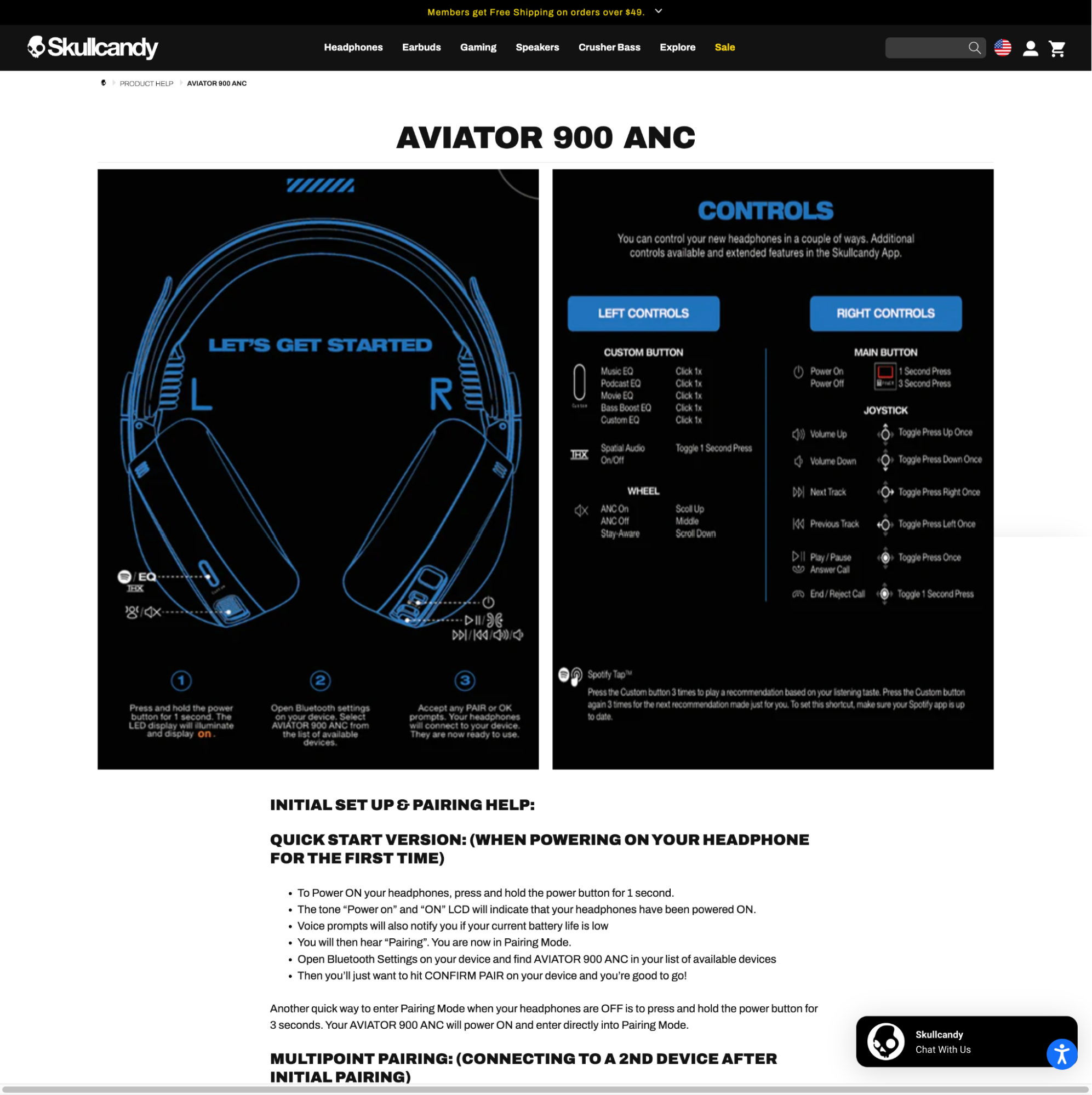
Skullcandy combines high-intent category page optimisation with a strong content cluster strategy to drive scalable organic traffic. Its noise-cancelling headphones category page ranks #1 for “wireless noise-cancelling headphones,” capturing ready-to-buy visitors through keyword-focused structure and clear purchase paths.
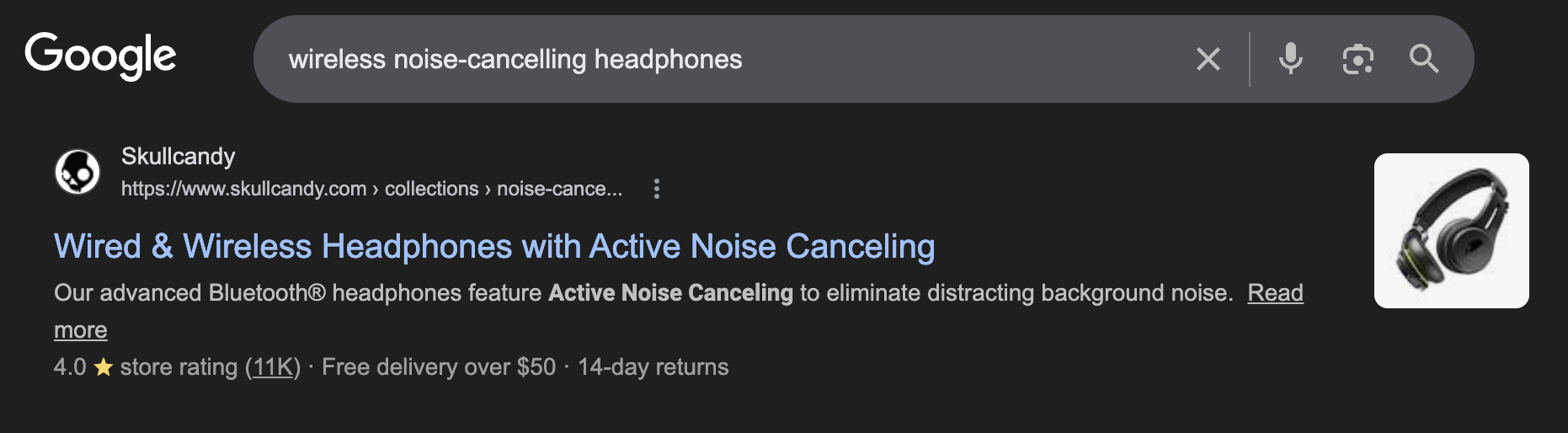
This page is supported by buyer’s guides, ANC explainers, and comparison content, which attract research-stage traffic and funnel users back via internal links. Together, this creates a flywheel where content builds authority and feeds qualified traffic into high-converting commercial pages, driving sustainable growth.
|
If you are looking to increase traffic and scale your online growth, On Tap offers tailored Digital marketing services to review your current channels, content strategy, and performance data, identifying practical opportunities to improve traffic quality, acquisition efficiency, and long-term growth. |
How to get traffic from AI search and generative engine visibility
AI engines prioritise trustworthy, well-evidenced content that they can confidently quote and attribute. Generic content is rarely cited, meaning you need to create content that is clearly structured, evidence-backed, and easy for AI systems to extract and reference.
-
Create authoritative, citable content: Structure articles around clear, verifiable statements backed by data, research, or original insights, while demonstrating strong E-E-A-T through named authors, credible sources, and up-to-date information to ensure AI systems can confidently trust and cite your content.
-
Add unique, defensible value: Go beyond generic content by incorporating proprietary data, expert insights, comparison tables, case studies, and real customer results that competitors cannot easily replicate.
-
Structure content for easy extraction: Use clear H2/H3 hierarchy, focused sections, and concise summaries so AI engines can quickly identify and extract key information.
-
Optimise for queries and formats: Target conversational, long-tail questions and present answers using bullet points, lists, tables, and self-contained sections that can stand alone while linking naturally to relevant pages.
-
Build multi-source validation beyond your website: While strong owned content builds baseline trust, AI engines prioritise products validated across expert reviews, creator content, and real user discussions. Actively earn coverage, encourage authentic user conversations, and collaborate with creators to increase your chances of being cited across multiple sources.
Expert tip: After 2-4 weeks of publishing or updating content, test your content for citability by selecting 5-10 target user questions and querying them in AI tools and Google AI Overviews. Check whether your pages are cited, how prominently they appear, and how accurately your key points are summarised. Refine and repeat.
Example: How brands gain visibility through Google AI Overviews
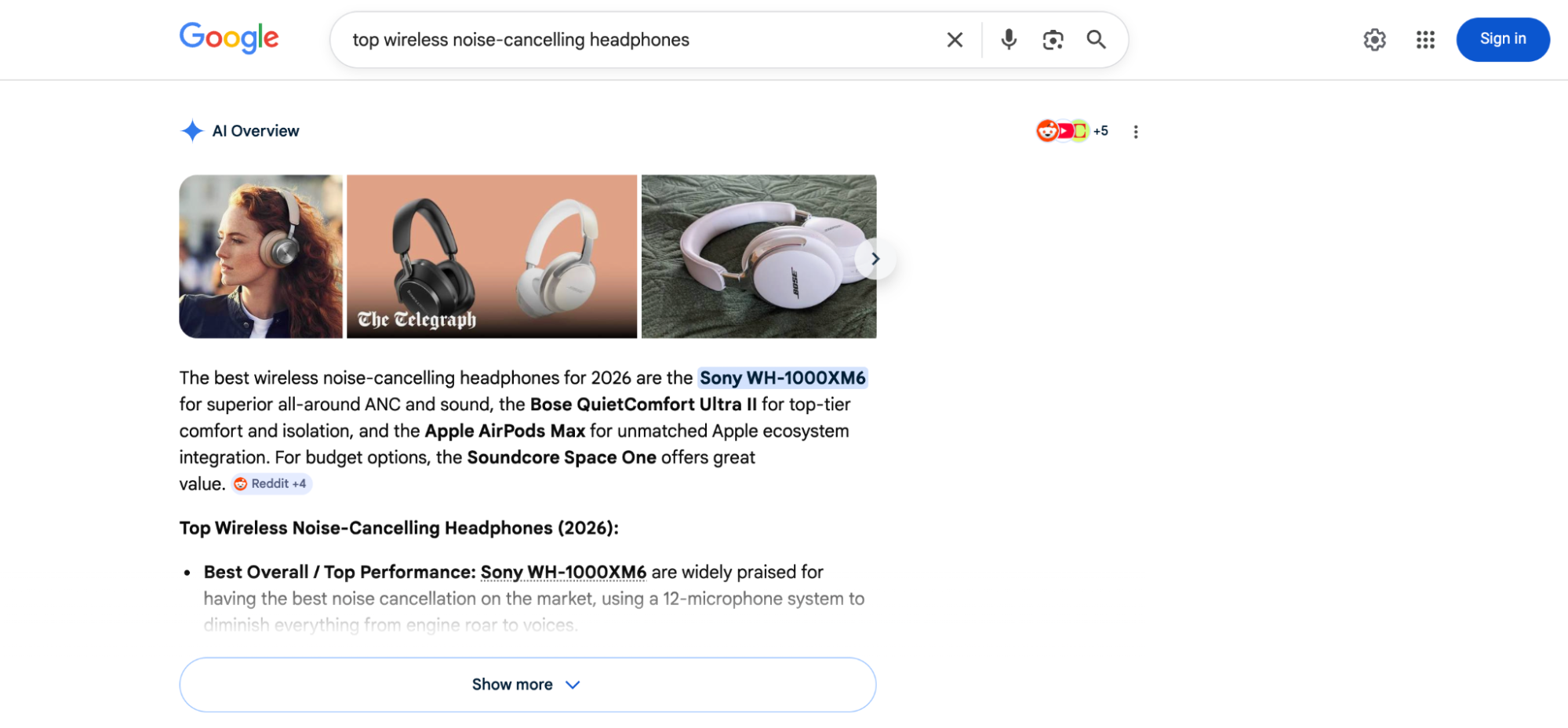
For queries like “wireless noise-cancelling headphones,” Google AI Overviews combine recommendations from sources like Reddit discussions, expert blogs such as The New York Times, and YouTube reviews. Products like Sony WH-1000XM6 and Bose QuietComfort Ultra have surfaced because they are consistently recommended across multiple trusted sources. This shows that brands gain visibility by combining expert credibility, real user validation, and widespread mention across platforms.
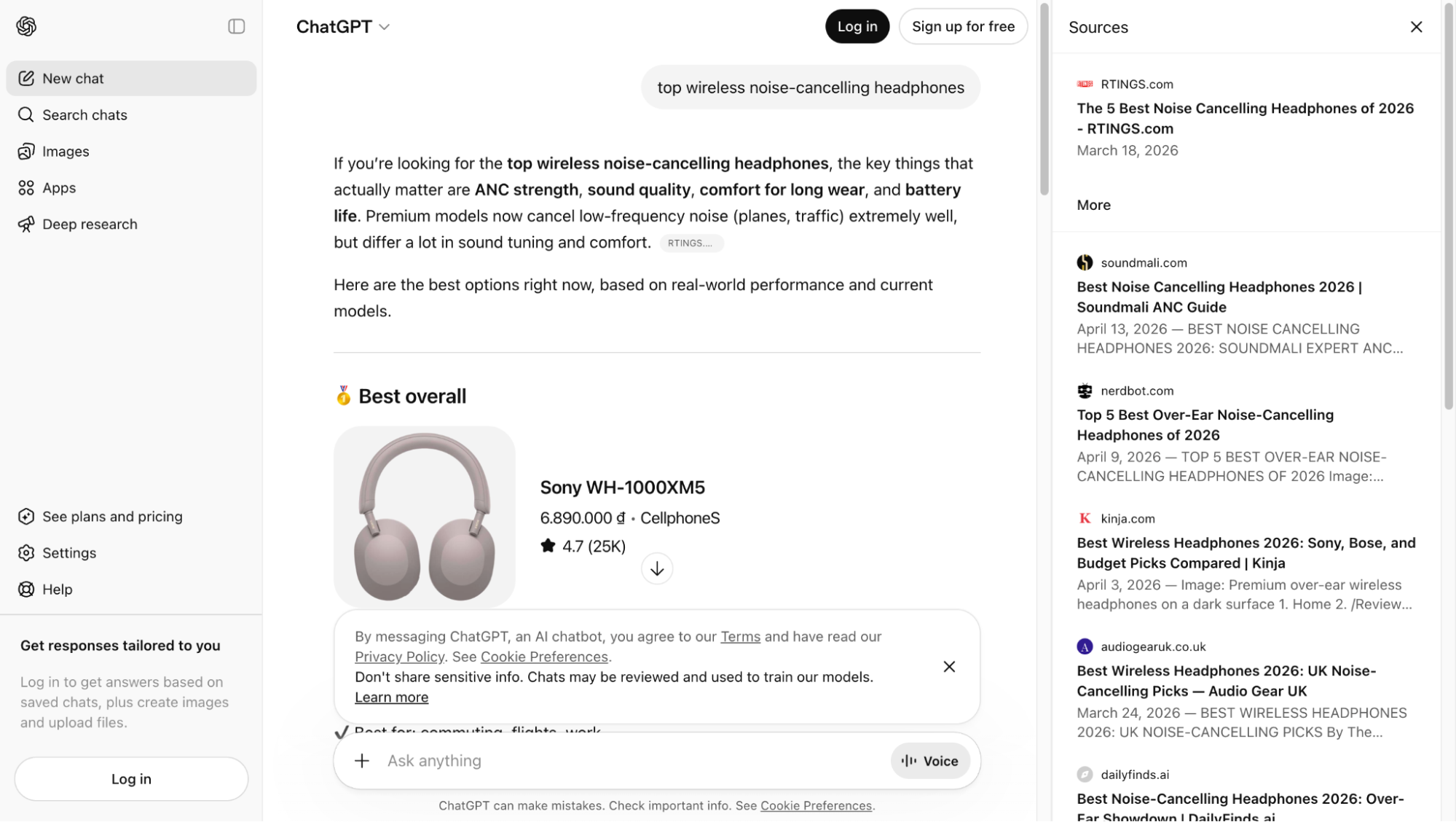
Similarly, AI search tools pull recommendations from trusted review sources rather than brand-owned content. Results are typically aggregated from expert blogs, comparison sites, and independent reviewers, meaning visibility depends on third-party validation, not just how well brands optimise their own websites.
How to get traffic from communities and forums
Communities and forums prioritise real, experience-based insights that solve specific user problems. Generic promotional content is marked as spam, so brands must contribute helpful, credible answers that fit naturally into ongoing discussions to earn visibility and trust.
-
Find the right communities: Look for platforms where users actively ask for product advice or recommendations. Search Reddit, Quora, Facebook Groups, and niche forums using real customer questions. Prioritise communities with consistent discussions and strong engagement regardless of size.
-
Validate audience fit: Review recent threads to ensure members match your target customers, including their pain points and buying stage. Build a focused list of 8-15 relevant communities, noting engagement levels, rules, and linking policies.
-
Provide value-first answers: Focus on solving problems with detailed, experience-based responses. Use examples, comparisons, or practical tips, and avoid promoting your product too early.
-
Add links naturally: Only include links when they genuinely extend your answer or provide deeper context. Prioritise helpful guides or resources before pushing product pages.
Expert insight: Prioritise threads that already rank on Google or appear in search results, as they can drive consistent traffic beyond the platform itself. A single well-positioned answer can continue generating clicks over time, similar to SEO. However, balance this with newer threads where you have a higher chance of standing out and being noticed.
Example: How brands get traffic from communities and forums
For queries like “top wireless noise-cancelling headphones,” Google displays a “Discussions and forums” section featuring real user conversations from Reddit and other communities. Brands like Sony WH-1000XM and Bose QuietComfort frequently get recommended.
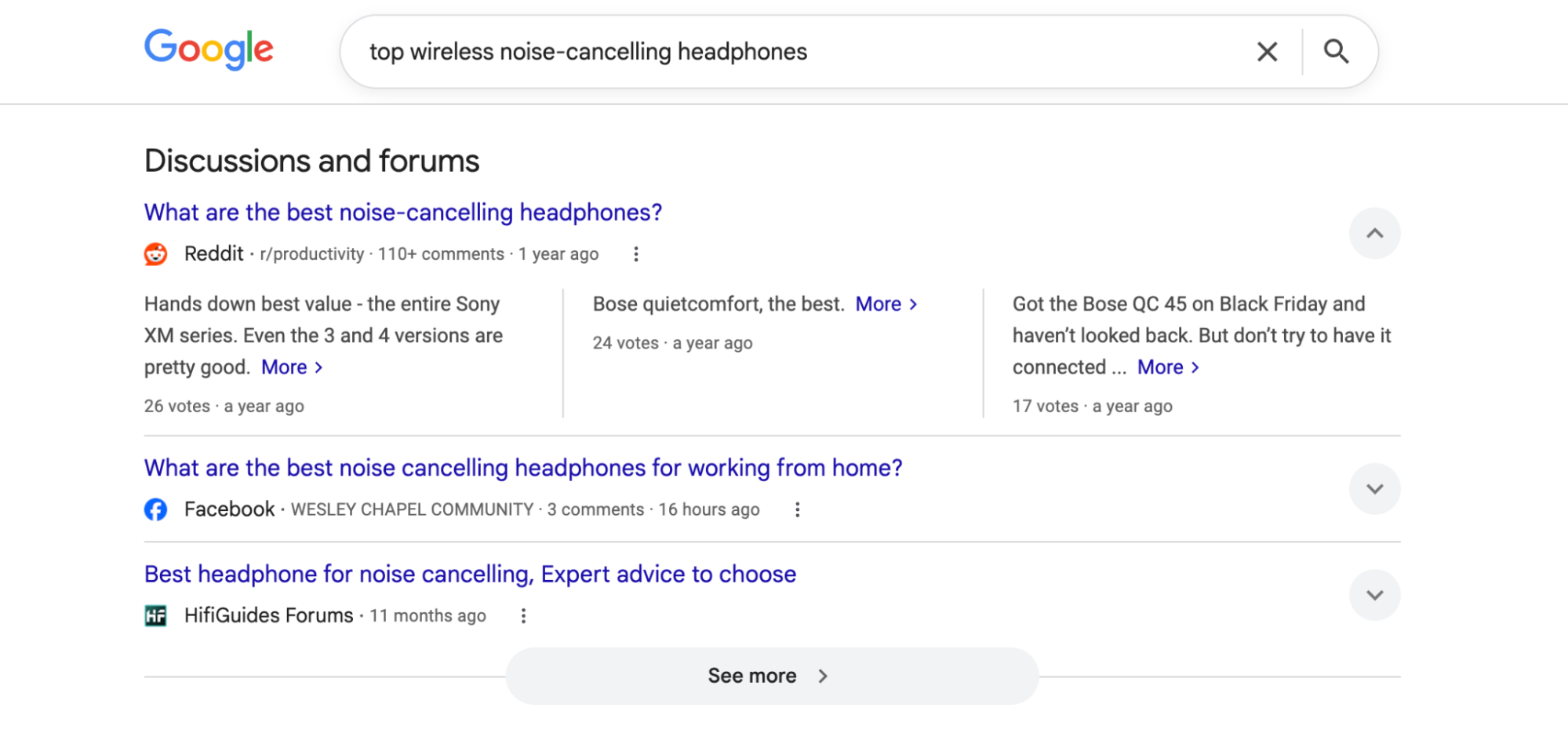
When potential buyers see these consistent recommendations, they become more interested and proactively search for your brand’s official information. This drives more organic and highly qualified traffic to your website.
How to get traffic from Google Ads and Shopping Ads
Google Ads and Shopping Ads prioritise highly relevant, intent-driven listings that match user search queries. Generic campaigns waste spend and fail to gain visibility, requiring precise targeting, product feeds, and optimisation.
Launch search campaigns targeting high-intent keywords
Search campaigns capture existing demand by targeting users who are already looking for products like yours, making them a reliable source of qualified traffic from day one.
-
Research high-intent keywords: Use tools like Google Keyword Planner to identify commercial and transactional queries, including both branded and non-branded searches with clear buying intent.
-
Group keywords by intent: Organise campaigns and ad groups around distinct product categories, use cases, or buying stages, so each group targets one clear search pattern instead of mixing unrelated queries.
-
Write intent-matched content: Highlight key benefits and differentiators that align with what users are searching for, and use ad extensions to increase visibility and click-through rates.
-
Align landing pages: Direct traffic to the most relevant category or product pages so users immediately find what they expect, maintaining traffic quality and engagement.
-
Add negative keywords: Filter out irrelevant searches to reduce wasted spend and ensure your ads attract more qualified visitors.
-
Optimise with data over time: Start with automated bidding strategies to maximise traffic quality, then refine based on performance as more data becomes available.
Set up Google Shopping campaigns for product visibility
Shopping campaigns combine visual product listings with high-intent searches, helping your products stand out and attract ready-to-buy visitors directly from search results.
-
Optimise your product feed: Ensure your Google Merchant Centre feed includes accurate, keyword-rich titles, detailed descriptions, clear, high-quality images, and up-to-date pricing.
-
Improve product titles strategically: Structure titles with attributes such as brand, product type, and key features to better match real search behaviour.
-
Use custom labels for control: Segment products by margin, popularity, or seasonality to guide budget allocation and prioritise high-value inventory.
-
Launch Performance Max campaigns: Use Performance Max or Standard Shopping to distribute product listings across Search, Shopping, YouTube, and Display.
Expert tip: Start with a 70/20/10 budget split (70% on Shopping or Performance Max, 20% on Search, and 10% on remarketing), then adjust based on traffic quality and performance data.
Example: How Best Buy scales traffic with Google Ads and Shopping Ads
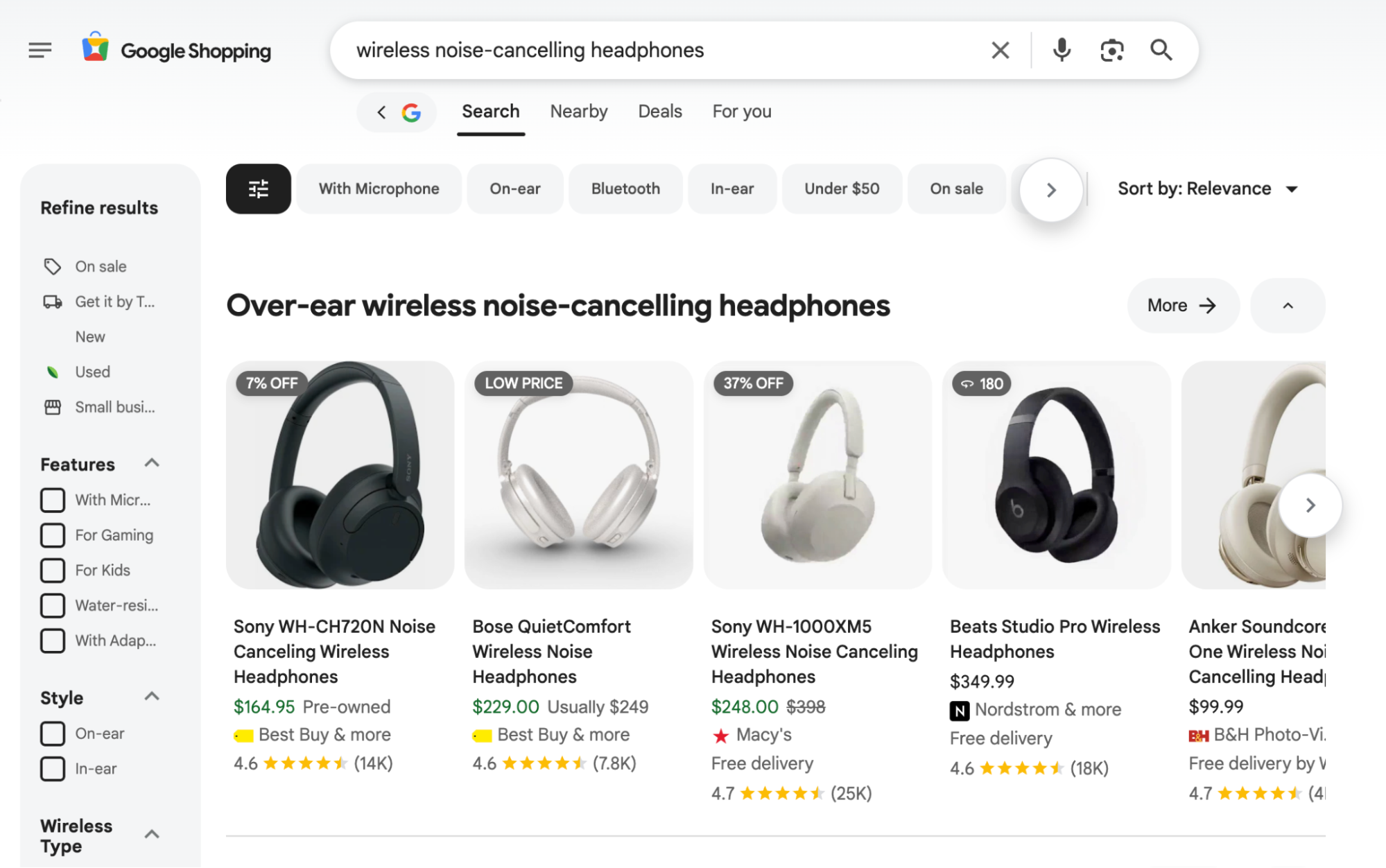
Best Buy dominates high-intent traffic by combining tightly targeted Search campaigns with highly optimised Shopping listings. For queries like “wireless noise-cancelling headphones,” their product ads for the Sony WH-CH720N consistently appear at the top of the Shopping carousel, featuring clear pricing, a visible discount (e.g. 7% off), strong ratings (4.6/5 from 14K+ reviews), and fast delivery messaging. This is driven by a clean, keyword-rich product feed in Google Merchant Centre, ensuring maximum relevance and visibility.
How to get traffic from social media ads
Social media ads drive traffic when content feels native to the feed and captures attention within seconds. Performance depends on creative relevance, audience targeting, and continuous optimisation across platforms.
Choose the right platforms and ad formats
The quality of traffic you attract depends heavily on where and how your ads appear.
-
Match platforms to your audience: Focus on Meta (Facebook and Instagram) for broad reach, TikTok for discovery-driven and younger audiences, and Pinterest for lifestyle or inspiration-led products.
-
Select high-performing formats: Use video and carousel formats to showcase products in action, while leveraging collection or shoppable formats to reduce friction and drive clicks.
-
Start with proven platforms: Begin with 1-2 core platforms where your audience is most active, then expand once you identify consistent traffic sources.
-
Set the right campaign objectives: Start with Traffic or Engagement to generate initial visitors, then shift toward Conversions as data and audience signals improve.
Create scroll-stopping ad creatives
Creative is the primary driver of traffic performance on social platforms. Strong creatives attract attention and encourage users to click through.
-
Prioritise video and UGC: Use short, authentic videos that demonstrate real product use, customer results, or relatable scenarios.
-
Test multiple variations: Run several creative variations at once, testing different hooks, angles, and messaging to identify what attracts the most qualified traffic.
-
Hook attention instantly: Use a strong opening within the first few seconds to stop users from scrolling and increase click-through rates.
-
Incorporate social proof: Add reviews, testimonials, or real customer experiences to build trust and improve engagement quality.
Expert tip: Retargeting works best as a follow-up layer. Re-engage visitors, product viewers, and email subscribers to bring back warmer traffic and strengthen overall campaign performance.
When managed effectively, social media ads can become a scalable source of new visitors, consistently bringing fresh, relevant traffic into your eCommerce funnel while supporting channels like SEO and paid search.
Example: How Incredible gains visibility and traffic through paid social ads
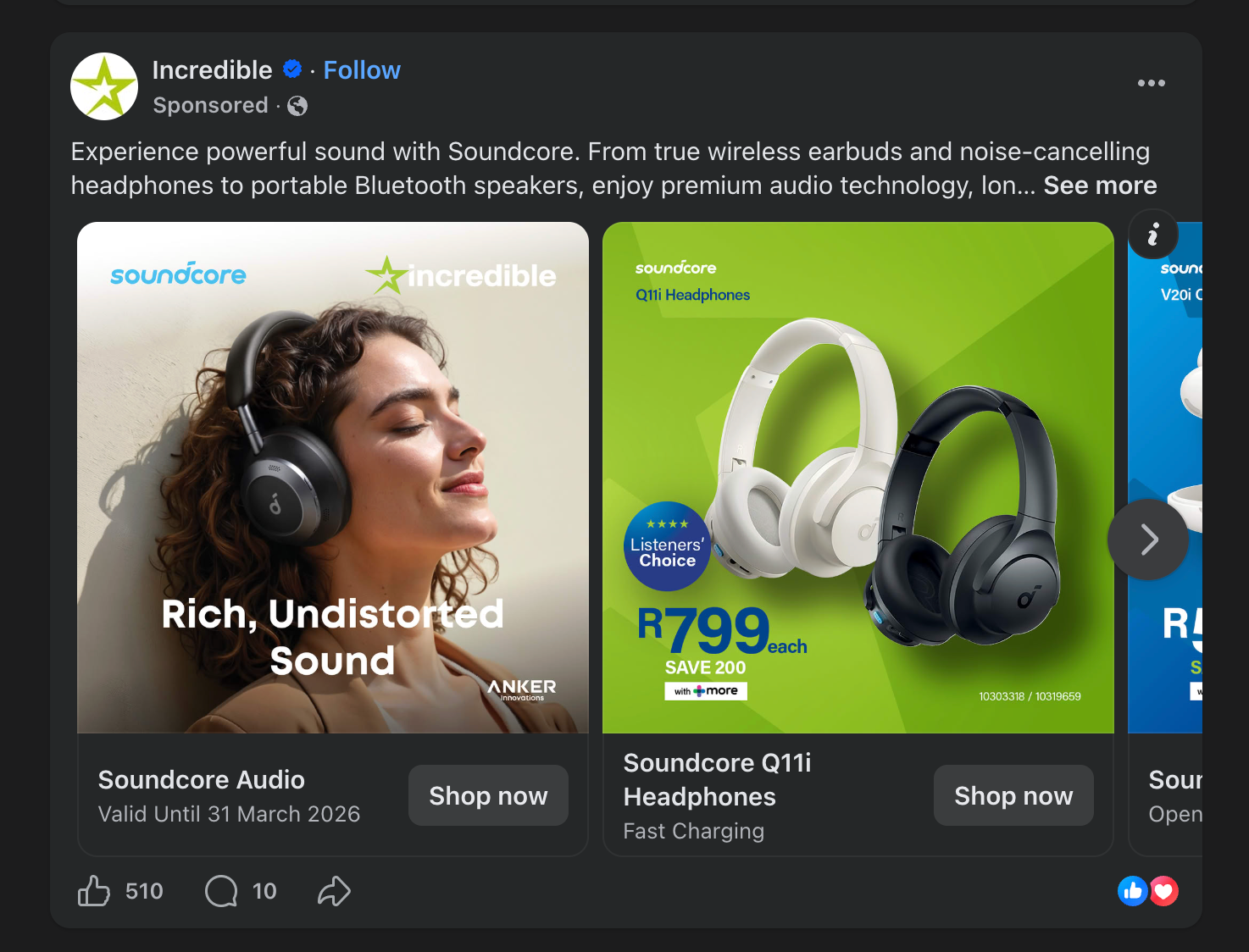
Brands like Incredible run Facebook ads featuring Soundcore headphones that appear in the news feed of users actively interested in audio products. With eye-catching images, compelling copy, and a direct “Shop now” button linking to the website, these ads deliver warm, high-intent traffic. Users see the ad exactly when they’re in the right mindset, making it easier to convert interest into website visits and sales.
How to get traffic from influencers and creators
Influencer and creator partnerships can bring qualified referral traffic from audiences that already trust the person recommending your product. This channel is especially effective for products that benefit from demonstration, styling, comparison, social proof, or real-world use.
-
Focus on relevant creators: Prioritise micro and mid-tier creators with engaged audiences that closely match your target customers, rather than selecting based on follower count alone.
-
Evaluate creator quality: Look beyond engagement rates. Assess comment quality, audience relevance, and whether their content style (reviews, tutorials, comparisons) aligns with your product and buying journey.
-
Build a targeted list: Shortlist 15-25 creators and review past collaborations to ensure authenticity and avoid over-promotional accounts.
-
Reach out with clear value: Send personalised messages offering product access, affiliate commissions, or co-created content, rather than generic requests.
-
Collaborate with structure and flexibility: Provide key messages, goals, and trackable links (e.g. UTM), but allow creators creative freedom to keep content authentic and trustworthy.
This channel works best once you have validated your product and messaging. Creator content can also be repurposed into paid ads or on-site social proof, extending its value beyond initial traffic.
Example: How Sony gets traffic from influencers and creators
For queries like “best noise-cancelling headphones 2025,” YouTube prominently features in-depth reviews from popular tech creators such as Chris Barraclough of Tech Spurt. In this Sony WH-1000XM6 review video (over 35k views in under 10 months, nearly 1,000 likes), the expert thoroughly covers design, sound quality, technical performance, comfort, and price.

These detailed, trustworthy reviews build strong brand credibility and include direct links to the product page. Viewers who watch the review are highly interested and often click through, resulting in warm, high-conversion traffic to the brand’s website.
How to measure and evaluate eCommerce traffic performance
Increasing traffic is only useful when you can measure whether it contributes to real business outcomes. Beyond vanity metrics like total sessions, focus on data that connects visitor behaviour to business outcomes.
1. Start with channel-level attribution
In Google Analytics 4, the Traffic Acquisition report breaks sessions down by source, like organic search, paid, referral, social, and direct. This tells you which channels deliver volume, but dig deeper into engagement rate and session duration per channel.
For example, a channel sending 10,000 monthly sessions with a 15% engagement rate is underperforming compared to one sending 3,000 sessions with 60%.
2. Monitor conversion rate by traffic source
Paid search often shows higher conversion rates than social or community-driven traffic due to stronger purchase intent. For instance, if your Google Ads traffic converts at 3% but your Meta Ads traffic converts at 0.8%, this significant gap helps you decide where to allocate more budget and how to optimise your messaging for each specific traffic source.
3. Track new vs returning visitor ratio
Monitor the percentage of new visitors versus returning visitors in Google Analytics (or your analytics platform). A healthy, maturing eCommerce site should see a gradual increase in the returning visitor ratio over time. Heavy reliance on new visitors (for example, consistently above 70-80%) often indicates weak customer retention.
4. Watch bounce rate on entry pages
If a category page receiving significant paid traffic shows a high bounce rate, the disconnect between ad messaging and page content is costing you money. Align the two tightly.
5. Set up goal tracking for micro-conversions
Pay attention to add-to-cart events, wishlist saves, email sign-ups, not just completed purchases. These signals reveal where in the funnel traffic drops off, pointing to specific pages or steps that need optimisation rather than simply driving more visitors into a broken funnel.
Review these metrics monthly at a minimum, comparing performance across channels and periods to identify what's genuinely moving the needle.
To support long-term traffic growth, On Tap’s AuditIQ provides continuous, real-time monitoring built for eCommerce stores. AuditIQ helps merchants detect technical SEO issues, site speed drops, broken user journeys, and performance problems before they impact visibility or conversions. By combining traffic growth strategies with proactive monitoring, businesses can protect search rankings, maintain a smooth shopping experience, and turn more visitors into customers over time.
Conclusion
Increasing eCommerce traffic is not about chasing every channel or tactic. It is about choosing the right channels for your stage, building a strong foundation, and consistently attracting the right kind of visitors. By applying the strategies in this guide, from quick-win channels like communities and paid ads to long-term investments like SEO and AI visibility, you create a balanced, sustainable traffic engine that grows over time.
If you need support building or scaling your traffic strategy, On Tap’s Digital Marketing services can help. Our team specialises in eCommerce growth across SEO, paid ads, and data-driven optimisation, helping you attract qualified traffic and turn it into measurable revenue.
To explore how our team can help you build a sustainable growth strategy and increase qualified traffic, get in touch with us today.