
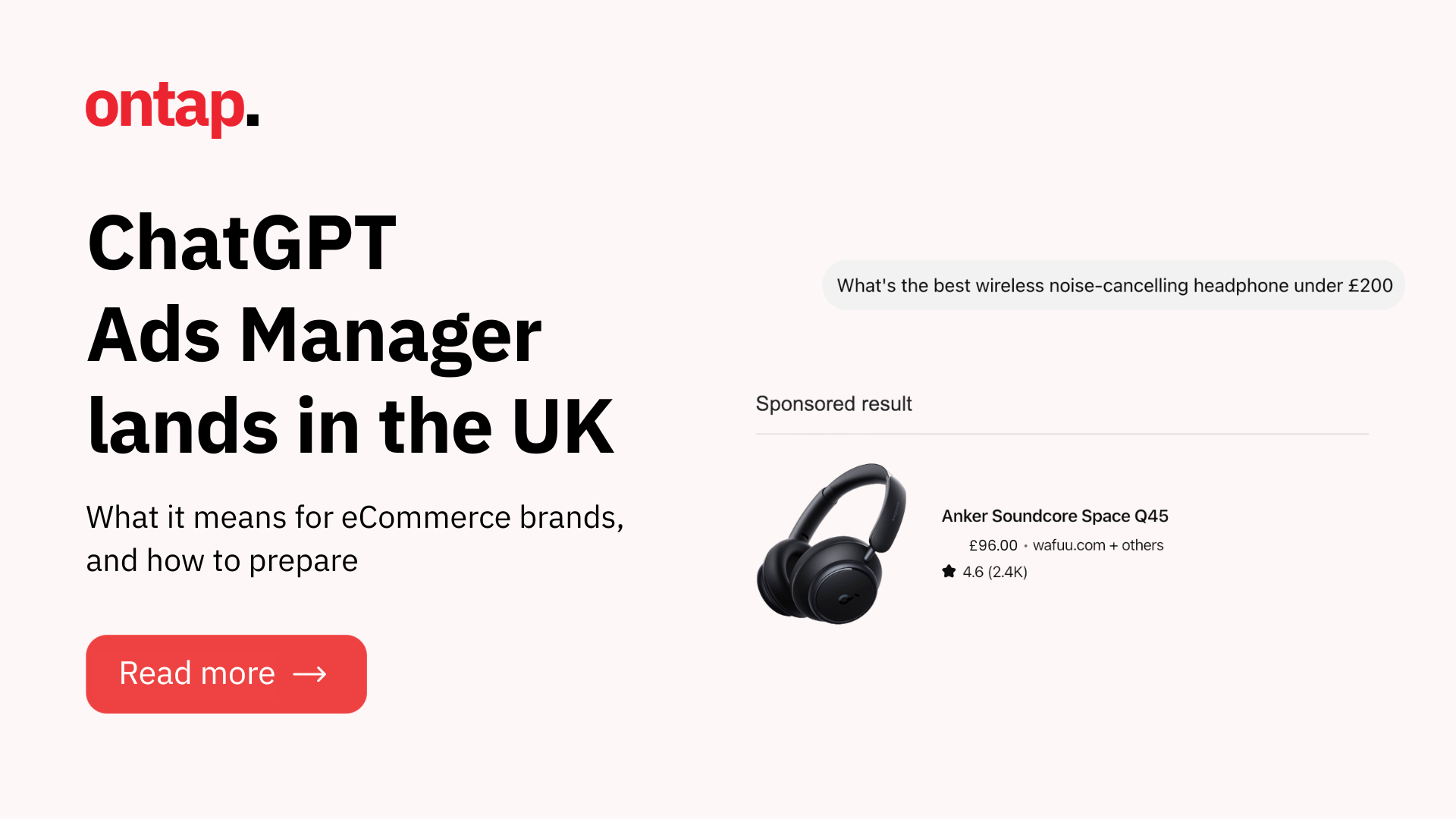
OpenAI has opened its ChatGPT Ads Manager beta to UK advertisers, marking the first significant international expansion of what may become one of the most consequential new advertising channels in a decade. With brands like Tesco, Hilton, Hiscox, and Next among the early UK participants, the pilot is moving beyond Silicon Valley experimentation into mainstream retail territory.
This expansion comes at a moment when the advertising landscape is undergoing its most significant structural shift since the rise of programmatic. And for eCommerce brands, the implications are both immediate and strategic.
What ChatGPT Ads Manager actually is
ChatGPT Ads Manager is OpenAI's self-serve advertising platform, allowing businesses to create, target, and measure ads that appear within ChatGPT conversations. Ads appear to users on the Free and Go subscription tiers, currently estimated at hundreds of millions of active users globally.
The platform supports both CPM (cost-per-thousand-impressions) and CPC (cost-per-click) bidding models, with advertisers able to set preferences for budgets, bids, pacing, and ad creative. The key difference from traditional search or social advertising is context: these ads appear within conversational AI interactions, where users are asking questions, seeking recommendations, and making decisions.
Why this matters for eCommerce
The expansion to the UK isn't just a geographic milestone. It's a signal that OpenAI is building the infrastructure for a global advertising business that directly competes with Google and Meta for eCommerce spend.
Consider the typical eCommerce purchase journey. A consumer might ask ChatGPT: "What's the best wireless noise-cancelling headphone under £200?" or "I need a gift for my partner's 30th birthday, something unique." These are high-intent, high-context queries that traditional search ads are increasingly losing to AI-first search experiences.
Pew Research data shows that 40% of American adults now use AI chatbots specifically for information lookup, making it the single most common chatbot activity. When four out of ten potential customers are turning to AI for purchase research, eCommerce brands need a presence in those conversations.
The bigger advertising shift
ChatGPT Ads Manager's UK launch should be viewed alongside several concurrent developments that collectively represent a fundamental restructuring of digital advertising:
-
Google's own AI disruption. Google Ads is simultaneously auto-enrolling advertisers in conversion-based customer lists (rolling out from June 17, with data processing beginning August 18, 2026) and reverting to the Target CPA and Target ROAS bidding strategy names. The customer list change is particularly significant: Google is now automatically building audience segments from your conversion data, whether you asked for it or not. The shift toward automated, AI-driven campaign management is accelerating across every major platform.
-
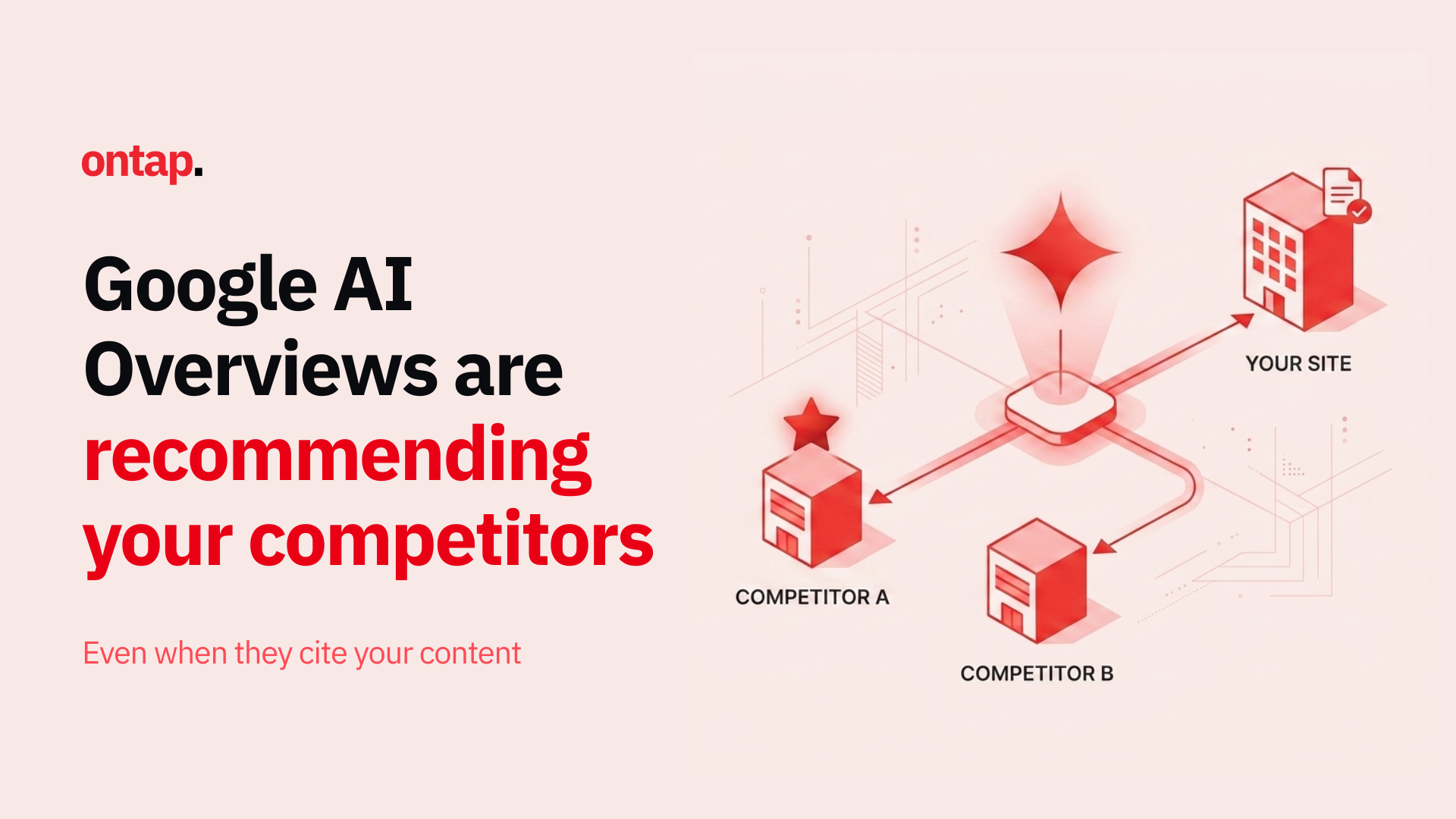
The discovery layer is fragmenting. Between Google's AI Overviews, ChatGPT, Pinterest's new Ask Pinterest AI app, and emerging conversational commerce tools, the surfaces where consumers discover and evaluate products are multiplying. Each of these surfaces has different advertising mechanics, different content requirements, and different measurement frameworks.
-
Attribution is getting harder. When a consumer researches a product through ChatGPT, checks reviews via Google AI Overviews, and then purchases directly on a brand's website, traditional last-click attribution breaks down entirely. The new advertising channels demand new measurement approaches.
What should eCommerce brands do right now?
-
Don't rush in, but don't ignore it. ChatGPT Ads Manager is in beta, and early CPMs are likely to be volatile as OpenAI calibrates pricing and ad load. However, understanding the platform mechanics now gives you an advantage when it scales. Request access to the beta if you're in the UK or US.
-
Audit your AI presence. Before spending on ChatGPT ads, understand how your brand and products appear in AI-generated responses organically. Adobe's new brand visibility tool for AI search (launched last week) tracks brand mentions and share of voice across AI engines. You need to know your baseline before investing in paid AI placement.
-
Rethink your content strategy. AI advertising surfaces reward brands that have rich, structured product information that AI models can reference. Your product descriptions, FAQs, specification pages, and review content feed the AI models that power both organic and paid recommendations. Investment in content quality pays dividends across every AI channel.
-
Watch the Google auto-enrollment carefully. If you're running Google Ads, review your account settings around conversion-based customer lists. Google is automatically enabling these, which means your conversion data is being used to build audience segments you may not have explicitly approved. Understand what data is being shared and how these lists are being classified.
-
Budget for experimentation. Allocate a portion of your Q3/Q4 advertising budget specifically for testing AI advertising channels. The brands that develop expertise in ChatGPT Ads, AI search optimisation, and conversational commerce early will have a meaningful competitive advantage as these channels scale.
The On Tap perspective
This isn't really a story about one new ad platform. It's about where buying decisions are now being made, and whether your brand has a seat at that table.
The old playbook of owning top organic and paid positions still matters, but it's no longer enough. When a customer's "search" is a single conversational exchange, you either show up inside it or you don't exist for that moment. There's no second page to fall back on.
We've seen this pattern before: mobile, paid social, programmatic. Each shift gave early movers a real advantage simply for understanding the mechanics first. The brands testing ChatGPT Ads Manager, auditing their AI visibility, and adapting their content now will have a meaningful head start in a year, while others are still catching up.
That said, the complexity is real. Managing attribution across fragmented surfaces, navigating Google's auto-enrollment changes, and building content for AI models with opaque ranking logic is a lot to take on with an already stretched team. That's a reason to get the right guidance now, not a reason to wait.
Get in touch with On Tap to talk through what an AI-ready advertising strategy should look like for your brand, and how to start building it.