

For over two decades, the World Trade Organization (WTO) maintained a moratorium that kept tariffs away from "electronic transmissions," a catch-all term covering everything from downloaded software and ebooks to streaming content and SaaS subscriptions. At the WTO's March 2026 conference, member nations failed to extend that moratorium, and the implications for eCommerce are potentially enormous.
What Actually Happened
The WTO's moratorium on customs duties for electronic transmissions was first established in 1998, when digital commerce was in its infancy. It has been routinely renewed ever since. This time, it wasn't.
The non-extension doesn't mean tariffs on digital goods are arriving tomorrow. What it means is that the legal barrier preventing WTO member nations from imposing such tariffs has been removed. Individual countries are now free to introduce customs duties on digital products and services crossing their borders (if they choose to, and if they can figure out how to implement them).
Why This Matters for eCommerce Merchants
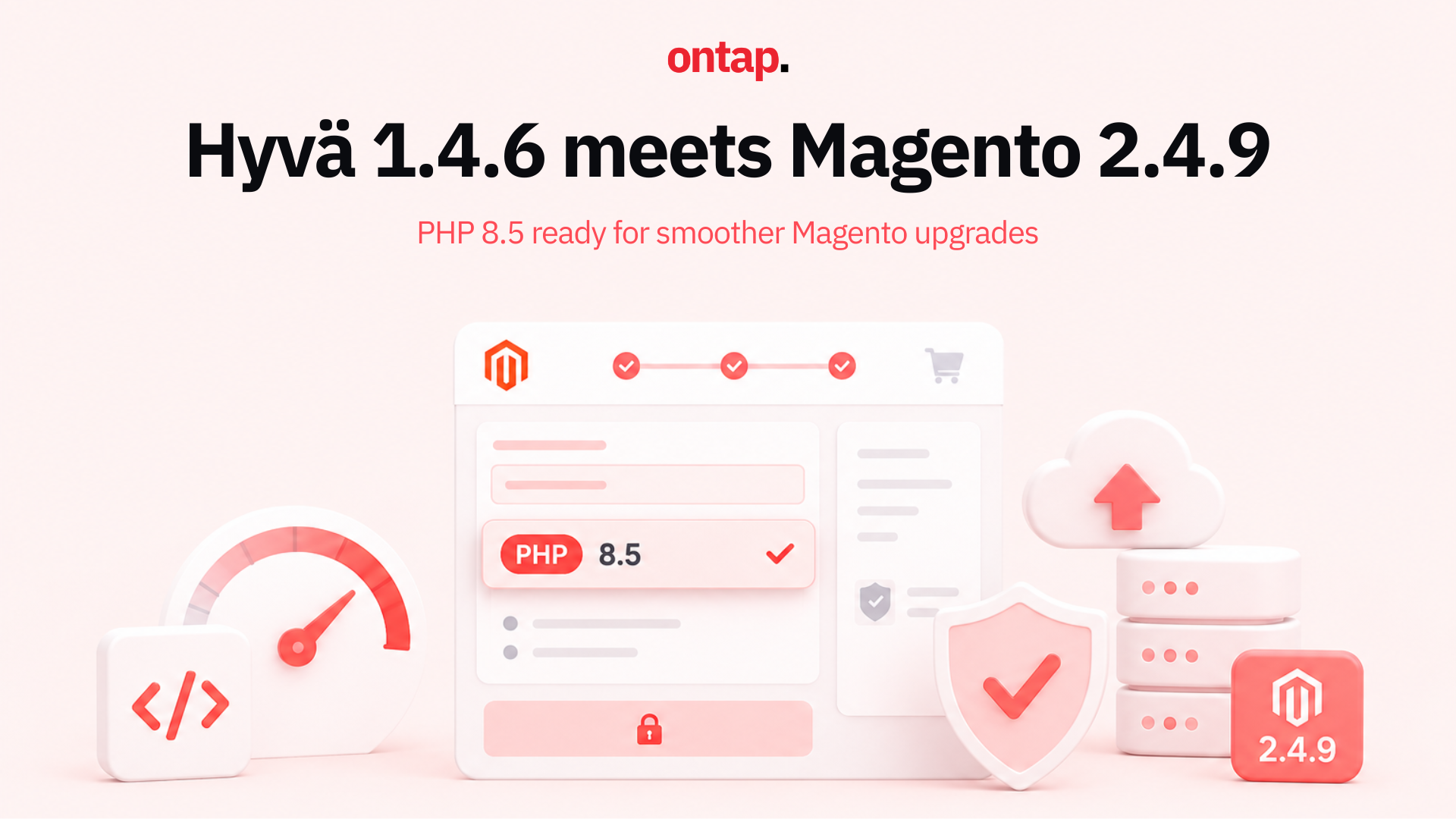
The infrastructure requirements for 2.4.9 represent the biggest technology stack jump in several Magento release cycles:
- PHP 8.3 through 8.5: Magento is finally catching up with the PHP ecosystem. If you're still running PHP 8.1 or 8.2, this is your forcing function to upgrade. PHP 8.4 and 8.5 bring significant performance improvements to array operations, string handling, and JIT compilation that directly benefit catalogue-heavy stores.
- MySQL 8.4: The move from MySQL 8.0 to 8.4 isn't just a version bump. MySQL 8.4 introduces improved query optimisation for complex joins (common in Magento's EAV structure) and better connection handling under load.
- MariaDB 11.4: For merchants running MariaDB, version 11.4 brings enhanced replication performance and improved InnoDB handling that can translate to faster indexing operations.
- OpenSearch 3: Updated search infrastructure means better relevance tuning and faster faceted search, directly impacting the customer experience on category and search results pages.
- Valkey Caching: Perhaps the most intriguing addition. Valkey, the open-source Redis fork maintained by the Linux Foundation, is now a supported caching backend. For merchants concerned about Redis licensing changes, this provides a fully open-source alternative with comparable performance.
Security: The Headline You Can't Ignore
If you sell physical products exclusively, you might think this doesn't affect you. You'd be partially right in the short term but wrong in the medium term, for several reasons.
1. Direct impact on digital product sellers
If you sell downloadable products, digital subscriptions, online courses, digital templates, or any form of electronic content across borders, you could soon face tariffs that didn't exist before. The economics of cross-border digital commerce have just become uncertain in a way they haven't been since the internet's early days.
2. Indirect impact through SaaS costs
Every eCommerce merchant relies on a stack of SaaS tools, from their platform subscription to email marketing, analytics, payment processing, and more. If countries begin taxing cross-border software services, those costs will flow downstream to merchants. A European merchant using US-based SaaS tools, or vice versa, could see cost increases that have nothing to do with their own pricing decisions.
3. The compliance complexity problem
We've already seen how challenging it is for merchants to navigate digital sales tax (VAT, GST) across jurisdictions. Adding customs duties on top introduces another layer of compliance. Unlike physical goods where the tariff is assessed at a border checkpoint, digital goods are delivered instantly and borderlessly. The enforcement mechanisms don't exist yet, and their creation could introduce friction into what has been a seamless global marketplace.
The Geopolitical Context
The non-extension didn't happen in a vacuum. Several developing nations, led by India and South Africa, have argued for years that the moratorium disproportionately benefits large tech economies (primarily the US and EU) at the expense of countries that are net importers of digital services. Their argument: if physical goods face tariffs, why should digital goods get a free pass simply because they're delivered over the internet?
The counter-argument, championed by the US and other tech-exporting nations, is that tariffs on digital goods would stifle innovation, raise costs for businesses and consumers globally, and be nearly impossible to enforce effectively.
Both sides have legitimate points. But the practical reality for merchants is that a new source of trade friction has been unlocked.
What This Means Alongside Other Trends
This development is particularly significant when viewed alongside two other trends in the eCommerce landscape:
- The rise of AI-driven commerce: AI services, from product recommendations to customer service chatbots to generative content tools, are inherently cross-border digital services. If tariffs are applied to electronic transmissions, AI-powered commerce tools could become more expensive depending on where the provider and merchant are located.
- Increasing data localisation requirements: Several countries are already pushing for data to be stored and processed domestically. Combined with potential digital tariffs, we could see a fragmentation of the global digital commerce infrastructure that has powered eCommerce growth for two decades.
What Should Merchants Do Now?
First, don't panic. This is a slow-moving development. The WTO's non-extension is a permission slip, not a mandate. Countries need to draft legislation, work out enforcement mechanisms, and navigate domestic politics before any tariffs take effect.
However, prudent planning is warranted:
1. Audit your cross-border digital revenue. Understand exactly what percentage of your digital product sales crosses national borders and into which markets.
2. Map your SaaS dependency chain. Know where your critical tools are headquartered and where they process data. This is good practice regardless of tariff developments.
3. Watch key markets. India, Indonesia, and South Africa are among the countries most likely to move first. If you have significant customer bases in these regions, monitor legislative developments closely.
4. Build pricing flexibility. If you sell digital products internationally, ensure your pricing infrastructure can accommodate per-market adjustments if tariffs require it.
5. Engage your industry associations. This is a policy issue where collective advocacy matters. Trade groups and chambers of commerce will be crucial in shaping how, and whether, individual countries implement digital tariffs.
The Bigger Picture
The WTO moratorium's lapse is a symptom of a broader shift: the internet's "borderless" era is gradually giving way to one where national boundaries reassert themselves in digital commerce. From GDPR to digital services taxes to data localisation, the trend line is clear.
For eCommerce merchants, the strategic imperative is resilience. Build businesses that can adapt to an increasingly fragmented regulatory landscape. The merchants who thrive in the next decade will be those who treat regulatory adaptability as a core competency, not an afterthought.
The duty-free internet was never guaranteed to last forever. It just felt that way.