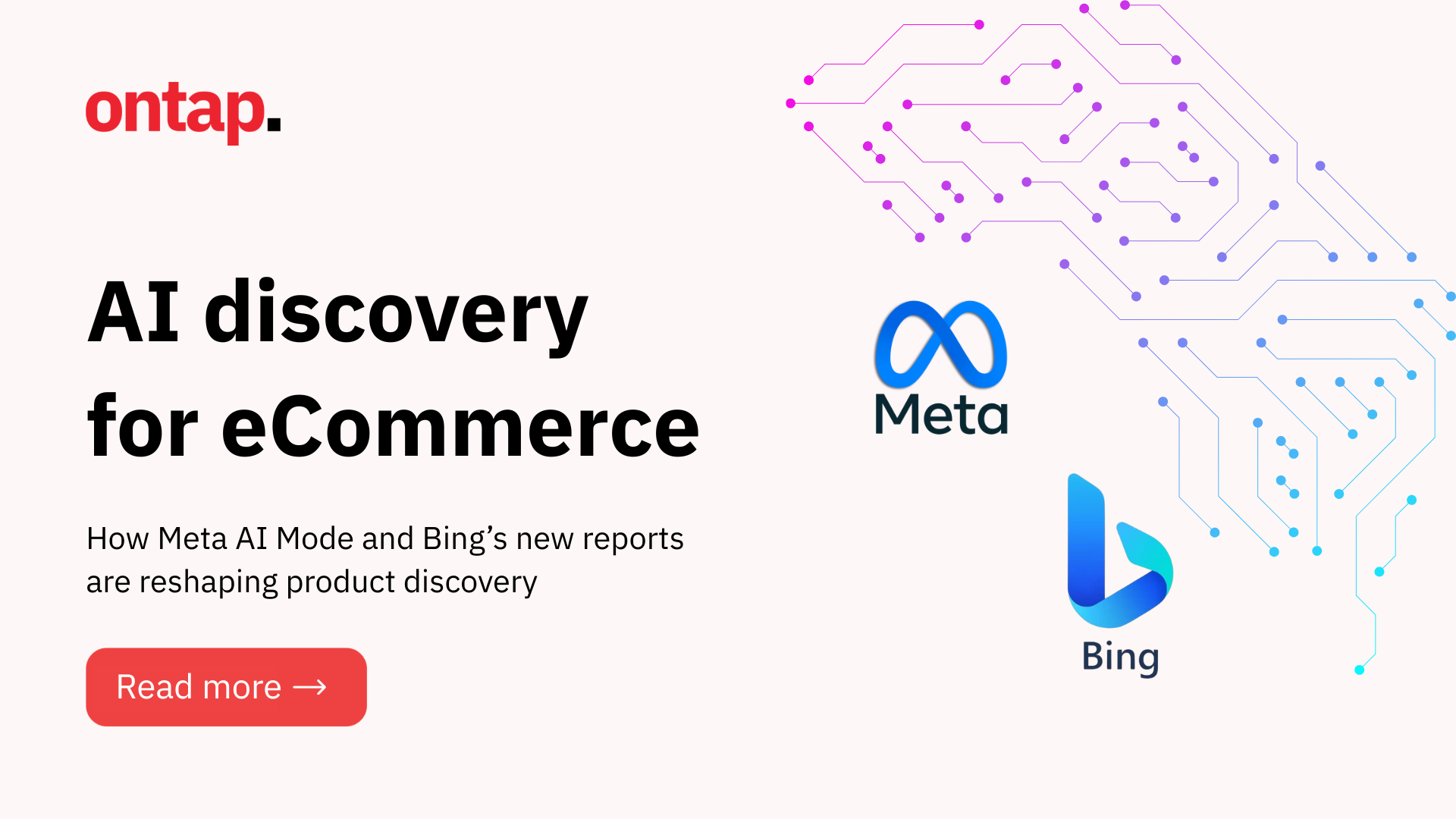

Two pieces of research published on July 2 paint a detailed, and somewhat uncomfortable picture of how AI is fundamentally reshaping product and brand discovery. When read together, they form a clear directive for eCommerce merchants: the discovery landscape is shifting beneath your feet, and the brands that survive will be the ones that own their data narrative.
The scale of the shift
Search Engine Land reported on a large-scale study of one million keywords that reveals the extent of AI's impact on traditional search behaviour. The findings are significant: certain industries are losing search demand entirely, while others are seeing demand shift from traditional keyword queries to conversational AI interactions.
For eCommerce merchants, this isn't an abstract concern. When consumers ask an AI assistant "what's the best running shoe for flat feet?" instead of searching "best running shoes flat feet 2026" on Google, the entire discovery mechanism changes. The search results page, with its carefully optimised product listings, paid ads, and rich snippets, is bypassed entirely. The AI provides a curated answer, and if your brand isn't in that answer, you don't exist in that consumer's decision journey.
The study reveals that this shift isn't uniform across categories. Industries where consumers seek recommendations, comparisons, and expert guidance are being disrupted most aggressively. This maps directly onto eCommerce categories like electronics, health and beauty, fitness equipment, and specialty foods, exactly the categories where margins tend to be highest and brand loyalty matters most.
Why proprietary data changes everything
The second piece of research offers a strategic response to this shift. Search Engine Land's analysis of proprietary data as a defensible AI citation asset makes a compelling case that original, structured data is the most reliable path to being cited by AI systems.
The logic is straightforward: AI systems need authoritative sources to ground their responses. When your brand publishes original research, unique benchmarks, proprietary testing results, or exclusive customer data, you create content that AI systems can't easily replicate from other sources. You become the primary source rather than a secondary reference.
But here's the critical nuance: having proprietary data isn't enough. Structure determines whether AI systems can actually extract and cite your information. If your unique product testing data is buried in a PDF or locked inside an image, AI systems can't use it, no matter how valuable it is.
What this means for eCommerce brands
The practical implications for online merchants are both urgent and actionable:
1. Audit your data assets
Every eCommerce brand has proprietary data they're not using. Customer satisfaction scores for specific products. Return rate data that reveals quality signals. Usage data from connected products. Sizing and fit data from returns analysis. This information is commercially valuable precisely because no one else has it.
2. Structure it for extraction
The gap between "having data" and "having citable data" is almost entirely about structure. Product comparison tables, specification databases, original benchmark results, and structured FAQ content are all formats that AI systems can extract from efficiently. If you run a sporting goods store and you've tested every running shoe you sell on a standardised set of criteria, that structured comparison data is exactly what AI systems want to cite.
3. Publish on your domain
This is where the DTC model shows its strategic value, and it connects to another story from this week. Reformation's IPO filing reveals that 75% of its new DTC customers are acquired through unpaid marketing channels, with a marketing-to-revenue ratio of just 9%. That's not just efficient marketing, it's a brand with such strong organic discovery that it doesn't need to buy most of its traffic.
Building proprietary content on your own domain creates a compounding asset. Each piece of original data you publish strengthens your domain's authority, increases the likelihood of AI citation, and reduces your dependency on paid channels.
4. Think entity, not page
Building on the concept of entity authority discussed in recent GraphRAG research, eCommerce brands need to think about their position in knowledge graphs, not just their ranking for specific keywords. AI systems increasingly understand entities, brands, products, categories, attributes, and the relationships between them.
Your brand needs to be associated with the right product categories, the right quality signals, and the right use cases across multiple authoritative sources. A single well-optimised product page isn't enough. You need a web of entity relationships that AI systems can traverse.
The competitive landscape is changing
What makes this moment particularly urgent is that the shift is accelerating. The one-million-keyword study shows demand migration, not just demand redistribution. Some of that search volume isn't going to competitors, it's leaving traditional search entirely and moving to AI-mediated discovery channels.
This creates both risk and opportunity. Merchants who invest now in proprietary data assets and structured content are building defensible positions that will compound over time. Those who wait until AI discovery becomes the dominant channel will find the landscape already occupied.
A practical starting point
If you're an eCommerce merchant reading this and wondering where to begin, start with one product category. Identify what unique data you have, testing results, customer reviews analysis, return patterns, fit data, longevity testing, and publish it in a structured format on your site. Create comparison content that AI systems can extract from. Add structured data markup so search engines and AI systems can understand the relationships between your entities.
Then measure. Track your AI citation rates, monitor referral traffic from AI search channels, and watch how your organic discovery metrics change over time.
The brands that will thrive in the AI discovery era aren't the ones with the biggest ad budgets. They're the ones with the most useful, most original, most structured information. Data is the new moat.
Conclusion
The shift toward AI-mediated discovery isn't a distant threat, it's already redrawing how customers find and choose brands. For eCommerce merchants, the winners will be the ones who treat proprietary data as a core business asset, structure it properly, and publish it where AI systems can find and cite it.
This is exactly where On Tap comes in. We help eCommerce merchants audit their existing data assets, structure that data for AI extraction, and build the kind of entity authority that keeps brands visible across both traditional and AI-powered discovery channels. Whether you're just starting to think about AI citation or you're ready to build a full data strategy, our team can help you turn what you already know about your customers and products into a durable competitive advantage.
Ready to future-proof your brand's discoverability? Contact us to get started.