
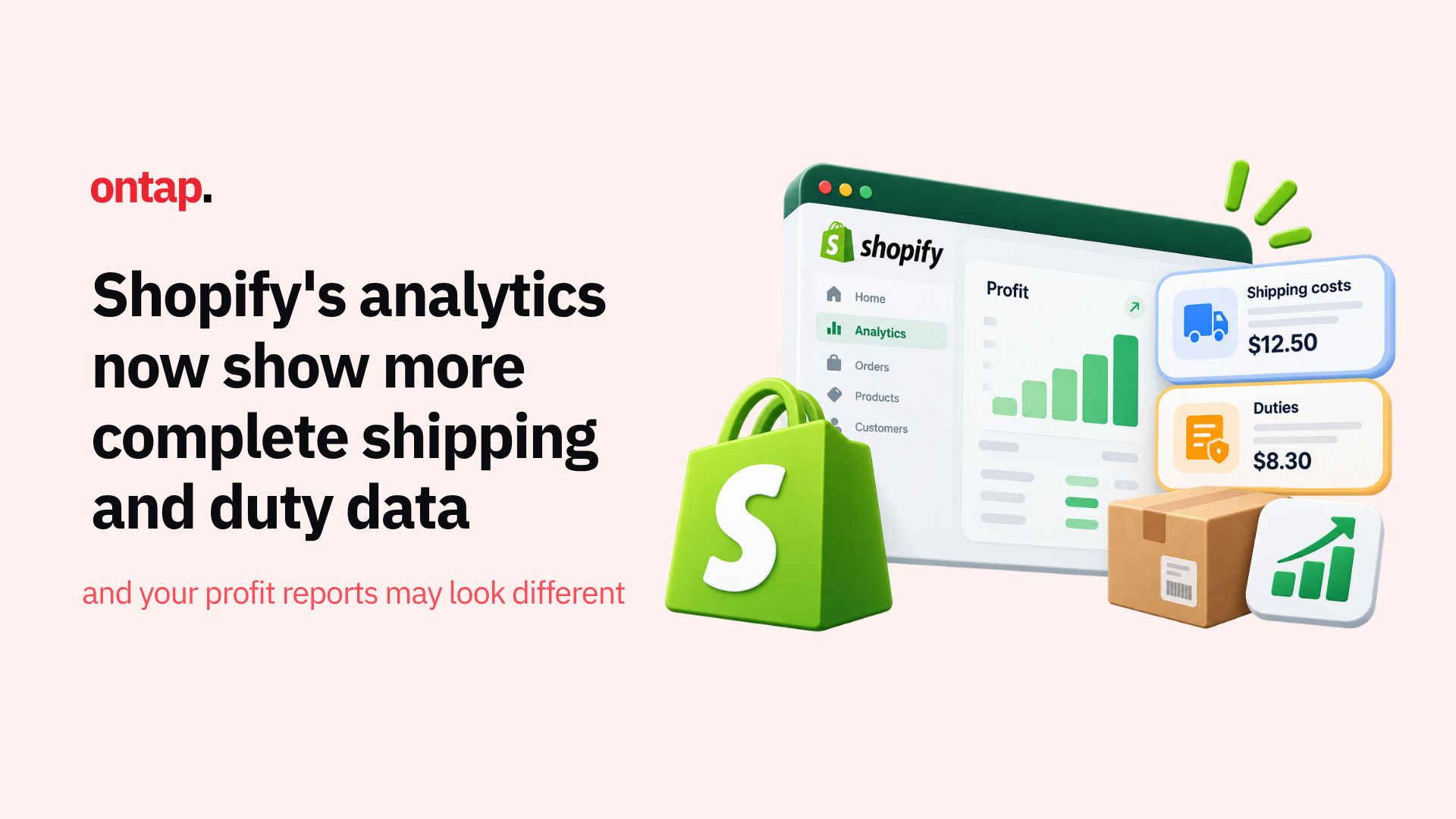
Shopify updated its analytics platform on 22 September 2026, and the change is more commercially significant than its brief changelog entry suggests. Profitability data now includes both duties and other shipping costs when they apply to the same order, and the platform better handles orders placed in different currencies. If you sell internationally, the profit margins you see in Shopify Analytics may look different as a result.
What actually changed
The Shopify changelog describes two specific improvements:
-
Shipping and duty data completeness: profitability data now includes both duties and other shipping costs when both apply to the same order, and refreshes more frequently;
-
Multi-currency support: the update better handles orders placed in different currencies, reducing the risk of conversion inconsistencies distorting margin calculations.
The reports most likely to be affected are "Average profit margin by market" and "Profit margin by order", two of the most commercially important views for any merchant operating across multiple markets. Shopify's own note advises merchants to expect changes to shipping cost, duty, or profit values in custom or Shopify-created reports that use this data.
This is not a minor formatting change. If your previous reports were missing duty data for some orders, or handling multi-currency conversions inconsistently, the figures you now see may differ from what was reported before.
Why this matters for international merchants
For merchants selling domestically, this change may have little visible effect. For merchants selling across borders, particularly those navigating the EU's customs duty framework or managing DDP (Delivered Duty Paid) checkout, more complete cost data changes the picture meaningfully.
Consider a merchant selling a £50 product to Germany. If duty data was previously incomplete for that order, the reported margin for that market was overstated. With more complete data, the true cost of international fulfilment becomes clearer. This matters because shipping costs and duties respond to entirely different levers:
-
Shipping costs: can be influenced through carrier negotiation, packaging changes, or fulfilment location;
-
Duties: are a function of product classification, country of origin, and trade policy, not operational decisions.
If you are trying to improve profitability in a specific market and your data has been incomplete, you may have been addressing the wrong cost. More complete data lets you identify the right ones.
The multi-currency improvement
The currency handling improvement addresses a subtler but equally important data quality issue. When a customer places an order in euros but your store reports in pounds, the conversion rate at the time of the order matters for profitability calculations. Inconsistencies in how these conversions are handled can create apparent margin variations that do not reflect real business performance.
For merchants selling into multiple markets with different currencies, more consistent currency handling means market-level profitability comparisons are more reliable. A difference of a few percentage points between two markets could previously have reflected conversion inconsistency as much as actual commercial performance.
The timing creates a calibration challenge
This update arrives during the final weeks before peak season. If you have been using Shopify's profitability reports to set pricing, allocate marketing budget, or prioritise markets for Q4, your inputs may have changed.
This follows Shopify's session measurement update of 21 September, which changed how conversion rates and other session-based metrics are calculated. Merchants now face two simultaneous measurement methodology changes heading into their most important trading period:
-
Top-of-funnel metrics: affected by the session measurement change;
-
Bottom-line profitability metrics: affected by the shipping and duty data update.
Together, they mean that several key metrics in Shopify Analytics are recalibrating at the same time.
What merchants should do this week?
-
Export your current profitability reports before comparing: Document your current "Average profit margin by market" and "Profit margin by order" figures. You need these baselines to distinguish genuine changes in business performance from changes in measurement methodology;
-
Review your cross-border market profitability specifically: If you sell into markets with significant duty costs, including the EU under its current customs duty framework or any market where you collect duties at checkout, check whether your reported margins have changed and understand why;
-
Check whether your free shipping thresholds remain margin-positive by market: With more complete cost data available, verify that a threshold that works domestically is not margin-negative in a high-duty market;
-
Recalibrate your peak season targets: If your Q4 profit targets were set against previously reported figures and those figures have changed, adjust your targets to reflect the more accurate data;
-
Test your multi-currency margin analysis: If you sell across multiple currencies, run a comparison of profitability by market to check whether the improved currency handling produces materially different results for any market.
The bigger picture
This update is part of a broader pattern from Shopify this month: improving the accuracy and granularity of merchant data as peak season approaches. Session measurement, profitability reporting, and other infrastructure changes taken together suggest Shopify is investing in the measurement foundations that underpin merchant decision-making.
The merchants who will benefit most are those who use the updated data to revisit decisions rather than simply noting the change. More complete data only creates value when it changes a decision. If you are selling internationally and have not yet reviewed your market-level profitability with the updated figures, the same blind spots remain, just with better tools available to address them.
About On Tap
On Tap is a growth-focused eCommerce consultancy helping mid-market and enterprise merchants build measurement infrastructure that supports better decisions. From analytics configuration and profitability reporting to cross-border strategy and peak season readiness, On Tap helps merchants ensure their data reflects what is actually happening in their business.
If you want help interpreting your updated profitability data before peak season, get in touch.