
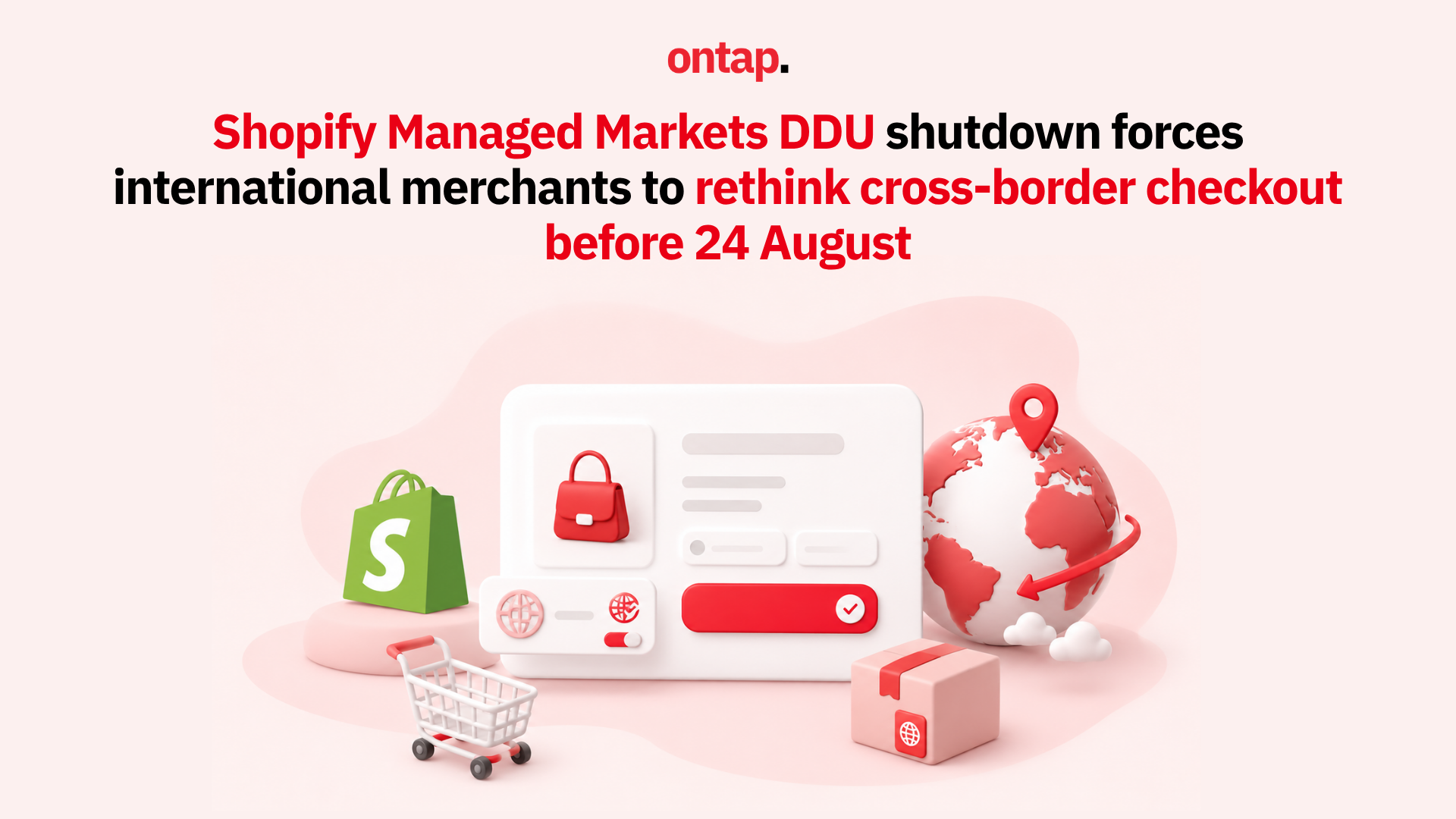
On 11 August, Shopify announced a change that will reshape the checkout experience for every merchant selling internationally through Managed Markets: from 24 August 2026, Delivered Duty Unpaid (DDU) support ends in every country and region where Managed Markets supports Delivered Duty Paid (DDP). Affected markets will automatically switch to duties collected at checkout.
This is not optional. And for merchants who have not prepared, the impact on conversion rates, customer experience, and operational costs could be significant.
What is actually changing
Today, Shopify Managed Markets merchants can choose between DDU and DDP for cross-border orders. DDU means the customer pays duties and taxes when the parcel arrives, sometimes as an unexpected charge at the door. DDP means duties are calculated, collected, and remitted at checkout, so the customer sees the full cost upfront.
From 24 August, the DDU option disappears. Every Managed Markets order going to a DDP-supported country will collect duties at checkout.
Why this matters more than it sounds
At first glance, this looks like a simplification. DDP is generally considered the better customer experience: no surprise charges at delivery, no refused packages, no customer service tickets about unexpected customs fees. Shopify's logic is sound.
But the transition creates real challenges that merchants need to address now.
-
Checkout price shock: Merchants whose international customers have been paying duties on delivery will now show those charges at checkout. For high-duty categories, including fashion, electronics, and luxury goods, this can add 15 to 25% to the displayed price.
-
Margin recalculation: DDP means the merchant is responsible for ensuring duties are correctly calculated and remitted. While Managed Markets handles the calculation, merchants absorb the risk of under-collection. If duty estimation comes in lower than the actual duty charged, the merchant covers the difference.
-
Pricing strategy adjustment: Many merchants running DDU have been using lower displayed prices as a competitive advantage. Moving to DDP eliminates this positioning. Merchants need to decide whether to absorb some duty costs into pricing or present them transparently and accept the visual price increase.
-
Return complexity: When duties are collected at checkout under DDP, refund processes need to account for the duty component.
What Shopify merchants should do before 24 August?
-
Audit your international order data: Pull your Managed Markets order history for the last 90 days. Identify which countries generate the most DDU orders and what typical duty rates are.
-
Update your checkout presentation: Make sure duties and taxes appear as separate line items with clear context. Customers who understand why the price is higher are less likely to abandon.
-
Review your pricing strategy: Decide now whether to absorb some duty costs into product pricing for key international markets or pass them through transparently.
-
Prepare customer communications: A proactive email explaining that duties are now included at checkout, and that this means no surprise charges on delivery, turns a potential friction point into a customer experience improvement.
-
Check your return policies: Ensure your returns process can handle duty refunds for DDP orders.
-
Model the margin impact: Run your average international order through the DDP calculation and compare the total duty collected against what customers have been paying at delivery.
The strategic question
Beyond the operational details, this change forces a strategic question: is your international business model built on transparent pricing, or has it been relying on the opacity of DDU to look competitive?
Merchants who have already embraced DDP will barely notice this change. Those who have been using DDU as a competitive lever need to adjust their positioning before 24 August, not after. Cross-border eCommerce is moving decisively towards pricing transparency. Merchants who get ahead of this trend will be better positioned as regulatory requirements continue to tighten.
About On Tap
On Tap is a growth-focused eCommerce consultancy helping mid-market and enterprise merchants build international commerce strategies that are transparent, compliant, and profitable. From Managed Markets configuration and checkout optimisation to cross-border pricing strategy and returns management, On Tap helps merchants navigate platform changes with confidence.
If you are unsure how this change affects your international business, get in touch this week.