
Shopify Plus and BigCommerce Enterprise are two leading SaaS platforms trusted by fast-growing brands and enterprise retailers. Both provide built-in hosting, security, and scalability, allowing teams to focus on commercial growth instead of infrastructure management.
While they serve similar business needs, the two platforms differ significantly in their core models. Shopify Plus prioritises ease of use and speed to market, whereas BigCommerce Enterprise offers greater flexibility and technical control. This comparison examines those differences in depth, helping you decide which platform best fits your growth goals, operational needs, and internal skills.
Overview: Shopify Plus vs BigCommerce Enterprise
Shopify Plus: Managed SaaS with optimised path to enterprise growth
Shopify Plus is a fully hosted SaaS platform built for high-growth brands that want to launch and scale quickly without the burden of managing infrastructure. It combines enterprise-grade hosting, security, and compliance with a pre-optimised commerce stack designed to accelerate performance and conversion. Core services like high-converting checkout, integrated payments, multi-channel selling, and storefront speed are built in from day one, reducing reliance on custom setup or third-party tools.
To meet business-specific needs, Shopify Plus supports structured extensibility through native tools, a large app ecosystem, and a global network of certified partners. This approach allows teams to adapt key areas of the experience while maintaining upgrade safety and minimising long-term technical maintenance.
Pros
-
Fast time to market: Shopify Plus enables rapid deployment through prebuilt tools, drag-and-drop admin interfaces, and low-code customisation.
-
Low ongoing maintenance: Shopify handles platform updates, security patches, and infrastructure improvements automatically.
-
Upgrade-safe customisation: Checkout and backend logic can be extended safely using Shopify Functions and UI Extensions, without compromising platform stability.
Cons
-
Limited backend control: Shopify does not allow server-side scripting, which makes it harder to implement deeply customised business logic or backend workflows.
-
Proprietary headless stack: Headless builds rely on Hydrogen and Oxygen, limiting flexibility for businesses that prefer to use their frameworks or hosting infrastructure.
BigCommerce Enterprise: Open SaaS for flexibility and control
BigCommerce Enterprise is built on an Open SaaS model that combines the benefits of a fully hosted platform with the flexibility to architect your commerce experience around specific business needs. Infrastructure, security, PCI compliance, and platform updates are managed by BigCommerce, so your team can focus on building storefronts and integrations without maintaining servers.
What sets BigCommerce apart is its open architecture and unopinionated development model. Nearly all commerce functions are exposed through REST and GraphQL APIs, giving developers full control over how storefronts are built, how services are connected, and how data flows across systems. Custom frontends can be created using frameworks like Next.js, Vue, or Nuxt and hosted on your infrastructure of choice. These storefronts connect to BigCommerce via APIs, while backend services such as checkout, product data, and customer accounts remain fully managed and PCI-compliant within the BigCommerce platform.
Pros
-
Greater flexibility across storefront and backend logic: BigCommerce’s Open SaaS and API-first architecture gives your team more flexibility in how your site is built and connected. You can separate the frontend from the backend to build a fully custom storefront, or use BigCommerce as a unified platform with extensive control over storefront theming and checkout design.
-
Greater integration freedom for complex system architectures: BigCommerce Enterprise offers unrestricted, high-throughput APIs with no platform-imposed call limits. This makes it a better fit for real-time, two-way integrations with ERPs, PIMs, CRMs, or middleware, particularly in high-SKU or multi-store environments.
-
Advanced checkout customisation: Developers can modify the entire checkout experience using BigCommerce’s open-source Checkout JS, enabling fully tailored buyer flows while retaining platform compliance.
Cons
-
Requires more developer involvement to unlock full capabilities: Taking full advantage of BigCommerce’s flexibility often requires developer support. Use cases like managing multiple storefronts from a single backend, building headless storefronts, integrating with ERP or PIM systems, and customising checkout flows are not supported through built-in tools or low-code interfaces.
-
Ongoing maintenance overhead: Customised builds require active upkeep. When multiple vendors are involved, platform updates can trigger conflicts or regressions that require additional QA and bug fixing.
Shopify Plus vs BigCommerce Enterprise: Key differences at a glance
|
Evaluation criteria |
Shopify Plus |
BigCommerce Enterprise |
|
Total cost of ownership |
Predictable licensing starting from USD $2,300/month on a standard 3-year term; development and integration costs can be lower due to extensive app ecosystem and low-code tools. |
Custom pricing model with potential for lower base fee; costs are more variable and can be higher when leveraging its open architecture for tailored solutions. |
|
Time to market |
Typically faster deployment with built-in tools and app integrations |
Longer deployment cycles when leveraging extensive customisation |
|
Long-term support and scalability |
Larger global ecosystem, partner network, and developer pool |
Smaller ecosystem but strong in B2B/manufacturing verticals |
|
Internationalisation & multi-store |
Decentralised approach via Markets and Expansion Stores |
Centralised multi-storefront from a single backend |
|
B2B capabilities |
Supports both dedicated B2B storefronts and shared B2B/DTC storefronts with company accounts and price lists; advanced workflows such as quotes and approvals require apps. |
Supports both dedicated B2B storefronts and shared B2B/DTC storefronts with native role-based permissions, quotes, approvals, and custom catalogues. |
|
Checkout performance & flexibility |
Optimised native checkout with controlled extension points |
Fully customisable checkout and payment logic |
|
Product catalogue management |
Uses collection-based product grouping; advanced segmentation or multi-store catalogue control require third-party apps. |
Uses category tree with hierarchical structure; includes built-in product segmentation and multi-store catalogue control from a single backend. |
|
Promotion & discount tools |
Built-in fixed, percentage, BOGO, and free shipping discounts; complex, segmented, or stackable rules require apps or Functions. |
Built-in advanced promotion logic including multi-condition, segmented, and stackable discounts. |
|
SEO flexibility |
Clean defaults with some fixed URL structures |
Full control over technical SEO elements |
In the next sections, we’ll go deeper into how each platform compares across critical enterprise criteria, starting with Total cost of ownership.
Total cost of ownership
Total cost of ownership (TCO) includes all expenses involved in implementing and running an eCommerce platform, beyond licensing fees alone. For SaaS platforms like Shopify Plus and BigCommerce Enterprise, the largest variable costs tend to stem from development, integration, third-party tools, and the internal effort required to maintain and extend the solution.
|
Cost component |
Shopify Plus |
BigCommerce Enterprise |
|
Platform fees |
Starts at $2,300/month on a standard 3-year term; Fixed pricing, though Shopify may apply variable GMV-based fees above certain thresholds. |
Custom quote based on GMV, order volume, or integration complexity. Often lower starting cost than Shopify Plus. |
|
Transaction fees |
0% with Shopify Payments. Third-party gateways incur 0.15% – 0.30% per transaction, increasing with sales volume. |
No transaction fees, regardless of payment provider. |
|
Development & Customisation |
Lower upfront development cost for standard builds using Shopify themes, Functions, and plug-and-play apps. |
Greater backend flexibility enables deeper customisation, but typically results in higher upfront development effort, especially for custom catalogues, pricing logic, or B2B requirements. |
|
Third-party apps & Integrations |
Many advanced features (like B2B, promotions, subscriptions) come via paid third-party apps that are plug-and-play, requiring minimal setup and no developer work. External systems (ERP, CRM, OMS) often connect through prebuilt or partner-built apps, reducing custom development and keeping setup costs predictable. |
Some features also require third-party apps. However, setup may involve more manual configuration or developer assistance, which increases the initial implementation cost. Integrations often involve direct API work or custom builds using developer resources. This leads to higher setup costs. |
|
Ongoing maintenance |
Low infrastructure maintenance due to a fully hosted model, but app updates, theme refinements, and code adjustments still require ongoing effort. Customised setups may increase support costs over time. |
Also benefits from a hosted environment, but greater backend flexibility can lead to higher maintenance costs for managing custom logic, third-party integrations, and technical dependencies. |
Shopify Plus is cost-efficient for teams that need to move quickly without deep technical resources and prefer off-the-shelf apps to extend functionality. In these use cases, the TCO is shaped by predictable platform fees and modular third-party tools, making it easier to launch and scale without heavy upfront investment.
BigCommerce Enterprise is better suited for teams with strong technical capabilities who require more control over backend systems and integrations. In these cases, TCO is shaped by custom development and maintenance costs. With technical expertise, teams can fully leverage the platform’s flexibility, tailoring it to complex business needs while maintaining long-term stability and cost control.
Time to market
Time to market reflects how quickly a business can plan, build, and launch its online operations. For enterprise use cases, each phase of implementation affects how fast a store can be operational.
The table below compares Shopify Plus and BigCommerce Enterprise across these dimensions for standard SaaS builds:
|
Factor |
Shopify Plus |
BigCommerce Enterprise |
|
Initial platform setup |
Fast — SaaS model eliminates infrastructure setup. Onboarding and admin configuration are streamlined; stores often reach a live state within weeks. |
Moderate — Also SaaS, but setup may take longer depending on project scope, data structure needs, and frontend architecture. |
|
Development and customisation |
Fast for standard builds — themes, Functions, and apps minimise coding. |
Slower — Backend flexibility allows tailored workflows, but often requires developer involvement for core features like pricing logic or complex catalogues. |
|
Integration |
Faster — Wide range of plug-and-play apps for ERPs, CRMs, shipping, and taxes. Ideal for standard workflows where prebuilt connectors exist. |
Slower — Greater integration flexibility, but most enterprise setups require scoped API work or middleware. Time extends based on complexity and coordination with internal systems. |
|
Testing and quality assurance |
Faster — Stable core platform with managed updates means less time spent validating infrastructure. QA typically focused on themes, apps, and custom logic. |
Slower — Testing scope is broader due to deeper customisation. Full QA cycles are often needed for backend logic, API behaviour, and integration flows. |
|
Overall deployment speed |
Faster – Most stores can go live within a few weeks, especially when using standard themes, prebuilt apps, and off-the-shelf integration. |
Slower – Implementation timelines are longer due to greater reliance on custom development and manual integration work. |
Shopify Plus enables faster time to market through its prebuilt themes, app ecosystem, and low-code customisation tools, while BigCommerce Enterprise requires longer timelines to support custom development and system integration.
Shopify Plus is best suited for fast-moving teams launching standardised or moderately complex storefronts, where core requirements can be met using built-in capabilities and ready-made apps. Time to market is accelerated through built-in tools and off-the-shelf apps that reduce the need for development work.
BigCommerce Enterprise is better suited for businesses with complex operational requirements, including custom pricing structures, multi-system integration, or B2B-specific workflows. In these cases, time to market is shaped by development and integration cycles needed to align the platform with internal systems and business logic.
Long-term support and scalability (market adoption and ecosystem depth)
For enterprise commerce, a platform’s ability to provide sustained support and scale effectively is directly influenced by its market adoption and ecosystem depth. Broad market adoption builds a large, skilled talent pool and encourages continual investment from technology partners. A deep, well-established ecosystem offers proven integrations, specialist agencies, and pre-vetted solutions that reduce implementation risk, speed up delivery, and lower long-term operating costs. Together, these factors give businesses the resource availability, vendor stability, and innovation pipeline needed to expand into new markets, add sales channels, and evolve operations with confidence over the long term.
|
Capability |
Shopify Plus |
BigCommerce Enterprise |
|
Merchant adoption |
Shopify Plus powers about 52,757 live accounts globally, adopted by high-growth and high-volume brands including Glossier, Gymshark, and Heinz |
BigCommerce Enterprise supports 5,825 active enterprise accounts, including brands such as Sony, Skullcandy, and Ted Baker. |
|
Top industries |
Common verticals for Shopify Plus include apparel, beauty and fitness, and broader consumer goods. It is widely adopted by DTC brands and omnichannel retailers focused on rapid growth and brand-driven experiences. |
BigCommerce Enterprise is commonly adopted by businesses in manufacturing, distribution, automotive, and wholesale, particularly those with complex catalogues, customer-specific pricing, and ERP integration needs. |
|
Ecosystem and partner network |
Large and mature partner ecosystem including 8,000+ apps, 1,700+ certified agencies, and a global developer base familiar with Liquid, Shopify APIs, and theme development. |
Smaller but growing ecosystem, with 1,000+ apps and fewer agency partners. Emphasis is placed on technical flexibility and composable architecture, attracting developers focused on custom builds and integrations. |
|
Developer availability |
Large global pool of front-end and Shopify-specialised developers. Many agencies and freelancers focus exclusively on Shopify. Talent is widely available, particularly for standard implementations. |
Fewer platform-specific developers, but accessible to general web developers familiar with HTML, JS, REST/GraphQL APIs, and common frameworks. The developer learning curve is shorter for those with full-stack experience. |
|
Pace of innovation |
Fast release cycle, with frequent updates to Shopify Functions, Checkout Extensibility, and internationalisation features. Shopify Editions (biannual product updates) showcase rapid platform evolution. |
Steady innovation, focused on backend extensibility and composable commerce. Updates are less frequent but more developer-driven, with long-term stability emphasised for large-scale deployments. |
|
Community size and visibility |
Large global user base, strong online community, active forums, and extensive third-party content. Shopify is well-known across both B2C and SMB/enterprise sectors. |
Smaller but focused community. Visibility is higher in B2B, composable commerce, and headless architecture circles. Strong support resources for technical teams. |
|
Platform maturity |
Launched in 2006. Shopify Plus was introduced in 2014. Now a widely adopted enterprise SaaS platform with standardised workflows and a consistent product roadmap. |
Launched in 2009. Enterprise focus accelerated post-2015. Known for stability and extensibility, especially in B2B and multi-brand use cases. Still evolving compared to Shopify in some standard tooling areas. |
Shopify Plus and BigCommerce Enterprise are both mature SaaS platforms, but their ecosystems and adoption patterns reflect different strengths.
Shopify Plus is best suited for businesses that benefit from a widely adopted platform with an extensive partner network, rich app ecosystem, and strong talent availability. Its rapid innovation cycle and large community provide confidence for teams that prioritise speed, agility, and access to proven solutions.
BigCommerce Enterprise is better suited for businesses that prioritise platform flexibility and long-term extensibility and have sufficient technical resources. While the ecosystem is smaller, it is tailored toward complex, integration-heavy use cases where custom development is expected.
Internationalisation & Multi-store management
For enterprise businesses expanding internationally, multi-store management and localisation are critical to growth. This section compares how Shopify Plus and BigCommerce Enterprise handle these needs at scale.
|
Capability |
Shopify Plus |
BigCommerce Enterprise |
|
Storefront architecture |
Shopify Plus supports multi-store operations through a combination of Shopify Markets and up to 9 Expansion Stores under one Plus contract. Shopify Markets enables localisation (language, currency, pricing, tax) within a single storefront. Expansion Stores are fully independent stores, each with its own theme, checkout, catalogue, and admin. These stores must operate under the same brand or legal entity. |
BigCommerce Enterprise supports up to 5 storefronts by default from a single backend; each can have its own domain, theme, catalogue visibility, and pricing structure. These storefronts can represent different brands, regions, or customer groups. |
|
Currency & language |
130+ currencies via Shopify Markets. Automatic or manual rates with rounding rules. Requires Shopify Payments for local checkout. Up to 20 languages per store (via Translate & Adapt app or theme translations). Unlimited via separate Expansion Stores. |
100+ currencies supported natively per storefront. No dependency on a single payment provider. Unlimited languages per storefront. Managed centrally using theme translation files and language toggles. |
|
Product catalogue across stores |
Shopify Markets allows product and pricing visibility by region within one store. All regions share the same catalogue. Expansion Stores are used when different regions need separate catalogues. Each store is a separate instance with no built-in way to sync products or manage them centrally. |
A single storefront supports region-based product and pricing visibility, using shared catalogue and price list controls. Multiple storefronts can use differentiated catalogues, but all are managed from a single backend. Products can be assigned to specific storefronts without duplication. |
|
Regional pricing |
You can apply price adjustments (e.g. +10%, −5%) to the base product price by region using Shopify Markets. To set exact prices per product per region, you need to use separate Expansion Stores. Prices are managed separately in each store, with no central control across stores. |
You can set specific prices for each product in each region using Price Lists. All prices are managed from one backend and assigned to each store or customer group as needed. |
|
Tax & Shipping |
Shopify Markets allows you to set shipping rates and tax rates per region within a single store. To use different carriers or region-specific tax rules beyond rate settings (e.g. varying VAT setup), you'll need Expansion Stores, each with a separate configuration. |
You can manage region-specific shipping zones, rates, carriers, and tax rules within a single store. All logic is configured centrally and assigned per region, without requiring multiple stores. |
|
Payment Methods & Gateways |
Payment methods are configured globally by default. To show or hide methods by region or customer group, you must use Shopify Functions or create separate Expansion Stores, each with its payment setup. Shopify Plus supports over 100 gateways, including Shopify Payments, Stripe, and PayPal. If you enable Shopify Payments, some third-party gateways may become unavailable, as Shopify prioritises its own payment service. |
Payment methods can be configured per storefront, country, currency, or customer group directly in the admin. BigCommerce Enterprise supports over 65 pre-integrated gateways, including Stripe, PayPal, Amazon Pay, Klarna, Adyen, and iDEAL. Merchants can freely assign different gateways by region with no platform restrictions or payment provider lock-in. |
|
Inventory & fulfilment |
With Shopify Markets, you can assign stock to multiple warehouses and use automatic order routing to fulfil orders from the most suitable location based on customer address and availability. If you need to apply different fulfilment rules for each region, such as using specific carriers, custom delivery speeds, or setting warehouse preferences, you will need to use Expansion Stores. Each store has its fulfilment configuration. |
You can manage regional fulfilment rules within a single store. Each region can use different delivery providers, warehouse routing logic, and fulfilment workflows. |
|
Admin & Reporting |
With Shopify Markets, all regions within a single store are managed from one admin, sharing products, customers, and orders. Expansion Stores have separate admin panels. Shopify Plus offers a central Organisation Admin to manage staff roles, billing, and store-level settings across Expansion Stores, but product and order data are not unified. |
All storefronts are managed in a single admin. Merchants can manage products, customers, permissions, and reporting across all storefronts without switching systems. Reports and data are fully consolidated across regions. |
Shopify Plus and BigCommerce Enterprise both support international expansion and multi-store strategies, but their architectural models differ significantly in how storefronts are created, localised, and managed.
Shopify Plus uses a decentralised approach, combining Shopify Markets (for localisation within a single store) with Expansion Stores (up to 9 stores included) for launching fully independent stores under the same brand. Each Expansion Store has its own admin panel, theme, checkout, and apps, giving regional teams full control over local operations. This setup is suited to businesses with region-specific merchandising, marketing, and team workflows. It gives local teams autonomy to operate independently while maintaining brand consistency at the top level.
BigCommerce Enterprise offers a centralised Multi-Storefront model, allowing up to 5 uniquely branded or regional storefronts to be managed from a single admin panel. All product data, pricing, permissions, and reporting are consolidated, enabling unified team management across regions. This is suited for businesses managing multiple brands or customer segments with a centralised team and shared product base.
B2B capabilities
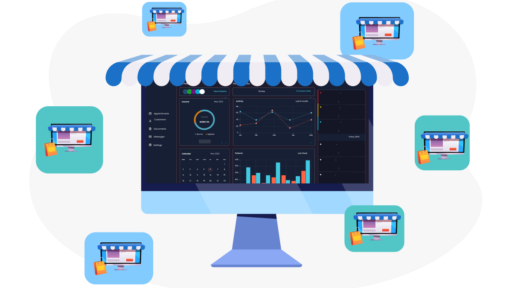
B2B selling involves complex workflows, from account-based pricing to role-based purchasing and negotiated quotes. Shopify Plus and BigCommerce Enterprise both offer features to support B2B transactions, but differ in how these are delivered and configured.
This section compares their capabilities across five areas that matter most to B2B operations:
|
Capability |
Shopify Plus |
BigCommerce Enterprise (B2B Edition) |
|
B2B storefront architecture |
Supports both dedicated and blended B2B storefronts. Dedicated B2B experiences are created by launching separate Shopify stores, each with its own admin, theme, and data structure. Blended storefronts serve both B2B and retail customers within a single store, using customer-specific logic for pricing, catalogue visibility, and payment terms. |
Also supports both dedicated and blended B2B storefronts, but all are managed from a single backend. Merchants can activate B2B features per storefront or customer group, with shared catalogue, customer records, and configuration across all sites. |
|
Customer account management |
Company profiles support multiple buyers with fixed roles (admin, approver, buyer). Each role has predefined access to price lists, purchase lists, and order history. Permissions are consistent and cannot be customised per user. |
Company accounts support flexible role hierarchies. Merchants can define custom roles: what each user can access (such as quotes, checkout, or payment methods), allowing more granular control per buyer within the same company. |
|
Custom pricing & catalogue visibility |
Product and price list visibility can be customised per company account or company location by assigning B2B catalogues in the admin. Catalogues cannot be assigned by customer group or buyer role. |
Merchants can customise product and pricing visibility per company account, customer group, or buyer role using built‑in catalogue rules in the admin. |
|
Quote & approval Workflows |
Not supported by default. Merchants must use Shopify Flow, Shopify Functions or third-party apps to allow buyers to request quotes or trigger approval steps. |
Supported directly through the B2B Edition. Buyers can submit quotes, and sales teams can edit prices, add comments, set expiry dates and route approvals before finalising the order. Includes full quote lifecycle management with no additional apps required |
|
Reordering and bulk purchase experience |
Buyers can create purchase lists to save frequently ordered items. Staff can assist by creating draft orders in the admin. There is no built-in quick order pad or SKU upload form for buyers; bulk ordering requires third-party apps or custom theme development. |
Buyers can use a built-in quick order pad to search or paste multiple SKUs, create shared shopping lists, and reorder with one click. Bulk and repeat ordering are supported directly without apps or customisation. |
|
Buyer Portal & Account Dashboard |
Buyers can log in to view their order history, invoices, and tracking information through the standard account area. Additional views such as quotes, saved carts, or payment history are not included and require custom development using Liquid or APIs. |
Buyers access a structured B2B portal with built-in tabs for quotes, orders, invoices, saved carts, and payment history. |
Shopify Plus and BigCommerce Enterprise both support modern B2B buying workflows, but their approaches reflect different priorities in architecture and flexibility.
Shopify Plus offers a streamlined B2B suite focused on ease of use, with essential capabilities like company accounts, custom price lists, and self-serve reordering that are tightly integrated into the DTC admin. However, advanced workflows such as quote management, catalogue segmentation, and payment logic often require third-party apps or theme customisation. It's best suited for hybrid B2B/DTC brands prioritising fast deployment over operational complexity.
BigCommerce Enterprise provides a more complete native B2B solution via its B2B Edition. It supports quote workflows, buyer-specific catalogues, role-based permissions, and order approval chains out of the box. These features reduce the need for app dependencies and custom builds, making it more suitable for B2B businesses with complex workflows or layered account structures.
Enterprise B2B commerce is rarely plug-and-play. Even with strong native capabilities, most organisations need tailored workflows, ERP or CRM integrations, and governance around company accounts. On Tap specialises in building these solutions on Shopify Plus, with our Shopify Plus development service enabling brands to launch robust B2B operations without overcomplicating their stack.
Checkout performance and flexibility
This section compares Shopify Plus and BigCommerce Enterprise in terms of checkout performance, customisation, and control over business logic. These capabilities directly affect conversion rates, operational workflows, and how easily merchants can adapt checkout to specific requirements (e.g. tax handling, discounts, payment conditions).
|
Capability |
Shopify Plus |
BigCommerce Enterprise |
|
Checkout performance |
Offers a single-page checkout optimised for mobile and desktop, with built-in acceleration via Shop Pay, Apple Pay, and Google Pay. According to Shopify, its overall checkout converts up to 36% better than competitors. Checkout customisation is feasible with Checkout Extensibility, but limited to approved extension points. |
Provides a self-managed one-page checkout designed for speed and mobile responsiveness. Supports major wallets like PayPal, Apple Pay, and Amazon Pay. Merchants can fully customise the checkout experience via Checkout JS and SDK. Performance and conversion depend on implementation quality. |
|
Layout & branding customisation |
Customisable with Checkout Extensibility: change layout, styling, and content using Checkout Editor and UI extensions. Changes are modular and upgrade-safe but limited to predefined areas. |
Customisable via Stencil templates and Script Manager. Developers can modify HTML, CSS, and JavaScript freely. Offers full control but may require ongoing maintenance after platform updates. |
|
Logic & conditional behaviour |
Business logic for discounts, shipping, payment rules, and checkout validation can be extended using Shopify Functions. Functions are modular, upgrade-safe, and deployed via custom apps, but are limited to specific extension points defined by Shopify. |
Checkout logic can be extended using server-side scripts, Checkout JS, and open APIs, giving developers full control over tax, shipping, payment methods, and field visibility. Changes are unrestricted but require dev oversight and QA for stability during platform updates. |
|
Third-party payment integration control |
Uses a platform-controlled checkout framework with structured extension points for integrating third-party payment service providers. Merchants can implement custom routing logic and fraud tools using Shopify Functions or Checkout Extensibility, but only within approved boundaries. Access to Shop Pay requires using Shopify Payments, and additional transaction fees apply when using alternative gateways. |
Offers an open integration model that allows direct connections to payment service providers, digital wallets, and third-party fraud tools via APIs and the Checkout SDK. Merchants have full control over payment workflows, routing logic, and risk management, with no platform restrictions on provider selection or transaction fees. |
Shopify Plus and BigCommerce Enterprise take different approaches to checkout performance and flexibility: Shopify focuses on speed, trust, and conversion out of the box, while BigCommerce Enterprise prioritises full control over layout, logic, and integration.
Shopify Plus delivers a secure, high-converting checkout with strong mobile performance and built-in acceleration via Shop Pay. Customisation is available through Checkout Extensibility and Shopify Functions, which provide safe and upgrade-ready control within approved areas. It’s best suited to teams prioritising conversion performance and low-code extensibility.
BigCommerce Enterprise provides full control over checkout layout and logic, including server-side scripting and unrestricted third-party payment integration. While it lacks a native conversion accelerator like Shop Pay, it offers greater adaptability for merchants requiring custom workflows or logic-driven integrations.
Note: B2B-specific and multi-storefront checkout capabilities are covered in the dedicated sections on B2B and Multi-store architecture.

Product catalogue management
For enterprise eCommerce operations, catalogue flexibility plays a critical role in how well a platform supports merchandising, regional strategies, and system integration. Key considerations include how catalogues are structured, how variants and options are handled, and whether catalogue data can be customised across storefronts, customer groups, or sales channels.
|
Capability |
Shopify Plus |
BigCommerce Enterprise |
|
Catalogue structure |
Products are organised using Collections (manual or automated). There is no native hierarchical category tree. One product can belong to multiple Collections. |
Products are organised into a category tree with nested subcategories. One product can be assigned to multiple categories. |
|
Variants and options |
Each product supports up to 3 options and 100 variants. Additional configurations require custom metafields or third-party apps. |
Supports up to 250 option types and 600 variants per product. Modifier fields (non-SKU options) allow for further input without expanding variant count. |
|
Custom fields and attributes |
Custom attributes are managed through metafields, which require Liquid coding or third-party apps to use for filtering, display, or integration. There’s no built-in admin UI to manage metafields across products at scale. Used for filtering, display logic, or integration, but require Liquid or app-based implementation for advanced use. |
Allows creation of custom fields and attributes directly in the admin. These can be used for product filtering, custom input, or ERP/PIM syncing without additional apps. |
|
Merchandising rules |
Merchandising is based on product-level rules using Smart Collections, which group items by tags, vendor, price, or inventory status. For example, to create a clearance section, a merchant can add a “clearance” tag to products and set a rule to include all tagged items in the collection. |
Merchandising is managed through catalogue-wide rules using categories, customer groups, product segments, and price lists. For example, a merchant assigns products to a “Clearance” category and sets it to display only for selected customer groups. |
|
Data import and API access |
Supports bulk import via CSV or API. Shopify Plus allows increased API rate limits for catalogue sync, but has daily variant creation limits for large catalogues. |
Supports large catalogue imports via CSV, REST, and GraphQL APIs. No hard daily limits on variant creation. API calls are unlimited on Enterprise plans. |
Shopify Plus and BigCommerce Enterprise both support enterprise-scale catalogues, but with different approaches to structure and flexibility.
Shopify Plus is best suited for businesses with straightforward product structures or a strong preference for tag- or app-based catalogue logic. Its use of Collections and metafields provides flexibility, but advanced merchandising and cross-store catalogue sharing typically require third-party tools or custom development.
BigCommerce Enterprise is better suited for businesses with complex catalogues, large SKU counts, or multiple storefronts requiring shared but customised catalogues. Its native support for deep product structures, multi-store segmentation, and built-in filtering makes it well-equipped for technical or B2B-led catalogue management.
Promotion and discount
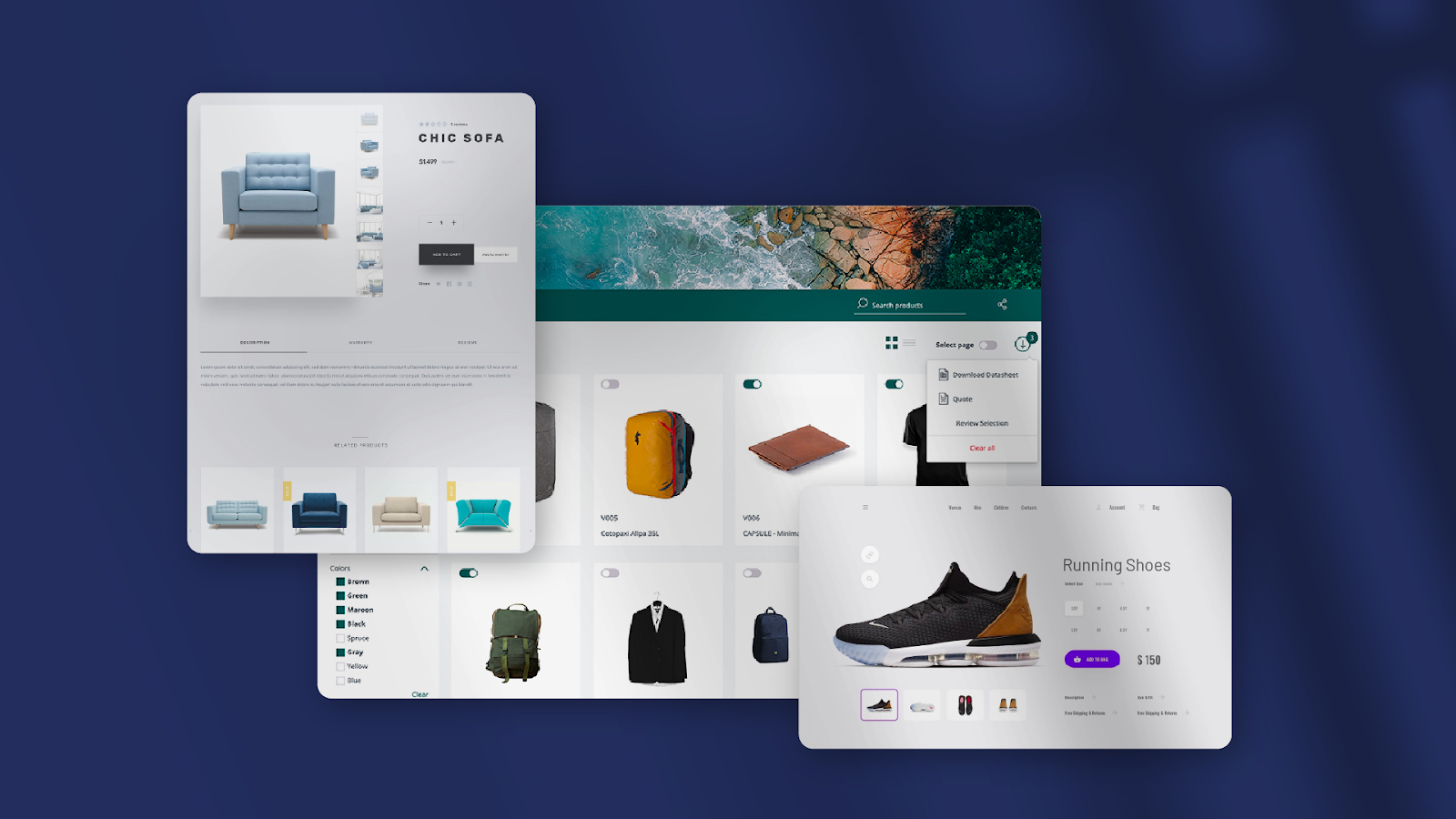
Promotional tools are critical for driving sales, clearing inventory, and incentivising repeat purchases. For enterprise teams, it’s not just about creating discounts — it’s about managing complex rules across customer segments, product groups, and multiple storefronts with minimal operational overhead.
This section compares how Shopify Plus and BigCommerce Enterprise handle core and advanced promotion capabilities, including built-in discount logic, customer segmentation, and promotional flexibility across stores.
|
Capability |
Shopify Plus |
BigCommerce Enterprise |
|
Discount rule types |
Supports fixed amount, percentage, buy X get Y, free shipping, and volume-based discounts. Can be automatic or code-based. |
Supports fixed, percentage, buy X get Y, tiered pricing, free shipping, and quantity-based rules. Available as automatic or coupon-based promotions. |
|
Cart-level and checkout rules |
Shopify Functions allow for advanced discount logic at checkout (e.g. tiered discounts, exclusions, custom rules). |
Cart-level and checkout promotions can be configured natively. Complex logic can be layered with conditions across product, cart, and customer group. |
|
Customer group targeting |
Native discount rules can apply to tagged customers or customer segments. Advanced segmentation requires Shopify Flow or apps. |
Discounts can be applied natively to customer groups or specific logged-in buyers. Customer group-based logic is fully supported across storefronts. |
|
Promotion stacking and exclusions |
Shopify allows one automatic discount per order. Additional codes may be used manually. Complex logic (e.g. stacking limits or exclusions) requires Functions or apps. |
Supports multiple concurrent promotions per order with rule-based exclusions and priorities. Merchants can control stacking behaviour and promotion logic natively. |
|
Bundling and custom promotions |
Bundling requires third-party apps or Shopify Functions. Native support is limited. |
Native support for product bundling, BOGO logic, and cart conditions without apps. Custom promotions can be configured with more granularity. |
Shopify Plus and BigCommerce Enterprise both support a wide range of promotional use cases, but they differ in how much flexibility is built into the core platform.
Shopify Plus is best suited for businesses that run straightforward campaigns or have development support to customise promotions using Shopify Functions. While many use cases are supported, more advanced logic often depends on third-party apps or custom scripting.
BigCommerce Enterprise is better suited for businesses that require advanced promotion logic out of the box, such as stacking rules, customer group-based discounts, or storefront-specific campaigns. Its native tools support more granular control without requiring additional apps or middleware.

SEO flexibility
Enterprise SEO depends on optimising technical elements such as URLs, metadata, structured data, and indexing rules to improve search visibility at scale. This section compares Shopify Plus and BigCommerce Enterprise based on how key SEO components are handled, whether optimised by default or configurable by merchants.
|
Capability |
Shopify Plus |
BigCommerce Enterprise |
|
URL structure |
Uses a fixed URL format that includes path prefixes like /products/ and /collections/. This structure is consistent and optimised for standard catalogue SEO, but not editable. |
Allows full control over product, category, and page URLs. Merchants can define flat or nested structures to support legacy migrations or specific SEO strategies. |
|
Canonical tags |
Canonical tags are generated automatically, simplifying setup for standard catalogue use. Editing requires theme changes or third-party apps. |
Canonical tags are editable per page in the admin. Supports dynamic or custom canonicals across storefronts. |
|
Meta titles & descriptions |
Fully editable for each product, collection, and page. Supports CSV import but lacks dynamic templates. |
Fully editable in the admin per storefront. Also supports metadata templates and dynamic tag rules across channels. |
|
robots.txt & sitemap.xml |
Generated automatically using platform defaults that follow general SEO best practices. Customisation requires developer access through CLI or theme overrides. |
Fully editable in admin or via API. Supports storefront-specific directives and sitemap segmentation. |
|
Structured data (schema.org) |
Requires manual implementation in the theme or via apps. No default schema included. |
JSON-LD schema is applied natively to product, category, and content pages. Extendable via admin or template logic. |
|
hreflang & international SEO |
Shopify Markets automatically adds hreflang for domain and subdomain-based regions. Manual setup is needed for Expansion Stores. Subfolders are not supported. |
Native hreflang support per storefront. Can define language–country pairs across subdomains, domains, or folders. Centralised hreflang generation. |
Shopify Plus prioritises ease of use and faster setup for standard SEO workflows, while BigCommerce Enterprise offers greater control for businesses with advanced or highly structured SEO requirements.
Shopify Plus is well-suited for brands that want to manage SEO efficiently through a clean admin interface, with minimal developer involvement. Basic technical SEO elements such as metadata editing, sitemap generation, and mobile performance are built in. Hreflang is handled automatically through Shopify Markets, and the app ecosystem provides accessible tools for most of the common SEO tasks.
BigCommerce Enterprise, by contrast, is designed for merchants that need full control over technical SEO. Features such as editable URLs, canonical tags, robots.txt, structured data, and storefront-level hreflang are built into the platform and accessible via admin or API. This level of control is better suited to businesses managing multiple storefronts, complex catalogue structures, or region-specific SEO strategies
Conclusion
In this article, we’ve compared Shopify Plus and BigCommerce Enterprise across the criteria that matter most to enterprise merchants, including total cost of ownership, time to market, international expansion, B2B capabilities, product catalogue management, and SEO flexibility.
While both platforms are capable at scale, they reflect different priorities. Shopify Plus is designed for teams that value speed, efficiency, and operational simplicity, with built-in pre-optimised components and a rich ecosystem of apps and partners. BigCommerce Enterprise offers more control and technical flexibility, making it well suited to businesses with complex system requirements, custom workflows, or multi-brand architecture.
If you’re exploring Shopify Plus as the foundation for your next phase of growth, whether expanding internationally, modernising your tech stack, or enabling B2B, On Tap can help. We specialise in enterprise-grade Shopify Plus implementations, including multi-store builds, custom integrations, and tailored B2B storefronts.
Explore our Shopify Plus development services or contact us for tailored consultations.