
UK Prime Minister Andy Burnham announced on August 9, 2026, that a package of consumer protection measures, including a crackdown on so-called "subscription traps", would be brought forward. The legislation, which requires businesses to make subscriptions easy to cancel and to clearly warn customers before auto-renewals, was originally expected in spring 2027. It will now take effect in January 2027, roughly three months earlier, landing just weeks after the Golden Quarter ends rather than during it.
Subscription industry experts have broadly welcomed the measures:
-
InternetRetailing reported that transparency requirements would benefit both consumers and reputable businesses.
-
The Guardian described the changes as part of Burnham's "everyday fixes" on the cost of living, alongside a crackdown on misleading discount pricing.
For eCommerce merchants who sell subscriptions, memberships, replenishment products, or anything with auto-renewal, this is not a story to skim and forget. The timing means your subscription flows need to be compliant right as your highest-volume acquisition period winds down, and the merchants who get this right will turn a regulatory requirement into a competitive advantage.
What the subscription trap rules actually require
The measures, grounded in provisions of the Digital Markets, Competition and Consumers Act, target three specific practices that regulators consider harmful to consumers.
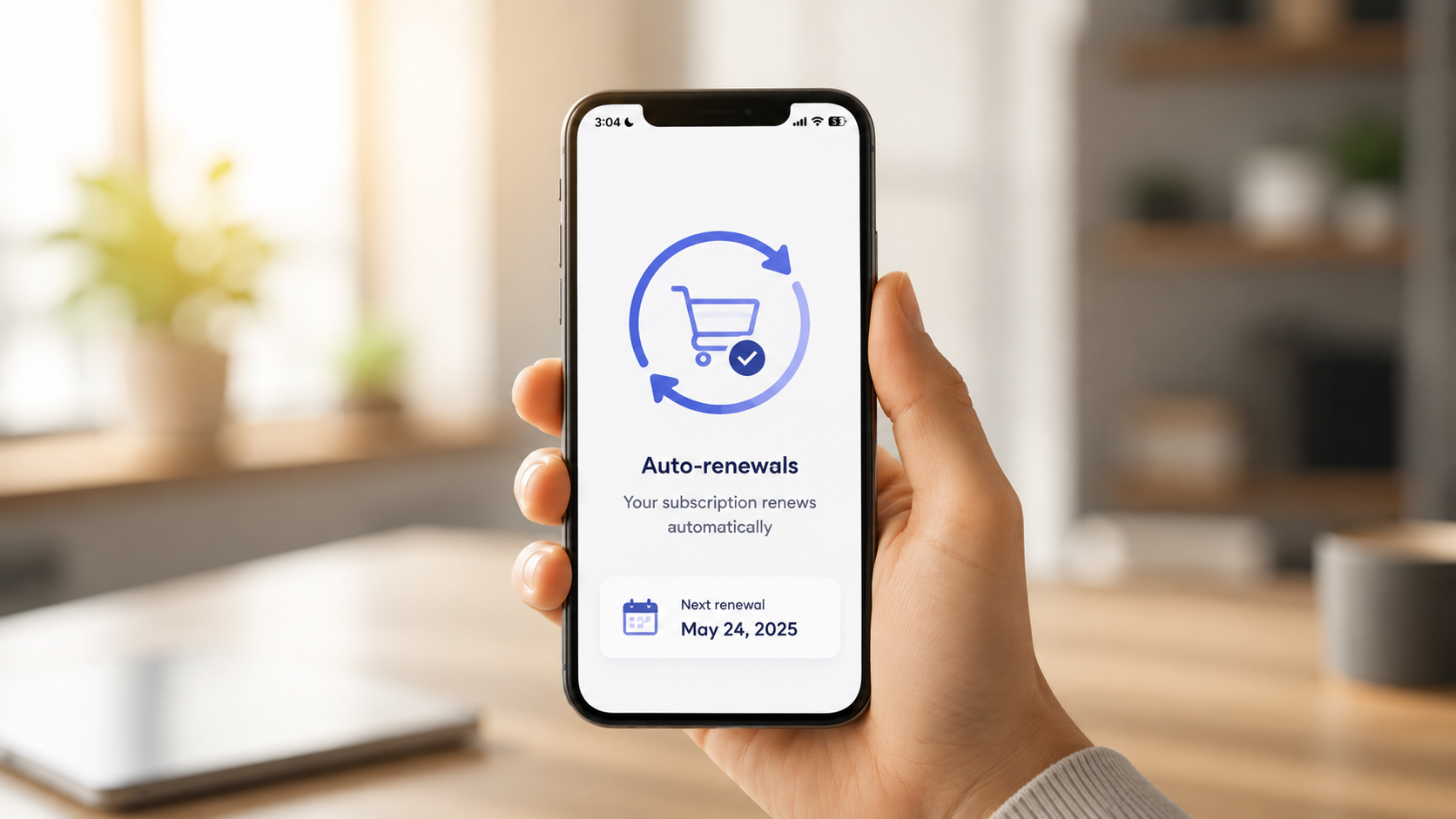
1. Pre-renewal reminders. Businesses must clearly warn customers before a subscription automatically renews. This is not a vague obligation; it means sending explicit, timely communications that tell the customer when their subscription will renew, what they will be charged, and how to cancel if they choose to.
2. Easy cancellation. Customers must be able to cancel a subscription with the same level of ease with which they signed up. If a customer can subscribe in two clicks, they should be able to unsubscribe in two clicks. The legislation targets businesses that bury cancellation options behind phone calls, chat queues, or deliberately confusing account settings.
3. Cooling-off provisions. A new 14-day cooling-off period will let customers cancel shortly after a free trial converts to a paid subscription, or after a long-term contract renews.
Government estimates put the savings at around £400 million a year for UK consumers overall, or roughly £14 a month for every subscription someone successfully exits that they didn't want to keep. These requirements are not abstract. They will be enforceable, and the UK's Competition and Markets Authority (CMA) has signalled that it intends to use its powers to take action against businesses that fail to comply.
Why the accelerated timeline matters for peak season
The original timeline would have given eCommerce businesses until spring 2027 to prepare. The acceleration to January 2027 means the requirements land within weeks of the Golden Quarter ending, not during it, which changes the nature of the risk rather than removing it.
Peak season is when many subscription businesses acquire the most new subscribers, often through promotional offers and gift subscriptions. Every subscriber acquired during Black Friday and the Christmas trading period will hit their first renewal, or their first attempt to cancel, right around the time the new rules take effect. If your sign-up flows are optimised for conversion but your cancellation and renewal-reminder flows are still built to the old, looser standard, you'll be retrofitting compliance onto exactly the subscriber cohort most likely to test it.
This creates two risks. First, the operational risk of rebuilding cancellation and reminder flows under time pressure, while also servicing your largest-ever subscriber base. Second, the commercial risk of acquiring customers during peak season who feel trapped in the weeks before compliant processes exist, and who churn at the first opportunity once they can, taking negative reviews and social media complaints with them.
Turning compliance into a commercial advantage
The most sophisticated subscription businesses have already learned a counterintuitive lesson: making cancellation easy actually improves retention.
When customers know they can leave at any time, they feel less pressure to cancel pre-emptively. When they receive transparent renewal reminders, they are more likely to actively choose to continue rather than feeling they were tricked into another billing cycle. And when they do cancel, a well-designed cancellation flow that offers alternatives, pause, downgrade, skip a month, saves a meaningful percentage of cancellations that a buried cancellation process would have lost to chargebacks and complaints instead.
Here is what this looks like in practice for eCommerce merchants.
1. Redesign your cancellation flow as a retention flow:
Instead of making cancellation hard to find, make it easy to find but designed to offer alternatives. When a customer clicks "cancel," present options: pause for a month, switch to a less frequent delivery schedule, downgrade to a smaller plan. Each option reduces churn while respecting the customer's autonomy.
2. Automate pre-renewal communications:
Do not treat renewal reminders as a regulatory burden; treat them as a touchpoint. A well-timed email that says "Your subscription renews in 7 days, here's what you'll receive and what you'll be charged" is an opportunity to remind the customer why they subscribed in the first place. Include product highlights, upcoming exclusive offers, or personalised recommendations based on their purchase history.
3. Audit your sign-up-to-cancellation asymmetry:
Walk through your own subscription flow as a customer. How many clicks to subscribe? How many clicks to cancel? If there is a meaningful asymmetry, fix it before the regulators notice.
4. Test your flows before peak season:
Do not wait until November to discover that your cancellation process is broken, hidden behind authentication loops, or triggers errors on mobile. Test it now, on every device and every browser your customers use.
The broader regulatory trend
The UK's subscription trap crackdown is not happening in isolation. The European Union has been tightening consumer protection rules around subscriptions and auto-renewals. The US Federal Trade Commission proposed its "click-to-cancel" rule in 2023, which requires businesses to make cancellation as easy as sign-up. Several US states have implemented their own subscription transparency requirements.
The direction of travel is clear: regulators globally are converging on the principle that subscription businesses must earn their renewals rather than relying on customer inertia.
For eCommerce merchants, this is not a single compliance event; it is a permanent shift in how subscription commerce must operate. Businesses that invest in transparent, customer-respecting subscription management now will be ahead of the curve as similar regulations are adopted in every market they sell into.
What to do this week
With the new rules landing in January 2027, right after your busiest trading period, the work below needs to happen now, while you're building or refining your Golden Quarter subscription campaigns, not after.
-
Step one: Identify every subscription, auto-renewal, and recurring billing flow in your business. This includes obvious subscriptions but also less obvious ones, auto-replenishment for consumables, annual membership renewals, and trial-to-paid conversions.
-
Step two: Map the customer journey from sign-up to cancellation. Document how many steps each process takes and identify any asymmetry between joining and leaving.
-
Step three: Implement or audit your pre-renewal reminder emails. Ensure they are clear, timely, and include a straightforward link to manage or cancel the subscription.
-
Step four: Build a cancellation-as-retention flow that offers alternatives to full cancellation, pause, downgrade, skip, and measure the save rate.
-
Step five: Brief your customer service team on the new requirements and ensure they have the tools and authority to process cancellations quickly and gracefully.
The UK subscription trap crackdown is not a threat to good subscription businesses. It is a threat to bad ones. And the merchants who treat this as an opportunity to build trust will find that compliance and commercial performance are not in conflict; they are the same thing.
On Tap perspectives
Most subscription businesses treat cancellation as a battle to lose reluctantly rather than a moment to manage well. That instinct is understandable: a saved cancellation looks like a win in this month's retention numbers, but it tends to cost more than it saves. The customer who couldn't find the cancel button doesn't forget; they just leave angrier, and often louder, than the one who could.
The businesses that come out of this well won't be the ones who did the minimum to satisfy the CMA. They'll be the ones who already treat renewal reminders and cancellation flows as part of the product experience, not a compliance checkbox bolted on separately, because that's the version customers actually notice and reward with loyalty.
If you need help auditing your subscription flows or building compliant, conversion-optimised recurring revenue models, talk to our On Tap team.