
New experimental evidence from two controlled Generative Engine Optimisation (GEO) tests should make every eCommerce brand reconsider where they are spending their AI visibility budget. The central finding: the sources that mention you may matter more for your visibility in AI-generated responses than the content you control.
This is a significant challenge to the conventional GEO playbook, which has focused on optimising owned content, including product descriptions, schema markup, structured data, and on-site editorial content, to appear in AI-generated shopping recommendations. The experimental evidence points to a different playbook entirely, one where earning mentions from authoritative third-party sources is the primary driver of AI visibility.
For eCommerce merchants who have been investing in product page optimisation for AI search, this is not a reason to stop. But it is a reason to rebalance.
What the experiments found
The experiments tested whether changes to owned content or the presence of third-party mentions had a greater impact on a brand's appearance in AI-generated responses. The data pointed to a clear pattern: when authoritative external sources mentioned a brand or product, AI models were significantly more likely to include that brand in their generated responses, regardless of how well the brand's own content was optimised.
This makes intuitive sense when you consider how large language models work. AI systems such as ChatGPT, Gemini, and Perplexity do not just read your website. They synthesise information from across the entire corpus of content they have been trained on or can access. If multiple trusted sources mention your product in a relevant context, the model has more confident evidence to draw on when generating a recommendation. Your own product page is just one signal among many, and it is a signal the model may weigh as inherently biased.
The implication for eCommerce brands is significant: the conventional approach of enriching product descriptions with AI-friendly structured data is necessary but insufficient. The brands that appear in AI shopping recommendations will be the ones that have earned a broad footprint of mentions across trusted third-party sources.
Why this matters more for eCommerce than any other category
The stakes are particularly high for product discovery. Mastercard's September 2026 survey of 26,000 parents and teenagers found that 31% of teenagers now trust AI-generated product recommendations over a friend's advice, and 27% are likely to use a fully AI-run shopping assistant. Even among parents, 49% turn to AI at least once a month to research products.
These are not future projections. They are current behaviour patterns. When a teenager asks an AI assistant for the best running shoes under £100, the model assembles its answer from the sources it trusts: review sites, editorial content, comparison articles, and forum discussions. If your brand is not mentioned in those sources, your optimised product page will not matter. You will not even be in the conversation.
The shift is already visible in traffic data. AI-referred sessions increasingly land directly on product pages, bypassing homepages and category navigation entirely. But to earn that direct landing, the product had to be recommended in the first place, and that recommendation was shaped by what the model found across external sources, not just what it found on your site.
The conventional GEO playbook is not wrong; it is incomplete
The experiments do not suggest that optimising your own content is worthless. Product schema, rich attributes, detailed specifications, and well-structured data still help AI models understand what your product is and whether it is relevant to a query. If a model does visit your product page, better content helps it extract accurate information.
But the experiments suggest that your own content is not the primary factor in whether the model includes you in its response in the first place. That decision appears to be driven more heavily by what the model finds about you in sources it considers authoritative and independent.
This creates a two-stage challenge for eCommerce brands:
-
Stage 1: Get into the conversation: This is driven by third-party mentions: reviews, editorial features, comparison articles, expert recommendations, and community discussions that mention your brand or product in the context of relevant queries.
-
Stage 2: Provide accurate product information: This is driven by owned content: your product pages, structured data, and schema markup that help the model describe your product accurately once it has decided to include you.
-
Most eCommerce GEO investment has been concentrated on Stage 2. The experiments suggest the bottleneck is actually Stage 1.
What eCommerce merchants should actually do
If third-party mentions are the primary driver of AI visibility, the investment priorities shift significantly.
-
Earn editorial coverage, not just optimise for it: Product roundups, comparison articles, and expert recommendations on trusted editorial sites are among the most influential sources for AI models. Merchants should invest in product seeding, press outreach, and expert relationships that generate genuine editorial mentions, not link-building schemes, but legitimate coverage of your products in the context where customers are searching.
-
Invest in review breadth and depth: AI models weigh review content heavily because it represents independent assessment. The quantity, quality, and specificity of your reviews across platforms such as Trustpilot, Google Business Profiles, and category-specific review sites directly influence whether AI models consider your products worth recommending. A product with hundreds of detailed reviews across multiple platforms has a fundamentally different AI visibility profile from one with a handful of on-site reviews.
-
Get your products into comparison and recommendation content: When authoritative sites publish "best X for Y" articles, affiliate roundups, or expert buying guides, those pieces become training data or retrieval sources for AI models. Being included in these articles through legitimate product quality, competitive pricing, and PR investment is likely more valuable for AI visibility than any on-site optimisation you could do.
-
Do not neglect owned content, but sequence it correctly: Continue investing in rich product data, detailed specifications, and structured markup. But understand that this investment pays off only after you have earned the external mentions that get you into the AI-generated response in the first place.
-
Monitor your brand's mention footprint: Track where your brand and products are mentioned across the web, not just for SEO backlink purposes, but as a proxy for your AI visibility surface. The breadth and authority of your mention footprint is increasingly the best predictor of whether AI models will include you in shopping recommendations.
The competitive implication
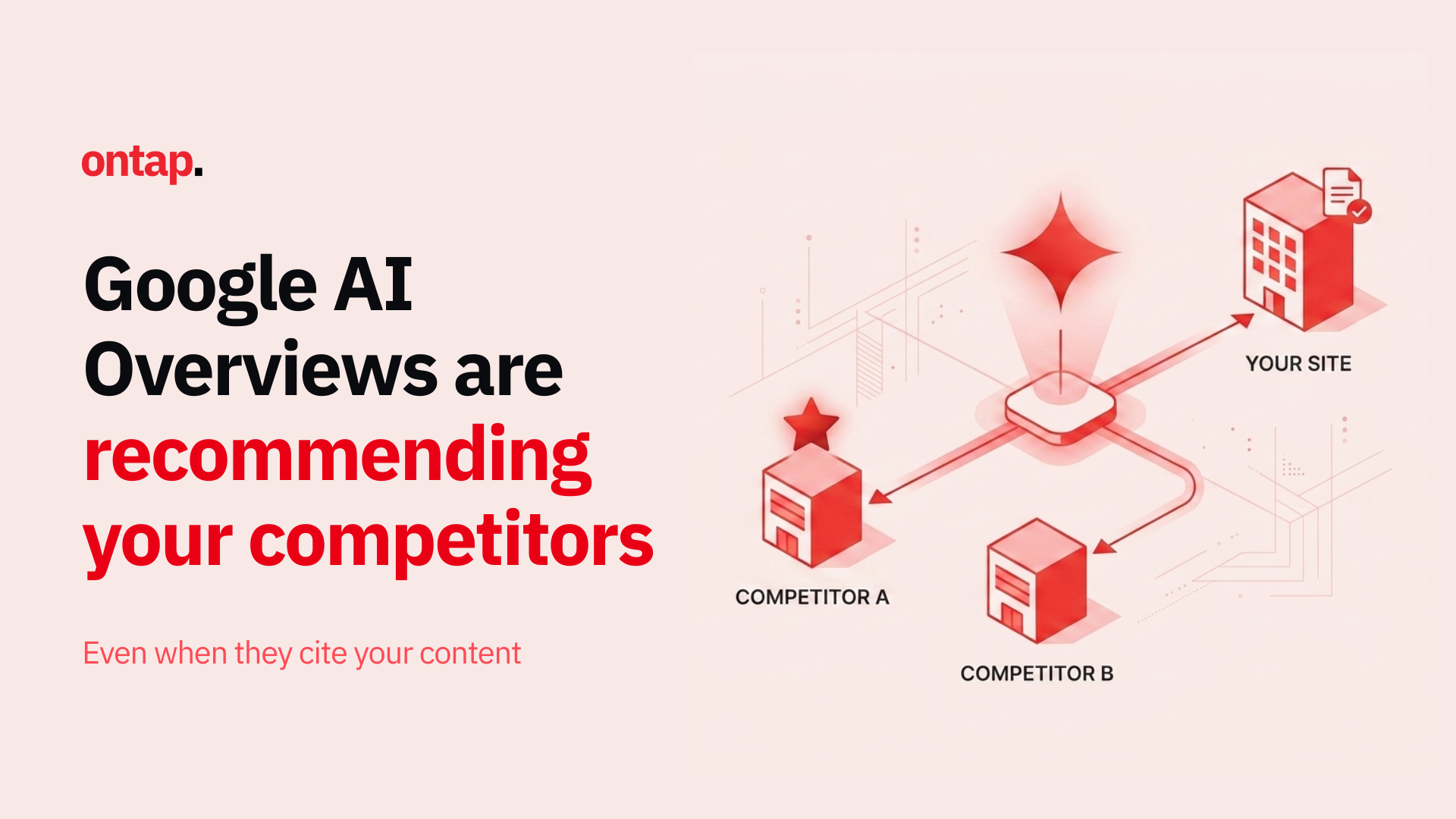
This finding has a significant competitive implication that eCommerce brands should not ignore. Brands with established editorial footprints, those that have historically invested in PR, media relationships, and review cultivation, have a structural advantage in AI visibility that newer or less well-known brands cannot quickly replicate.
If you are a challenger brand trying to compete with established players in AI shopping recommendations, the experiments suggest that your product page optimisation matters less than your brand's presence across the third-party sources that AI models trust. Closing that gap requires sustained investment in earning mentions, reviews, and editorial coverage, not a quick technical fix.
The brands that understood this six months ago are already appearing in AI-generated shopping recommendations. The brands that understand it today still have time to build their mention footprint before the peak season queries that AI models will answer using the sources available to them right now.
About On Tap
On Tap is a growth-focused eCommerce consultancy helping mid-market and enterprise merchants build AI visibility strategies that go beyond owned content optimisation. From brand mention audits and editorial footprint analysis to product data architecture and GEO strategy, On Tap helps merchants earn the third-party presence that AI models actually recommend from.
If you want to understand your brand's current AI visibility surface and where the gaps are, get in touch.