
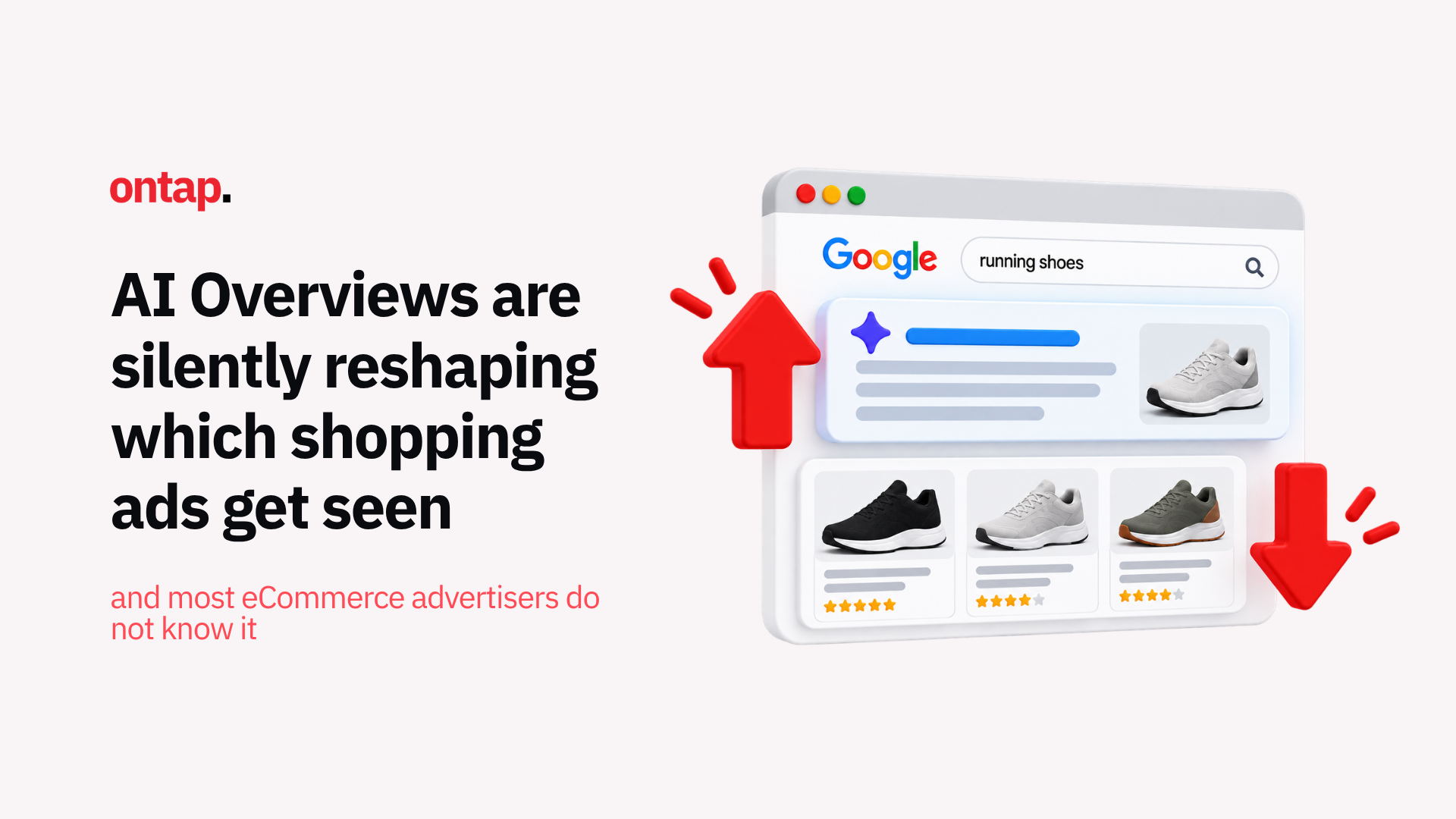
On 7 September 2026, Mike Ryan, Head of eCommerce at Smarter Ecommerce, published benchmark analysis that every eCommerce advertiser should be reading right now. As Search Engine Land reported, Shopping ad impressions per advertiser account fell from approximately 1.85 million in mid-2025 to approximately 1.4 million in mid-2026, a decline of roughly 25%. In the same period, median Shopping ad click-through rate rose from 1.20% to nearly 1.55%, an increase of approximately 20% year over year.
Your Shopping ads are getting fewer impressions but more clicks per impression. That sounds like an improvement. It is not. It is a SERP restructuring, and understanding what is driving it will change how you approach Q4 planning.
The mechanism: AI Overviews filtering out lower-intent queries
Ryan's reading of the data: Google is showing Shopping ads on fewer, higher-intent queries and serving AI Overviews on the lower-intent ones. When a shopper searches for an informational or comparative query that would previously have shown Shopping ads, AI Overviews now appear in their place. Ads are reserved for queries where purchase intent is clearer and more direct.
As Relevant Audience's analysis documents, the dataset behind Ryan's analysis covers thousands of Shopping and Performance Max campaigns across hundreds of advertiser accounts, with roughly 175 billion impressions tracked over a 12-month comparison period. The 1.4 million to 1.85 million figure represents the median across accounts, meaning the decline is systematic and widespread, not confined to specific categories or campaign types.
This is not a measurement anomaly. The AI Overview rollout on shopping queries has been dramatic: from 2.1% of shopping queries in November 2025 to 14% by March 2026, a 5.6x increase in four months, according to a Visibility Labs study of 20.9 million SERPs. And as Semrush's study of 600,000 keywords found, AI Overviews are appearing alongside Google Ads twice as often as they were a year ago, with a notable spike during the September-December 2025 holiday shopping season.
What this means for your ROAS calculations
The combination of fewer impressions and higher CTR creates a specific accounting problem for Shopping advertisers. Your ROAS may look unchanged or even slightly improved, because you are getting more clicks per impression and those clicks are higher-intent. But the total addressable query universe has shrunk. You are reaching fewer potential customers at the top of the funnel.
For performance marketers who plan Q4 budgets based on prior-year impression volumes, this creates a systematic over-estimation of available inventory. The queries that drove your Q4 impressions in 2025 may now trigger AI Overviews rather than ad-eligible SERPs. The same budget may deliver materially fewer impressions than prior-year data suggests.
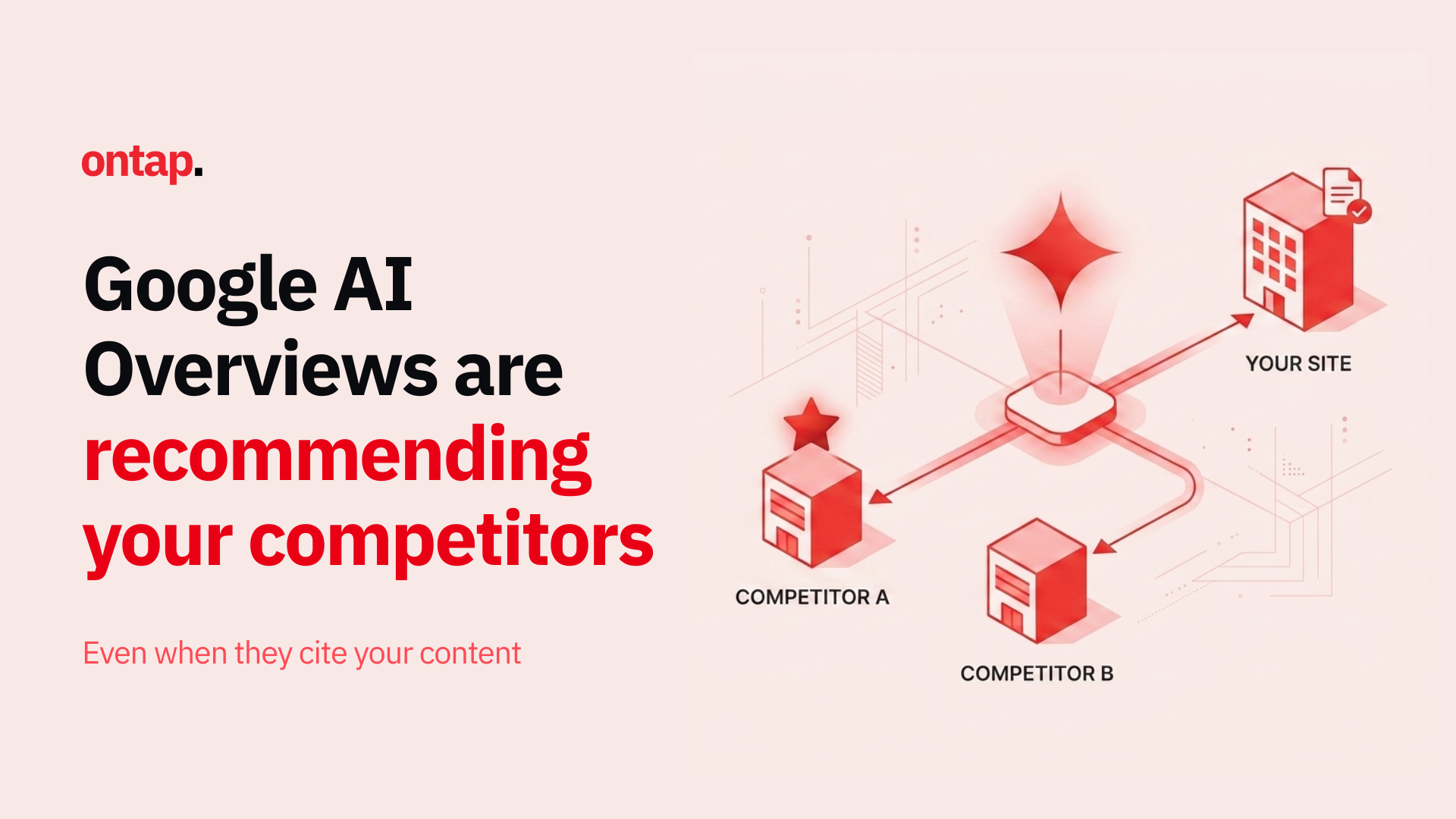
There is a second, more subtle consequence. AI Overviews on shopping queries function as competitive editorial content that appears above your ads. As we covered in August, when AI Overviews recommend competing products or reframe buyer intent before the shopper sees your ad, the ad's effective performance is reduced in ways that do not appear in impression or CTR data.
The high-intent query concentration
The corollary to impression decline is important: the impressions that remain are higher-quality. A Shopping ad that appears on a query where AI Overviews have filtered out lower-intent traffic is reaching a shopper with clearer purchase intent.
This means your Shopping ad creative, product titles, images, pricing, and review counts, matter more than they did 12 months ago. The queries reaching your ads have already survived one filter. These are buyers closer to a purchase decision. The quality of what they see when your ad appears has an outsized effect on whether they click and whether they convert.
What this means for peak season planning
The September spike in AI Overview coverage that Semrush documented in 2025 is likely to recur in 2026. If AI Overviews were appearing on 14% of shopping queries in March, the pre-holiday research surge may push that figure higher during September and October, exactly when your audience is beginning Q4 research.
For peak season advertisers, three specific adjustments matter.
-
Expect fewer impressions at the same spend: Plan your Q4 impression volumes based on trailing 90-day data, not prior-year data. The structural change in Shopping inventory is real and is not reverting.
-
Invest in product feed quality: Higher-intent queries reaching your ads are evaluating your product more carefully. Product titles, images, pricing, and review signals all carry more weight when the impressions are concentrated on high-intent searches.
-
Audit your AI Overview exposure on Shopping queries: Use Search Console's Search Type filter to identify which queries are generating AI Overview appearances alongside your ads. Understand which of your core shopping queries now trigger AI Overviews. These are queries where editorial content is influencing the customer before your ad appears.
The bigger picture
AI Overviews' impact on Shopping is a structural change in the paid search inventory available to eCommerce advertisers. The impression decline is real, the CTR improvement is a consequence of query-level filtering rather than creative performance improvement, and the effect is likely to intensify through peak season.
Advertisers who understand this will plan Q4 budgets and creative strategies accordingly. Those who assume their 2025 impression volumes represent the available 2026 inventory will discover the gap between their projections and their actuals in November, when there is no time to adjust.
About On Tap
On Tap is a growth-focused eCommerce consultancy helping mid-market and enterprise merchants navigate the intersection of paid search, AI visibility, and product discovery. From Shopping campaign audits and AI Overview exposure analysis to product feed optimisation and peak season media planning, On Tap helps merchants close the measurement gaps that are costing them revenue.
If you want to audit your Shopping campaign performance for AI Overview impact, get in touch.