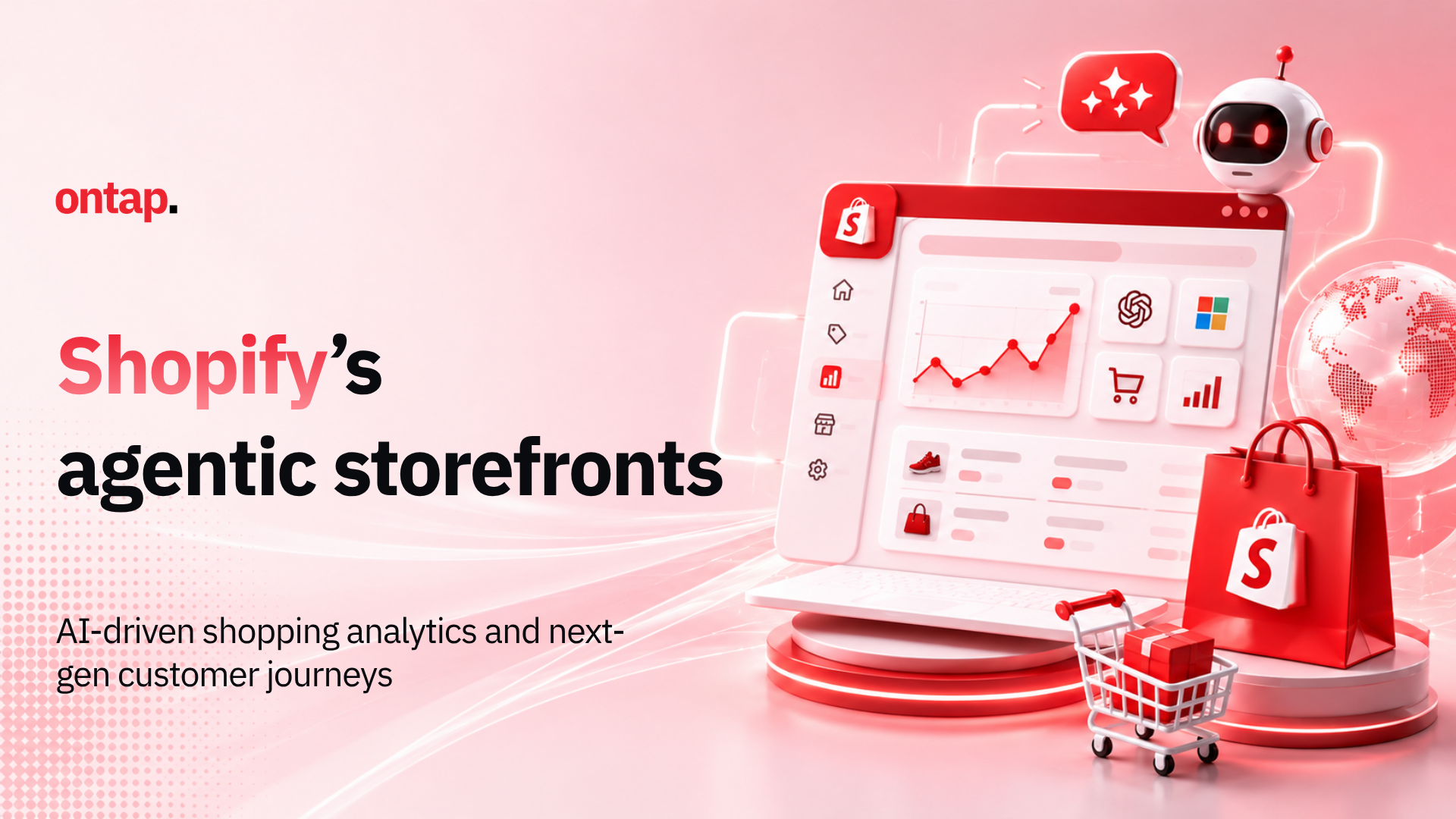

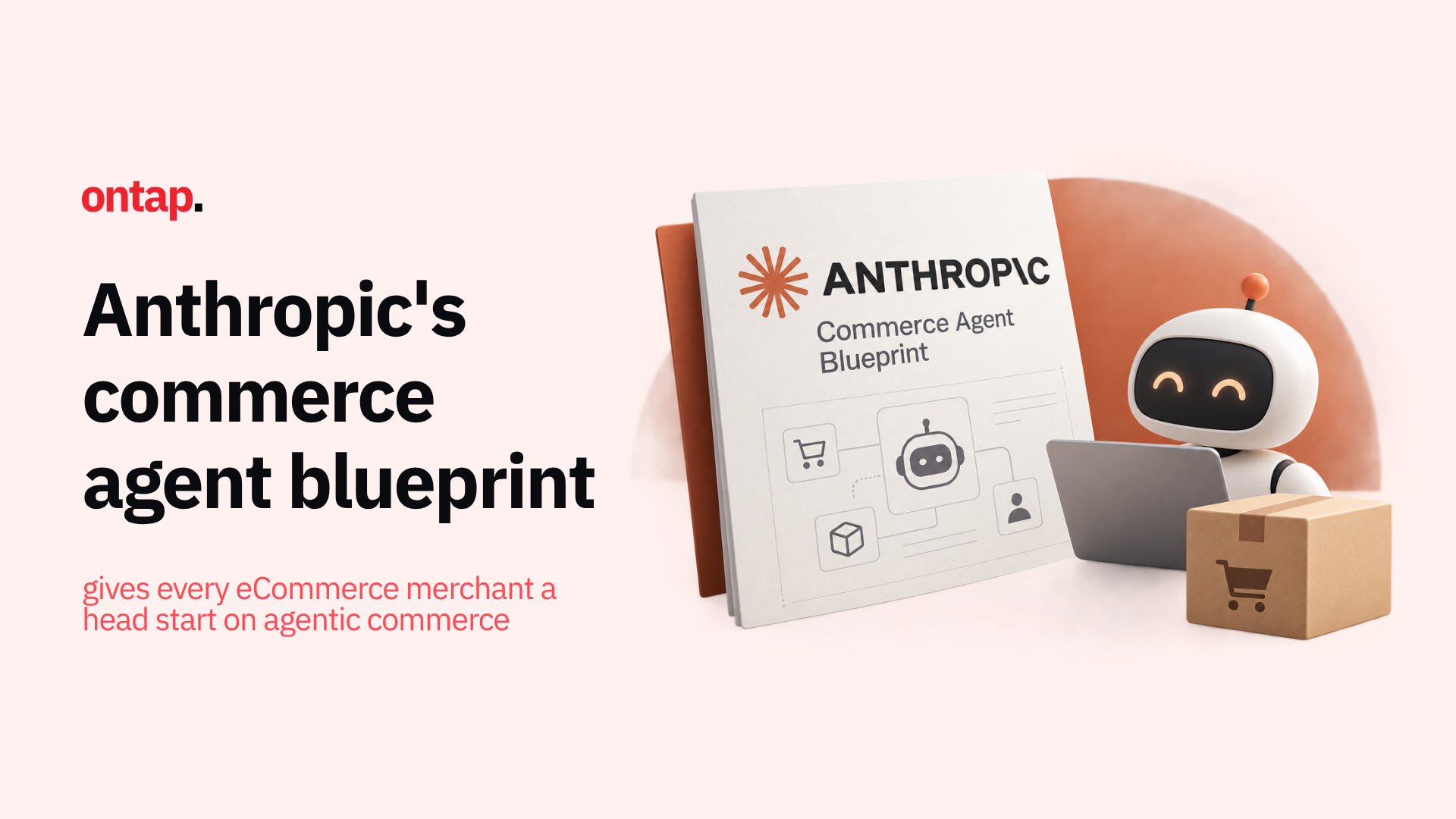
On 2 September 2026, Anthropic open-sourced Claude Commerce Agents, an Apache 2.0 reference blueprint containing a shopping agent, a merchant agent, and complete example implementations for retail, travel, telecom, and entertainment. Partners including Visa, Mastercard, Shopify, Priceline, and Accenture are already deploying it.
Anthropic's reported results are significant: retailers running shopping agents on Claude have seen carts up to 35% larger and shoppers 60% more likely to complete a purchase. But Anthropic was deliberate about what the blueprint does not include, and understanding those boundaries is as important as the capabilities themselves.
What the blueprint actually includes
The blueprint ships as two working agents.
-
The shopping agent searches a product catalogue, compares products, and builds a cart on the customer's behalf. Critically, it stops at the cart. As PaymentsJournal noted, "The customer still completes the transaction through the retailer's existing checkout, while the merchant retains control of payment and the broader shopping experience." The agent finds products and builds the cart. The shopper and the store's own checkout close the transaction.
-
The merchant agent works the back-end: analysing sales data, drafting product descriptions, pricing recommendations, and marketing campaigns, all for human approval before action. No autonomous pricing changes. No unilateral inventory decisions.
The blueprint includes guardrails that tie product and pricing recommendations to catalogue data and are explicitly designed to prevent manipulative upselling. As MarkTechPost's technical analysis notes, the architecture separates end-to-end latency from perceived latency by streaming components as they form, and prompt caching can achieve 90-99% cache hit rates, cutting the cost of inference substantially.
What it does not include
Anthropic was deliberate about what the blueprint leaves out. As PYMNTS reported: "The blueprint carries no payment protocol, no checkout and no ad layer, leaving all of that to retailers and partners such as Visa and Mastercard."
No transaction routes through Anthropic. No product catalogue is hosted by Anthropic. No advertising layer exists within the blueprint. These are architectural choices, not limitations. Anthropic is providing the intelligence layer and leaving the commerce infrastructure with the merchant, which is where it should stay.
For eCommerce merchants, this boundary is important. The shopping agent is only as good as the product catalogue it has access to. Anthropic provides the reasoning. You provide the data.
Why product data quality is the determining variable
The 35% larger carts and 60% higher completion rates are Anthropic's reported figures from early deployments. They are not guaranteed outcomes. The quality of the shopping agent experience depends entirely on the richness and accuracy of the product data it works with.
An agent that searches a catalogue with thin product descriptions, missing attributes, inconsistent categorisation, and outdated inventory will produce recommendations that do not match what customers want. Customers who experience an unhelpful agent will not convert better. They will convert worse.
This is the same principle behind every AI-powered discovery tool: the algorithm is only as good as the inputs. Invest in your product data before investing in the agent layer.
The scale asymmetry Anthropic is betting on
As PYMNTS noted, Claude AI reached 107.6 million unique web visitors in July 2026, up from 25.3 million in January. That is impressive growth, but it remains well below ChatGPT's 469.1 million and Gemini's 302.2 million. Merchant embedding lets Anthropic reach shoppers through other companies' distribution at a scale it cannot yet achieve directly.
This creates an alignment of incentives that should give merchants confidence. Anthropic's strategy depends on Claude becoming the AI layer inside successful eCommerce experiences. They have every reason to make the blueprint work well.
What eCommerce merchants should do
-
Read the blueprint. The GitHub repository is public and Apache 2.0 licensed. Even if you are not ready to deploy an AI shopping agent, understanding the architecture gives you context for every AI commerce conversation you will have over the next 12 months.
-
Assess your product data readiness. The blueprint assumes clean, structured, attribute-rich product data. Audit your catalogue against that standard before evaluating any AI shopping agent technology. This investment improves your performance across every discovery channel, not just agentic commerce.
-
Start with the merchant agent. The back-office merchant agent, handling sales analysis, product description drafting, and pricing recommendations, requires less customer-facing infrastructure and carries lower risk. It is the right starting point for merchants who want to develop AI capabilities without exposing customers to early-stage experiences.
-
Evaluate your checkout handoff. The shopping agent builds the cart and hands off to your existing checkout. This means your checkout completion rate becomes the limiting factor in the agent's conversion performance. Any improvements you make to checkout before deploying an agent amplify the agent's results.
The bigger picture
Anthropic's commerce agent blueprint is the clearest public articulation yet of what functional agentic commerce looks like in 2026. It is not science fiction. It is Apache 2.0 code that Shopify and Priceline are already running in production.
The hard part, the part that determines whether the reported results materialise for any given merchant, is product data quality, checkout performance, and the operational discipline to evaluate and deploy AI capabilities methodically rather than reactively. Anthropic has done its part. The rest is yours.
About On Tap
On Tap is a growth-focused eCommerce consultancy helping mid-market and enterprise merchants build the product data foundations and AI readiness that translate agentic commerce blueprints into measurable commercial results. From catalogue enrichment and AI readiness assessments to checkout optimisation and technology partner evaluation, On Tap helps merchants close the gap between capability and deployment.
If you want to understand where Anthropic's commerce agent blueprint fits in your roadmap, get in touch.