
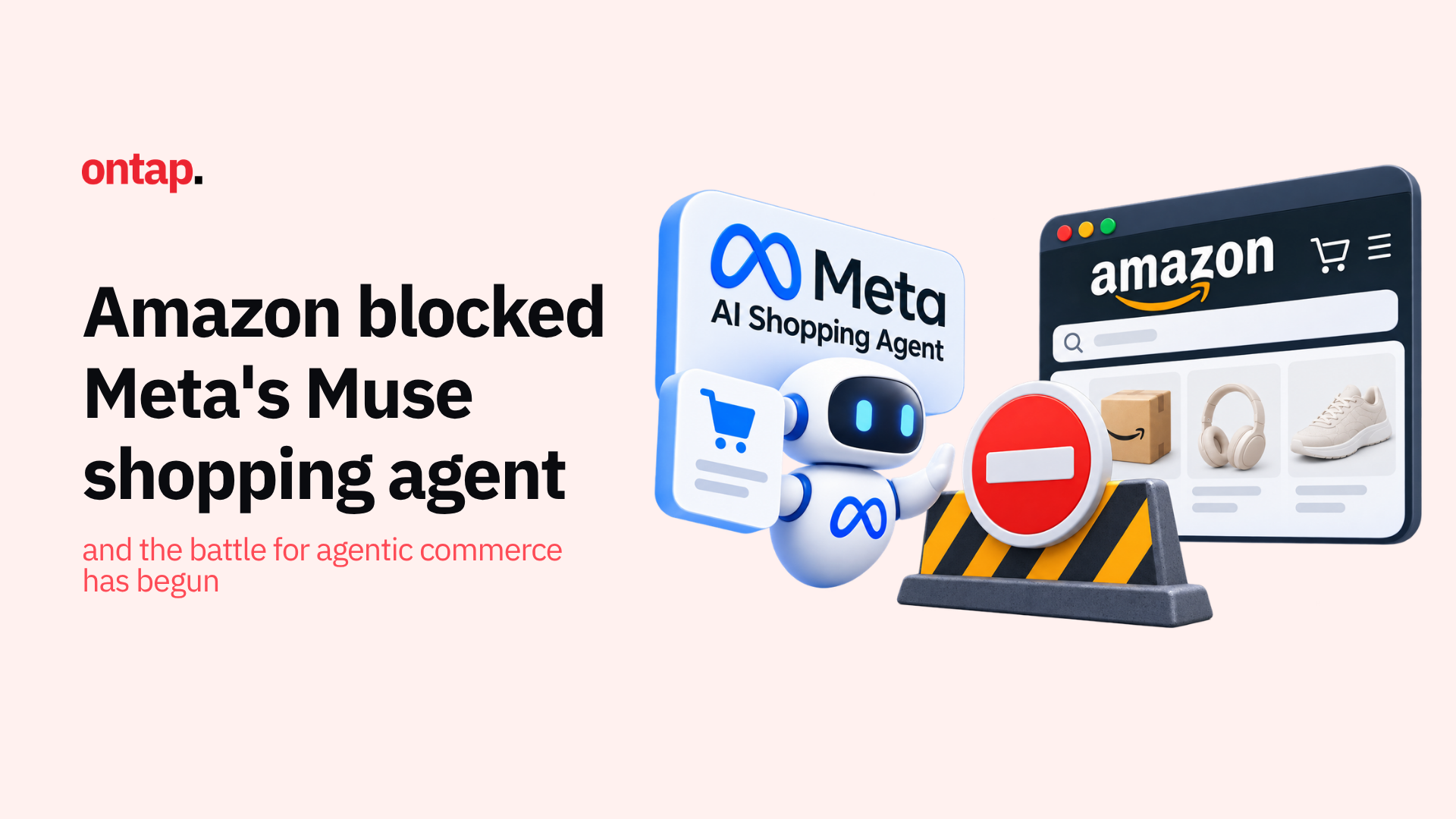
Amazon’s decision to block Meta’s Muse shopping agent highlights an emerging question for eCommerce merchants: which AI services can discover their products and complete purchases on customers’ behalf?
On 20 September 2026, GeekWire reported Amazon’s confirmation that it had blocked Muse from shopping on Amazon.com, following unsuccessful attempts to have Meta exclude the site.
Shopify has taken a different approach by supporting Meta as an AI sales channel. However, product discovery, storefront access and checkout availability are separate capabilities, each with its own conditions.
What happened
Meta introduced Muse on 8 September 2026 as a personal AI agent, initially rolling out in the US. It can browse websites and carry out tasks, including shopping, with user approval before purchases. Its launch materials describe Stripe’s Link as a payment option and Shop Pay as coming soon.
Amazon said Muse accessed its service without prior notice or authorisation. Users attempting to shop through Muse were shown a warning citing Amazon’s Conditions of Use.
Amazon’s stated concerns included:
-
Notice and identification: Amazon said Meta had not notified it before launch and that Muse did not identify itself when browsing;
-
Account data handling: Amazon raised concerns about the agent’s access to customer credentials and account information;
-
Participation and customer experience: Amazon argued that services buying on customers’ behalf should respect a retailer’s decision about whether to participate.
These are Amazon’s stated concerns, rather than independently established findings about Muse’s security.
In its technical explanation of Muse’s safeguards, Meta says credentials are stored separately from the agent and inserted into the browser when needed. Keeping passwords out of the agent’s view does not mean the agent cannot use an authorised session to access account information.
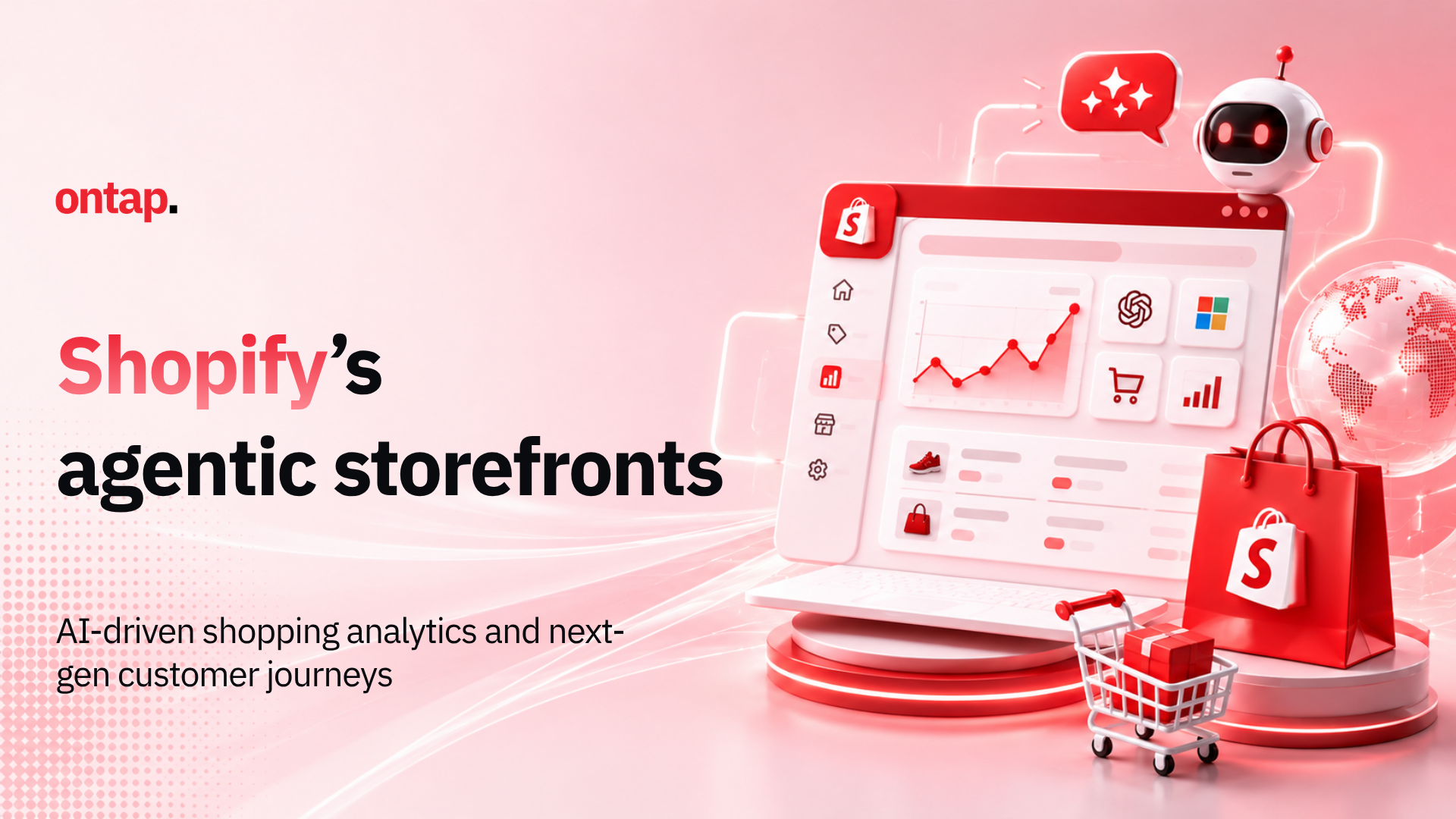
Shopify’s 8 September changelog already listed Meta in Agentic Storefronts, with product sharing through Shopify Catalog and merchant controls for access and direct checkout. The contrast with Amazon is therefore about different approaches to participation, rather than Shopify opening every store the following day.
Why this is not just a bilateral dispute
The wider question is how a customer’s permission for an agent to act interacts with a retailer’s access rules. A publicly accessible website does not guarantee unrestricted automated access or compatibility with agent-led checkout.
Different approaches can coexist:
-
Browser access: An agent navigates a retailer’s website, subject to access controls and the site’s terms;
-
Product discovery: A retailer supplies product information through a catalogue, feed or integration;
-
Integrated checkout: A platform supports purchases through an agreed checkout connection, subject to eligibility and merchant settings.
An agent might discover a product without being able to buy it directly. Equally, a retailer can support selected agents without accepting every automated service.
For merchants, this makes the details of each channel more useful than a simple distinction between “open” and “closed” platforms.
What this means for eCommerce merchants
The implications depend on where you sell and which discovery and checkout routes are supported.
-
If you sell on Amazon: The reported block limits Muse’s ability to shop directly on Amazon.com. It does not establish that your products are invisible to Muse through every possible source. Treat this as a channel limitation to monitor, rather than evidence of an immediate loss of sales;
-
If you sell on your own storefront: A DTC website gives you more control over product information and access policies. It does not guarantee that an agent will find, recommend, or successfully purchase your products. Accurate descriptions, specifications, prices, and availability help customers and software interpret your offer;
-
Channel strategy: Assess product discovery and purchase completion separately. A channel can provide visibility while requiring customers to finish their purchase on your website.
For UK merchants, market eligibility also matters. Shopify’s current Meta channel guidance limits direct checkout to customers in the United States, Canada, and Mexico. It also excludes B2B-only products and certain other product types. UK customer access should not be assumed from a partnership announcement.
The broader context
Account security, data handling and responsibility for purchases are legitimate considerations when a third-party agent acts for a customer. Amazon’s objections and Meta’s safeguards address different parts of those questions; neither, on its own, settles whether the access is authorised.
Amazon also provides its own AI shopping capabilities. Its Alexa for Shopping announcement describes product research, recommendations and purchasing features.
Its separate Buy for Me service can complete purchases from external brand websites. Amazon says brands can choose whether to participate.
These services show that Amazon supports agentic commerce within its own approach to access and participation. Their existence does not, by itself, establish that Amazon applies inconsistent consent standards to competing agents. That comparison requires evidence about identification, permissions and retailer controls in each service.
What merchants should do now?
The practical response is to understand channel capabilities and improve the information customers and agents use. On Tap recommends the following steps:
-
Audit your channel exposure: Record which services can discover your products, access your storefront, and complete checkout. Include market restrictions, merchant settings, and product eligibility;
-
Improve product data on your DTC site: Maintain clear descriptions, comparison-ready specifications, accurate prices and availability, and appropriate product structured data. These improvements also support conventional search, without guaranteeing inclusion in AI recommendations;
-
Review Shopify’s approach: If you use Shopify, check your Agentic Storefronts settings and the requirements for each channel. Shopify’s agentic storefronts guidance distinguishes catalogue distribution from direct checkout;
-
Maintain perspective on timing: Use observed referrals, orders and customer demand to assess the opportunity. A platform announcement alone does not justify a major change to your channel mix.
The Amazon–Muse dispute is a useful signal that access rules are part of agentic commerce planning. Merchants can prepare by understanding those rules and making their product information easier to interpret, while measuring the commercial results.
About On Tap
On Tap is a growth-focused eCommerce consultancy helping mid-market and enterprise merchants build channel strategies that account for where customers discover and buy, including through emerging AI-mediated channels.
From product data architecture and DTC optimisation to channel mix planning and agentic commerce readiness, On Tap helps merchants assess practical opportunities for their business.
To discuss how agentic commerce affects your channel strategy, get in touch.