
Optimising customer experience in B2B eCommerce is an ongoing challenge, driven by the intricate nature of B2B purchasing processes that involve multiple stakeholders and extended decision cycles. This complexity is heightened as B2B customer interactions increasingly shift online, making it essential to deliver a seamless and value-driven digital experience for long-term retention and growth.
In this guide, we will break down actionable strategies for enhancing the B2B experience across all 5 phases of the eCommerce customer journey: Discovery, Onboarding, Purchase, Post-purchase and Advocacy. It also examines real-life case studies and key metrics to measure the impact of these enhancements. By the end, you will be equipped with a comprehensive understanding of essential strategies to optimise your B2B customer experience in eCommerce, ready for immediate implementation within your business.
What is B2B customer experience?
B2B customer experience (CX) refers to the cumulative impact of all interactions and experiences between a business and its business customers, spanning every touchpoint across the entire eCommerce customer journey. Unlike B2C, B2B CX involves multiple stakeholders within the client organisation, longer sales cycles, and more complex decision-making processes. For example, a B2B customer experience in eCommerce may involve a procurement officer browsing a tailored catalogue, a finance manager approving the purchase with bulk ordering and a warehouse lead tracking shipments. Each of these touchpoints contributes to the overall customer experience and is often hard to find in a typical B2C experience.
4 reasons why B2B customer experience management is important
Investing in B2B customer experience is a strategic necessity as it directly impacts a company’s financial performance and long-term viability. By managing a strong customer experience in B2B, businesses can yield several key benefits:
-
Direct revenue impact: Delivering a smooth, user-friendly experience increases the likelihood that customers will choose your company and complete high-volume transactions, resulting in greater revenue efficiency.
-
Fostering loyalty and reducing churn rates: When customers consistently feel valued and supported throughout their journey, they are more likely to maintain long-term relationships, recommend your brand to others, and continue partnering with your business over competitors. This stable customer base forms the foundation for sustainable business growth.
-
Improving brand reputation: A positive customer experience also naturally enhances a brand's reputation, cultivating trust and credibility within the industry. This builds a strong, reliable image that attracts new business and retains existing clients.
-
Achieving brand differentiation: Delivering an exceptional customer experience serves as a powerful differentiator, enabling a brand to distinguish itself from its rivals in today's increasingly crowded B2B market.
The evolving trend of B2B customer experience
The future of B2B customer experience is poised for a dramatic transformation, primarily driven by technological innovations such as AI and remote interaction trends. For B2B businesses to remain competitive and foster strong customer relationships, understanding these evolving trends is crucial for preparing for and adapting to change. Let's explore the significant shifts anticipated in B2B customer behaviour.
-
Growing embrace of self-service and remote engagement: According to McKinsey, a significant 70% of B2B decision-makers are now open to new, fully self-serve or remote purchases exceeding $50,000, with a notable 27% willing to spend over $500,000 through these channels. This substantial trend highlights a decreased reliance on traditional in-person sales. Consequently, businesses must prioritise developing seamless and intuitive online B2B customer experiences to meet this growing demand for digital interaction.
-
Higher demand for responsive customer service: The widespread adoption of advanced tools, including AI-powered chatbots, virtual assistants, combined with the continued presence of dedicated business consultation teams, has fundamentally elevated B2B customer expectations for service. Customers now anticipate fast, professional, and highly effective problem-solving capabilities, accessible precisely when and where they are needed. This necessitates a robust and agile customer service infrastructure that can deliver on these demands.
For strategic advice on building your support systems and consultant-led service touchpoints, On Tap's eCommerce consultancy service is here to help.
-
Increase in hyper-personalisation: The rapid evolution of AI is fuelling a strong need for highly personalised experiences within the B2B landscape. AI's ability to analyse vast amounts of data on customer behaviour, preferences, historical interactions, budget constraints, and navigation of approval workflows allows businesses to deliver remarkably relevant content, product recommendations, and support. This level of customisation is especially critical for B2B customer, as their primary goal is time-saving efficiency. They need to quickly identify the most suitable products, access solutions that closely match their business-specific requirements, or receive immediate, targeted support on the website. As a result, B2B companies should embed this capability into their digital storefronts.

The complete guide to B2B customer experience strategies through 5 phases of the customer journey
In the following sections, we'll explore key best practices to enhance customer experience throughout each phase of the B2B customer journey. This journey consists of 5 core phases: Discovery, Onboard, Purchase, Post-Purchase, and Advocacy. Each phase features targeted strategies tailored with a strong emphasis on key customer touchpoints across the eCommerce site. These strategies are universally applicable and aim to create seamless, value-driven experiences for every B2B customer. Let’s dive in!
Strengthening first impressions strategies in the discovery phase
The discovery phase is where new customers, who are unfamiliar with the brand, actively research, validate potential vendors, shortlist options, and often reach out for consultations. At this point, their primary objective is to gather comprehensive, trustworthy and aligned information that enables them to make well-informed decisions to choose the right partner.
Beyond acquiring new customers, businesses must also cater to existing, traditional customers. These customers are familiar with your company but still rely on conventional ordering methods, such as phone calls and manual processes. While they are past the brand discovery phase, they are currently discovering your eCommerce site as they transition online. Therefore, businesses should not overlook this segment when designing the online experience. The strategies below offer actionable guidance for both types of customers.
Creating an intuitive experience for new customers
For new customers, visiting your website is much like having the red carpet rolled out for their first interaction with the brand. Your website must deliver an obvious, intuitive and welcoming digital environment. This includes:
-
Intuitive navigation: The menu and website pages should facilitate straightforward interactions, requiring minimal clicks and eliminating confusion. The goal is a smooth, self-guided experience from the moment they land on your site.
-
Mobile responsiveness: Your digital store must offer a seamless and optimised experience across all devices, from desktops to tablets and smartphones. This is especially critical for B2B professionals on the go as it allows them to access essential information, place orders, or check account status from any location. In fact, Google data shows 91% growth in B2B researchers using mobile devices throughout the purchase journey, highlighting their growing reliance on mobile.
-
Clear product content: Businesses should also invest substantial time and resources in developing thorough, engaging, and easy-to-consume product content. This includes high-quality images and videos, detailed product descriptions, the integration of customer reviews to aid decision-making, and comprehensive documentation essential for B2B, such as white papers, compliance certifications, case studies, and testimonials from other businesses. This content should be displayed on the website: easy to locate, easy to read, aligned with customer browsing behaviour, and available for download for convenient access.
Addressing digital adoption concerns for existing customers
For existing customers who are familiar with traditional ordering methods, transitioning from phone calls or manual order processing to using your eCommerce platform can be challenging. To facilitate a seamless shift, businesses must implement critical changes that support both the internal team and customers:
-
For the internal team: A key barrier to digital transformation for a company's internal team is the fear of underperforming against KPIs during the transition. To alleviate this concern, businesses should educate employees that transitioning online offers effective new ways of working, opening up more benefits such as increased order volume or the ease of tracking user behaviour, which will help them meet their KPIs. Additionally, B2B companies should consider offering incentives to encourage adoption further. To ensure an effective consultation process, B2B companies must also provide these employees with comprehensive training in both knowledge and skills. As a result, it’s essential to establish a dedicated group responsible for overseeing the adoption process.
-
For traditional customers: Businesses can encourage them to adopt digital solutions by highlighting the advantages of digital adoption or offering incentives.
To explore more about driving customer adoption in B2B eCommerce, check out our blog for more details: Comprehensive guide to B2B customer adoption in the digital era.
Streamlining customer experience tips in the onboarding phase
The onboarding phase is the process of educating your customer through the early stages of using a product or service, typically occurring during the registration process when users create an account and try placing their first order on the website. At this stage, customers may be unfamiliar with your eCommerce platform portal, necessitating comprehensive guidance and robust support.
Additionally, given large-volume purchasing needs, B2B customers also seek assurance of a seamless and dependable process. Understanding these critical customer concerns is fundamental for businesses aiming to design an onboarding experience that is clear, detailed, and highly efficient. Below are some best practices for you to follow.
Implementing digital tools for onboarding ease
-
Comprehensive self-service portals: Businesses should offer easily accessible, step-by-step guides, detailed FAQs, video tutorials, and a searchable knowledge base directly within the eCommerce site. This empowers customers with self-service options while ensuring support is readily available when needed.
-
Real-time support chatbot: To enhance customer experience and operational efficiency, businesses are advised to deploy an AI-powered chatbot that provides instant, 24/7 real-time assistance. This chatbot can efficiently handle common inquiries and resolve basic issues. This significantly reduces the workload on business consultant teams, enabling them to focus on more complex and high-value customer interactions.
-
Automation process: Businesses can leverage automated email sequences to deliver crucial information to customers at key stages of their onboarding journey. This includes welcome messages, incentives or discount offers for first-time orders, reminders for training sessions, and helpful tips for using portal features. Beyond email, automation tools can handle the scheduling of onboarding activities, including webinars, one-on-one training sessions, and check-in calls.
-
Trial orders & pilot programs: To foster greater confidence and mitigate perceived risk, businesses should consider enabling customers to engage in small, guided trial orders or structured pilot programs. This familiarises them with the platform's ordering process, logistics, and capabilities without significant commitment.
To explore the B2B customer onboarding process in greater detail, check out our blog for more insights: 5 best B2B customer onboarding practices and 6 tips for eCommerce businesses.
Leverage business consultant support
Beyond the effective utilisation of digital tools, the role of a business consultant remains crucial in this phase, as B2B processes are often complex. Therefore, businesses still need a consultant on standby to handle tasks that require specialist expertise, human flexibility and judgment. Having such dedicated support becomes even more critical during the transition period when customers are still unfamiliar with the processes and have yet to become comfortable using self-support tools on the eCommerce site. B2B companies must continue to prioritise the following aspects:
-
Throughout consultant assistance: Consultants need to assist customers throughout their entire journey, from addressing pain points in transitioning to digital commerce to account setup and management, ordering, payment, post-purchase order tracking, and long-term subscription registration. They also proactively address complex concerns to ensure a hassle-free digital experience from the very beginning.
-
Personalised guidance: When guiding customers, consultants should tailor their approach to each B2B client, as every business often has unique requirements for ordering and workflows. Consultants must remain flexible and adapt their support to each specific situation.
Optimising conversion and value best practices in the purchase phase
The B2B purchase phase demands a level of sophistication rarely seen in B2C transactions. Unlike individual consumers, business customers require highly tailored experiences, often encompassing personalised pricing structures, flexible payment terms, and clear workflows. The following key strategies are designed to help you deliver a truly seamless and personalised purchasing experience that meets these elevated B2B expectations.
Enhancing personalisation in product selection
- Tailored B2B catalogue and product recommendation: This involves dynamically displaying product catalogues that are specifically curated based on a customer's industry or their specific contractual needs. Businesses can leverage AI technology to ensure these recommendations are as precise and relevant as possible.
- Customised pricing: In high-volume B2B transactions, businesses need to offer tailored pricing, such as tiered pricing, contract-based rates, or volume-based discounts. These strategies should be flexible enough to meet customer-specific needs and clearly displayed on the eCommerce product page for easy reference and transparency.
Expanding flexibility in cart options
- Account management customisation: Businesses can implement robust support for permission-based access levels, aligning with different organisational roles and responsibilities of the B2B customers. For example, procurement executives might be empowered to add items to their cart, modify quantities, and select payment methods. Meanwhile, procurement managers would hold the ultimate authority to approve final purchases.
- Flexible B2B subscription management: Businesses should enable easy adjustments of quantities, changes in delivery frequencies, pausing and resuming subscriptions, upgrading and downgrading plans, or modifying billing details.
Reinforcing confidence in checkout
-
Streamlined and optimised checkout process: Businesses should prioritise reducing friction in the B2B checkout process by offering quick-order options, such as on-page checkout and single-click reorders. For added security and to manage the typically large and complex B2B orders, it's recommended for businesses to incorporate pop-up windows at each step to confirm the customer's receipt of information and email.
-
Transparent pricing and order calculations: 44% of B2B customers stated that B2B eCommerce checkouts need greater transparency around shipping costs and additional fees. It is therefore crucial to clearly and proactively communicate accurate pricing, applicable taxes, and all fulfilment-related expenses upfront. This level of transparency helps prevent unexpected charges that could lead to cart abandonment, especially given the typically high order values in B2B transactions.
-
Flexible payment options: B2B companies often need to offer a variety of payment options, including ACH transfers, credit/debit cards, and wire transfers. Businesses can also offer flexible payment terms, such as partial upfront deposits, payment upon delivery, or deferred schedules like Net 30 or Net 60, allowing customers to choose the option that best fits their needs.
-
Detailed delivery information and real-time tracking: The checkout process should clearly display the shipping provider, estimated delivery dates at the point of purchase, and the latest possible delivery time in case of potential delays. This allows customers to plan proactively around expected arrival times. It is crucial in B2B contexts, where even a slight delay can impact multiple stakeholders across the supply chain.
Ensuring satisfaction and support in the post-purchase phase
While order placement marks a transaction, the profound opportunity to solidify B2B customer relationships lies in the post-purchase phase. At this stage, businesses should focus on delivering complete transparency and leveraging customer feedback for continuous improvement. Here are key strategic areas to enhance the post-purchase experience:
- Proactive value delivery: Proactively informing customers about product updates, recalls, or service interruptions as soon as possible is a must. To avoid information overload, businesses should streamline their communication channels by combining multiple departmental messages into a single, clear external newsletter while also ensuring consistent messaging is delivered through business consultants.
- Robust self-service capabilities: Providing comprehensive self-service functionality is a strategic advantage in B2B, considering “the evolving trend of B2B customer experience” that we discussed above. A B2B independent portal will empower customers to manage orders, track shipments in real-time, access invoices, and update their account information. By allowing customers independent control over common information, businesses can streamline operations and cultivate a more proactive and empowered client base.
- Systematic collection & centralisation of feedback: Businesses should implement robust mechanisms to collect customer feedback via surveys, comment cards, online reviews, and direct interviews. The insights gathered are invaluable for identifying evolving requirements and pinpointing pain points experienced by B2B customers at different stages of their journey.
- Advanced data analysis for actionable insights: While collecting customer feedback is foundational, the genuine strategic advantage emerges from analysing this data to reveal hidden patterns and prioritise crucial insights. Leveraging advanced analytics and AI tools enables businesses to process immense volumes of feedback efficiently, detect shifts in customers’ behaviour over time, and strategically prioritise issues according to their frequency, severity, and projected business impact. This sophisticated approach underpins truly data-driven enhancements to the customer experience.
Cultivating loyalty and growth strategies in the advocacy phase
The final stage of the B2B customer journey focuses on transforming satisfied clients into loyal advocates. This stage focuses on securing repeat business and nurturing strategic, long-term relationships that foster sustained mutual growth. To achieve this, companies should implement targeted strategies such as:
-
Discounts and rewards: Based on customers’ purchasing volume, length of relationship, and level of engagement, businesses can proactively offer escalating benefits, such as volume-based discounts, cashback programs, or access to specialised services.
-
Customer case studies and testimonials: For long-term B2B clients who have experienced positive results from the partnership, consider inviting them to participate in case studies or provide testimonials on the website. This not only showcases their success but also reinforces the collaborative nature of the relationship, while strengthening your brand’s credibility and trustworthiness.
Game-changing B2B customer experience case study
To better understand how the strategies discussed truly deliver results, the following section presents a successful case study of Brooklinen showcasing exceptional B2B customer experiences, specifically on online platforms. Let’s explore!
Challenge
Brooklinen revolutionised the bedding industry by offering luxury-quality sheets at accessible prices. Initially launched through a successful Kickstarter campaign, the brand quickly gained traction among millennials seeking quality bed linens online and expanded its product offerings to include towels, loungewear, and home accessories.
Following its success in the DTC business, the brand is now looking to scale its B2B operations. However, all B2B transactions are currently managed offline, requiring manual order placement via phone. This outdated and time-consuming process lacks personalisation, creates friction, and hinders scalability.
Solution
Recognising the need for change, Brooklinen revamped its B2B eCommerce customer experience across the customer journey.
Discovery phase
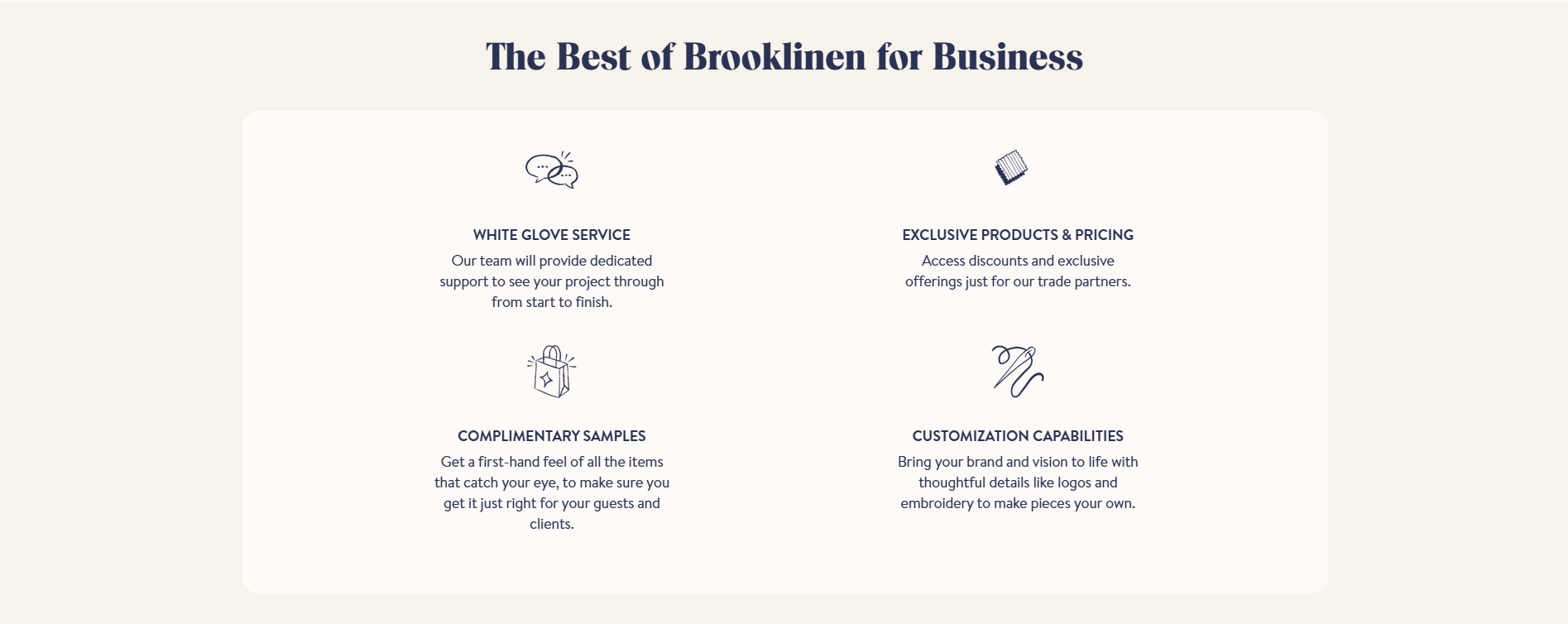
The first significant change was the launch of a dedicated B2B site for trade and hospitality clients. Having a separate site directly integrated into the eCommerce website allowed Brooklinen to shift customer behaviour, transitioning existing offline clients to online and attracting new ones. To ease this transition, they introduced a “White Glove Service,” a dedicated team that provides end-to-end support for B2B customers.
Onboarding phase
Brooklinen’s B2B site is as intuitive and user-friendly as their DTC experience, which made onboarding smooth and efficient. Throughout the onboarding process, customers also benefit from a dedicated consultation team, which is always available to assist with any steps or issues they may encounter.
Purchase phase
On the Brooklinen business site, B2B buyers can shop online with features tailored specifically for businesses. Key highlights include:
-
Exclusive pricing and products: B2B customers gain access to exclusive pricing across a wide range of products. Brooklinen has also introduced a specialised commercial-grade product line, available only on the B2B platform.
-
Streamlined checkout: Brooklinen offers flexible payment options, including credit card, PayPal, and ShopPay, allowing customers to choose between full payments or monthly instalments. A range of shipping options is also available to meet different operational needs, from expedited (1-2 business days) to standard delivery (4-10 business days). All pricing details and estimated shipping times are displayed at checkout, allowing customers to review everything carefully before completing their purchase.
With all these features, clients can easily place orders through the B2B site, enjoying preferred rates without the hassle of manual processes.
Post-purchase phase
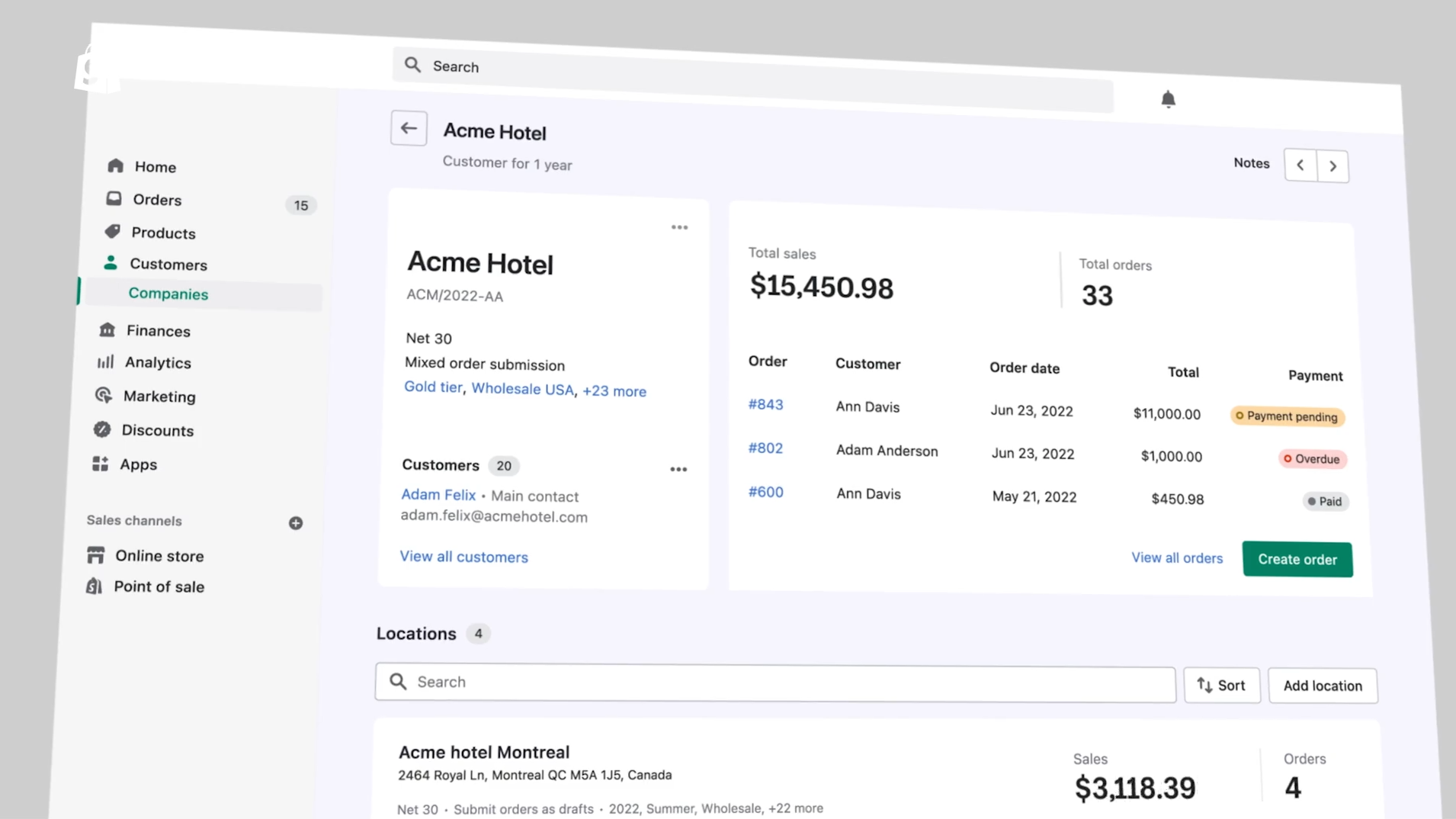
Once an order is placed, customers can receive order confirmations, shipping notifications, and track their order status directly through this portal. The B2B account also empowers customers to manage post-order activities independently, including viewing their order history, efficiently placing reorders, or submitting return requests.
Loyalty phase
To sustain the relationship, Brooklinen leverages its platform’s backend to monitor customer purchasing behaviour and automate follow-up communication. With access to comprehensive B2B data and the use of Klaviyo, an app that uses eCommerce data to create AI-driven segments and triggers, Brooklinen can enhance its outreach to business clients. This allows for personalised messages to retain customers, such as reorder reminder emails based on historical buying patterns. This data-driven approach marks a significant upgrade from the brand’s traditional, less trackable methods for B2B ones.
Results
With these strategies, Brooklinen experienced positive results on both the customer side and the business itself:
-
Empowered customers through self-service: The B2B eCommerce site enabled customers to manage their own accounts and orders, encouraging a more proactive and efficient buying experience.
-
Delivered a seamless, branded experience: B2B customers now enjoy the same intuitive and polished shopping experience as DTC buyers, making it easier and more appealing to purchase online.
-
Reclaimed time to focus on customers: Brooklinen was able to spend 80% more time engaging directly with customers instead of managing operational tasks by shifting to an online platform. This extra capacity enabled the business consultation team to apply their expertise more effectively, connect with customers on a deeper level, and deliver personalised solutions that enhanced the overall experience.
B2B customer experience metrics to measure
After implementing the strategies outlined above, it’s crucial to evaluate the effectiveness of your CX efforts. Measuring success through metrics and structured approaches not only helps assess performance and identify improvement areas but also demonstrates the return on investment (ROI) of your CX initiatives. Key metrics and methods to measure B2B customer experience for each customer journey include:
Lead rate
This is the percentage of customers who take a “lead” action (e.g. fill out a contact form, request a whitepaper, have a conversation with the business consultation team (applied for existing customers)
At the discovery stage, this rate is a key indicator of whether your eCommerce experience and outreach support are meeting expectations. If people aren’t converting, it may be time to assess how responsive and visible your support touchpoints are across the eCommerce site.
Activation rate
Activation rate is the percentage of new customers who complete a predefined set of “first-value” actions within a given time window (e.g. set up account, import information in the portal).
This metric plays a crucial role in the onboarding phase by indicating how effectively a business assists customers in getting started with the product or service. A high activation rate demonstrates that the process, whether through the website or business consultations, is easy to follow and that customers receive excellent guidance.
Win rate
Win rate represents the percentage of target accounts that successfully convert into paying customers.
During the purchase phase, this metric measures your business’s ability to close sales by delivering a smooth, hassle-free buying experience. A strong win rate suggests that customers appreciate the convenience of your offer, which includes competitive pricing, flexible payment methods, personalised accounts, and an easy-to-navigate purchasing process.
Customer Satisfaction Score (CSAT)
Customer Satisfaction Score (CSAT) measures how satisfied customers are with their overall experience with your business. It’s typically gathered through short surveys asking customers to rate their satisfaction on a scale (e.g., 1–5 or 1–10).
Right after a customer completes a purchase or goes through product rollout, it’s crucial to assess whether their expectations were met. A high CSAT score indicates that customers are generally pleased with your service delivery, responsiveness to support, and overall follow-through. This strengthens trust while playing a crucial role in increasing retention and fostering long-term loyalty.
Customer Lifetime Value (CLV)
Customer Lifetime Value (CLV) estimates the total revenue a business can expect from a single B2B customer account over the entire course of their relationship. This includes initial purchases, as well as repeat orders, upsells, and other related transactions.
CLV is a critical metric tied directly to customer retention and advocacy. The longer customers remain engaged and the more they advocate for the brand, the greater financial value they bring to the company. Maximising CLV is a core objective for sustainable B2B growth, as it quantifies the long-term financial impact of loyal customers.
Conclusion
This article has explored essential strategies to enhance the B2B customer experience across all 5 phases of the customer journey, from discovery to advocacy. Relevant B2B case studies and key metrics have also been highlighted to demonstrate the effectiveness of the tactics. By adopting these approaches and continuously monitoring performance, B2B organisations can design and refine their customer experience to be more personalised, convenient, and efficient, ultimately improving long-term customer retention and attracting more customers to the digital store.
To implement these initiatives effectively, businesses should partner with experienced B2B specialists like On Tap. As a member of the B2B eCommerce Association, On Tap offers comprehensive end-to-end eCommerce solutions, from expert consultation to customised development. Explore our B2B solutions and contact us today to get started with our team!