
What does a shopper do when your website shows them something irrelevant? They leave. In a market where 80% of consumers say they are more likely to buy from brands that personalize, a generic experience is no longer neutral; it actively costs you sales. This guide shows you exactly how to fix that: applying personalization across the customer journey to reduce drop-off, strengthen retention, and drive more revenue from the traffic you already have.
What is eCommerce personalization?
eCommerce personalization is the use of customer data, such as browsing behavior, purchase history, preferences, and real-time context, to automatically tailor shopping experiences, content, and offers across digital touchpoints, including websites, apps, email, and SMS.
Rather than serving a single static experience to every visitor, a personalized store dynamically adapts. Product recommendations shift based on what a shopper has viewed, banners change based on customer lifecycle stage, and email campaigns fire based on individual behavior rather than batch schedules.
Personalization vs. customization: What is the difference?
Personalization is driven by the system, which uses your data to automatically tailor the experience, while customization is driven by you, the shopper, who manually configures it to your own preferences. Effective personalization anticipates needs. Customization fulfills stated preferences. These two terms are often used interchangeably, but they mean very different things.
Personalization is system-driven and proactive. The store analyzes backend data and automatically delivers relevant suggestions, such as "Based on your recent views" product recommendations, without requiring any action from the shopper.
Customization is user-driven and reactive. The shopper actively configures their own experience, for example, building a custom laptop by selecting RAM, storage, and color options.
Why eCommerce personalization matters for modern online stores
Personalization is no longer a nice-to-have feature. It is a baseline expectation that, when met, drives compounding commercial results:
-
Conversion rate: A shopper who lands on your store and immediately sees products relevant to their interests, browsing history, or purchase patterns has far less work to do. There is no need to dig through irrelevant categories or wade through products that do not match their needs. Personalized recommendations, search results, and on-site content reduce that friction at every step, making it easier for the right shopper to find the right product and complete the purchase.
-
Average order value (AOV): Generic cross-sell widgets surface whatever happens to be popular. Personalized ones surface what that specific shopper is most likely to add to their basket, based on what they have browsed, bought before, or left behind in a previous session. The result is a higher rate of add-to-cart on complementary items, and a larger basket size, without relying on blanket discounts to drive it.
-
Customer lifetime value (CLTV): Retention is where personalization pays its biggest dividend over time. Customers who feel understood by a brand spend more, return more often, and are far less likely to switch to a competitor. A well-executed personalization strategy, from relevant product suggestions to loyalty rewards that reflect individual behaviour, removes friction at every touchpoint and replaces it with a shopping experience that feels effortless and worth coming back to.
-
Marketing efficiency: When you know who your customers are and what they are likely to want next, you stop spending budget on the wrong people at the wrong time. Personalized email campaigns, retargeting audiences built from behavioural data, and on-site promotions targeted to specific segments all deliver better returns from the same spend. Over time, that efficiency compounds: lower cost per acquisition, higher return on ad spend, and a smaller proportion of your budget wasted on low-intent traffic.
What you need before you start: Building the right foundation
Most personalization efforts fail not because of the wrong tools, but because of skipped fundamentals. Before selecting software or launching campaigns, three foundational steps will make everything downstream more effective.
Set your objectives first (before touching any stack)
Personalization without a goal is just noise. The most common trap is treating personalization as a feature to activate rather than a strategy tied to a measurable business outcome.
A specific, measurable personalization objective sounds like:
-
Increase the conversion rate of returning visitors from 2.1% to 3.0% within 90 days through personalized homepage content.
Need a benchmark to work from? Here is what a strong conversion rate looks like in 2026.
-
Reduce cart abandonment rate from 72% to 65% through personalized recovery emails triggered within one hour of abandonment.
-
Lift average order value for repeat buyers from £57 to £63 within 60 days by surfacing complementary product recommendations on the product detail page.
Skipping this step might seem like a shortcut, but it creates problems that are entirely predictable:
-
You optimize for activity (recommendations added, campaigns launched) rather than impact (conversion, revenue, retention).
-
You cannot prioritize which tactics to implement first when budget and bandwidth are limited.
-
You have no way to measure success or know when something is not working.
|
Practical worksheet Before building anything, answer:
|
Think in patterns, not individuals
The most common beginner misconception about eCommerce personalization is this: you need to show something different to every single user. It is understandable, but it is paralyzing and practically impossible to execute at the start.
Effective personalization begins with identifying behavioral patterns across groups of customers, not profiling individuals. When you find that customers who visit more than three product pages in a single session convert at four times the rate of single-page visitors, you can act on that pattern at scale without knowing anything about the individuals involved.
Think of personalization as a maturity ladder:
-
Segments (the right starting point): Broad groups defined by shared attributes, such as new visitors versus returning customers, email subscribers versus paid traffic, or high spenders versus one-time buyers.
-
Cohorts: Finer behavioral groups, for example, customers who purchased in the last 30 days, or visitors who abandoned a cart last week.
-
1:1 personalization: Fully individualized experiences powered by machine learning, typically achievable as data volume grows.
For most stores, the segment level is where they find the highest ROI fastest, and it is where you should start.
The good news is that you do not need to build sophisticated models to find meaningful patterns. There are four pattern types that every eCommerce store can identify today:
-
Intent-level patterns: Browsing depth, cart additions, search queries. These are the signals that separate browsers from buyers.
-
Customer lifecycle patterns: New visitor, first-time buyer, lapsed customer, loyal repeat buyer. Each stage calls for a different experience and a different message.
-
Product interest patterns: Category affinity built from browsing and purchase history, revealing what a shopper gravitates toward even before they have told you directly.
-
Traffic source patterns: Paid, organic, and email visitors often behave very differently and warrant distinct experiences.
Build your data foundation
Start with the data you already have
Most stores sit on more data than they realize. You do not need a Customer Data Platform (CDP) or a data science team to begin personalizing. The barrier to personalization is rarely a lack of information; it is knowing which data matters, what it tells you, and how to act on it. Before reaching for a new tool or platform, it is worth taking stock of what you already have.
Data broadly falls into five types, each unlocking a different layer of personalization.
-
Behavioral: Clicks, pages viewed, time on site, search queries, and scroll depth. Together, these paint a real-time picture of what a shopper is interested in at any given moment.
-
Transactional: Purchase history, order value, frequency, and product categories bought. Look here to understand spending patterns, identify your highest-value customers, and anticipate what someone is likely to buy next.
-
Contextual: Device type, location, time of day, and weather. These signals let you adapt the experience to the circumstances of the visit rather than serving identical content to everyone regardless of where they are or how they are browsing.
-
Demographic: Age, gender, and account details. Useful for shaping messaging tone, tailoring size and style guidance, and building audience segments for targeted campaigns.
-
Zero-party: Quiz answers, preference forms, and wishlist data. Unlike the other types, this is information the shopper has chosen to share directly, which makes it the most reliable signal of all and carries no risk of misinterpretation.
You do not need all five to start. Most stores can launch their first meaningful personalization initiative using behavioral and transactional data alone, both of which are available in your eCommerce platform and analytics tools from day one.
The identity problem: Where most stores fall short
The bigger challenge, and the one most stores underestimate, is identity. Anonymous tracking can tell you a great deal about what a visitor does during a single session, but the moment they leave, that context disappears. Building a persistent picture of each customer requires connecting on-site behaviour with email engagement, paid ad audiences, and CRM records over time. That connection only becomes possible once you know who the visitor is.
The most effective ways to capture identity early are often the simplest:
-
Account creation prompts: Offer an incentive such as early access or an exclusive discount at checkout or after a second session.
-
Email capture flows: Exit-intent or scroll-triggered overlays that offer value in exchange for an email address.
-
Loyalty programs: Membership identity is inherently tied to a persistent profile, linking every purchase and browsing session to a single known customer over time.
Once you have an identified user, you can connect their on-site behavior with email engagement, paid ad retargeting audiences, and CRM records. This creates a single customer view that makes every personalization tactic downstream more accurate and more profitable.
11 high-impact eCommerce personalization strategies
Below, we map specific tactics to the four objectives most eCommerce stores prioritize: increasing conversion rate, boosting AOV, reducing cart abandonment, and improving retention.
To increase conversion rate, start with these tactics:
Dynamic product recommendations
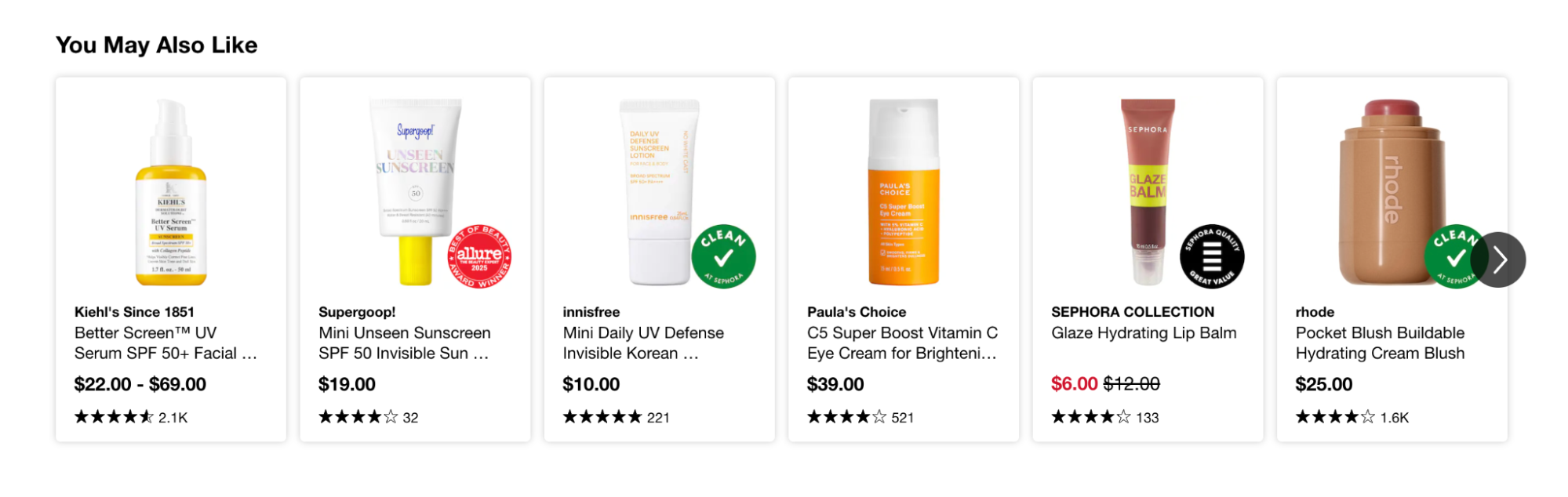
Product recommendations are one of the most widely used personalization tactics, and the revenue impact is well documented. Barilliance's 2023 research puts their average contribution at nearly a third of total eCommerce site revenues.
The key is matching the right algorithm to the right placement:
-
Customers who viewed X also bought Y: Best used for returning visitors, this collaborative filtering approach surfaces products with proven purchase affinity based on behaviour similar to theirs. For new visitors with no prior data, swap this for bestsellers and top-rated products to give first-time browsers a credible starting point.
-
Frequently bought together: Most effective on the product detail page (PDP), where purchase intent is highest. Pairing this with completing the look widgets increases basket size by surfacing complementary products at the moment a shopper is closest to committing.
-
You may also like: Well-suited to the cart and checkout stage, where low-risk complementary items such as accessories or consumables priced below the cart total can be added without disrupting the purchase flow.
-
Buy it again: An often overlooked placement, post-purchase recommendations target a customer at peak satisfaction. Replenishment reminders for consumable products and accessory suggestions for the item just bought are most effective here, when the shopper is most receptive to buying again.
Start with rules-based recommendations (manually curated frequently-bought-with links) before investing in a full machine learning engine. Placement and copy quality will often drive more lift than algorithm sophistication at the early stage.
Semantic and NLP-powered search
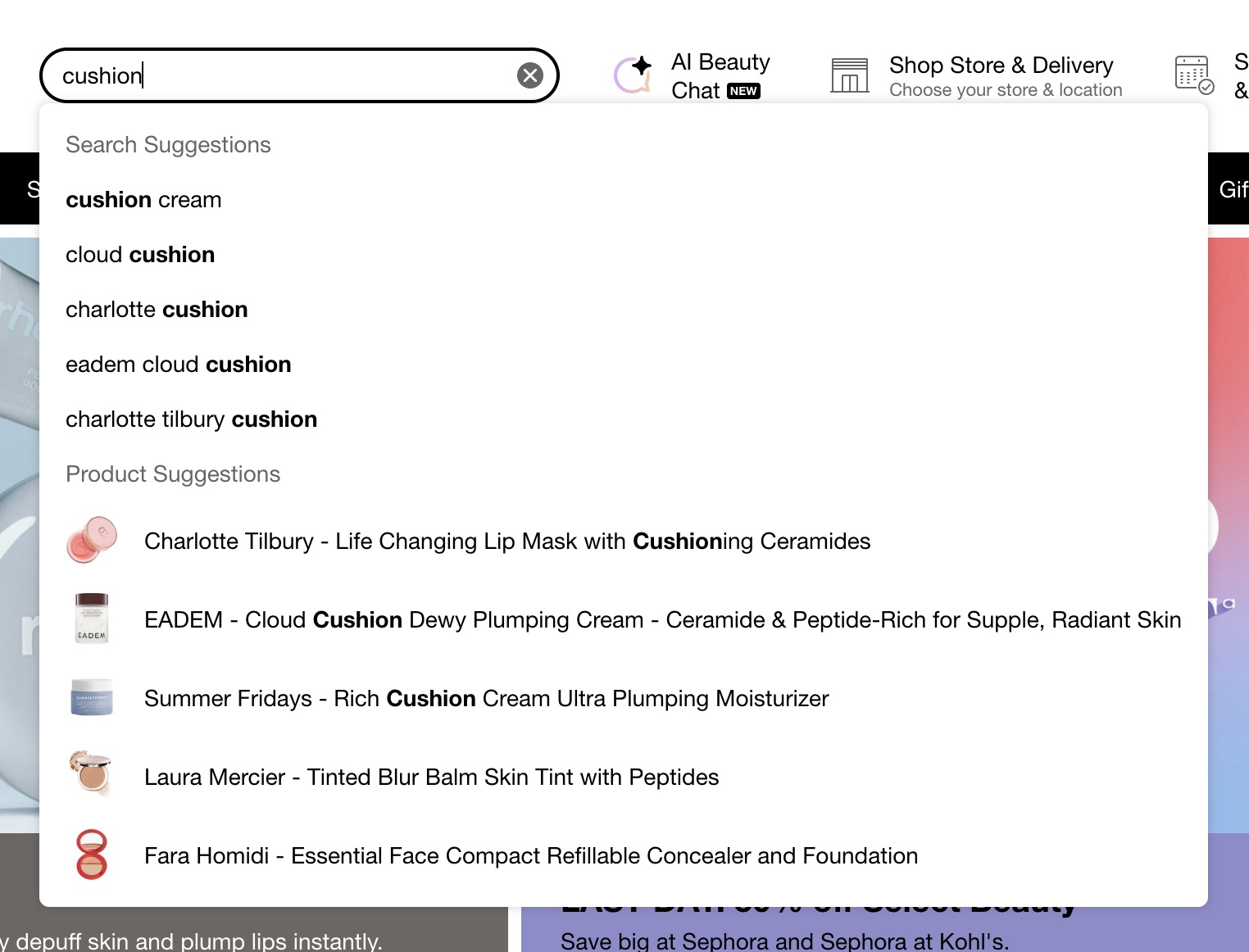
Site search is one of the highest-intent actions a shopper can take. Users who search on an eCommerce site convert 2.5x higher than non-searchers. Yet most default search implementations rely on exact keyword matching, which breaks the moment a shopper types something like "running shoes for wet trails" instead of the product title.
Natural language processing (NLP) powered search understands the purchase intent behind queries, not just the literal words. It handles synonyms, typos, long-tail queries, and attribute-based searches such as "blue cotton midi dress under £60". The practical result is fewer zero-result pages, more relevant listings, and measurably higher conversion from the search results page.
Personalized search takes this further by ranking results based on an individual's browsing and purchase history, so a shopper who consistently buys premium brands sees those ranked higher without any manual configuration.
Learn more: For a practical deep-dive into search optimization, head to our guide on eCommerce site search.
Dynamic homepage layouts
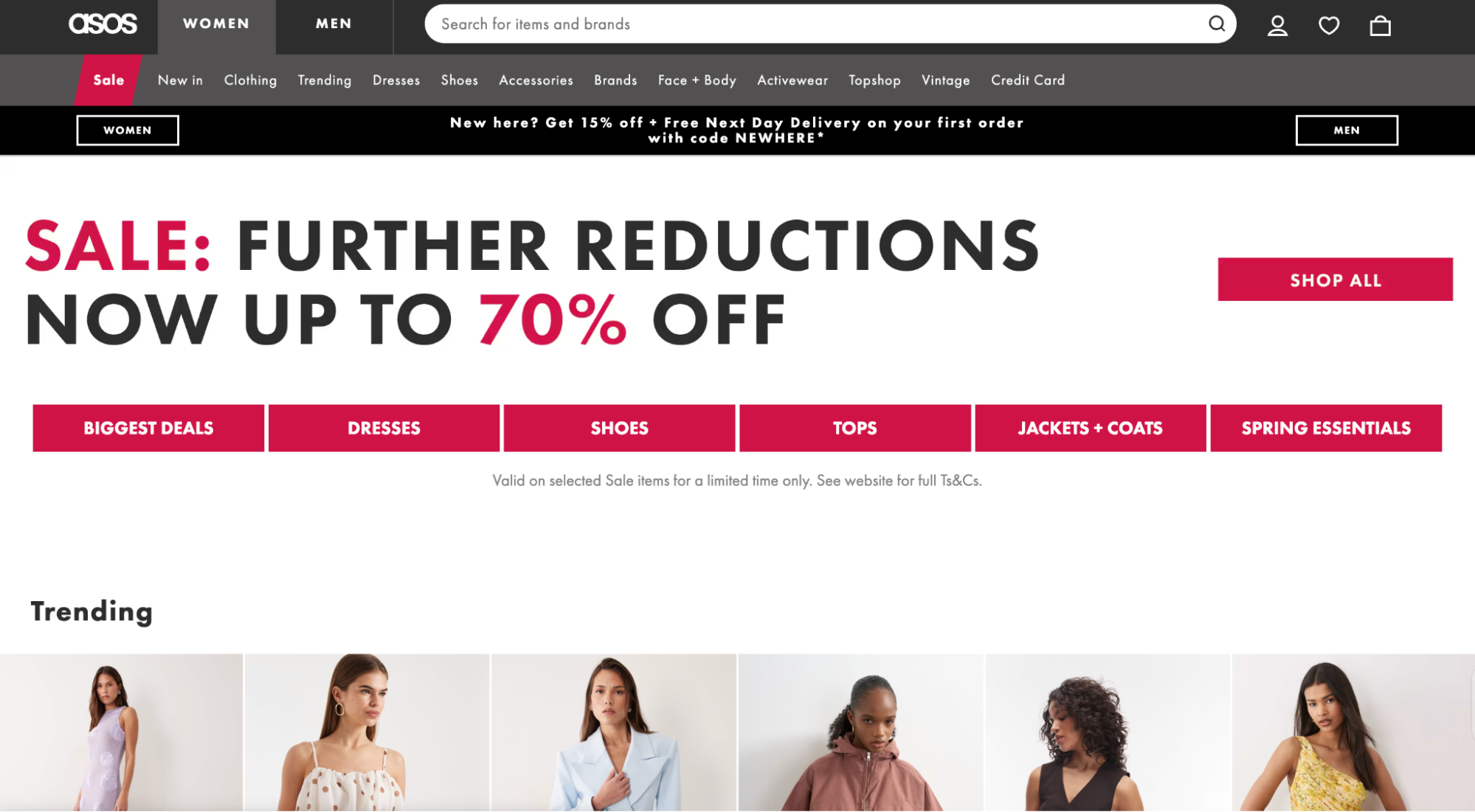
Your homepage is simultaneously the most visible and most underutilized personalization opportunity in your store. Most visitors land there, yet most homepages serve identical content to everyone: the same hero banner, the same featured collections, the same promotional slots, regardless of who is looking at them. A first-time visitor who has never heard of your brand and a loyal customer who has purchased seven times have entirely different needs, different levels of trust, and different reasons to be there. Treating them the same is a missed opportunity at the very top of the funnel.
Dynamic homepage layouts fix this by adapting the experience to the visitor in front of you. The underlying content blocks, hero banners, featured collections, navigation highlights, and promotional slots stay the same. What changes is which version of each block is served, and to whom.
-
New visitors: Bestsellers, top-rated products, and brand trust signals give first-time browsers the social proof and orientation they need to feel confident exploring further. Pair this with an introductory offer to lower the barrier to a first purchase.
-
Returning visitors: A welcome back prompt, recently viewed items, and new arrivals in categories they have previously browsed signal that the store remembers them, reducing the effort required to pick up where they left off.
-
Loyalty members: Surface their points balance, exclusive member offers, and early access to new collections. These are the customers most likely to respond to recognition and reward, so give them a homepage that reflects their status.
-
Lapsed customers (90 or more days since last purchase): Win-back messaging paired with a time-sensitive incentive creates both relevance and urgency for a segment that needs a specific reason to return.
Personalized category navigation
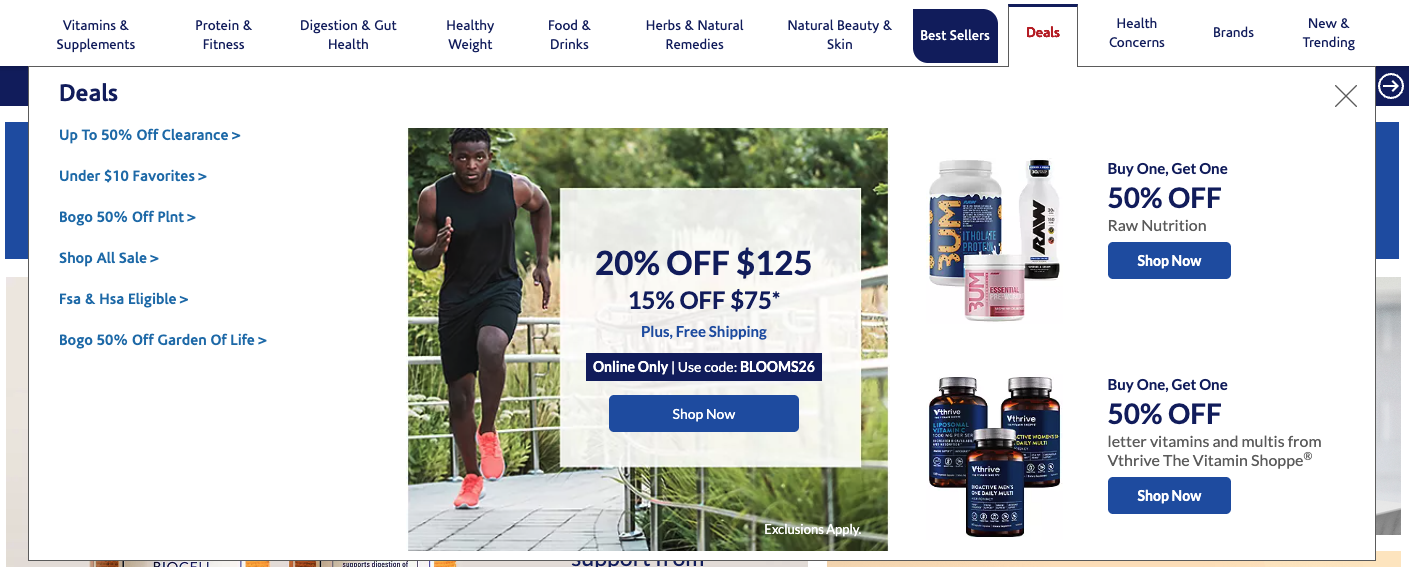
Standard navigation is organized around your product catalog logic. Personalized navigation is organized around your customer's actual shopping journey. The distinction matters more than it might seem: a shopper who has to work to find what they are looking for is a shopper who is one click away from leaving.
In practice, this means surfacing shortcuts and pathways that reflect individual behavior rather than a generic category tree:
-
Continue shopping prompts: A returning visitor who spent their last session browsing trail running gear should see a shortcut that takes them straight back there, not a top-level Athletic category they have to navigate through again.
-
Personalized breadcrumb navigation: A customer whose purchase history skews heavily toward running should see Athletic > Running > Trail prioritized automatically, without any manual configuration on your end.
-
Adaptive promoted categories: Featured categories across the store adjust to both seasonal patterns and individual affinity, ensuring the right product families are visible to the right people at the right time.
The cumulative effect is a store that feels like it knows its customers. Navigation friction drops, time to product discovery shortens, and the shopping experience feels intuitive rather than something the visitor has to figure out.
Virtual shopping assistant
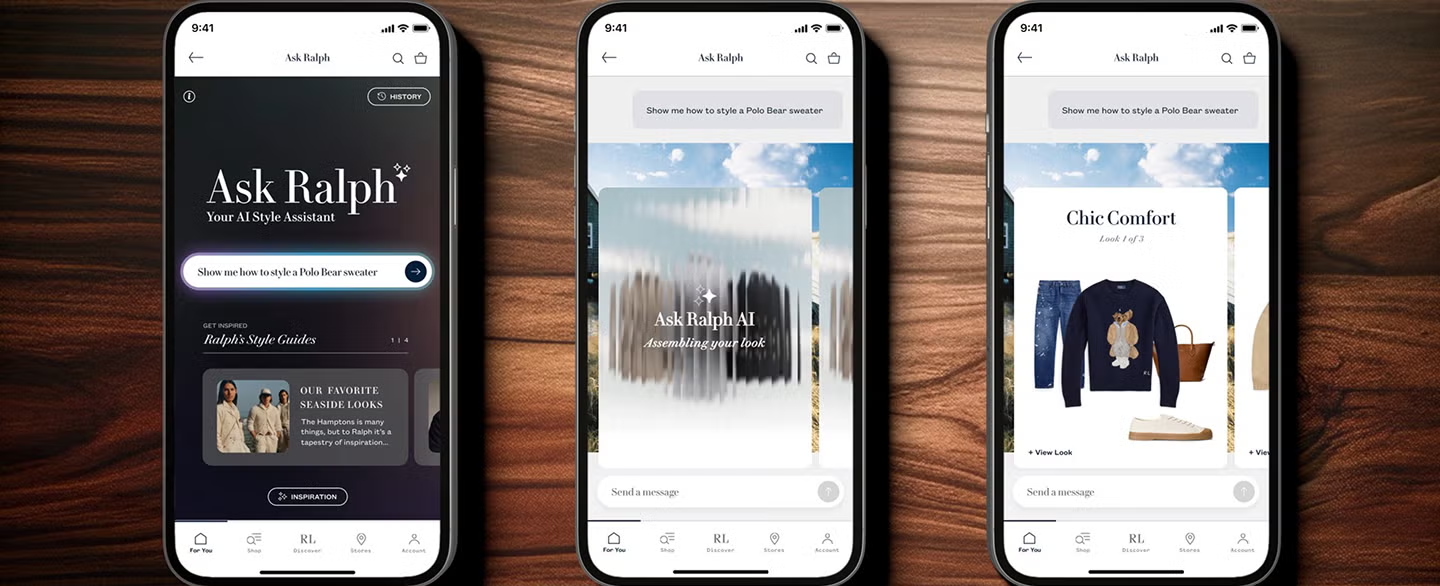
AI-powered conversational agents are reshaping how shoppers discover and decide on products. According to McKinsey, AI agents could generate $3 to 5 trillion globally in eCommerce revenue by 2030, with $1 trillion in the US alone, signalling a fundamental shift in how online shopping will be conducted over the next decade. Unlike static recommendation carousels, a virtual shopping assistant can ask clarifying questions, understand context, and guide a shopper through a purchase decision in natural language. The result is an experience that feels closer to talking to a knowledgeable store assistant than browsing a website.
A well-implemented virtual assistant can handle a surprisingly broad range of interactions:
-
Product discovery: Open-ended queries like "I need a gift for a 30-year-old who loves hiking, budget around £70" are where conversational assistants genuinely outperform static navigation. Rather than returning a generic search results page, the assistant narrows down options through dialogue.
-
Product comparison: Questions like "What is the difference between these two running shoes?" can be answered instantly and in context, removing a common source of pre-purchase hesitation.
-
Size and fit guidance: Drawing on purchase history and stated preferences, the assistant can make confident recommendations without the shopper needing to consult a separate size guide.
-
Post-purchase support: Order tracking, returns guidance, and reorder prompts handled conversationally reduce the load on your support team while keeping the customer experience consistent.
Learn more: For a broader look at how AI is transforming the way eCommerce stores operate and compete, see our piece on AI in eCommerce.
The following tactics focus on a different kind of win: not just more customers converting, but more revenue from the customers already in your store. Here is how personalization can boost average order value without discounting your way there.
Segmented upsell and cross-sell recommendations
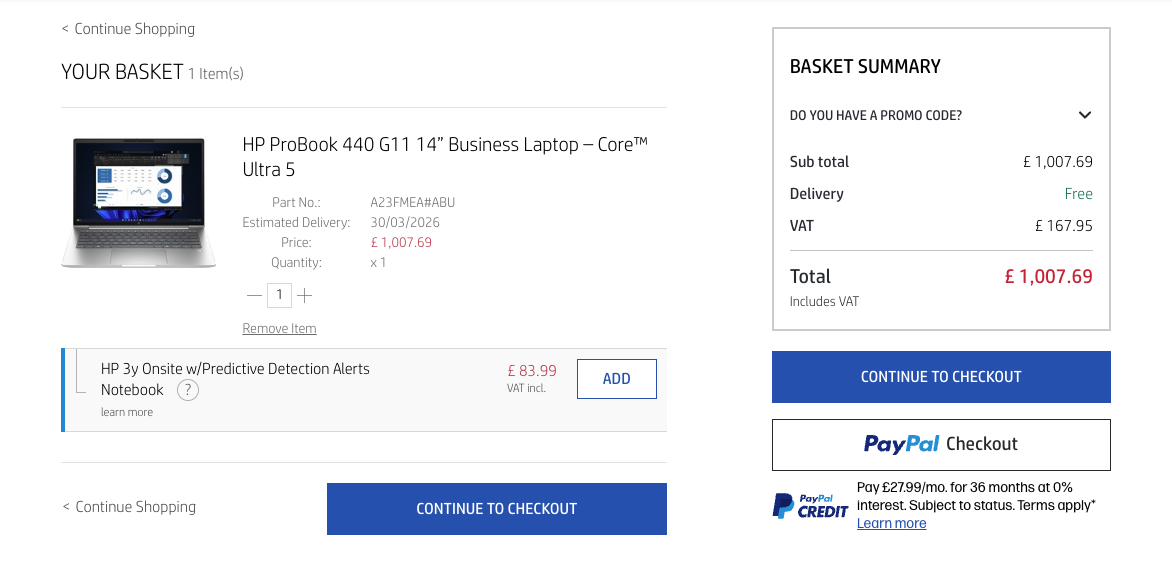
Not all upsell opportunities are equal. A single recommendation algorithm applied to your entire customer base will underperform compared to segment-specific logic, because different buyers respond to fundamentally different triggers. The goal is to match the recommendation to buyer psychology as much as to the product catalogue.
-
VIP customers (top 10 to 15% by lifetime spend): Surface premium bundles, limited-edition products, and early access items. These customers are price-tolerant and respond to exclusivity far more than they respond to discounts.
-
Deal-seekers (high coupon usage, frequent sale purchases): Bundle discounts and buy-X-get-Y offers deliver perceived value without conditioning full-price buyers to hold off until the next promotion.
-
Premium first-time buyers (high first-order value): Strike while the affinity is fresh. Complement their purchase with adjacent premium items before the initial excitement of buying from you fades.
One thing worth keeping front of mind: the most effective segmented recommendations are built to maximize margin, not just cross-sell rate. Build your segmentation logic with your profitability data in view, not just your revenue figures.
Dynamic pricing
Dynamic pricing in eCommerce is not about real-time price fluctuations, which can damage trust. It is about delivering contextually relevant pricing logic to the right customer at the right moment:
-
VIP pricing tiers: Automatically apply a loyalty discount, such as 10% off for your top 10% of spenders, visible when they are logged in, reinforcing high-value customer status.
-
Inventory urgency pricing: Surface last-chance pricing when stock of a specific size or variant drops below a threshold. This is factual urgency, not manufactured pressure.
-
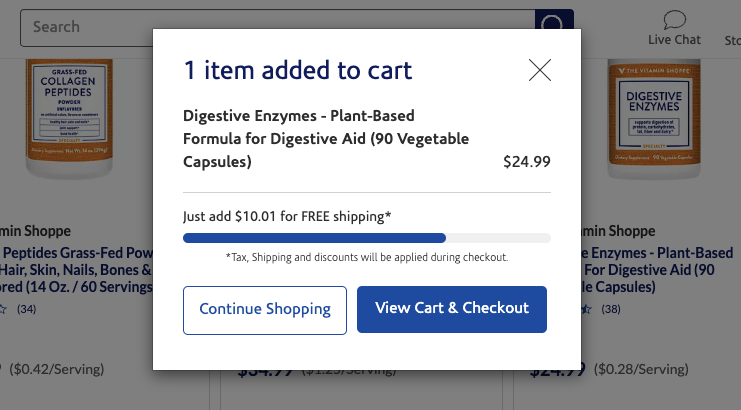
Bundle discounts that adapt to cart value: Add £15 more to unlock 15% off, with the threshold dynamically adjusting based on what is already in the cart.
Every store has a segment of shoppers who got close but did not convert. Personalization gives you the tools to identify them, reach them at the right moment, and give them a reason to come back and complete the purchase. The tactics below are some of the most effective ways to reduce cart abandonment and recover revenue that would otherwise be lost.
Personalized cart recovery emails
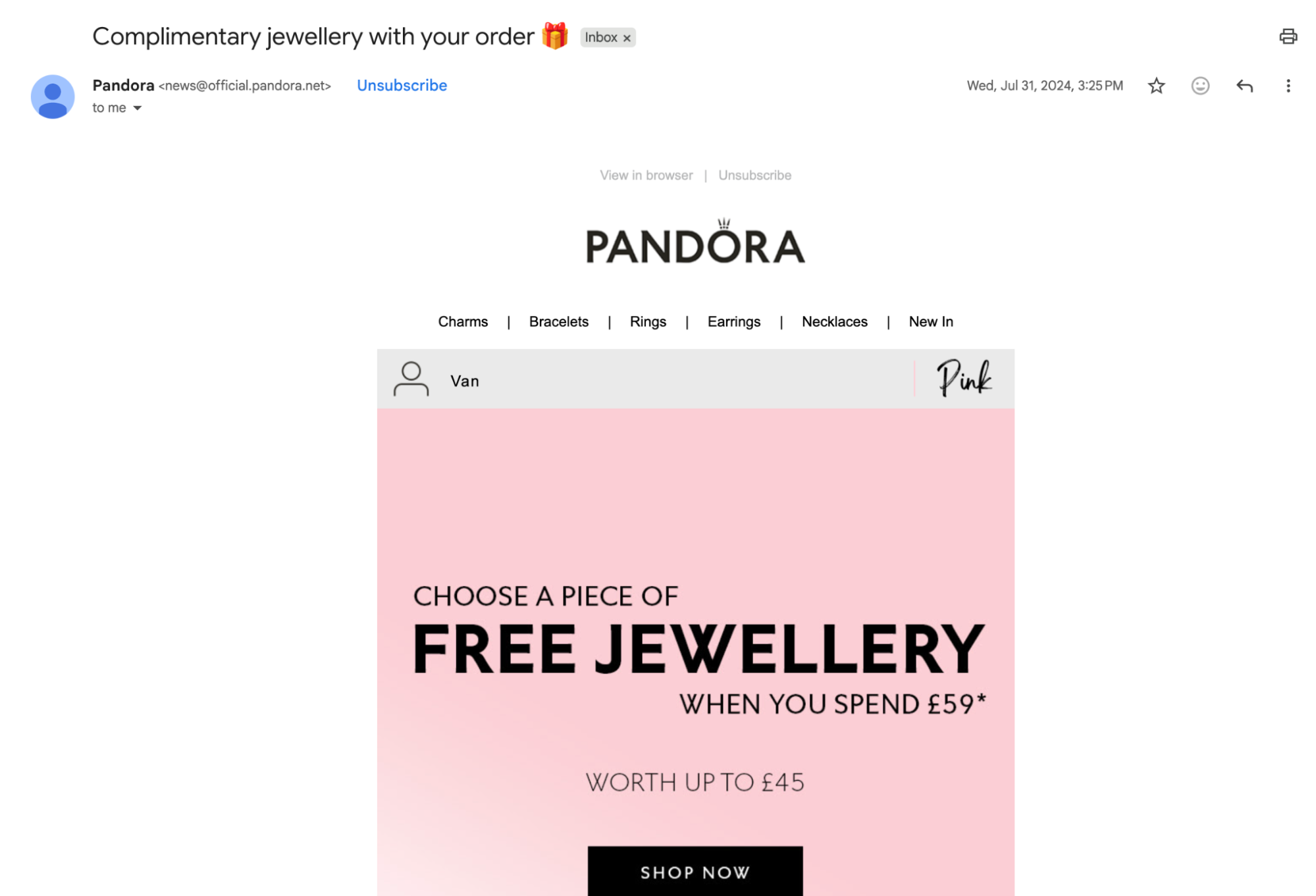
Abandoned cart emails achieve an average open rate of 50.5% and conversion rate of 3.33%, according to Klaviyo's benchmark data. The reason these numbers outperform almost every other automated email flow is straightforward: they reach shoppers who have already shown clear purchase intent. The opportunity is significant, but only if the emails feel personal rather than automated. A generic "you left something behind" message is easy to ignore. A well-timed recovery email that reflects exactly what the shopper was considering is much harder to dismiss.
To get the most out of your recovery sequence:
-
Show the cart, not a summary of it: Include exact product images and names so the shopper can pick up precisely where they left off, with no effort required on their end.
-
Remove re-entry friction: Deep-link directly to the pre-populated cart rather than your homepage or a generic product page.
-
Match the incentive to the segment: First-time abandoners may need a nudge to build enough confidence to buy. Loyal customers often just need a reminder, and offering them a discount you did not need to give away quietly trains them to abandon on purpose.
-
Use inventory to create honest urgency: If the stock of a specific size or variant is genuinely low, say so. Factual scarcity is more persuasive than a countdown timer with no grounding in reality.
-
Sequence your emails deliberately: Send the first within one hour as a straightforward reminder, follow up at 24 hours with social proof or a review, and reserve any incentive for the third email at 72 hours for those who still have not converted.
Floating and persistent cart reminders
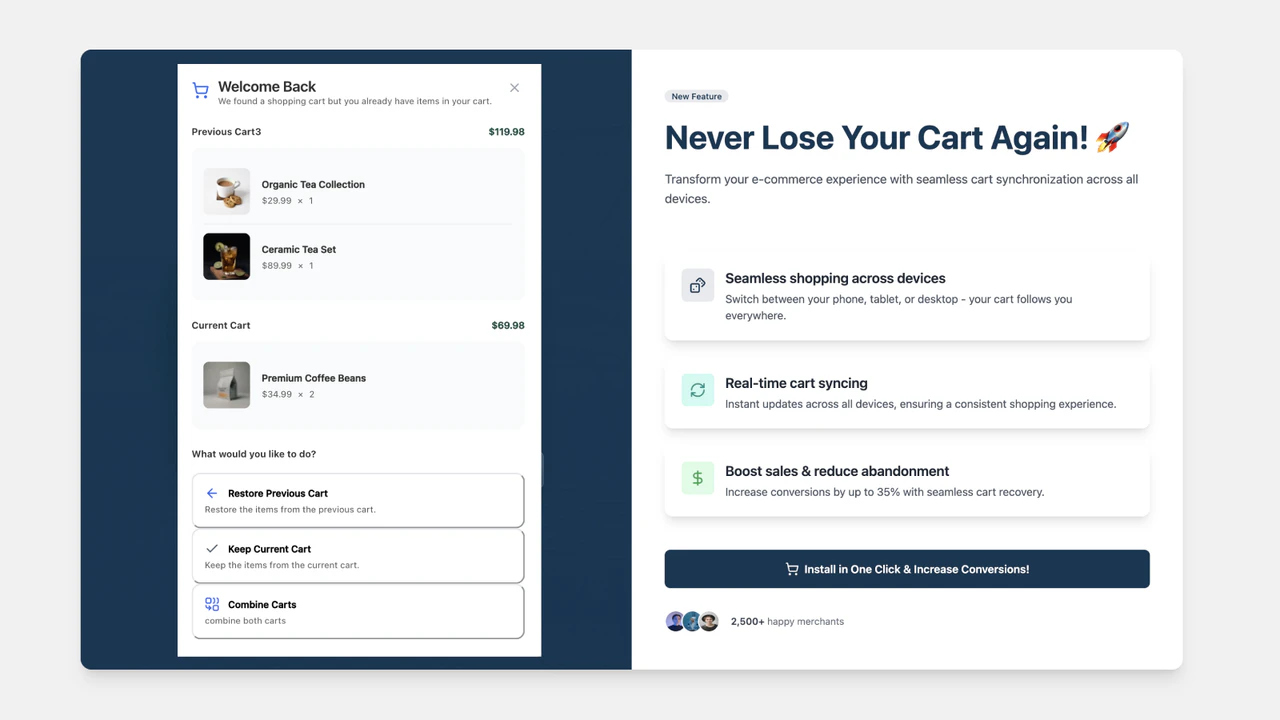
Not every shopper who hesitates will leave. On-site personalization can recover browsers while they are still on your store by surfacing nudges that are relevant to what is in their cart at that moment, rather than generic prompts that could apply to anyone:
-
Free shipping countdown timers: Tied to an active offer in their session, these create a time-sensitive reason to act without requiring a discount.
-
Discount expiry reminders: Personalized to the specific promotion applied to their cart, so the urgency feels earned rather than manufactured.
-
"Don't forget these items" prompts: One-click add-back for items a shopper has removed from their cart, presented as a helpful reminder rather than a hard sell.
-
Segment-specific overlays: A first-time visitor sees a 10% off nudge to reduce first-purchase hesitation. A loyal customer sees a double points message that rewards their status instead of cheapening the relationship with a blanket discount.
The most profitable customer is one you already have. These tactics use personalization to increase customer retention by keeping them engaged, coming back, and spending more over time.
Hyper-personalized win-back campaigns
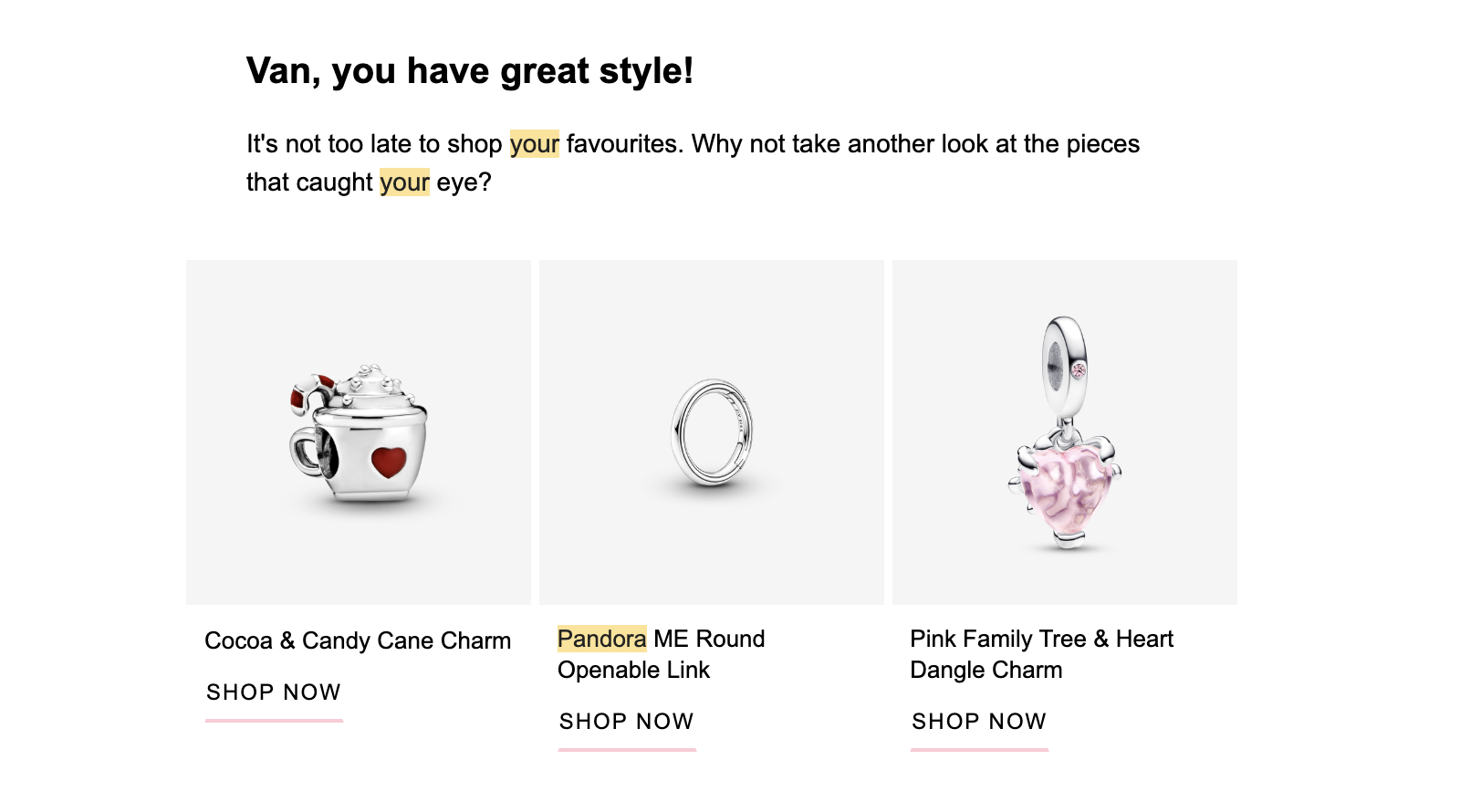
Every store has a segment of lapsed customers who bought once, or bought regularly, and then went quiet. Generic "we miss you" emails perform poorly because they acknowledge the gap without giving the customer a compelling reason to close it.
Hyper-personalized win-back campaigns take a different approach. Rather than leading with sentiment, they use individual purchase history and product affinity to make the re-engagement feel timely and genuinely relevant. Consider a trail runner who purchased shoes 90 days ago. Instead of a generic win-back, they receive: "Sarah, your trail shoes need new laces. Here is 20% off running gear, just for you." It works for three reasons:
-
It references something specific they own, not a broad category they may or may not care about.
-
The 90-day timing aligns naturally with a replenishment or upgrade window, so the outreach feels well-judged rather than arbitrary.
-
The offer is framed as exclusive to them, which makes it feel like a gesture rather than a broadcast promotion.
Personalized loyalty and reward points
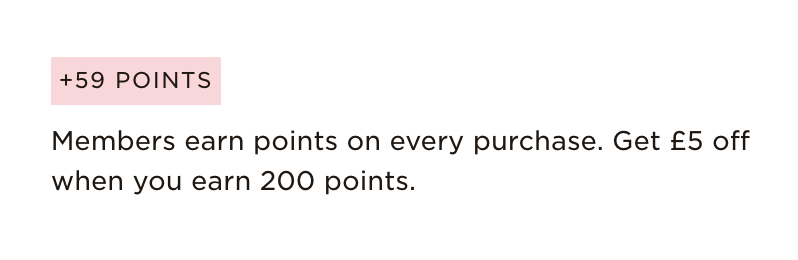
Personalized loyalty goes beyond showing a points total. It uses what you know about each customer to make the programme feel individually meaningful rather than a generic perk available to everyone:
-
Points balance reminders at high-intent moments: Surfacing a customer's available points on the product detail page or at checkout, paired with messaging like "You have enough points to save £10 on this order," turns a passive balance into an active purchase trigger.
-
Tier-based personalization: Customers approaching the next loyalty tier respond strongly to progress messaging such as "Spend £20 more to reach Gold status." Personalize the threshold dynamically based on each customer's actual spend rather than a fixed bracket.
-
Reward expiry nudges: A personalized email or push notification reminding a customer that their points are about to expire, with a curated selection of products they can redeem them against, drives re-engagement without requiring a discount.
-
Exclusive rewards tied to purchase history: Rather than offering the same reward catalog to every member, surface redemption options that align with what each customer has bought before. A frequent sportswear buyer should see sports-related rewards, not homeware vouchers.
Essential tools and technology stacks for eCommerce personalization
The right stack depends on your store's scale, existing platform, and the specific problems you are trying to solve. Tools that are native to your platform and integrate cleanly with each other will always outperform a collection of disconnected point solutions. Before adding anything new, make sure it fits your current setup rather than complicating it.
Here is a breakdown of the key categories and the platforms worth considering:
AI-powered personalization tools
AI is increasingly at the centre of how leading eCommerce stores deliver personalization at scale. The platforms below leverage machine learning and real-time data to move beyond rule-based logic, enabling dynamic content adaptation, intelligent product recommendations, and individualized experiences that improve automatically as more customer data flows through them:
-
Dynamic Yield: A flexible personalization platform offering collaborative filtering, dynamic homepage layouts, and algorithmic merchandising. Well-suited for mid-market to enterprise stores that need granular segment control across multiple touchpoints.
-
Adobe Target: A powerful A/B testing and personalization tool within the Adobe Experience Cloud. Strongest for stores already invested in the Adobe ecosystem that want to combine experimentation with personalization at scale.
-
Algolia: A search and discovery platform that combines NLP-powered search with personalized ranking, allowing stores to surface the most relevant results for each individual shopper based on their browsing and purchase behavior. Particularly strong for stores with large catalogs where search is a primary discovery channel.
-
Bloomreach: Combines a customer data platform, personalized search, and content management in a single platform. A strong choice for larger retailers who want personalization and search handled in one place rather than across separate tools.
-
Insider: An omnichannel personalization platform covering web, app, email, SMS, and push notifications. Particularly strong for brands that want to personalize across multiple channels from a single interface without stitching together separate tools.
|
Building something more custom? Off-the-shelf tools cover a lot of ground, but there are situations where the highest-impact personalization requires something built specifically for your store, your data, and your customer journey. At On Tap, we build custom AI-powered solutions for eCommerce brands that need to go beyond what standard platforms offer. |
Email and SMS automation
-
Klaviyo: The dominant eCommerce email and SMS platform, with deep Shopify integration, powerful segmentation, and pre-built flow templates for abandonment recovery, post-purchase sequences, and win-back campaigns.
-
Emarsys: An enterprise-focused omnichannel customer engagement platform with strong AI-driven personalization across email, mobile, and web. Well-suited for larger retailers managing high volumes of customer interactions across multiple markets.
-
Omnisend: A strong mid-market alternative with omnichannel automation across email, SMS, and push notifications in a single platform, with eCommerce-specific workflows built in from the start.
Customer data platforms (CDP)
A CDP is not necessary to start personalization, but it becomes valuable once data is flowing from multiple sources, including website, email, paid ads, CRM, and POS. CDPs unify customer profiles in a single location and make that data available to every tool in your stack.
-
Bloomreach: In addition to its personalization capabilities, Bloomreach functions as a CDP for retailers who want to unify customer data and activate it across search, content, and marketing in one platform.
-
Salesforce Data Cloud: For stores already on Salesforce, Data Cloud provides a unified customer profile that feeds personalization across every Salesforce product in the stack.
-
Adobe Real-Time CDP: Part of the Adobe Experience Platform, this is built for enterprises that need to unify customer data from multiple sources and activate it in real time across Adobe Target, Adobe Journey Optimizer, and other downstream tools. Best suited for stores already invested in the Adobe ecosystem.
Loyalty and retention apps
-
Lootly: A loyalty and referral platform that helps eCommerce stores build customisable rewards programmes, drive repeat purchases, and turn existing customers into brand advocates through points, referrals, and VIP tiers.
-
Yotpo Loyalty: A more enterprise-focused loyalty offering, tightly integrated with their reviews and SMS products.
Whatever tools you choose, continuous monitoring helps ensure they do not degrade the experience they are meant to improve. AuditIQ eCommerce monitoring tool tracks performance, Core Web Vitals, and technical health 24/7, flagging issues introduced by personalization scripts or integrations before they affect conversion.
|
Getting the stack right matters as much as choosing the right tools. Two platforms that work brilliantly in isolation can create significant problems when they are pulling from the same data in different ways. Before adding anything new to your setup, it is worth having an expert review how your tools will interact. At On Tap, we help eCommerce brands implement personalization technology cleanly and cohesively, so nothing conflicts and nothing goes to waste. Talk to our team before you invest. |
A real-world example: How ASOS puts eCommerce personalization into practice
ASOS is one of the most well-documented examples of eCommerce personalization at scale. With over 26 million active customers and more than 100,000 products on the platform at any one time, the challenge ASOS faces is not traffic or inventory. It is relevant: helping each individual shopper find what they are looking for across a catalogue that grows by thousands of items every week. Their answer is a systematic, data-driven personalization infrastructure that touches almost every strategy covered in this guide.
Frequently bought together
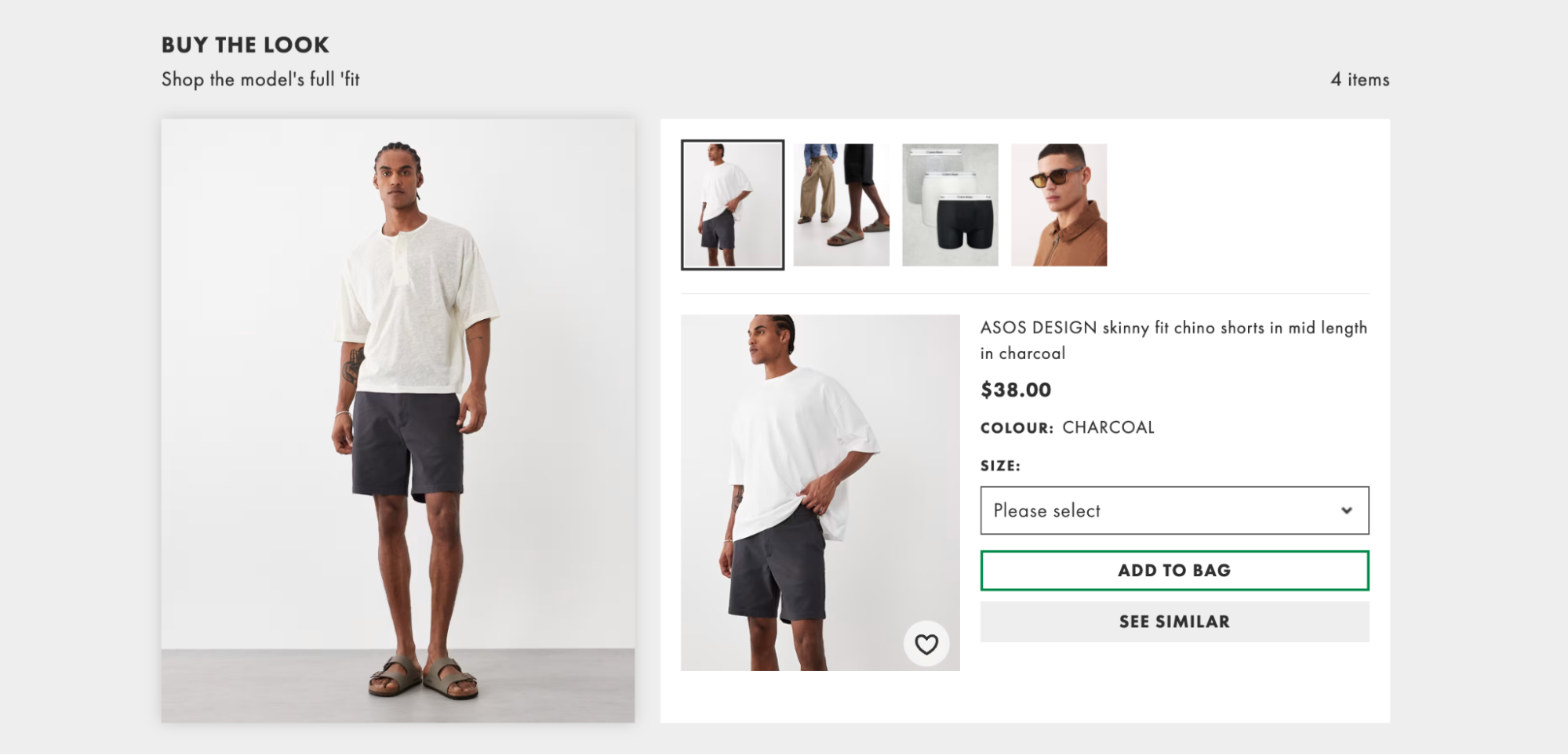
ASOS's outfit generation model is trained on nearly 600,000 outfits curated by their in-house stylists, each made up of a hero product and a variable number of styling products, such as a dress styled with shoes and a bag. Once trained, the model generates new outfit recommendations by sequentially adding compatible items and re-scoring each combination. The result is a Buy the Look carousel on every product detail page that surfaces complementary items tailored to the seed product, a direct application of the frequently bought together tactic that increases basket size at the moment of highest purchase intent.
Virtual shopping assistant
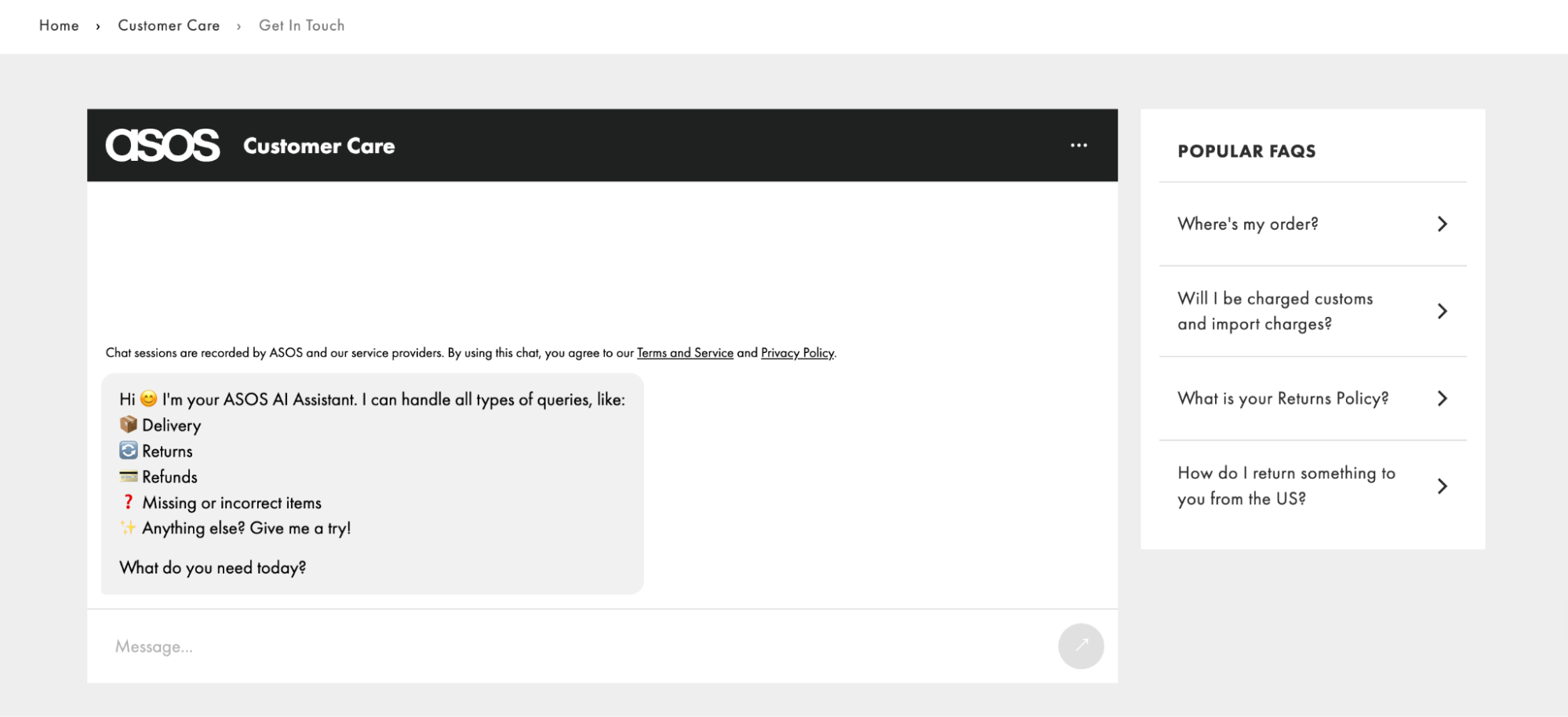
ASOS's AI Assistant is available directly on their customer care page, handling the full range of post-purchase queries, including delivery, returns, refunds, and missing or incorrect items. Rather than routing customers through a support team, the assistant resolves queries conversationally and around the clock.
It is a practical example of how a virtual shopping assistant moves personalization beyond the product discovery phase and into the post-purchase experience, keeping the customer relationship intact at the moments where friction is most likely to cause churn.
Semantic and NLP-Powered Search
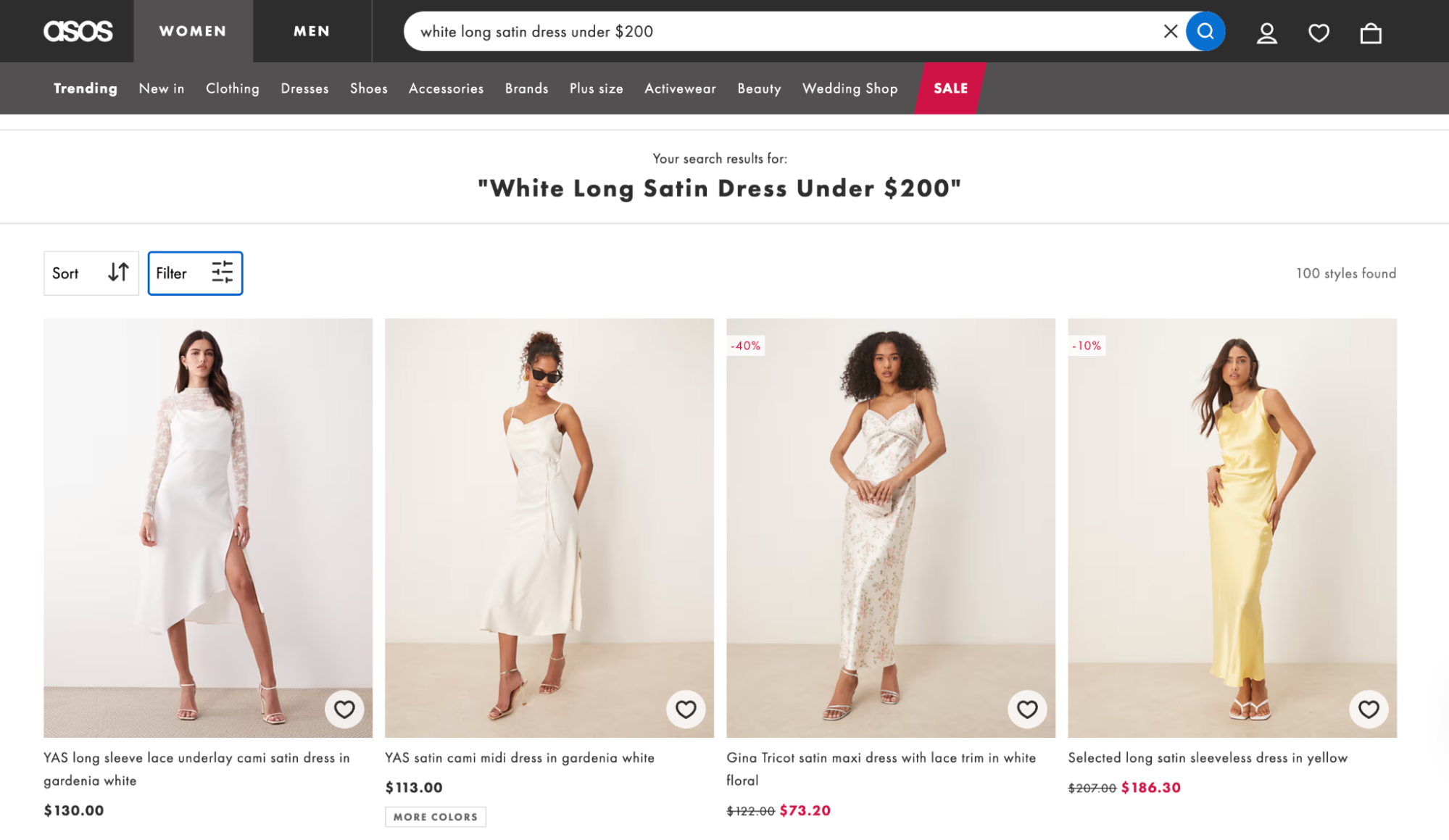
ASOS's search capability goes well beyond exact keyword matching. A shopper can enter a specific, multi-attribute query such as "white long satin dress under $200", and the platform will return relevant results by understanding the full intent behind the query rather than matching individual words against product titles. Color, fabric, silhouette, and price point are all interpreted simultaneously, narrowing the catalog to what the shopper actually means rather than what they literally typed.
The results
ASOS's personalization investment has produced results that stand out even against the broader industry backdrop. While many retailers struggled through the COVID-19 crisis, ASOS reported a 329% increase in before-tax profits and a 19% increase in global retail sales in their 2020 year-end results. Their focus on AI and machine learning across product discovery, search, navigation, and post-purchase experience is widely cited as central to their ability to adapt quickly to shifting consumer behaviour while competitors were still catching up.
Final thoughts
Personalization is not a feature you switch on. It is a capability you build progressively, one objective, one segment, one tactic at a time.
The commercial case is clear, and the barrier to entry is lower than most stores assume. Start small, prove the value, and let the results justify the next investment. The stores that begin now, even simply, will be significantly ahead of those still waiting for the perfect moment to start.
At On Tap, eCommerce personalization is central to how we help brands grow. Whether you are just getting started or looking to scale what is already working, our team can help you identify the highest-impact opportunities for your store and build a strategy around them. Get in touch with us to talk through where personalization fits into your growth strategy.