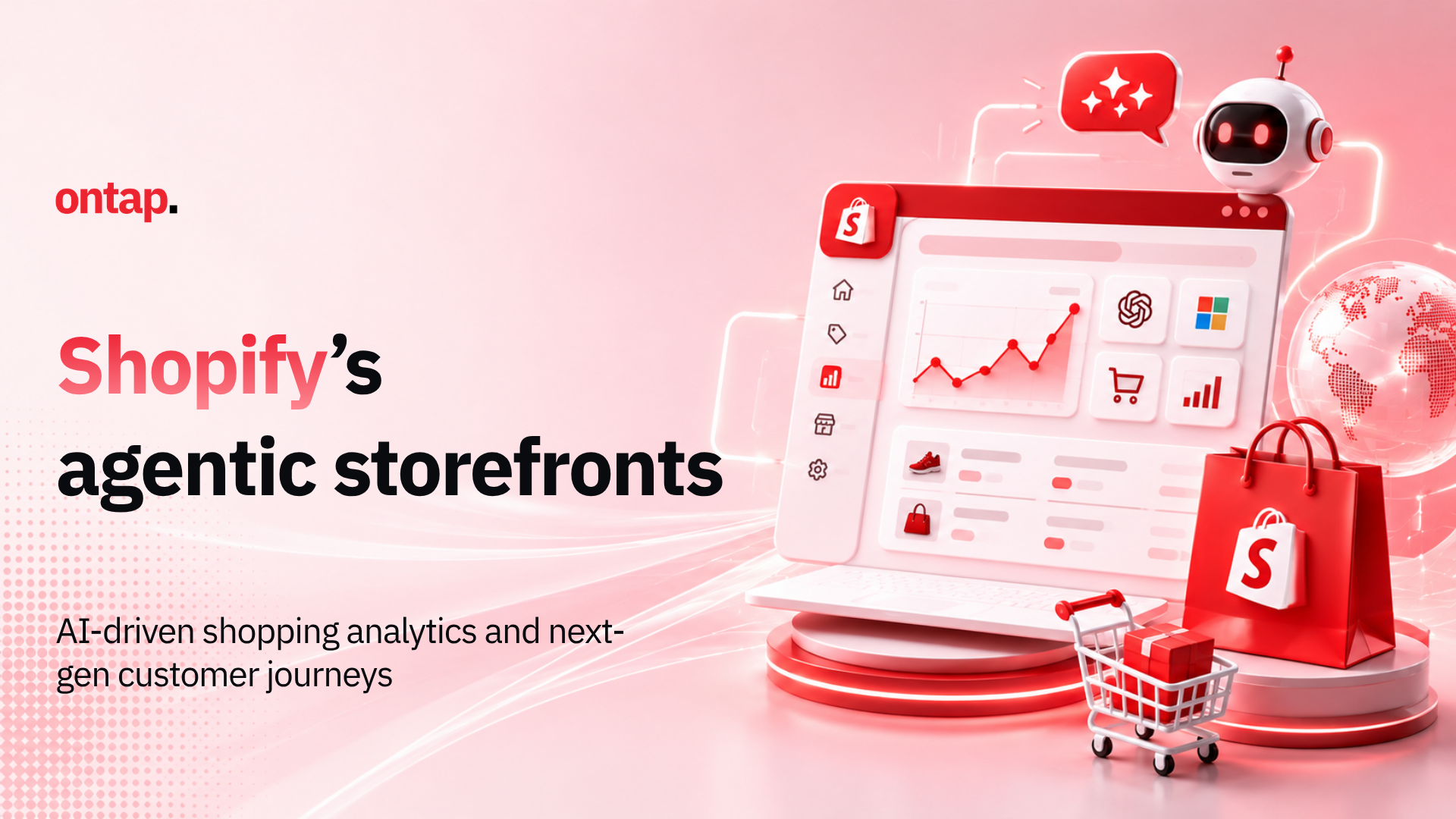

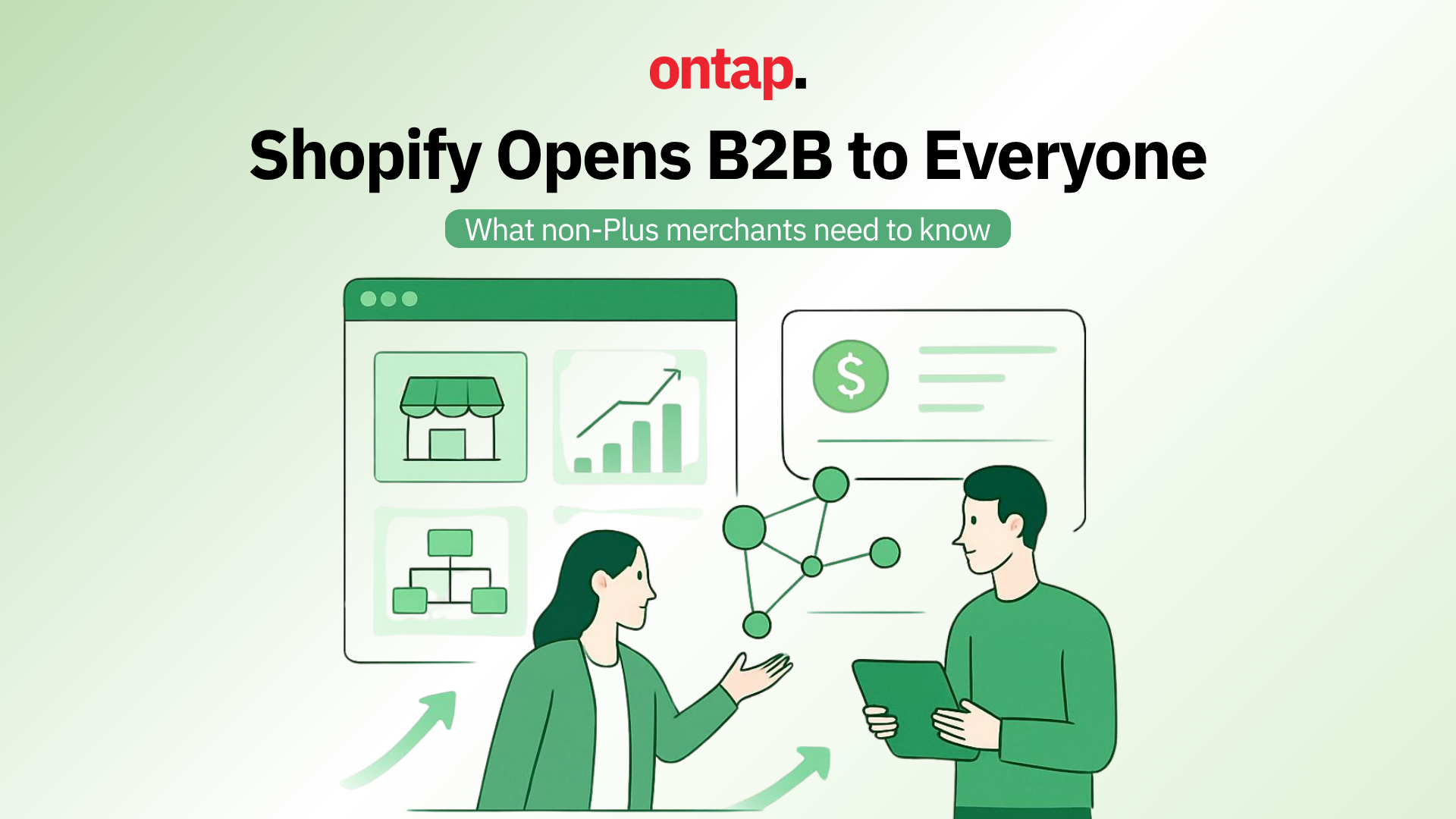
Shopify just made its native B2B features available to Basic, Grow, and Advanced plan merchants. As of April 2, 2026, tools that previously required a Shopify Plus subscription at $2,300+/month are now accessible for a fraction of the cost. If you've been running your wholesale operation through spreadsheets, email chains, or third-party apps, pay attention.
What's actually unlocked
As of April 2, 2026, merchants on non-Plus plans can now access three core B2B features:
-
Company profiles: You can create wholesale customer accounts with company-level structures, assign multiple buyers to a single organisation, and set custom permissions per buyer so different people on the same account see only what they should.
-
Custom catalogues: You can build separate price lists and product collections for specific B2B customers or customer groups, completely independent from your DTC storefront, so wholesale buyers never see retail pricing and vice versa.
-
Payment terms: You can offer Net 15, Net 30, or custom payment windows to wholesale buyers, which removes the pay-now-or-nothing constraint that previously pushed smaller merchants toward third-party workarounds.
Shopify didn't build a lite version to upsell you later. What Basic plan merchants got on April 2 is the same foundational B2B toolset that Plus merchants have been using since Shopify launched native B2B in 2022.
Why this matters more than it sounds
The B2B ecommerce market is large, and most of it still runs on email threads and manual invoicing. Smaller merchants who wanted to wholesale through Shopify had two options before this: pay for Plus, or stitch together apps that never quite integrated properly. That cost barrier is gone, and it changes the math for several types of merchants:
-
DTC brands expanding into wholesale: If you've been fielding inquiries from retailers who want to stock your products but didn't want to pay for Plus, you can now set up a proper wholesale channel on a $39/month Basic plan without upgrading or stitching together a patchwork of apps.
-
Small manufacturers: Businesses selling directly to trade customers can now build a professional B2B storefront, complete with separate pricing and payment terms, without committing to enterprise-level platform spending.
-
Hybrid businesses: If you serve both consumers and businesses from the same store, you can now manage both channels natively in one place rather than maintaining separate infrastructure for each.
What's still Plus-only
Shopify didn't open everything. Quantity rules, volume pricing tiers, and company-specific checkout customisations still require Plus. If your wholesale operation depends on minimum order quantities, tiered discount structures, or custom shipping rules, you're still looking at a Plus setup.
The features released to lower plans are solid fundamentals, not a full replacement for a sophisticated B2B configuration. If your requirements are simple, you're covered. If they're complex, don't confuse this announcement with permission to downgrade.
This release is built for merchants who've been avoiding wholesale because the tools weren't accessible. It's not built for merchants who've already outgrown the basics.
The competitive implications
With that picture clear, the market impact is significant. This is a direct shot at Adobe Commerce and BigCommerce, which have long positioned B2B as an enterprise-tier feature worth paying extra for. Adobe Commerce's B2B module is still the stronger option for large, complex operations. But for merchants doing $500K to $5M in wholesale revenue, Shopify just became the obvious choice, because they're unlikely to need what Plus-only features offer.
The harder conversation is for apps like Wholesale Club and SparkLayer. These products existed because Shopify's native B2B was Plus-only. That gap is now mostly closed. Some will survive by going deeper than what's native. Most will need to find a new reason to exist, and that repositioning will take time they may not have.
What should merchants do now?
1. Audit your current B2B workflow. Map what you're using for wholesale today: which apps, which manual processes, which workarounds. Then compare that list against the three native features now available. You might find you can cancel two or three paid subscriptions immediately.
2. Test before you migrate. Set up a development store and build out your company profiles and catalogues. Don't cancel existing app subscriptions until you've confirmed the native feature set covers everything you actually need.
3. Reassess your plan tier. If you're currently on Plus primarily for B2B, run the numbers. The gap between Plus and non-Plus has just narrowed. The question is whether the advanced features you're actually using justify the $2,300+/month price.
4. Follow up on the wholesale inquiries you turned away. If you've been saying no to retailers who wanted to stock your products because you didn't have the infrastructure, now's the time to re-engage. A professional B2B buying experience signals that you're ready to be taken seriously as a supplier. If you were leaving money on the table before, that excuse is gone.
On Tap's Take
This is Shopify running its standard playbook: take what was premium, make it accessible, and make leaving the platform harder to justify. It works every time, and merchants benefit from it.
For agencies and solution partners, the more interesting shift isn't the features themselves. It's where the conversation now starts. Clients used to ask: "Can we afford B2B on Shopify?" That question is dead. The new question is "How sophisticated does our wholesale operation actually need to be?" and that question requires a real answer, not a pricing conversation. Agencies that can answer it well will win the work. Those who can't will lose it to someone who tested the platform before the meeting.
The On Tap team helps merchants navigate platform decisions and build commerce experiences that drive growth. Get in touch to discuss your B2B strategy.