 Best full-service eCommerce agency 2026


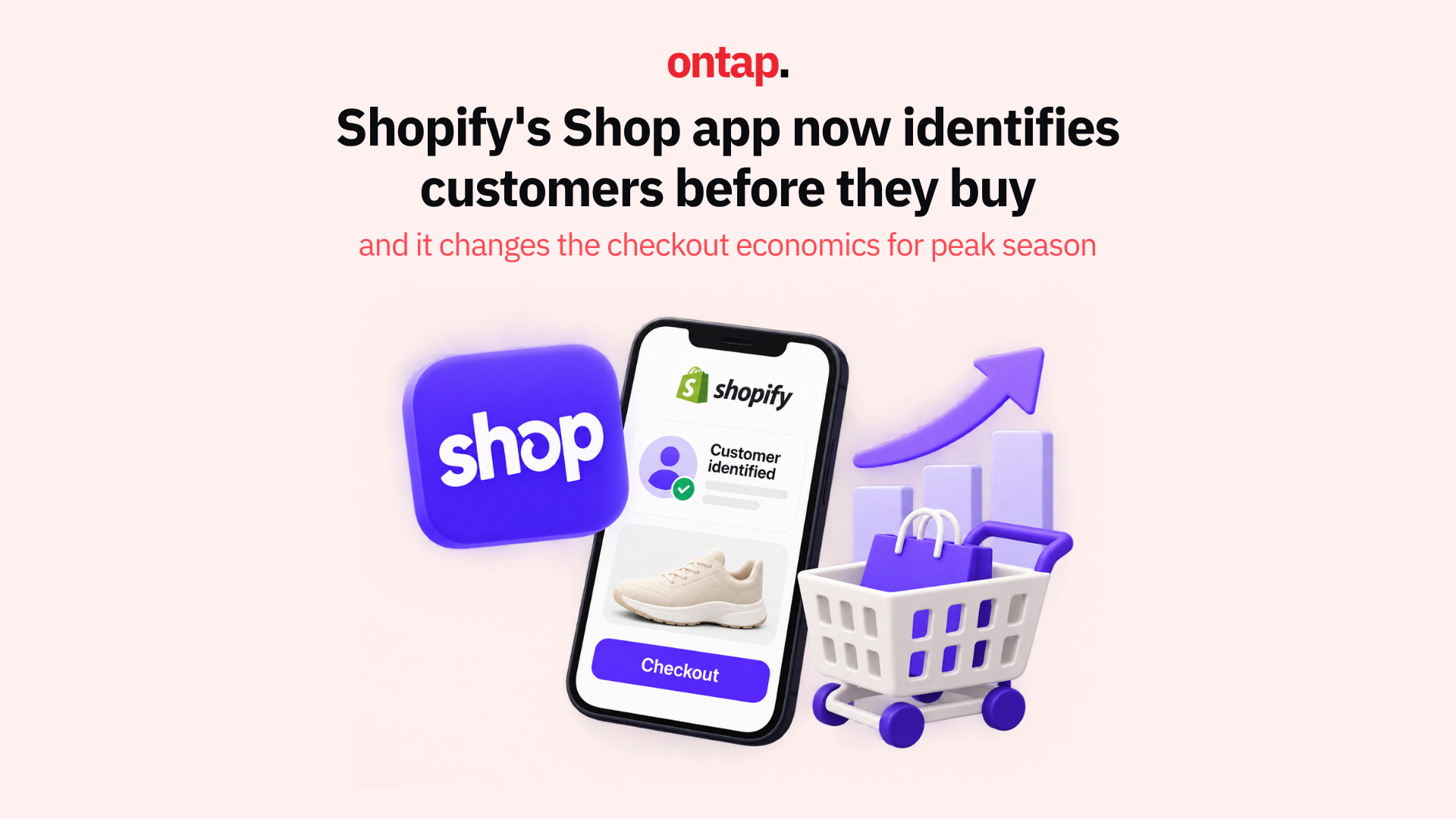
On October 5, 2026, Shopify announced that Shop can now verify who a shopper is while they are browsing a merchant's store, before they make a purchase. This is more significant than it sounds, and the timing could not be better.
What changed
Shop can now identify Shop users during their browsing session, not just at checkout. For recognised shoppers, this means:
-
Checkout loads faster because Shop can recognise the shopper before they reach checkout;
-
Carts sync across devices, so a cart started on mobile can carry over to desktop, and vice versa;
-
The Buy with Shop Pay button is pre-filled with the card the shopper last used;
-
One-tap sign-in speeds up the customer account login flow for Shop users;
-
Built-in cart recovery lets Shop resurface viewed products and remind shoppers about abandoned carts;
-
Two-way sync means carts created in the Shop app can carry over to the storefront, and storefront carts can appear in Shop.
According to Shopify's October 5 update, this is now supported across all browsers.
There are some conditions. Cart sync applies to customers with a Shop account who are recognised by Shop or signed in to the store, and Shopify notes that carts do not merge and cross-region shopping can limit whether a cart follows the customer.
Why this matters more than a feature update
At first glance, cross-device cart sync seems like an incremental improvement. But consider what it actually addresses: the gap between browsing and buying across multiple devices.
A customer browses products on their phone during lunch, saves a few options, and plans to buy from their laptop at home. Without session continuity, the laptop may not remember the phone session. The customer has to find the product again, rebuild the cart or restart part of the journey.
Shopify's approach reduces that friction by using Shop as an identity layer that can persist across recognised sessions and devices. A shopper's cart can follow them, while Sign in with Shop gives them access to saved account details without repeating the full sign-in process.
The important shift is continuity. The customer can move between devices without the merchant treating each session as an entirely new shopping journey.
The conversion math heading into peak season
This feature arrives at a critical moment. Adobe expects US online holiday spending to reach a record $275.1 billion in 2026, up 6.7% year over year. Mobile is expected to account for 57.4% of overall online holiday spending.
During peak season, even small reductions in checkout friction can matter at scale.
The merchants who could benefit most from pre-identified shoppers are those with:
-
High mobile browsing and cross-device purchase journeys, particularly merchants whose own analytics show customers researching on one device and purchasing on another;
-
Multi-session purchase journeys, where customers research across multiple visits before buying;
-
Repeat buyers making seasonal purchases, where existing Shop users can return to a recognised shopping experience without starting from zero.
The value depends on how many customers already use Shop and how often their journeys cross sessions or devices. This is not a universal conversion uplift, but it removes a specific source of friction for recognised shoppers.
What merchants should do now?
1. Understand the prerequisite: Cross-device cart sync requires the customer to have a Shop account and to be recognised by Shop or signed in on your store. Shopping activity sync also requires the Shop channel to be active. If Shop Pay is enabled, Sign in with Shop is automatically enabled for customer accounts and legacy customer accounts.
This means merchants should understand how visible Shop Pay and Shop sign-in are within their existing customer journey before peak traffic arrives.
2. Review your customer account strategy: This update strengthens the value of recognised shoppers. When Shop can identify a customer, their cart can persist between devices and Shop sign-in can make the return journey faster.
Merchants should review whether customer accounts, Shop Pay and Shop sign-in are easy to find and use, particularly for repeat customers.
3. Test the experience yourself: Add items to your cart on mobile as a Shop user, then open the same store on desktop. Verify that the cart carries across correctly and that the checkout experience behaves as expected.
If your store uses checkout customisations or other important checkout extensions, include them in the test before peak season.
4. Align cart recovery workflows: Shop can resurface products a customer viewed and remind them about carts they left behind. That means part of the recovery experience can now happen through Shop alongside your existing email and SMS programmes.
Review the overall customer journey so your own recovery cadence still makes sense when Shop is also helping shoppers return to previous activity.
5. Build Shop performance into your analytics: The original opportunity here is worth measuring, but Shopify does not currently document a standard analytics segment that simply compares every recognised Shop user with every anonymous visitor.
Instead, Shop analytics lets merchants track Shop orders, referral orders, Shop sales, referral sales, and Shop Pay transactions. Use those metrics alongside your own customer and conversion reporting to understand how Shop contributes to the journey.
The broader strategic picture
This update is part of a pattern we've been tracking throughout 2026. Shopify is increasingly using Shop to connect shopper identity, saved details, and commerce experiences across surfaces.
That now extends beyond a single storefront session. With WebMCP checkout, browser-based AI agents can assist with the shopping journey from product discovery and cart management through checkout and order confirmation.
When a Shop user is recognised during browsing, the immediate benefits are practical: faster sign-in, cart persistence, Shop Pay pre-fill and recovery. The merchant still needs the relevant Shop features active, but Shopify handles the underlying identity and cart synchronisation for eligible users.
The scale of that network matters. Shopify says Shop Pay gives merchants access to 250M+ shoppers, while Shopify reported in its Q2 2026 earnings call that Shop Pay GMV grew 53% year over year.
The competitive implication is worth noting. Amazon has a large base of signed-in customers. Google operates across signed-in shopping experiences. Apple has Apple Pay. Shopify is building its own persistent buyer identity through Shop.
For Shopify merchants, that means a recognised Shop user can move through a faster, more continuous buying journey without requiring the transaction to move into a marketplace.
For merchants, the practical takeaway is clear: customers do not always complete a purchase in the same session or on the same device where they started. Shop's latest update makes it easier for recognised customers to carry that intent with them.
Peak season is weeks away. Test the experience now, check that Shop Pay, Shop sign-in, and cart sync behave as expected, and understand how much of your customer base can actually benefit before peak traffic arrives.
How On Tap can help
Shop’s latest update gives recognised shoppers a smoother route from browsing to checkout. How much that helps your store depends on your own customer journey and setup. On Tap works with Shopify merchants to review checkout and customer account configurations, test cross-device journeys, and align cart recovery with existing email and SMS flows ahead of peak trading. If you’d like support reviewing your setup before peak season, get in touch with our team.