 Best full-service eCommerce agency 2026


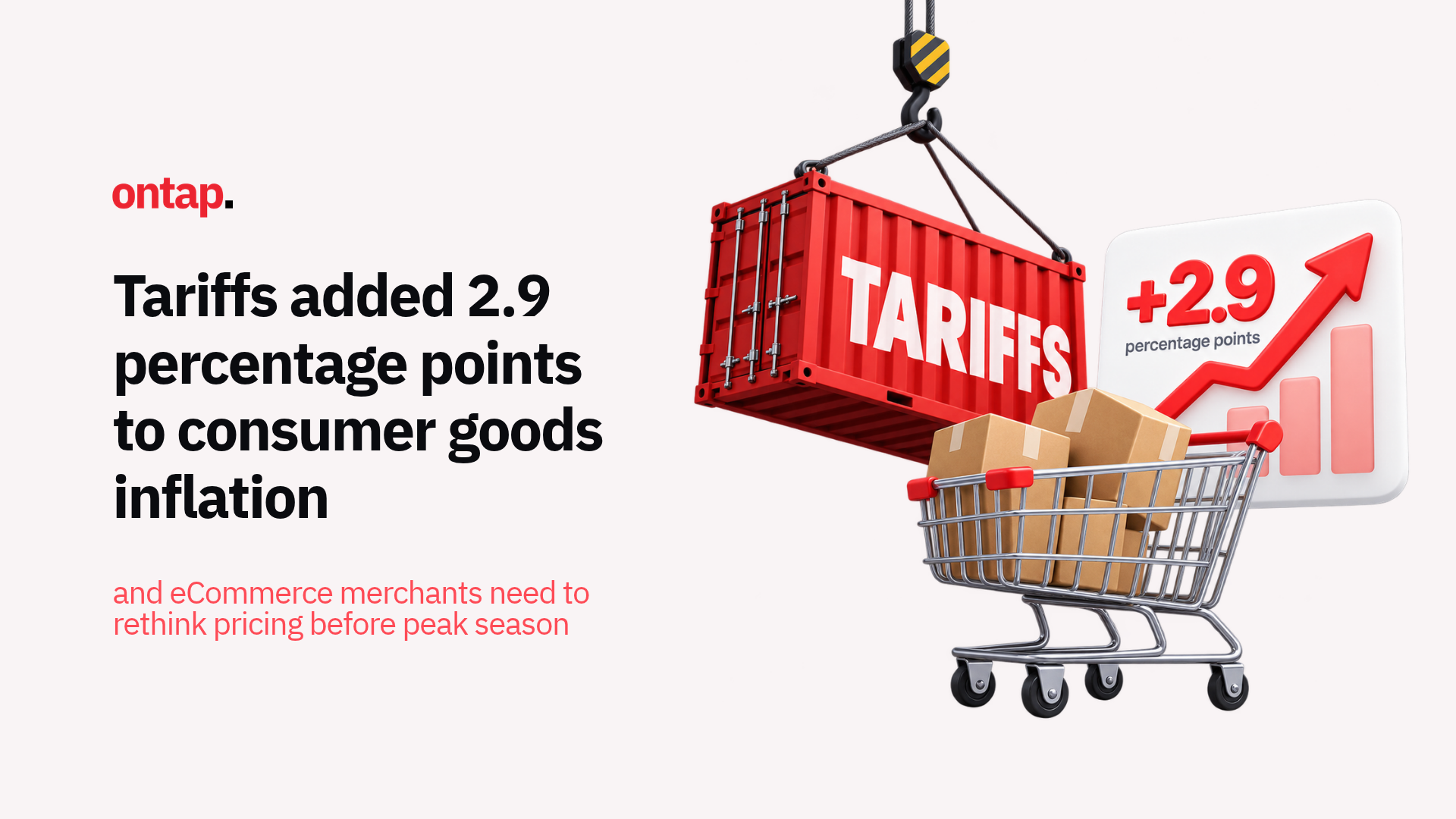
On 6 October, the New York Fed published research quantifying what eCommerce merchants have felt in their margins for months: tariffs imposed since early 2025 had contributed 2.9 percentage points to consumer goods price inflation by February 2026. Without the estimated tariff effects, goods prices would have fallen slightly.
The figure is important, but so is the timing. The 2.9 percentage point contribution was the estimated peak in February, not the current contribution to inflation. The research shows that tariffs raised the overall price level for consumer goods, with those effects taking time to move through imports, domestic production, and retail prices.
At the same time, preliminary October data from the University of Michigan showed consumer inflation expectations rising to 4.7% for the next 12 months, while long-run expectations climbed to 3.5%, above the 2.8% to 3.2% range seen throughout 2024.
For eCommerce merchants heading into peak season, these aren't abstract economic indicators. They point to customers who remain highly aware of prices and concerned about the cost of living, making the value behind every purchase more important.
How tariff-driven inflation changes shopping behaviour
The New York Fed research reveals an important timing dynamic. Nearly 90% of the 2025 tariffs were passed through to US import prices, with import prices responding almost immediately. But that does not mean consumers feel the entire effect at once.
The direct effect on retail prices builds over several months, while indirect effects take longer as higher input costs and reduced import competition influence US producer prices. Researchers analysed 67 non-oil consumer goods categories and found that the full effect on consumer prices can take around a year.
This means tariffs do more than create a one-time increase in import costs. Their effects can move through retail prices gradually, while the higher price level remains even after the contribution to year-over-year inflation starts to ease.
Consumers don't need economists to tell them things cost more. They're already making purchasing decisions in an environment where prices and affordability remain major concerns.
Retailers are also stretching the promotional calendar. Lowe's is starting four weeks of Black Friday deals on 29 October, giving shoppers more time to shop and save before Black Friday itself.
That does not mean tariffs alone caused the earlier promotional window. But for eCommerce merchants, it reinforces the need to think about pricing and promotion earlier than the traditional Black Friday week.
Three pricing strategy adjustments for a high-inflation peak season
Make your pricing story clear, not just your prices low
In a high-inflation environment, consumers are sceptical. They've been watching prices rise across categories and are more likely to question promotional tactics that feel like manufactured urgency.
The merchants who win this peak season will be those who communicate why their pricing represents value, not just that something is "X% off."
This means contextualising your pricing. If your products have maintained price stability and you can substantiate that claim, make it clear. If you've improved sourcing or supply chain efficiency to keep costs down, that's a legitimate story worth telling.
The weakest approach is a generic "SALE" banner with no credible value narrative behind it.
Restructure your promotional architecture around trust
When shoppers are already sensitive to rising prices, reference pricing needs to feel credible. A "30% off" promotion is less persuasive if the customer doesn't believe the original price represents genuine value.
Instead, consider structuring promotions around concrete value: free shipping thresholds calibrated to actual shipping costs, bundled pricing that delivers genuine per-item savings, or loyalty pricing that rewards existing customers.
This is especially important as AI shopping agents become more prevalent. These systems can compare products, prices and offers across retailers with far less reliance on the psychological anchoring that traditional promotional pricing uses.
Your prices need to hold up against comparison, not just against your own compare-at values.
Segment your peak season strategy by price sensitivity
Not all customers respond to price pressure in the same way. The University of Michigan's October results show particularly weak sentiment among lower-income consumers, who have fewer resources to absorb higher prices.
Your own customer data should determine how that difference translates into promotional strategy.
-
For price-sensitive shoppers: lead with clear value communication, transparent pricing and early-access deals that help them plan their spending. Make pricing easy to understand and compare, particularly on mobile.
-
For less price-sensitive shoppers: focus on product quality, exclusivity and experience differentiation. These customers can be more responsive to curation, personalisation and service than to another blanket discount.
The goal is not to discount more broadly. It is to understand where a discount actually changes purchase behaviour.
The international dimension
For merchants selling across borders, US tariffs create an additional pricing complexity.
If you sell the same products in multiple markets, the US landed cost can differ substantially from the cost base elsewhere. Your pricing structure therefore needs to reflect market-specific costs rather than rely on a single global margin target.
This is particularly relevant for merchants using dynamic pricing tools. Ensure your pricing logic accounts for tariff-adjusted landed costs by market, not just competitor pricing signals.
A tool optimising for competitive position without understanding your actual cost base can still produce a price that wins the sale but damages margin.
What to do this week
-
Audit your promotional pricing against actual landed costs. Verify that your compare-at prices represent genuine reference prices and that planned peak discounts still leave acceptable margin after tariffs, freight and fulfilment.
-
Review your pricing communication on product pages and in marketing materials. Replace generic discount messaging where a clearer value story can explain why the offer is worthwhile.
-
Segment your customer base using your own purchase and engagement data. Adjust promotional targeting so value messaging reaches more price-sensitive customers without unnecessarily discounting to customers who buy for quality, exclusivity or service.
-
Stress-test your margins under peak season promotional scenarios. The 2.9 percentage point figure is an estimate of tariffs' peak contribution to consumer goods inflation, not a 2.9 percentage point increase in every merchant's input costs. Use your own tariff exposure and landed costs when modelling profitability.
The merchants who thrive this peak season will be the ones who acknowledge the pricing reality their customers face and build trust through transparency rather than hoping that louder promotional messaging will overcome price anxiety.
The New York Fed research makes the broader point clear: tariffs have raised consumer goods prices, while consumer inflation concerns remain elevated. For merchants, that makes pricing both a margin decision and a communication challenge.