
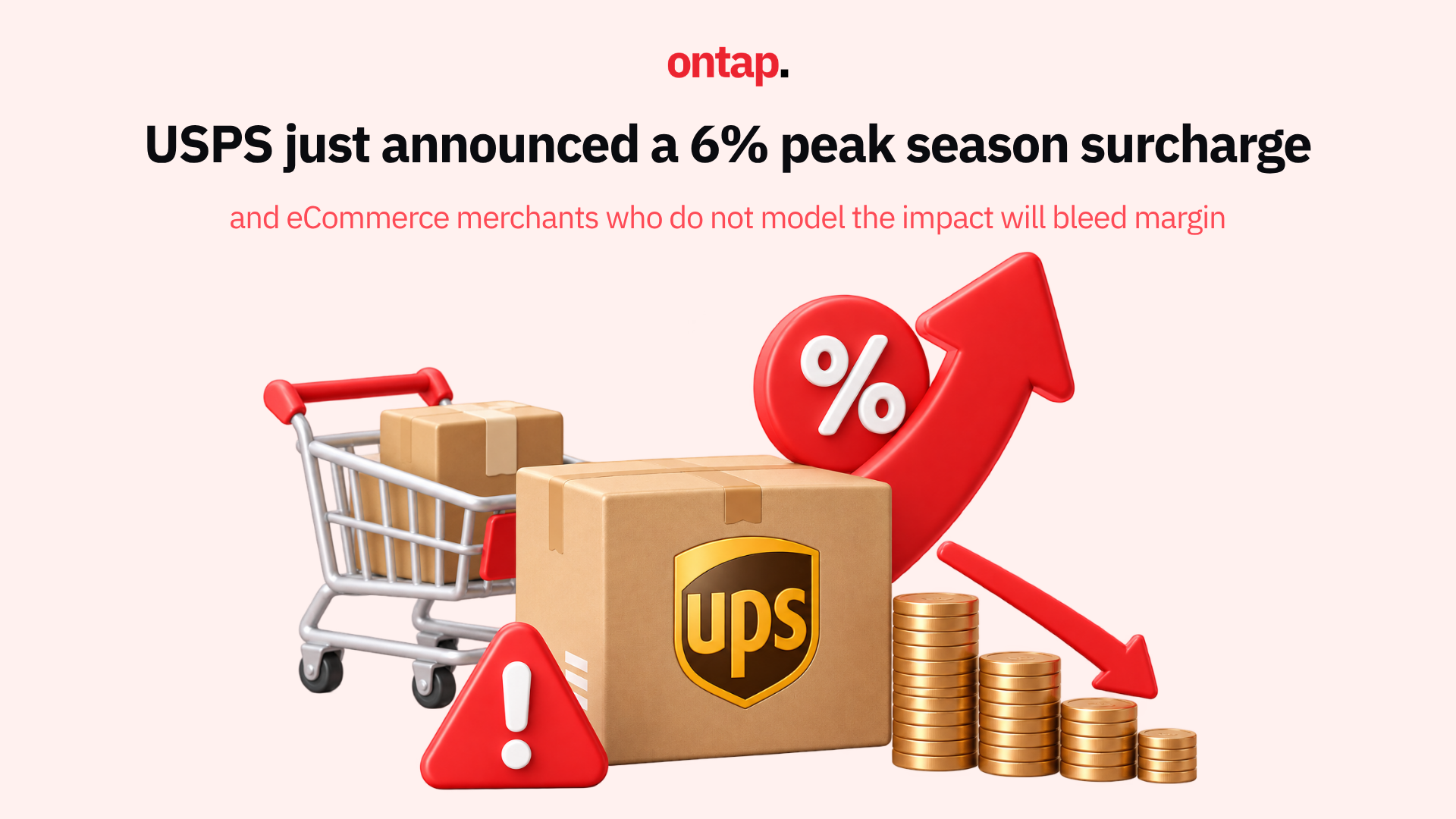
The US Postal Service announced on 25 August 2026 a 6% average rate increase for peak season shipping, effective 4 October through 17 January 2027. The surcharge impacts Ground Advantage, Priority Mail, Priority Mail Express, and Parcel Select, the services that carry the majority of eCommerce shipments during the holiday season.
Taken alone, a 6% shipping increase is manageable. But USPS shipping costs do not exist alone. They stack.
The stacking problem most merchants have not modelled
In April 2026, USPS implemented an 8% price increase on package shipping services to account for higher fuel costs. That surcharge also runs through 17 January 2027. When the peak season surcharge kicks in on 4 October, merchants will not face a 6% increase. Instead, they will face the cumulative effect of both surcharges on their holiday shipping volumes.
A 25-pound, Zone 5 Priority Mail Express package faces a $10.50 peak season increase on top of whatever the April fuel surcharge added. And this year's peak surcharge is notably higher than 2025's: last year's holiday rate increases ranged from 4.9% to 5.8% on average. This year's 6% average represents the highest USPS peak season surcharge in recent memory.
USPS is not alone. FedEx announced a 5.9% average rate increase for 2026, with some shippers seeing increases up to 40% depending on weight and zone. UPS has its own surcharge structure. Every major carrier is pushing costs higher heading into peak season.
Why this is a pricing problem, not just a logistics problem
The real risk is not the surcharge itself. Most eCommerce merchants set their shipping strategy months before peak season and don't revisit it when carrier costs change. Free shipping thresholds, flat-rate shipping offers, and even product pricing were likely calculated based on pre-April shipping costs. Every one of those calculations is now wrong.
Consider a merchant who offers free shipping on orders over $50. When that threshold was set, the average shipping cost per order might have been $7.50. With stacked surcharges, that same shipment might now cost $8.80 or more, depending on zone and weight. The free shipping threshold has not changed, but the margin erosion on every free-shipped order has grown by 15 to 20%.
For merchants selling heavy, bulky, or low-margin products, the maths can flip from thin-margin to loss-making.
What eCommerce merchants should do before 4 October
-
Model the combined surcharge impact by SKU and zone: Run the numbers for your top 20 products by volume, across your most common shipping zones. Identify which products flip from margin-positive to margin-negative under stacked surcharges.
-
Re-evaluate free shipping thresholds: Your free shipping threshold was likely set before April 2026, when it was based on outdated shipping costs. Consider whether the threshold needs to increase, whether minimum order quantities need adjustment, or whether specific product categories should be excluded from free shipping offers.
-
Diversify your carrier mix: USPS's 6% surcharge may make UPS or FedEx more competitive for certain weight and zone combinations. Regional carriers may offer better rates for shorter-distance shipments. Carrier rate shopping at the package level can recover significant margin during peak season.
-
Communicate shipping cost changes early: If you are adjusting shipping prices, tell customers now, not in November when they are ready to buy. Transparent communication about shipping costs builds trust. Surprising customers with higher shipping at checkout drives cart abandonment.
-
Factor shipping costs into promotional planning: Peak season promotions are often planned without considering their impact on shipping economics. A 20% discount on a product that already has thin margins after stacked shipping surcharges might not make financial sense, even if it drives volume.
The bigger picture
Merchants who model the impact now and adjust their shipping strategy before 4 October will protect their margins. Those who treat it as a cost of doing business without re-running the numbers will discover the impact in their Q4 financials, and by then it will be too late to fix.
The USPS filing is pending Postal Regulatory Commission review, but merchants should plan as though the 4 October effective date is confirmed. Waiting for final approval before acting leaves too little time to adjust pricing, thresholds, and carrier strategies before peak season begins.
About On Tap
On Tap is a growth-focused eCommerce consultancy helping mid-market and enterprise merchants build shipping strategies that protect margins during peak season. From carrier mix optimisation and free shipping threshold modelling to promotional planning and fulfilment strategy, On Tap helps merchants make shipping decisions based on current costs, not historical assumptions.
If you need help modelling the surcharge impact on your peak season margins, get in touch.