 Best full-service eCommerce agency 2026


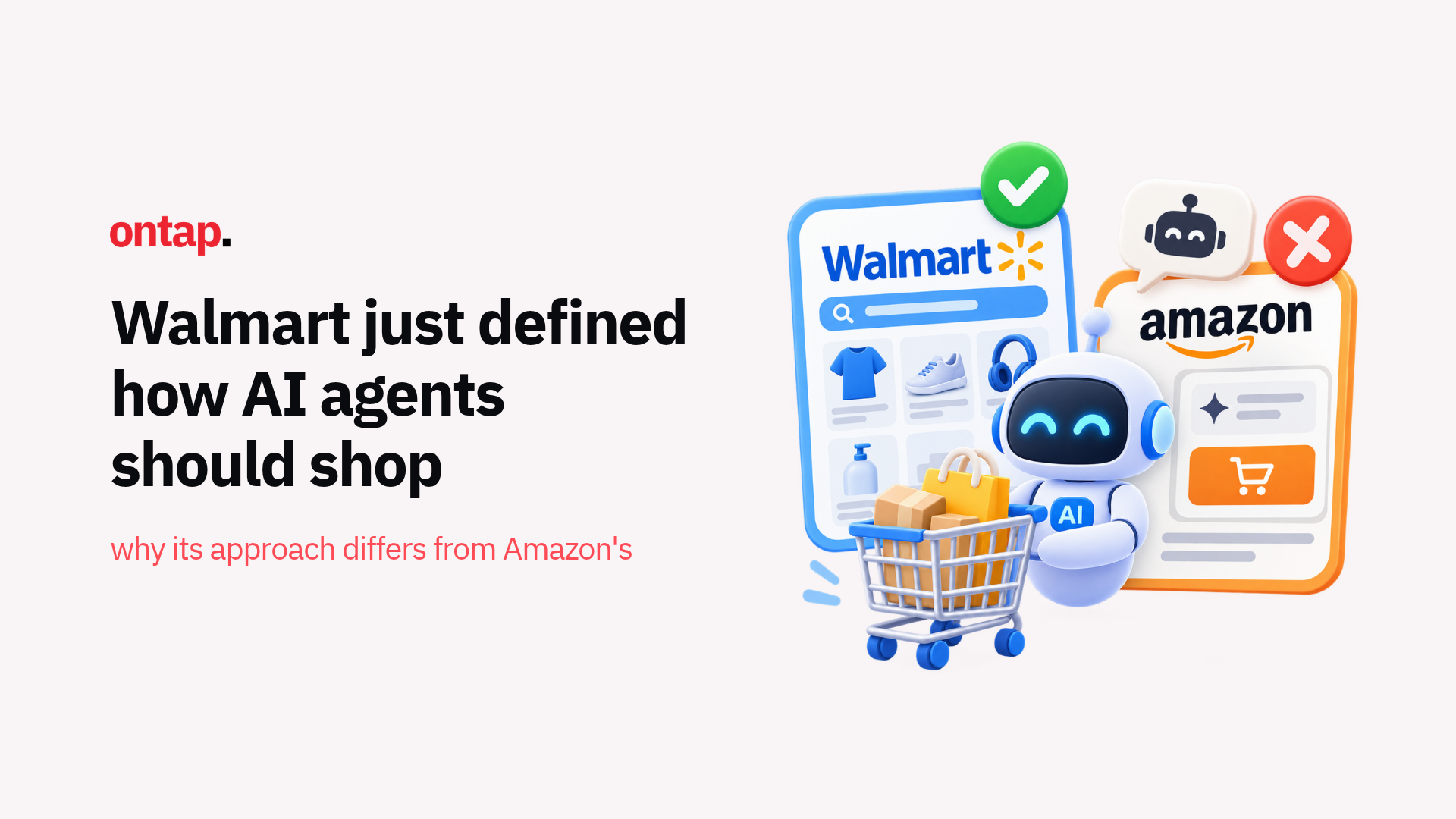
On 21 October 2026, Walmart announced a framework for how AI agents can shop on behalf of its customers. The announcement introduced three interconnected pieces:
-
Agent Profiles: dedicated profiles within customers’ Walmart accounts, with spending limits and separate purchase tracking, announced for launch within the following month;
-
Walmart Agent Gateway: an invitation-only beta using Model Context Protocol (MCP), an open standard that lets agents interact with structured tools and data;
-
Agentic Access Terms: formal rules governing customer consent, agent access, payment information, and autonomous checkout.
This matters beyond Walmart’s business. It shows how one of the world’s largest retailers is preparing for customers to delegate shopping to AI agents, while retaining controls over how those agents operate.
Two approaches to the same future
Walmart and Amazon have taken different approaches to external shopping agents.
Amazon has challenged agents accessing its platform without its permission. In its statement about Perplexity’s Comet, Amazon said third-party purchasing applications should operate transparently and respect a service provider’s decision about participation.
Walmart is building dedicated infrastructure for participating external agents. Agent Profiles will let customers control what an agent can do, including setting spending limits and requiring approval for purchases. The Gateway connects agents with Walmart’s own assistant, Sparky, through a structured interface.
Walmart says the Gateway can also help agents find a customer’s usual products without sharing their broader personal information or purchase history.
Walmart already lists conversational commerce integrations with Muse, ChatGPT and Gemini alongside Sparky. The Gateway extends this approach by creating a route for additional agents, subject to Walmart’s approval and access requirements.
Both retailers retain control over external access. Walmart’s announcement adds a dedicated interface designed for agent shopping, alongside rules for how agents must behave.
Why this matters for eCommerce merchants
For merchants, these developments raise a practical question: how should external agents be allowed to discover products and complete purchases?
Two approaches are emerging:
-
Controlled website access: agents interact with existing websites and services under the platform’s rules, with access subject to restrictions;
-
Dedicated agent infrastructure: platforms provide structured tools for product discovery, carts and checkout, with authentication, permissions and customer controls.
These approaches can overlap. Walmart’s terms allow it to restrict or block agents even when they use its dedicated infrastructure.
For merchants who sell on multiple marketplaces, the priority is to understand which AI shopping experiences each channel supports. Product discovery, customer approval and checkout may work differently across platforms, affecting how customers find and buy products.
For merchants who sell on their own websites, Walmart’s adoption of MCP is relevant because Shopify also provides MCP-based commerce tools. A shared standard can simplify integration, but each platform still defines its own tools, permissions and eligibility requirements.
What Walmart’s agent terms actually establish
Walmart’s Agentic Access Terms set out how agents must obtain permission, handle information and act on customer instructions.
Customer approval and spending controls
By default, Walmart requires customer approval for agent purchases. Outside the Gateway, customers must approve every checkout.
Within the Gateway, Walmart may allow an agent to complete purchases autonomously within customer-defined limits. Agents must meet additional requirements, including providing signed customer instructions and using access credentials restricted to the relevant transaction or session.
Walmart can still require human approval. Customers and agent providers remain responsible for configuring and operating agents within the agreed limits.
Payment information protection
Walmart says agents do not receive customers’ payment-card information and cannot add or change payment methods.
Keeping payment credentials with Walmart reduces the sensitive information an external AI service needs to handle during a purchase.
Separate tracking
Agent Profiles will allow customers to track AI-initiated purchases separately from their regular shopping activity. Customers will also be able to manage spending limits and remove an Agent Profile when they no longer want it connected.
This gives customers a clearer way to oversee purchases made on their behalf.
Limits on data use
Agents can access information only for permitted shopping purposes. Walmart’s terms prohibit bulk scraping, model training and redistribution of its data outside those purposes.
For merchants developing agent integrations, access permissions and data-use restrictions therefore need to be considered together.
The strategic implications for eCommerce leaders
Walmart’s approach creates several considerations for merchants evaluating their channel and technology decisions:
-
Product data quality supports discovery: rich, structured and accurate product information helps agents understand what they can recommend. Keep descriptions, specifications, prices, stock availability and fulfilment details consistent across channels, without assuming that better data guarantees recommendations;
-
Channel strategy needs an agent-access assessment: understand which marketplaces and platforms allow agents to discover and purchase products, what restrictions apply and where customers complete checkout;
-
Open standards can reduce integration friction: MCP provides a common protocol for agent tools, but merchants and developers still need to account for platform-specific authentication, functionality and access conditions;
-
Customer control supports trust: spending limits, purchase approvals and visible transaction records give customers practical ways to manage delegated shopping. Similar controls are worth considering when developing customer-facing AI features.
What to do before peak season
The practical steps for merchants are:
-
Audit your product data: check that descriptions, specifications, variants, pricing, availability and fulfilment information are accurate wherever AI shopping systems can access your listings;
-
Map agent access by channel: identify which experiences support product discovery and purchasing. Use confirmed capabilities and performance data to inform channel investment;
-
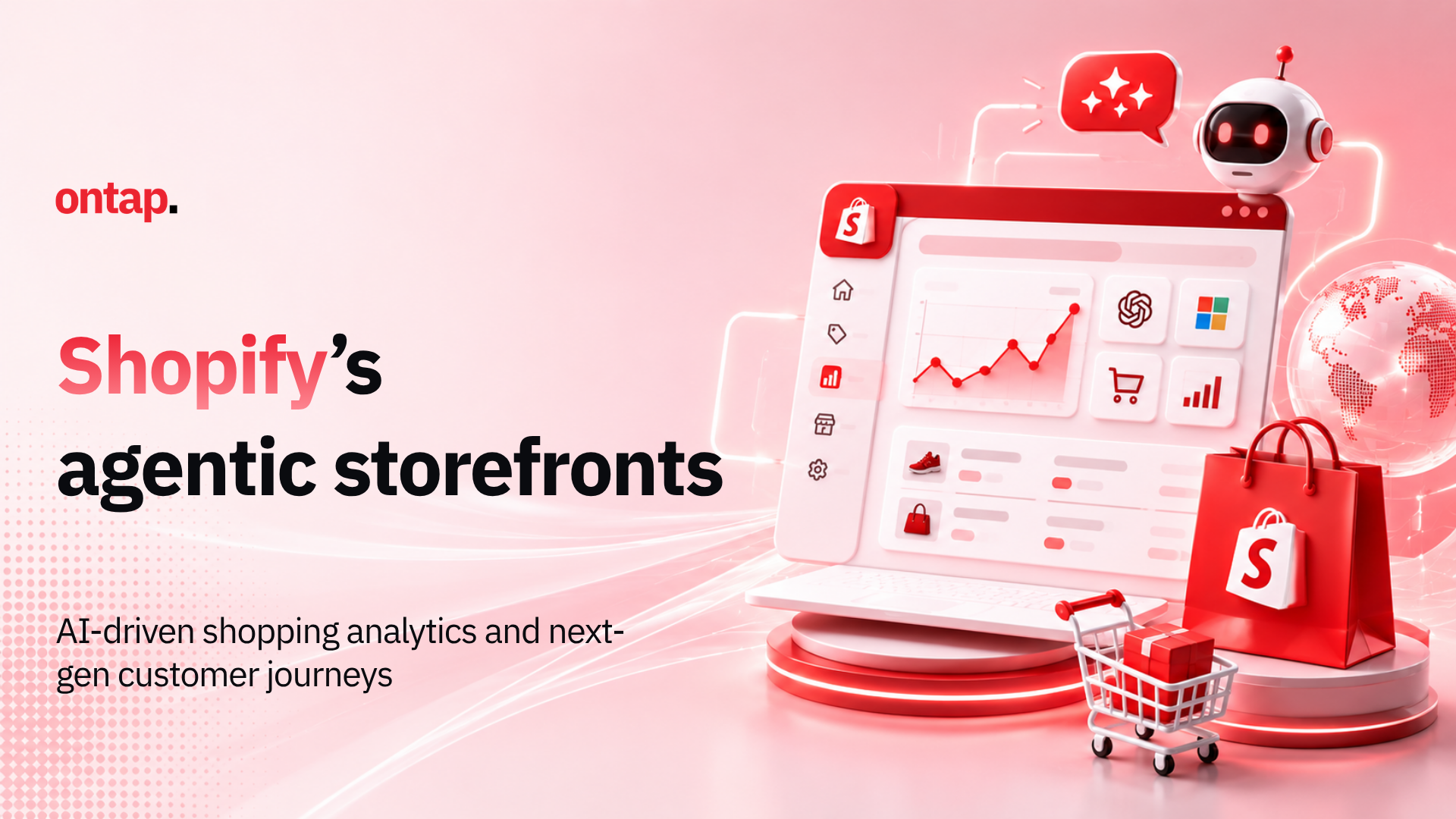
Review your Shopify setup: eligible products are automatically included in Shopify Catalog, although inclusion does not guarantee appearance in a particular AI answer. Review your agentic storefront settings to understand channel access. Shopify’s WebMCP tools separately support compatible agents shopping through a customer’s browser;
-
Watch the Walmart Gateway beta: access is invitation-only, and functionality may vary between participants. Walmart Marketplace sellers should check which integrations support their products as the programme develops;
-
Define agent controls for your own store: decide what agents can access, when customers must approve an action and how customers can withdraw permission.
AI agents are becoming another way for customers to discover products and delegate shopping tasks. Walmart’s framework provides a concrete example of how retailers can support those interactions through dedicated infrastructure and customer permissions.
For merchants, preparation starts with accurate product data, a clear understanding of channel requirements and controls that let customers decide how much authority to give an agent.