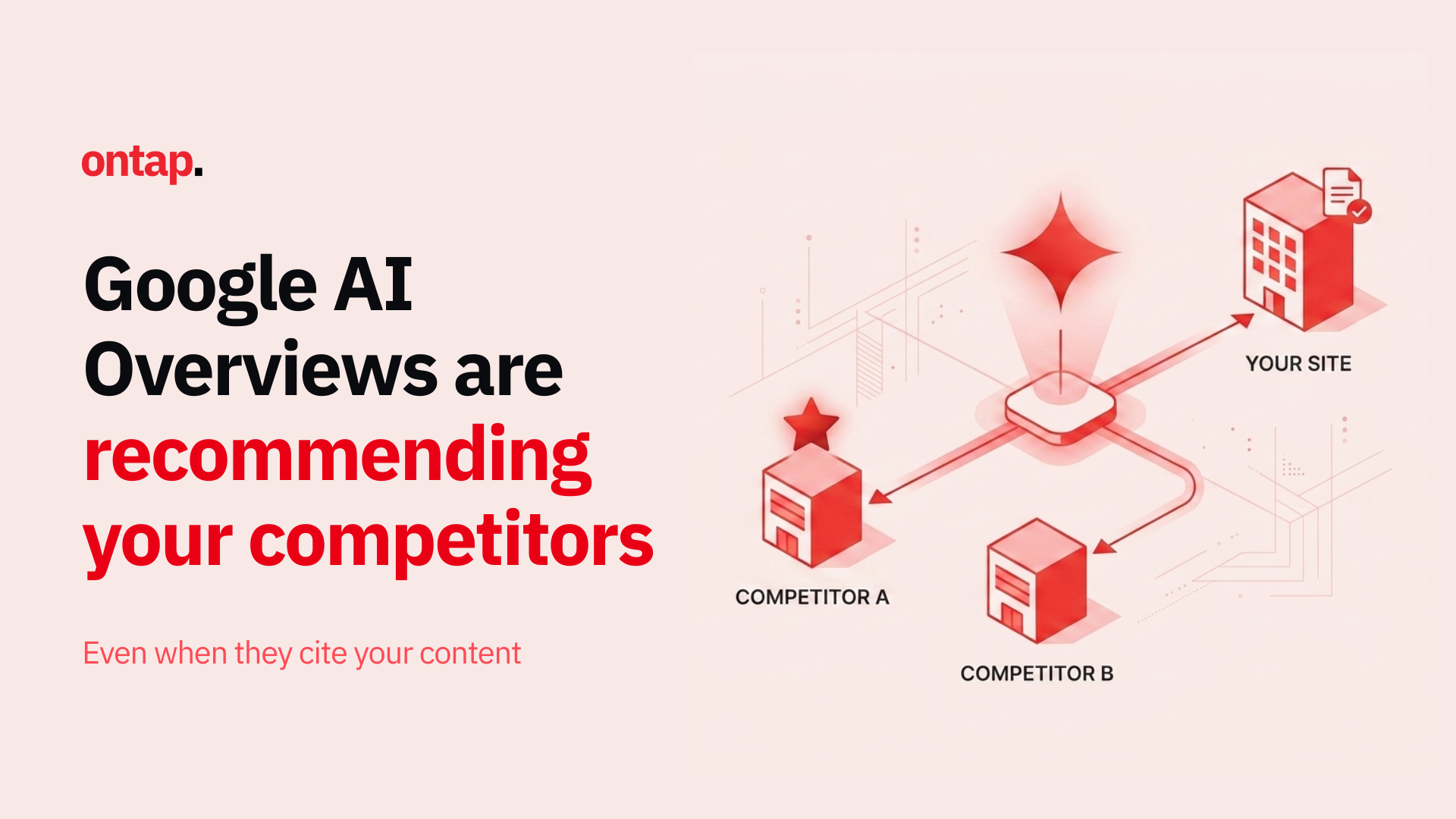

There is a growing problem in AI-powered search that most eCommerce businesses have not noticed yet: AI platforms are citing your content as a source but never mentioning your brand name in the answer. Your information is being used to help shoppers make purchasing decisions, but those shoppers have no idea it came from you.
As Search Engine Land reported on 30 July, around 40% of AI citations leave the source brand completely unnamed. A separate Semrush and Kevin Indig study of 3,981 domain appearances across four AI engines puts the figure at 61.7%. These are what researchers are calling "ghost citations": your content appears as a linked source, but your brand name never surfaces in the AI-generated answer itself.
For eCommerce businesses, this is not a vanity metric problem. It is a revenue problem.
What ghost citations actually look like
Imagine a shopper asks an AI assistant: "What is the best way to clean leather boots?" An AI platform generates a detailed answer using content from your product care guide. Your page appears as a small linked source at the bottom of the response. But the answer itself never mentions your brand, your products, or your store. The shopper gets helpful advice. You get nothing.
The Semrush study reveals that each AI engine behaves differently, and the differences are stark. ChatGPT is citation-heavy: 87% citation rate, but only 20.7% mention rate. Gemini does the reverse: 83.7% mention rate, but only 21.4% citation rate. Google AI Mode sits at a 49% ghost citation rate. Perplexity reaches 52%.
Both citation and mention occurred together in only 13.2% of all appearances. Being cited and being named are separate events that happen independently.
The eCommerce revenue implication
The commercial impact is measurable. Industry data shows 4,700% year-over-year growth in AI-referred traffic to US retail sites in 2026. This traffic channel is growing faster than any other acquisition source most eCommerce businesses have access to. But if your share of that traffic is ghosted, if AI sends shoppers to generic advice that happens to link to your page rather than explicitly recommending your brand, the conversion rate on that traffic will be substantially lower than it should be.
A shopper who arrives at your site because an AI explicitly named your brand as a trusted source is fundamentally different from one who clicked a small citation link out of curiosity. The first has pre-qualified trust. The second is starting from zero.
What causes ghost citations
Ghost citations correlate with several content structure patterns.
-
Content that leads with information rather than identity: If your product guide opens with generic advice and only mentions your brand in the footer or navigation, AI systems extract the advice without the brand context. As Bright Data's March 2026 analysis found, 92.4% of AI Mode and Gemini citations are self-contained sentences of 6 to 20 words. The first sentence of each major section carries disproportionate weight. If your opening sentence is generic, the AI citation will be generic.
-
Missing structured data that explicitly connects content to brand: Schema markup, author attribution, and organisation-level structured data help AI systems understand the relationship between content and its source.
-
Weak entity associations: If your brand is not consistently associated with your topic area across multiple sources - your website, third-party reviews, industry mentions, and social profiles - AI systems have less reason to name you when referencing your expertise.
As Kevin Indig explained: "Ghost citations exist because the model's parametric memory does not associate your brand strongly enough with the category. More self-published content on your own domain does not change parametric memory."
How to fix ghost citations
Embed brand identity within extractable passages
AI systems extract specific passages from your content. If those passages are brand-neutral, the AI answer will be brand-neutral. Write "On Tap recommends cleaning leather with..." rather than "To clean leather, you should..."
Strengthen your entity graph
Make sure your brand is consistently and accurately represented across every surface that AI systems use for verification: Google Business Profile, social media profiles, Wikipedia (if applicable), industry directories, and review platforms.
Invest in structured data that links content to brand
Implement Organisation, Brand, and Product schema across your site. Use author markup that connects individual content pieces to your brand entity.
Measure AI brand mentions, not just citations
Most AI visibility tools currently measure whether your content is cited. That is necessary but insufficient. You need to measure whether your brand is named in the answer text. If the gap between citations and brand mentions is large, you have a ghost citation problem.
Audit your most-cited content
Identify which of your pages are most frequently cited by AI systems and check whether those citations include your brand name. Prioritise structural improvements on high-citation, low-brand-mention content first.
The bigger picture
Ghost citations represent one of the most significant measurement blind spots in eCommerce marketing today. Many businesses believe they have strong AI visibility because their content is being cited. But citation without brand attribution is visibility without value: your content does the work, and your brand gets none of the credit.
As AI-referred traffic continues its explosive growth trajectory, the gap between "cited" and "named" will increasingly separate the eCommerce brands that capture AI-driven demand from those that merely contribute to it.
About On Tap
On Tap is a growth-focused eCommerce consultancy helping mid-market and enterprise merchants close the gap between AI citation and AI brand recognition. From entity graph audits and content architecture to structured data implementation and AI visibility measurement, On Tap helps merchants ensure their content works for their brand, not just for AI.
If you want to audit your ghost citation rate and fix it, get in touch.