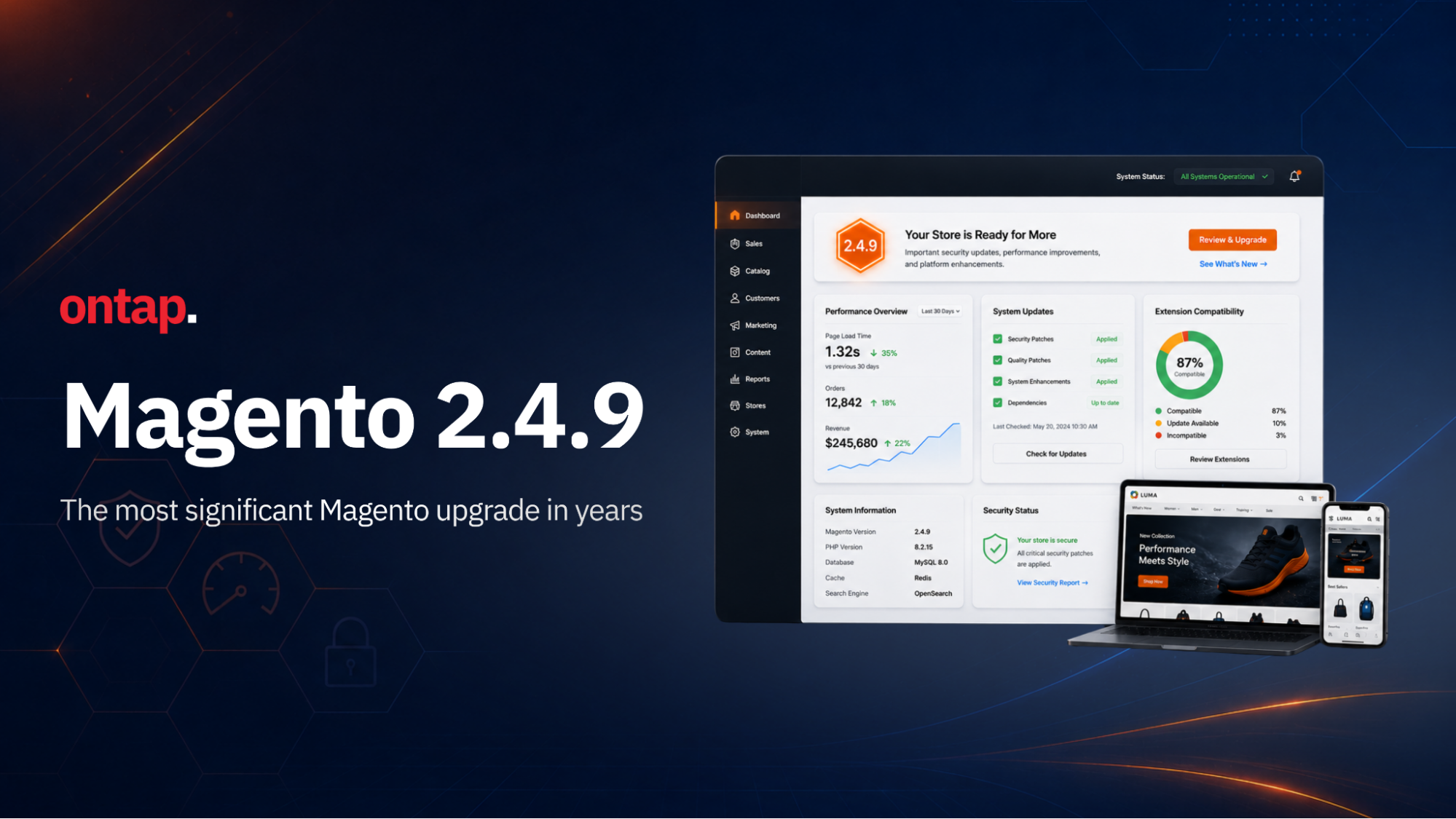

A seamless shopping experience is essential for eCommerce success, boosting customer retention and driving sales across all industries. However, a slow Magento backend can make everyday administrative tasks frustrating, especially within the admin panel – the interface used to manage your store’s backend operations. Such delays can disrupt the overall shopping journey and ultimately lead to higher bounce rates. In this article, we’ll explore six proven ways to Magento backend optimise for faster admin panel, sharing actionable techniques to help you enhance speed, improve server response, and deliver a smoother user experience.
Common causes of Magento admin panel performance issues
There are several common reasons why the Magento admin panel may be performing poorly. Understanding these causes will help target our optimisation efforts. Here are the key culprits behind a slow Magento backend:
-
Inadequate server resources: Magento is resource-intensive. If your server (or hosting plan) doesn’t meet Magento’s minimum requirements for CPU, RAM, or disk speed, the admin panel will lag. A weak or overloaded server may simply not have enough memory or processing power to handle Magento’s demands, leading to timeouts or slow queries. Insufficient PHP memory allocation is a common issue.
-
Excessive data volume: Magento stores with very large catalogues or massive order histories can experience slow admin responses. The more items and records Magento has to manage, the heavier the database queries become. Similarly, an unoptimised database full of old logs, obsolete records, and abandoned cart data can bog down queries.
-
Frequent or improper indexing: Magento uses indexing to pre-process and organize data such as prices, inventory, and search information to enhance frontend performance. If your indexers are set to “Update on Save” (the default in earlier versions, though Magento 2.4.8 now defaults to “Update on Schedule”), Magento will reindex relevant data immediately every time you save a product or category. This real-time reindexing can cause save operations in the admin panel to become very slow, especially for stores with large catalogues.
-
Third-party extensions (modules): Magento’s flexibility allows installing many extensions to add features. However, not all extensions are well-optimised. Poorly coded modules or simply having too many modules enabled can add significant overhead to admin pages. As the number of installed extensions grows, the chance of stability issues increases – one slow extension can affect the entire admin panel.
-
Inefficient cache management: When caches aren’t configured properly or aren’t cleared regularly, outdated data can linger, leading to a slow admin panel. Inefficient caching, such as leaving multiple cache types enabled or failing to clear caches periodically, can result in delays that impact both backend efficiency and overall site speed.
6 practical steps to optimise Magento backend for an enhanced admin panel
Optimise your server and hosting environment
No matter how much you fine-tune Magento’s settings, if your current server resources are no longer sufficient, your Magento backend will experience slow loading times. To ensure optimal performance, it’s essential to properly configure your web server and implement actions to enhance your hosting. Here are the key factors to consider when optimising your hosting environment for Magento:
-
Use adequate hardware (CPU/RAM): If you’re on a shared hosting plan, you might be competing for CPU time and memory with other sites, which can make your Magento admin sluggish. Consider moving to a VPS or dedicated server where you have guaranteed resources, or a reliable Magento cloud hosting provider. Make sure the server meets Magento’s recommended specifications (multiple CPU cores, fast SSD storage, and ample RAM).
-
Increase PHP memory limit: The PHP memory_limit config dictates how much memory each PHP process can use. For heavy Magento operations (like saving a complex product or reindexing), a low memory limit (e.g., 512M or 768M) might cause swapping or even script crashes. It is recommended to set memory_limit to at least 2G (2048M) for Magento, especially for larger stores. Check your PHP configuration (php.ini or .htaccess) and increase the memory_limit value if it’s below 2G.
-
Separate database server: If your store is large, one optimisation is to separate the database onto its own server (or using a cloud database service). This way, the web server (PHP/Apache or Nginx) and the DB server don’t compete for the same resources. It also allows the DB to use all allocated RAM for caching database operations. However, for small to mid-sized stores, a single server with good specs is usually fine.
-
Use faster storage: Ensure your server uses SSDs for storage. Magento does a lot of read/writes (especially for caches, sessions, and temp files). SSDs dramatically improve the speed of file operations. If you’re on an older HDD or a slow NFS storage, consider migrating to SSD-backed storage.
-
Use HTTP/2 with TLS: Enable HTTP/2 to support multiplexed connections for loading admin panel assets over TLS, such as scripts, fonts, and icons. This allows multiple requests to be sent and received simultaneously over a single connection, improving loading efficiency and reducing latency.
-
Consider a CDN for admin panel access: If your admin panel is accessed by remote teams or users worldwide, consider using a Content Delivery Network (CDN) with smart routing or latency-based DNS (e.g., Cloudflare, Fastly). A CDN can decrease access time and enhance responsiveness, especially on slower or distant networks. Although CDNs are typically linked to frontend performance, they also provide significant benefits for admin panels by distributing content closer to users and optimising delivery.
Implement caching
Enabling caching is one of the fundamental ways to speed up any Magento installation, including the backend. Magento has multiple types of caches (Configuration, Layout, Blocks HTML output, etc.) that significantly reduce the time needed to generate pages by reusing stored data.
-
Configuration cache: speeds up loading of system configuration and settings.
-
Layout and block caches: speed up rendering of admin HTML for forms, grids, etc.
-
Translate cache: caches UI labels. Keeping these caches enabled means the system doesn’t recompute layouts or reload configuration from XML every single time you open an admin page.
By keeping all these caches enabled, Magento can avoid unnecessary recomputation of layouts or reloading of configuration files every time an admin page is accessed, improving both speed and user experience. Key action steps include:
-
Verify cache types: Navigate to System > Tools > Cache Management and ensure that all cache types are enabled (green) and not in a "disabled" (red) state. If caches were disabled during development, re-enable them to let Magento efficiently handle cached data.
-
Use faster cache storage: By default, Magento stores cache and session data on the file system, which may be slow depending on your storage system. For better performance, configure memory-based storage, like Redis, for cache and session storage. Redis significantly speeds up data read/write operations by storing data in memory rather than on slower disk storage.
-
Enable PHP OPcache: Make sure PHP OPcache is enabled on your server. OPcache stores precompiled PHP code in memory, preventing the need for PHP to re-parse scripts on every request. This improves loading times by reducing the processing time for repeated operations—especially important for admin panel tasks that involve frequent PHP executions (loading classes, rendering pages, etc.).
Use asynchronous indexing and optimise cron jobs
Magento’s indexing and cron system plays a huge role in backend performance. If your admin actions are slow, one likely reason is that too much work is being done synchronously (in real-time) during those actions. Asynchronous indexing means deferring heavy tasks to background processes, so your admin interface isn’t stuck doing them while you wait.
Switch indexers to “update by schedule”
Starting with Magento 2.4.8, the default indexer mode is set to “Update by Schedule” to improve backend operational efficiency. In this mode, when you make changes such as updating products or categories, Magento marks the related indexes as needing an update but does not reindex immediately. Instead, reindexing is performed asynchronously via scheduled cron jobs running in the background. This approach reduces delays during save operations in the admin panel and minimises performance bottlenecks.
If you are using an earlier Magento version or have indexers set to “Update on Save,” it is highly recommended to switch to “Update by Schedule” to benefit from smoother backend responsiveness and better overall system throughput.
Ensure cron jobs are running and optimised
Magento relies on cron jobs for many background tasks: reindexing, cleaning cache, sending emails, generating sitemaps, etc. If cron isn’t running, those tasks pile up or, worse, Magento might try to do them during a web request. So, first verify that your cron is set up according to Magento’s instructions. You should see recent timestamps in System > Cron Schedule (or in the cron_schedule database table for the technically inclined) to confirm jobs are executing. If your admin operations are slow during certain times, check if some heavy cron jobs are running at the same time.
For example, if you schedule a full reindex or a large product import via cron at 9 am when admin users are also active, they might feel the site slow down. Try to schedule intensive tasks for off-peak hours.
It's also essential to catch cron failures or performance regressions automatically instead of checking schedules manually. That’s why tools like the AuditIQ exist. It is designed to detect server health, uptime and performance issues around the clock, alerting your team in real time before they impact revenue. Beyond detecting server health, AuditIQ is a comprehensive eCommerce monitoring tool that also covers Core Web Vitals, technical SEO, security signals, module vulnerabilities and configuration changes across Magento stores.
Avoid overlapping crons
In some cases, if a cron task takes a very long time and the next schedule triggers, you could end up with multiple heavy processes running. Monitor your cron job execution times; if something consistently takes too long, you may need to adjust it (e.g., run it less frequently or optimise the task itself). Magento supports dividing cron jobs into groups (default, index, and another for jobs like consumer queue).
Manage features and modules effectively
Magento comes with many built-in features, and over time, you may have added numerous third-party extensions and custom modules. However, some of these extensions can unexpectedly slow down your Magento backend. To maintain optimal loading times, it’s important to regularly audit, optimise, or remove unused or underperforming modules.
Optimise features and modules
Regularly reviewing extensions and built-in features is one of the easiest ways to Magento backend optimise without costly infrastructure changes
Begin by profiling your modules using Magento’s built-in Profiler or tools like New Relic to identify which extensions or functions are causing slowdowns on specific admin pages. Check for external calls made by extensions that might delay loading and audit any extension-related cron jobs that could overload your server. Test loading times by temporarily disabling suspect modules in a staging environment to assess their impact.
If you have development resources, optimise extension code by reducing data loads or improving queries. Always keep your extensions updated, as newer versions often include performance fixes. Remember, having too many extensions adds cumulative overhead, so consider consolidating functionality where possible.
Uninstall unnecessary features
Even inactive extensions can consume resources by listening to events, adding admin menu items, loading UI components, or running cron jobs. To speed up your backend, audit all installed modules and fully uninstall those you don’t need—not just disable them—to remove related database entries and setup data. This reduces your codebase and database size, lowering query load and memory usage for faster admin responses.
Beyond third-party modules, evaluate Magento’s built-in features you might not use. For example, the built-in Reports module (especially in Commerce edition) can consume resources unnecessarily if unused—Adobe recommends disabling it to improve loading times. Other features like Magento CRM, marketing tools (Related Product rules, Customer Segments), and older banner or advertising modules may also add background processing overhead if not needed. Additionally, consider removing unused store views, as each extra view multiplies data and can slow down admin grids and indexing.
By systematically auditing, optimising, and removing unnecessary extensions and features, you can significantly improve your Magento backend’s speed and efficiency, ensuring a smoother and more productive store management experience.
Upgrade Magento and its tech stack to the latest versions
Upgrading to the latest Magento/Adobe Commerce version can bring significant performance gains. Magento continually optimises the platform; newer versions often have more efficient code and database queries, better caching logic, and fixes for known slowdowns. New releases like Magento 2.4.8 introduce optimised database support with MySQL 8.4 and MariaDB 11.4, enhancing stability and scalability for large catalogues and complex operations. Additionally, Magento 2.4.8 replaces Elasticsearch with OpenSearch, a more efficient search engine that improves search performance and relevance, indirectly benefiting backend processes tied to search functionality. Backend improvements also include optimised queries for product retrieval and enhanced GraphQL caching, which accelerate data handling and reduce server load.
When updating Magento, it’s crucial to also upgrade the underlying software stack to fully benefit from performance improvements:
-
PHP version: Use the latest PHP version supported by your Magento release to maximise performance. As of 2025, PHP 8.4 offers substantial speed improvements over earlier versions. Magento benefits from engine optimisations in PHP 8, enabling faster execution and more efficient handling of concurrent requests with reduced memory usage.
-
MySQL/Database server: Ensure your MySQL or MariaDB version is up-to-date and compatible. Newer MySQL versions have better performance and indexing capabilities. Also, consider using a specialised MySQL variant (like Percona Server), which can offer improvements.
-
Elasticsearch/OpenSearch: Magento 2 uses Elasticsearch or OpenSearch for catalogue search and layered navigation. While primarily impacting frontend search speed, keeping your search engine updated and properly tuned helps maintain efficient backend operations, such as reindexing and admin global searches, preventing slowdowns.
-
Magento extensions: As part of the upgrade, update your third-party extensions and themes to their latest versions as well. New releases often include performance improvements and compatibility fixes for the updated Magento core.
Learn more: What’s new in Magento 2.4.8?
Clean and optimise the Magento database
Over time, a Magento store’s database can become bloated with data that impacts performance. Cleaning and optimising your database is like tidying up a warehouse – it makes everything run more efficiently. A lean database responds faster to queries, which means quicker admin page loads and search results.
Here are several strategies for database optimisation:
-
Clear out old and unnecessary data: Regularly remove outdated and unnecessary data to maintain a lean and efficient Magento database. This includes cleaning log tables (such as admin action logs and audit logs), archiving or pruning old orders and abandoned carts, and removing expired sessions, especially if stored in the database. Also, watch for large cache, indexer, or temporary tables left behind by crashes or extensions, and clean or truncate them as needed. Regular maintenance like this prevents database bloat, reduces query times, and improves overall backend loading times.
-
Optimise database tables: Running SQL optimisations can help reclaim space and further enhance performance. If you deleted a lot of data (logs, etc.), you should also optimise those tables to free space and improve index efficiency. This can be done via phpMyAdmin or MySQL client for each relevant table, or with a CLI script looping through tables.
-
Ensure proper indexes: Magento’s database comes with all necessary indexes for normal operations. But if you or an extension added custom queries, you might benefit from adding indexes to certain columns to speed up admin grid filters or reports. Use MySQL’s slow query log feature – enable it and set a threshold (e.g., queries taking over 1 second) to catch any slow database queries triggered by admin actions. If you find some recurring slow queries, a developer can examine them and potentially add an index or adjust the query.
-
Use external tools for analysis: Consider using AuditIQ to see if database queries are a bottleneck. AuditIQ's server monitoring can show you the slowest queries that Magento is running and how often. If you notice a particular query (perhaps from a third-party module or a custom report) is extremely slow, you can focus on optimising that, either by editing the query, adding indexes, or caching its result.
Learn more: Find out more tactics to optimise your overall Magento website performance.
Conclusion
Magento backend optimise is a critical step toward ensuring a fast, reliable, and scalable eCommerce store. By implementing the practical strategies outlined in this guide, such as updating to the latest Magento and PHP versions, configuring indexers properly, managing extensions wisely, and fine-tuning your server environment, you can dramatically improve backend loading times. A well-optimised backend not only streamlines your store management but also enhances the customer experience by enabling faster updates, accurate inventory, and smooth order processing.
If you’re struggling to optimise your Magento backend, On Tap - A trusted Magento website development company - offers expert Magento optimisation services tailored to your unique business needs. Our experienced team handles everything from comprehensive performance audits and backend tuning to server configuration and extension management, delivering measurable improvements in speed, stability, and user experience. Don’t let slow backend processes hold your store back, partner with On Tap to take your Magento shopfront to the next level.
There’s always more to learn about building a faster, more scalable Magento store. Continue your discovery through our Hyvä development for a next-generation frontend experience.