
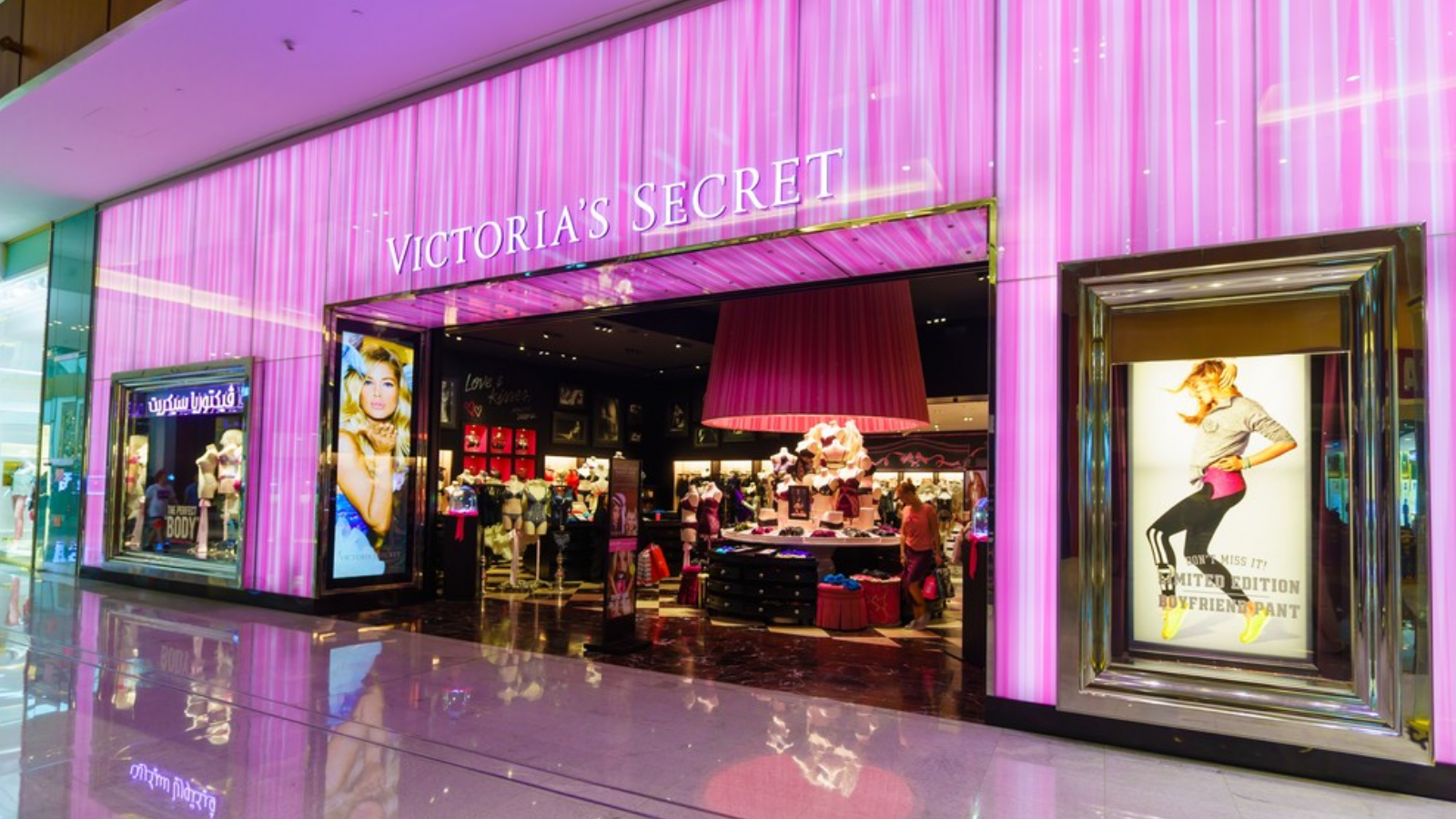
In a retail landscape defined by consumer belt-tightening, trade-down behaviour, and relentless discounting, Victoria’s Secret just delivered a masterclass in going the opposite direction. Their Q1 2026 results, 15% net sales growth to $1.6 billion, comps up 13%, and net income surging 20-fold to $57 million, didn’t come from slashing prices. They came from what the company calls a “promo detox.”
The contrast that tells the full story
To understand why Victoria’s Secret’s results matter, it helps to see them alongside what’s happening at the other end of the market. The same week Victoria’s Secret reported its results, Dollar General posted Q1 sales of $10.8 billion (up 3.4%), driven by an “accelerated rate” of trade-down activity. CEO Todd Vasos revealed that higher-income shoppers, those making over $100,000 annually, are increasingly showing up at Dollar General stores. The company opened 190 new stores in Q1 alone.
Meanwhile, FMI data shows that mass retailers have drawn level with supermarkets as Americans’ primary grocery destination, with 37% of shoppers now naming a mass merchant as their main grocery source, equal to traditional supermarkets for the first time.
These aren’t contradictory stories. They’re the same story viewed from different ends of the spectrum. The middle market continues to erode. Value wins at the bottom. Brand clarity wins at the top. The dangerous place to be is in between, offering neither the most compelling price nor the most compelling brand experience.
Victoria’s Secret is the clearest case study available right now for winning at the brand end of that spectrum, and while Dollar General’s 3.4% sales growth confirms the discount end of the market is thriving, Victoria’s Secret proves there’s an equally compelling path at the other end, if you execute it correctly.
What is "Promo Detox" and why does it work?
Victoria's Secret's promo detox is a deliberate strategy to wean the brand off promotional dependency. Rather than training customers to wait for the next 40%-off sale, the company shifted to more full-price selling. The result: adjusted gross margin expanded by 240 basis points to 37.6% year over year.
To put that in plain terms: a “basis point” is simply one-hundredth of a percentage point, so a 240 basis point improvement means gross margin, the percentage of each sale kept as profit after the cost of goods, rose by 2.4 percentage points. On revenue this size, that’s a meaningful jump in profitability without selling a single extra unit.
This is counterintuitive in a market where consumer sentiment is at record lows and two-thirds of households report cutting spending. Conventional wisdom says you meet consumer pressure with discounts. Victoria's Secret says you meet it with brand clarity instead.
CEO Hillary Super articulated the strategy simply: "For Victoria's Secret, that world is sexy, glamorous and luxurious. For Pink, it is bold, playful and irreverent." Two distinct brand identities, each with a clear emotional proposition, each earning its price point through positioning rather than defending it through discounting.
The margin maths that should wake you up
Let's put the margin impact in perspective. A 240 basis point gross margin improvement on $1.6 billion in quarterly revenue translates to approximately $38 million in additional gross profit in a single quarter. That's money that can be reinvested in product quality, marketing, eCommerce tools, technology, and fulfilment without touching the P&L.
Compare this to the typical eCommerce promotion cycle: discount by 20% to drive a 15% volume increase, netting a reduction in total gross profit. Many merchants are running harder just to stand still, training their customers to expect and wait for discounts.
Victoria's Secret broke this cycle by making two critical changes simultaneously:
1. Brand differentiation became the value proposition. Instead of competing on price, they competed on identity. The appointment of a dedicated chief merchant for the Pink brand, a role left unfilled under previous leadership, signals how seriously they're taking the separation of brand identities. Each brand now has its own customer, its own aesthetic, and its own reason to exist at its price point.
2. The product earned the price. GlobalData's Neil Saunders noted that the fresh approach to marketing, combined with product improvements, gave customers a reason to pay full price. This is the piece most merchants miss; promo detox only works if the product experience justifies the price. You can't simply remove discounts and expect the same volume. You have to simultaneously improve the value equation from the product side.
The Promo Detox framework for eCommerce merchants
If Victoria's Secret's results inspire you to rethink your promotional strategy, here's a practical framework:
Step 1: Measure your promotional dependency
What percentage of your revenue comes from discounted transactions? If it's over 40%, your customers have been trained to wait for sales. That's the habit you need to break.
Step 2: Strengthen brand identity before reducing promos
Don't pull promotions in a vacuum. First, invest in clarifying what your brand stands for. What emotional territory do you own? What makes your product worth full price? If you can't articulate this clearly, your customers certainly can't.
Step 3: Improve the product experience
Victoria's Secret didn't just stop discounting; they improved their products and marketing simultaneously. Look at your product quality, packaging, unboxing experience, post-purchase communication, and eCommerce personalisation strategies across the customer journey. These are the touch points that justify premium pricing.
Step 4: Graduate gradually
A cold-turkey approach to promotional withdrawal risks a revenue cliff. Instead, reduce promotional frequency and depth gradually. Replace percentage-off sales with value-adds, gifts with purchase, early access, loyalty perks that preserve margin while maintaining customer engagement.
Step 5: Watch your cohorts
Victoria's Secret's fourth consecutive quarter of comp growth shows the strategy has legs. Track your customer cohorts closely as you detox. Are new customers arriving at full price? Are existing customers adjusting? The data will tell you whether your brand identity is strong enough to hold.
The On Tap perspective
In an economy where consumers are splitting into value-seekers and brand-loyalists, the worst strategy is to be neither fish nor fowl. Dollar General is winning the value game decisively. Victoria's Secret is winning the brand game decisively. Both are growing. Both are gaining market share.
The merchants in trouble are the ones stuck in the promotional treadmill, discounting enough to erode their brand positioning but not enough to compete with true value retailers. If that sounds familiar, Victoria's Secret just showed you the way out.
The question isn't whether promo detox works. The Q1 results prove it does. The question is whether your brand is strong enough to survive the transition. And if it isn't, building that brand strength should be your top priority for the rest of 2026.
At On Tap, we help eCommerce brands build the kind of brand and technical infrastructure that supports premium positioning. Get in touch to learn more.