

Expanding your eCommerce business across borders isn’t just about translating your store; it’s about managing multiple markets, currencies, tax regimes, and fulfilment flows while staying in control. Shopify Plus positions itself as the solution, offering tools like Shopify Markets, Expansion Stores, and advanced checkout customisation to simplify global selling. In this article, we evaluate how far Shopify Plus can really take you, whether it is the right fit for your international strategy, and how to maximise its potential.
How Shopify Plus handles selling internationally
In this section, we’ll take a closer look at how Shopify Plus empowers brands to expand globally with ease. While Shopify’s standard plans (Basic, Shopify, and Advanced) cover the basics of cross-border selling through Shopify Markets, such as localised pricing, language, and currency, these features often aren’t enough for businesses with complex international needs.
That’s where Shopify Plus truly stands out. It offers advanced tools to tailor your store for each region: independent expansion stores for different markets, a centralised organisation-level admin for streamlined management, advanced checkout customisation and Advanced Shopify Payments that waive transaction fees, support local payment methods, and automatically display duties and shipping costs so customers see the final landed price at checkout. Together, these features make Shopify Plus a powerful solution for scaling international eCommerce.
Below is a detailed breakdown of how Shopify Plus handles each aspect of international selling.
1. Flexibility of store architecture models
Shopify Plus offers merchants two primary architectural models for international expansion, each shaping how businesses deliver customer experiences and manage operations on a global scale.
-
One store for multi-markets:
With this model, all international selling activities are managed within a single store, while merchants can customise the shopping experience for each region. On Shopify Plus, a store can support up to 50 active markets, each configured with its own currency, language, pricing rules, domains, and shipping options, all managed from a unified dashboard.
-
Key features:
-
-
Centralised operations and data management: A single admin dashboard provides unified control over inventory, orders, and customer data across all regions, enabling streamlined logistics and consistent reporting.
-
Flexible localisation: Customise currency, language, product availability, pricing, taxes, duties, and even themes per market.
-
SEO optimisation: Use local domains or subfolders (e.g., *.fr, .de) to build regional SEO authority and improve discoverability.
-
-
Best for:
-
Businesses selling the same or similar catalogue worldwide.
-
Brands prioritising efficiency and centralised management over full regional independence.
-
Merchants testing new international markets without heavy upfront investment.
-
Multi-store for multi-markets
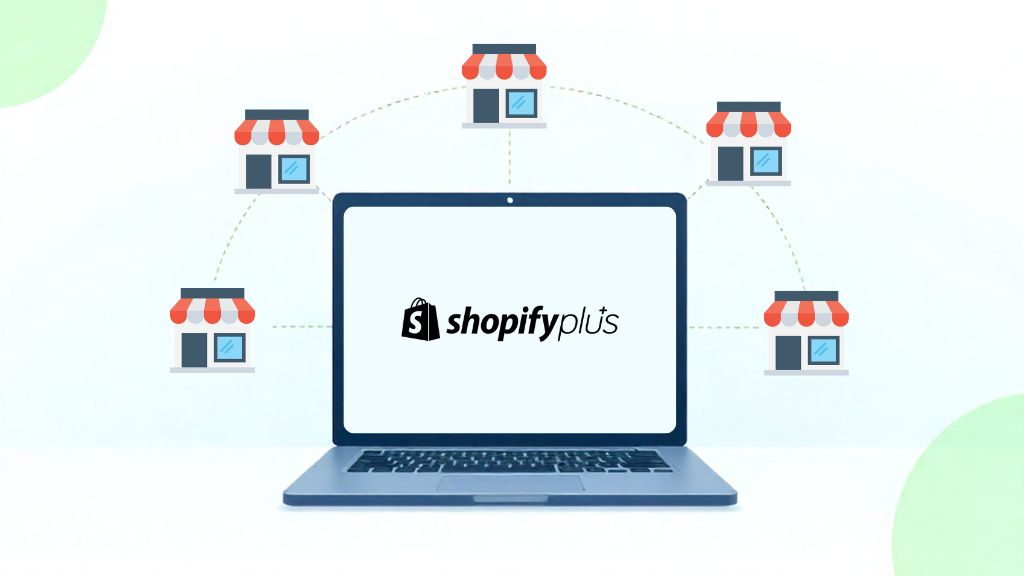
With this model, merchants operate multiple Shopify stores (up to 9 expansion stores on Shopify Plus, in addition to your primary store) to serve different markets or regions independently. Each store functions as its own entity, offering maximum flexibility and control for businesses that need deep localisation in product assortments, content, design, and operations.
-
Key features:
-
Independent storefronts: Each store has its own products, inventory, pricing rules, content, design, and checkout experience, tailored to local needs.
-
Deep localisation: Stores can be built for specific domains, languages, currencies, cultural expectations, and regional regulations, enabling hyper-local marketing and branding.
-
Separate inventory & fulfilment: Manage warehouses, shipping providers, and stock levels per store to align with local supply chains.
-
Maximum flexibility: Ability to run different business models (e.g., B2B vs. B2C) or regional exclusives, and integrate with country-specific third-party systems.
-
Best for:
-
Global brands with diverse product assortments or significant differences in customer expectations between markets.
-
Companies needing separate storefronts for compliance (e.g., tax laws, payment methods, or restricted product categories).
-
Enterprises running hybrid operations (B2B + B2C) or markets requiring unique branding/UX.
Choosing the right store architecture on Shopify Plus sets the foundation for all subsequent setups. It directly influences catalogue setup, data management, pricing, payment and shipping configurations, marketing, and SEO strategies, which in turn shape the customer experience in each country or region.
2. Catalogue and product availability
Product catalogue management on Shopify Plus is directly tied to your chosen store architecture.
-
For the "One store for multiple markets" model: A single master catalogue is shared across all regions. You can control regional availability by showing or hiding products, which works best when your product line is largely consistent worldwide.
-
For the "Multiple stores for multiple markets" model: Each store maintains its own independent catalogue. This gives full freedom to localise assortments, SKUs, or seasonal collections, but requires manual updates across stores.
Shopify currently enforces a 100-variant limit per product (for example, combinations of size, colour, and style). However, Shopify has announced that this limit will expand to 2,048 variants per product through the Increased Variants preview, available in development stores via the GraphQL Admin API.
It’s important to note that the productSet mutation supports up to 2,048 variants, but only with asynchronous calls; synchronous calls are still capped at 100, according to API updates. For stores with large, complex SKUs, where a single product may require dozens of size, colour, and material combinations, this limitation often forces workarounds, such as splitting products into multiple entries or using third-party apps.
Plus stores with 50,000 or more total variants can upload unlimited variants per day via apps or CSV import, ensuring large catalogues can scale without technical bottlenecks.
3. Data management across stores
Regardless of the store model, whether a single store for multiple markets or multiple expansion stores, Shopify Plus provides organisation-level administration, allowing merchants to centralise management of user permissions, billing, and access controls.
-
Centralised user permissions: Admins can assign roles and permissions across all stores from a single dashboard, controlling who can access each store and what actions they can perform.
-
Unified billing: Shopify Plus consolidates subscription fees and app charges across stores, simplifying accounting and budgeting.
-
Consolidated access: Store owners can log in via a single account to manage multiple stores, reducing complexity in daily operations.
However, each store’s actual data, such as products, inventory, orders, and customer records, remains siloed. To consolidate or analyse data across multiple stores (e.g., total sales, combined customer reports, or global inventory), merchants typically rely on:
-
Shopify APIs: To fetch and aggregate data programmatically from each store.
-
Third-party middleware or data warehouses: Tools like Stitch, Fivetran, or custom integrations can unify data for reporting, business intelligence, or automation.
This setup gives merchants the best of both worlds: centralised control for management and billing, while maintaining store-level autonomy for operations and localisation.
4. Pricing and currencies
Shopify Plus allows you to tailor prices for international markets through Shopify Markets. All products start with the store’s base currency, then merchants can adapt prices per region in three ways:
- Automatic conversion: Prices are converted from the base currency using Shopify’s daily exchange rates.
- Percentage adjustments: You can apply a percentage increase or decrease across a market’s catalogue to reflect local buying power.
- Fixed pricing: Specific product prices can be set for each country or region, overriding conversions and adjustments.
You can also apply rounding rules so converted figures display naturally (for example, converting £39.12 to £39).
Once set, prices are displayed, charged, and refunded in the customer’s local currency (where Shopify Payments is available), while all financial reporting continues to use the store’s base currency. You can also apply rounding rules so converted figures display naturally (for example, converting £39.12 to £39) to provide a smoother experience for customers.
However, the multi-store model introduces some differences:
- Base currency and catalogue: While one store shares a single catalogue and base currency across all markets, each expansion store in a multi-store setup has its own catalogue and base currency.
- Independent pricing: Merchants can set prices independently for each store, fully tailored to the local market.
- Custom pricing strategies: Pricing can be customised per store without relying on automatic currency conversions.
- Separate management: Each store’s prices must be managed individually, which requires more operational effort but allows maximum flexibility for diverse markets.
Note: Whether prices appear tax-inclusive or exclusive is controlled separately through Dynamic tax-inclusive pricing, covered under Taxes and Duties.
5. Payments and payouts
On Shopify, both Shopify Payments (the default gateway) and Adyen (a supported third-party option) can serve as the primary gateway for international selling. They support local-currency checkout, handle refunds, and settle funds directly into your connected bank accounts. With Shopify Payments, you also gain access to Shop Pay, Shopify’s one-click wallet that improves mobile conversion.
In contrast, other third-party gateways force transactions back to your store’s base currency and often trigger extra fees. For merchants seeking a more hands-off cross-border solution, Managed Markets can take care of duties, import taxes, compliance, and even remittance.
-
Gateway choice
-
Shopify Payments (or Adyen) enables local-currency checkout and refunds.
-
If you use another provider, checkout reverts to your store’s base currency, and Shopify Plus charges a 0.20% transaction fee on every order.
-
Supported payment methods
-
Major cards: Visa, Mastercard, American Express, and Discover.
-
Digital wallets: Shop Pay, Apple Pay, Google Pay, PayPal Express.
-
Local payment methods: iDEAL (Netherlands), Bancontact (Belgium), Sofort & Giropay (Germany), EPS (Austria), Alipay (China).
-
Buy Now, Pay Later (BNPL): Klarna, Afterpay, and Shop Pay Instalments in supported regions.
-
Crypto payments (early access): USDC stablecoin on the Base network, with settlement either in USDC or in your chosen payout currency.
-
Payment processing
-
With Shopify Payments or Adyen, customers pay and receive refunds in their local currency, meaning no forced conversion back into your store’s base currency—and no hidden currency conversion fees.
-
With other gateways, local currency display is only cosmetic. All transactions are converted back into your store’s base currency before payout, which results in currency conversion fees and may also expose customers to extra cross-border or bank charges.
-
Payouts and settlement
-
Plus merchants can connect up to eight local bank accounts, minimising foreign exchange (FX) costs by settling regionally.
-
Standard payout schedules are daily or weekly, depending on the country.
-
Managed Markets batches payouts on fixed dates (1st, 8th, 15th, 22nd), with funds arriving a few days later.
-
Fee structure
-
Processing fees: Standard card processing fees, often negotiable on Plus.
-
Conversion fees: 1.5% in the US, 2% for other regions when payout currency differs from the customer’s currency.
-
Third-party gateway fee: If you use a third-party payment provider instead, Shopify Plus applies an additional transaction fee that is lower than on standard plans and negotiated individually.
-
Refunds: Processing and conversion fees are not returned.
-
Other aspects
-
Fraud analysis: Built-in tools using AVS, CVV, and machine learning.
-
Compliance: PCI DSS Level 1 certified; 3D Secure (PSD2/SCA) handled automatically in the EU/UK.
-
Chargebacks: Admin tools provided; liability can shift if Fraud Protect is enabled.
6. Taxes and duties
Shopify Plus enables merchants to handle cross-border compliance by calculating and collecting duties and import taxes at checkout. Using the Delivered Duty Paid (DDP) model, customers see the full landed cost upfront, aligning duty calculations with shipping documentation and preventing duplicate charges at delivery.
To activate DDP, merchants must use supported carriers (e.g., DHL Express) that provide DDP shipping labels, and products require accurate Harmonised System (HS) codes and country of origin data. For large catalogues, this workflow can be automated via integration with Product Information Management (PIM) or Enterprise Resource Planning (ERP) systems, ensuring consistent duty calculations across all products.
-
Duty collection options: Merchants can collect duties at checkout (DDP) or leave them to the customer on delivery (DAP). Plus merchants usually choose DDP to protect conversion and reduce returns.
-
Fees: According to Shopify’s duties pricing documentation, a duty calculation fee applies to every order — 0.5% during the current reduced period (since February 2025), reverting to 0.85% with Shopify Payments or 1.5% with other gateways.
-
Shipping labels: If you collect duties, you must use DDP shipping labels via supported carriers (e.g. DHL Express) to prevent customers from being billed again at delivery.
-
Tax display: Dynamic tax-inclusive pricing controls whether product prices appear with VAT/GST included (as expected in markets like the UK or EU) or tax-exclusive (as in the US).
-
Automates cross-border compliance: Managed Markets automatically assigns HS codes, calculates and remits duties and taxes, generates compliant shipping documents, guarantees duty/tax amounts at checkout, and files taxes abroad, reducing the risk of delivery issues.
7. Shipping and fulfilment

-
Shipping engine: Shopify calculates rates by matching the customer’s address to shipping zones and rules defined in Admin. These are applied across all fulfilment locations.
-
Fulfilment routing: Orders are assigned to a warehouse, retail store, or 3PL based on Shopify’s routing logic. Plus merchants benefit from higher API limits to override this with ERP or OMS integrations.
-
Customs documentation: Shopify generates commercial invoices and customs forms from product data. Labels are issued to match checkout configuration — DDP if duties were collected, or DAP if not.
-
Carrier connectivity: Shopify integrates with carriers like UPS, USPS, and DHL Express for real-time rates. Broader carrier networks can be connected through third-party shipping platforms.
-
Shopify Fulfilment Network (SFN): In supported regions, Shopify provides outsourced warehousing, pick-pack, and shipping as a managed service.
-
International fulfilment compliance: Through Global-e, orders ship via DHL or UPS with Shopify-provided labels, and customs clearance and duties/taxes are guaranteed.
8. Store redirection, translation and SEO

Shopify Plus provides built-in features for managing redirection, translation, and SEO across markets:
-
Redirection: Shopify Markets can detect if a customer lands on the “wrong” market domain and either automatically redirect them or display a prompt to switch based on their browser language. However, for more advanced scenarios, such as IP-based geolocation redirection or compliance-driven rules (e.g., GDPR cookie consent in the EU), you’ll need to integrate a third-party app.
-
Domains and SEO: Each market can be assigned its own dedicated domain, subdomain, or subfolder, giving merchants flexibility in structuring their international web presence. Shopify automatically generates hreflang tags to signal to search engines which version of a page to display for users in different regions, reducing the risk of duplicate content and improving international SEO visibility.
-
Languages: Each store supports up to 20 languages. Translate & Adapt allows manual translations with auto-translation for two languages; additional languages or app content often require third-party tools.
9. Scalability, security and compliance
Shopify Plus infrastructure supports 10,000+ checkouts per minute, with 99.99% uptime backed by SLA. Security standards include PCI DSS Level 1 and DDoS protection. Tools for GDPR and CCPA compliance are available, though merchants remain responsible for VAT/GST filings and restricted product compliance.
Expanding internationally with Shopify Plus involves much more than simply opening your store to new markets. From store architecture and catalogue management to payments, logistics, and compliance, each decision shapes how effectively your brand can scale across borders. Shopify Plus provides a versatile toolkit to address these challenges, but success depends on aligning its features with your specific global strategy.
Curious about the full scope of Shopify Plus? Check out our in-depth feature breakdown of Shopify Plus to see how it can support your international journey.
Strengths of Shopify Plus for International Expansion
Shopify Plus offers several key advantages for businesses looking to expand globally, primarily centred on flexibility, streamlined management, and improved customer experience.
Flexible strategies to fit the stage of growth
The platform provides a choice between two main store architecture models: a single store for multiple markets or multiple stores for multiple markets. This allows merchants to select a strategy that best fits their stage of growth. The single-store model is ideal for simplicity and centralised management of up to 50 markets, with adjustments for currency, language, and pricing layered on top. For businesses needing deeper localisation, the multiple-store model allows for up to nine additional stores, each with its own independent catalogue, design, and content. This adaptability helps businesses tailor their approach to different regions and maintain sustainable international operations.
Flexible customisation for each region
Shopify Plus offers advanced tools for flexible customisation, going beyond basic currency and language options to create a truly localised shopping experience.
-
International SEO optimisation: The platform includes built-in SEO tools to help you succeed in international markets.
-
Support for 20 languages: A key feature is the ability to offer up to 20 languages per store, with automated translation for product content and manual translation options for other store elements. This helps create a truly localised experience for customers, regardless of their location.
-
hreflang tags: It automatically generates and manages hreflang tags, which tell search engines the relationship between different language and regional versions of a page, ensuring users are directed to the most relevant store.
-
Region-specific URL structures: Shopify allows you to use region-specific URL structures like subdomains (e.g., https://www.google.com/search?q=ca.yourstore.com), subfolders (e.g., yourstore.com/ca), or even country-specific domains (yourstore.ca) for better search engine ranking and local recognition.
-
Local payments and tax policies:
-
Pricing and currency: The platform supports over 133 currencies, allowing customers to pay in their local currency. Furthermore, businesses can set different prices for specific markets or regions to optimise profit margins.
-
Payments: Shopify Payments supports region-specific payment methods, like iDEAL (Netherlands), Bancontact (Belgium), Klarna (Germany), and Alipay (China), which increases conversion rates and builds customer trust. The platform also automates sales tax, VAT, and customs duties calculations based on the customer's location.
-
Delivered Duty Paid (DDP): This is particularly effective with the Delivered Duty Paid (DDP) model, which displays the final landed cost (including all taxes and shipping fees) at checkout. This transparency reduces cart abandonment and ensures a smooth, predictable experience for international customers.
-
Shipping and fulfilment rules: Shopify Plus enables you to set up specific shipping rules and rates for different regions or countries, leading to more efficient logistics management. You can configure various shipping options and prices for different geographical areas, including free shipping promotions. The platform also integrates seamlessly with local shipping carriers and logistics partners, helping to optimise delivery costs and times for each market.
Centralised management via organisation-level admin
A key strength of Shopify Plus is its ability to centralise management through the "organisation-level admin" dashboard.
-
User and permission management: The organisation can manage access rights and roles for all users across every store and market from a single location, ensuring consistency and security across the entire system.
-
Centralised reporting: While each store operates independently, the organisation-level admin provides an overview of payments and revenue across all stores, which streamlines reporting and analysis.
-
Automation: With tools like Shopify Flow, businesses can automate complex cross-store processes, such as syncing new products or price changes. This reduces repetitive manual work and increases operational efficiency.
Enhanced customer conversion
The platform's features are designed to remove friction at checkout and increase customer trust.
-
Shopify Payments enables checkout in over 133 currencies, allowing customers to pay and be refunded in their local currency without hidden conversion fees. This is a significant advantage over third-party gateways that force transactions back to the store’s base currency.
-
The platform also supports various regional payment methods and Shop Pay, which is proven to boost mobile conversion, particularly in North America.
-
Additionally, by offering Delivered Duty Paid (DDP), merchants can show the full landed cost upfront, which reduces abandoned carts and delivery refusals caused by unexpected fees.
Limitations and challenges of selling internationally with Shopify Plus
Despite its robust features, Shopify Plus is not a one-size-fits-all solution and has certain limitations.
Synchronisation challenges between expansion stores
-
Product data: Each expansion store maintains a separate product catalogue. This means that whenever you update products, change content, or adjust inventory, you need to repeat these actions across every store. The process is time-consuming and error-prone unless you implement a complex middleware solution for automation.
-
Customer data: There is no unified global customer profile across stores. As a result, customer data and purchase history are fragmented, making it difficult to manage loyalty programs or analyse shopping behaviour on a global scale.
-
Order and returns data: Order and returns information is also siloed within each store. This complicates reporting and reconciliation, especially for enterprises that operate multiple legal entities or require profit-and-loss reporting by region.
To overcome this, businesses often need to invest in a middleware solution or integrate with ERP/PIM systems, which adds to the total cost and technical complexity.
Scaling limitations
While Shopify Plus is designed for scale, it has certain built-in limitations that large enterprises may outgrow.
-
Store and market limits: The default limits of managing up to 50 markets and having 9 expansion stores may not be sufficient for very large corporations or multi-brand organisations. Reaching beyond these limits requires more complex architectural solutions and workarounds.
-
API limits: Although Shopify Plus has higher API limits, businesses with high-volume, real-time data needs, such as managing a massive number of SKUs or complex customer data, may still encounter technical bottlenecks. Integrating multiple stores with complex back-end systems (like ERP, PIM, WMS) requires significant investment in middleware and adds to operational complexity.
Pricing and payment constraints
While Shopify Payments is a powerful tool, its availability is limited to about 40 countries. Businesses headquartered elsewhere may not be able to leverage features like multi-currency refunds or Shop Pay. For other payment gateways, Shopify Plus still applies an additional transaction fee, which can significantly erode margins at high sales volumes. Moreover, Shopify does not return processing fees on refunded orders, which can create added cost pressure for businesses with high return rates.
Translation limitations
Shopify's built-in translation tool, Translate & Adapt, only offers automatic translation for two languages, with others requiring manual input. Some content, particularly from third-party apps, may not be natively translatable, which can create an inconsistent experience for international customers.
Compliance gaps
For complex redirection logic, such as IP-based geolocation or GDPR consent rules, merchants must rely on external apps. While Shopify handles many compliance aspects, merchants are still responsible for managing VAT/GST registration and filing, as well as compliance for restricted products in regulated industries. The lack of local hosting or data residency options can also be a barrier in countries with strict data regulations like China.
Best practices for selling internationally with Shopify Plus

1. Start with market prioritisation
Before expanding, start by prioritising markets based on demand, local regulations, and logistics feasibility. Use Shopify Markets to quickly test low-volume regions, then only invest in an Expansion Store for strategic markets that require a completely separate setup.
2. Design a layered localisation strategy
-
Languages: Invest in professional translation for priority markets; use Shopify’s 20-language capacity for breadth.
-
Currency and pricing: Combine automatic conversion for scale with fixed price lists in strategic markets to protect margins.
-
Tax display: Configure dynamic tax-inclusive pricing so storefronts match local norms (VAT-inclusive in EU, tax-exclusive in US).
3. Align SEO and discovery with market setup
-
Use country domains or subfolders to build trust and capture regional search traffic.
-
Configure hreflang correctly to prevent duplicate content issues and signal relevance to Google.
-
Avoid aggressive IP-based redirection that harms search indexing; instead, rely on Shopify’s domain-based prompts or customer choice.
4. Remove friction at checkout
-
Enable Shopify Payments wherever possible to unlock multi-currency checkout, Shop Pay, and local payment methods.
-
Add regional payment methods (iDEAL, Bancontact, Klarna, Alipay) to meet customer expectations.
-
Offer Buy Now Pay Later selectively to boost AOV in markets where it’s culturally preferred.
5. Provide clarity on landed costs
-
Always aim for DDP (duties prepaid at checkout) to avoid refusals and disputes.
-
Ensure every SKU has HS codes and country-of-origin data so duties are calculated correctly and treaty benefits apply.
-
Use Managed Markets if speed of entry is the priority, but weigh fees and product restrictions against in-house compliance capabilities.
6. Build logistics resilience
-
Develop a distributed fulfilment strategy using local warehouses or 3PL partners.
-
Use Shopify Plus API capacity to integrate ERP/OMS systems for accurate stock and routing decisions.
-
Standardise DDP labels with carriers like DHL/UPS to ensure delivery experience matches checkout promises.
7. Unify data and reporting early
-
Invest in PIM/ERP middleware to overcome Shopify’s siloed store model.
-
Create a central BI layer to consolidate orders, returns, and customer data across markets.
-
Define KPIs globally (e.g. CAC, LTV, refund rate) so performance is comparable across regions.
Conclusion
Shopify Plus provides the flexibility and infrastructure needed for global commerce, but it isn’t a one-size-fits-all solution. Its strength lies in supporting different store architecture models—whether running a single store across multiple markets with localised pricing and languages, or deploying independent expansion stores where deeper localisation and autonomy are required. Alongside this, Plus brings powerful features for payments, taxes, and cross-border optimisation, though merchants may still need third-party solutions for advanced data management and integrations.
Ultimately, the best setup depends on your target markets, operating model, and long-term goals. To unlock the full potential of Shopify Plus for international growth, it helps to partner with an experienced Shopify Plus development team.
At On Tap, we specialise in helping ambitious brands unlock the full potential of Shopify Plus. From international store architecture and localisation to seamless integrations and ongoing optimisation, our Shopify Plus development services are designed to set you up for scalable global growth.
Ready to take your brand global? Contact us today to explore how we can make Shopify Plus work for you.
FAQs
-
What are the differences between Shopify Markets vs. Expansion Stores for international selling?
Shopify Markets and Expansion Stores focus on different levels of internationalisation. Markets focuses on centralised efficiency by managing localisation from a single store, while Expansion Stores provide full independence for deeper customisation. They are not opposing strategies but complementary tools that, when combined, give brands both efficiency and flexibility in global operations.
-
Shopify Markets manages the operational side of internationalisation—covering local pricing rules, currencies, languages, duties/taxes, and SEO settings. It’s designed for efficiency, enabling you to run one catalogue and adapt it across multiple regions without duplicating your store.
-
Expansion Stores (exclusive to Shopify Plus) are additional stores available on Shopify Plus (up to 9 in addition to the primary store). They give merchants full independence to create separate stores with unique catalogues, themes, content, apps, and integrations. This level of control is useful for markets that require deep customisation (e.g., different product assortments, fully localised storefront designs, region-specific payment methods, or integrations with local third-party systems), as well as for distinct business models such as B2B vs. B2C.
In practice, most global brands utilise these tools in conjunction with one another, relying on Markets for efficiency in regions with similar needs, and deploying Expansion Stores in markets that demand deep localisation or independence. The right balance depends on your international strategy, resources, and long-term growth goals.
-
Should I upgrade to Shopify Plus or use Shopify Markets?
When planning international growth, the choice often comes down to whether you can scale with Shopify Markets alone or if you need the advanced capabilities of Shopify Plus. Let’s compare three scenarios:
a. Shopify core + Free Markets
Best for: early-stage or testing international demand
-
You can localise prices, currencies, domains, and languages for each region without extra cost.
-
Works well if your product catalogue is consistent across countries and your volumes are moderate.
Limitation: No multi-store setup, limited automation, and reliance on third-party apps for advanced needs (e.g., IP-based redirection, complex tax handling).
b. Shopify core + Managed Markets (premium upgrade)
Best for: merchants wanting Shopify to handle complexity
-
Managed Markets adds end-to-end services like duty/tax calculation at checkout, compliance, and consolidated international payouts.
-
Useful if you want to minimise operational overhead and let Shopify manage customs, tax, and payment risks.
Limitation: Fixed payout schedules, additional fees on top of transactions, and less control if you prefer to manage duties and compliance in-house.
c. Shopify Plus (comes with Markets + Expansion Stores)
Best for: scaling brands with high international ambitions
-
Includes everything in Markets, plus up to nine expansion stores for full regional autonomy (local teams, unique catalogues, independent apps).
-
Allows advanced automation (Shopify Flow, Launchpad), custom checkout (Shopify Scripts or Checkout Extensibility), and negotiated processing fees.
-
Ideal if you’re operating across multiple large regions or B2B channels, where governance, performance, and flexibility matter.
Limitation: Managing multiple expansion stores can increase complexity and operational overhead. Product updates, inventory syncing, and content changes often require duplication across stores unless supported by middleware or third-party integrations, which add cost and complexity.
When to upgrade to Shopify Plus
You should consider Shopify Plus if:
-
You need regional autonomy (separate catalogues, pricing rules, tax setups, or apps per market).
-
You’re managing high sales volume across multiple countries and want to avoid operational bottlenecks.
-
You require advanced checkout customisation, deeper automation, or lower processing fees at scale.
-
You’re building a hybrid B2C + B2B model, where Plus unlocks additional wholesale features.
-
You’re expanding into many international markets (typically 5–6 or more) and want to optimise costs with centralised management from a single organisation-level admin.
If your international operations are simpler—selling the same catalogue worldwide with moderate volumes—then Shopify Core with Free or Managed Markets may be enough until your business complexity justifies the Plus upgrade.
-
What sets Shopify Plus apart from other standard plans in selling internationally?
|
Criteria |
Shopify Plus |
Shopify (Standard Plans) |
|
1. Number of stores and markets |
Offers up to 50 active markets and 9 additional expansion stores for fully localised stores under one contract. Flexible architecture for multi-region or multi-brand setups. |
One store up to 3 markets (additional stores need additional cost). Limited control and customization per market. |
|
2. Catalogue and product availability |
More advanced multi-store catalogues: assign specific products/collections per expansion store. Better suited for region-specific assortments. |
Basic catalogue sharing. Product availability can be restricted per market using Shopify Markets, but is limited to one inventory model. |
|
3. Data management across stores |
Centralised control data across data and markets via Shopify organisation-level admin. |
Basic data management via default Shopify admin. |
|
4. Pricing and currencies |
Full price lists per store, advanced rounding, and flexible rules. Allows different pricing strategies per market/store. |
Multi-currency with Shopify Payments. Auto-conversion or fixed pricing with some limitations (rounding, control). |
|
5. Payments and payouts |
Same base benefits, but higher payment capacity, faster payouts in some regions, and better fraud management. Expansion stores integrate smoothly under one Plus contract. |
Shopify Payments unlocks multi-currency checkout, local payment methods, and duties calculation. Without it, only currency display is possible. Payouts managed per store. |
|
6. Taxes and duties |
Supports multiple legal entities, advanced checkout tax logic (e.g., VAT exemption for B2B). Easier ERP/3PL integration for duties. |
Automatic regional tax calculation (EU VAT, US sales tax). Duties & import taxes available with Markets + Shopify Payments. Limited customisation and legal entity handling. |
|
7. Shipping and fulfilment |
More scalable for global logistics. Easier to integrate with enterprise 3PL/ERP systems and manage complex duty/shipping rules. |
Shipping profiles per market, integrated with Shopify Shipping (where available). Duties shown at checkout only if supported by Shopify Payments. |
|
8. Store redirection, translation and SEO |
Fully localised SEO (content, domains, hreflang) per store. More control over store redirection. |
Shopify Markets provides language domains/subfolders and automatic redirection by IP/region. SEO management per market is limited. |
|
9. Scalability, security and compliance |
Enterprise-ready: higher API limits, unlimited staff accounts, 10,000+ checkouts per minute, with 99.99% uptime backed by SLA. |
Suitable for SMEs expanding into a few markets. May hit API/staff/traffic limits during peak sales. |