

A powerful B2B eCommerce platform is essential for businesses aiming to streamline operations and capitalise on the explosive growth of the digital marketplace. According to TrustRadius, every B2B buyer surveyed prefers to manage some or all of their purchasing journey via self-service options, highlighting the critical need for B2B merchants to develop self-service portals. This surge in demand also underscores the importance for B2B companies to invest in advanced eCommerce platforms rich in tailored features.
To guide you in building and scaling your online presence, this blog reveals the essential B2B eCommerce platform features every business should consider - highlighting key B2B eCommerce features and insights to help you choose the right solution for your needs.
Factors influencing B2B eCommerce platform features
Modern B2B buyers’ needs and preferences
Modern B2B buyers are digitally savvy, relying heavily on online and mobile channels for procurement. Their buying process is often complex, involving multiple stakeholders, detailed approval workflows, bulk orders, contract-based pricing, and expectations for self-service capabilities that allow independent research and ordering prior to any sales engagement.
Key buyer characteristics include:
- Buyers exhibit a digital-first mindset and prefer mobile accessibility when engaging with B2B platforms.
- Multiple decision-makers are involved in purchasing processes, which lengthens the sales cycles.
- B2B buyers require complex purchasing workflows, such as approval flows and reorder functions, to meet their operational needs.
- There is a strong demand from buyers for personalisation, transparency, and trust, including the use of custom catalogues, clear pricing, and reliable product information.
- Buyers expect a frictionless checkout experience that offers transparent shipping details, multiple payment options, and robust customer support.
- The platform must provide scalability to efficiently handle traffic surges and support multi-location operations.
Key challenges faced by B2B merchants
In addition to addressing the needs of B2B buyers, the decision to select specific B2B eCommerce functionalities is shaped by the complex challenges that B2B merchants face. These challenges include:
- Manage complex pricing structures that accommodate negotiated deals, volume discounts, and customer-specific arrangements.
- Seamlessly integrate eCommerce platforms with backend systems such as ERP, CRM, inventory management, and accounting to ensure real-time information flow and improve operational efficiency.
- Handle multifaceted customer data by maintaining data accuracy, standardisation, and security across all platforms and touchpoints to support effective decision-making.
- Manage credit and payment risks by assessing buyer creditworthiness, mitigating fraud, and providing secure and flexible payment processing options.
- Efficiently onboard traditional customers onto digital channels through clear communication, effective change management, and targeted training to overcome resistance to new technologies.
Essential B2B eCommerce platform features and real-world adaptation
Many features of B2B eCommerce platforms overlap with those found in B2C platforms as B2B businesses aim to deliver a B2C-like experience to their customers. Essential functionalities common to both B2B and B2C platforms include:
- User experience and navigation: Advanced search, user-friendly navigation, detailed product descriptions, and mobile-friendly responsive designs that ensure easy access across devices.
- Customer engagement and trust: Customer reviews, personalised recommendations, live chat support, and trust-building elements such as security badges and testimonials that foster confidence and assist decision-making.
- Payment and checkout options: Multiple payment options that cater to diverse customer preferences and streamline the purchasing process.
While these shared elements contribute to a smooth and engaging shopping experience, B2B platforms often need additional capabilities to address their more complex sales processes. B2B platform features should be driven by the unique needs and challenges of both B2B buyers and merchants. Below is a detailed overview of these essential features based on those requirements.
| B2B buyers and merchants’ needs/challenges | Website feature(s) |
| Personalised experience |
1. Custom catalogues 2. Custom pricing/Tiered pricing 3. Request for quote/Hide price |
|
Complex workflows and multiple buyers |
4. Bulk ordering, add multiple products to the cart 5. Quick reorder 6. Company account, approval flows |
| Transparency & trust | 7. Tax breakdown at checkout |
| Operational efficiency |
8. ERP/CRM/IMS/accounting/shipping management software integration 9. Self-service portals 10. Analytics |
| Frictionless checkout | 11. Company credit card support with flexible payment options |
| Scalability |
12. Multi-location shipping 13. Multi-location inventory management 14. Multi-language and currency support |
| Customer data management |
15. Customer segmentation management (B2B/DTC; supplier/retailer...) 16. Customer account management 17. Quote request management |
| Order management |
18. Order management 19. Minimum/maximum order quantity |
1. Custom catalogues in B2B eCommerce
B2B buyers demand relevant and personalised shopping experiences to efficiently manage their complex purchasing decisions. A key feature to address this need is custom catalogues. These personalised product catalogues are tailored to individual buyers or customer segments, showcasing only the products that are relevant to them—complete with negotiated pricing and specific payment or shipping options. By filtering out unnecessary items, custom catalogues simplify the buying process and ensure that customers see only what aligns with their needs and agreements.
The process starts by creating a B2B catalogue explicitly designated as such, distinct from B2C catalogues. Merchants categorise and add products to the catalogue, associate navigation hierarchies, and set metadata attributes like size, style, or colour to enable detailed filtering. Catalogues are often associated with specific customer hierarchies or account groups to ensure relevance.
To enhance personalisation, consider adding product recommendations based on each buyer’s browsing history, previous purchases, or similar customer profiles. These recommendations help buyers discover complementary products, identify alternatives, and speed up reordering of frequently purchased items — boosting both customer satisfaction and order value.
Real-world adaptation:
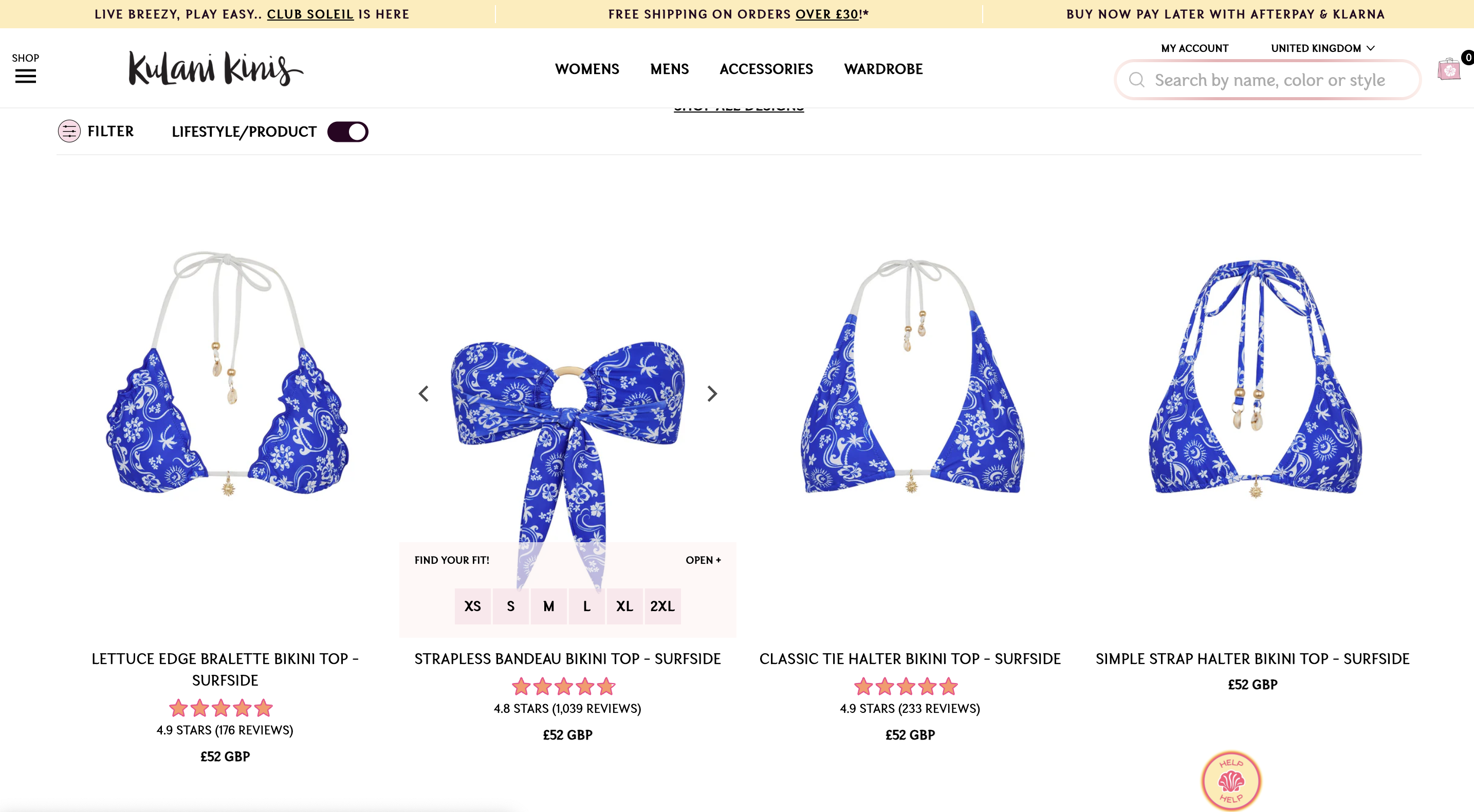
Kulani Kinis, a dynamic Australian swimwear brand known for its colourful and stylish bikinis inspired by Hawaiian culture and summer vibes, features a rich catalogue with over 800 products. The brand excels in custom catalogue functionality, showcased on a collection page with an intuitive slider that displays available stock across all swimwear sizes, enhancing the shopping experience for wholesale buyers.
2. Custom pricing/Tiered pricing
Custom pricing and tiered pricing are critical features in B2B eCommerce that allow businesses to offer personalised, flexible pricing structures tailored to the unique needs of each customer. Unlike standard fixed pricing common in B2C, B2B buyers typically require negotiated rates, volume-based discounts, and payment terms that reflect their purchasing power and long-term relationship with the supplier.
Customised pricing strategies should include:
-
Creation of personalised pricing rules: B2B merchants develop customised pricing models that vary by customer segment, individual buyer, product category, order volume, or account type. These rules replace one-size-fits-all pricing with tailored rates that reflect negotiated contracts, purchase history, and business relationships.
-
Multi-layered and tiered pricing structures: Pricing can be set up as tiered discounts based on volume thresholds, contract-based flat rates, or role-specific prices within an organisation. For example, larger orders trigger higher discounts automatically, encouraging bulk purchasing and rewarding loyal customers.
-
Dynamic discounting and promotions: Merchants configure fixed-amount or percentage-based discounts that activate under predefined conditions such as purchase frequency, seasonal promotions, or customer loyalty. This flexibility enables businesses to respond quickly to market demands while maintaining control over margins.
Real-world example:
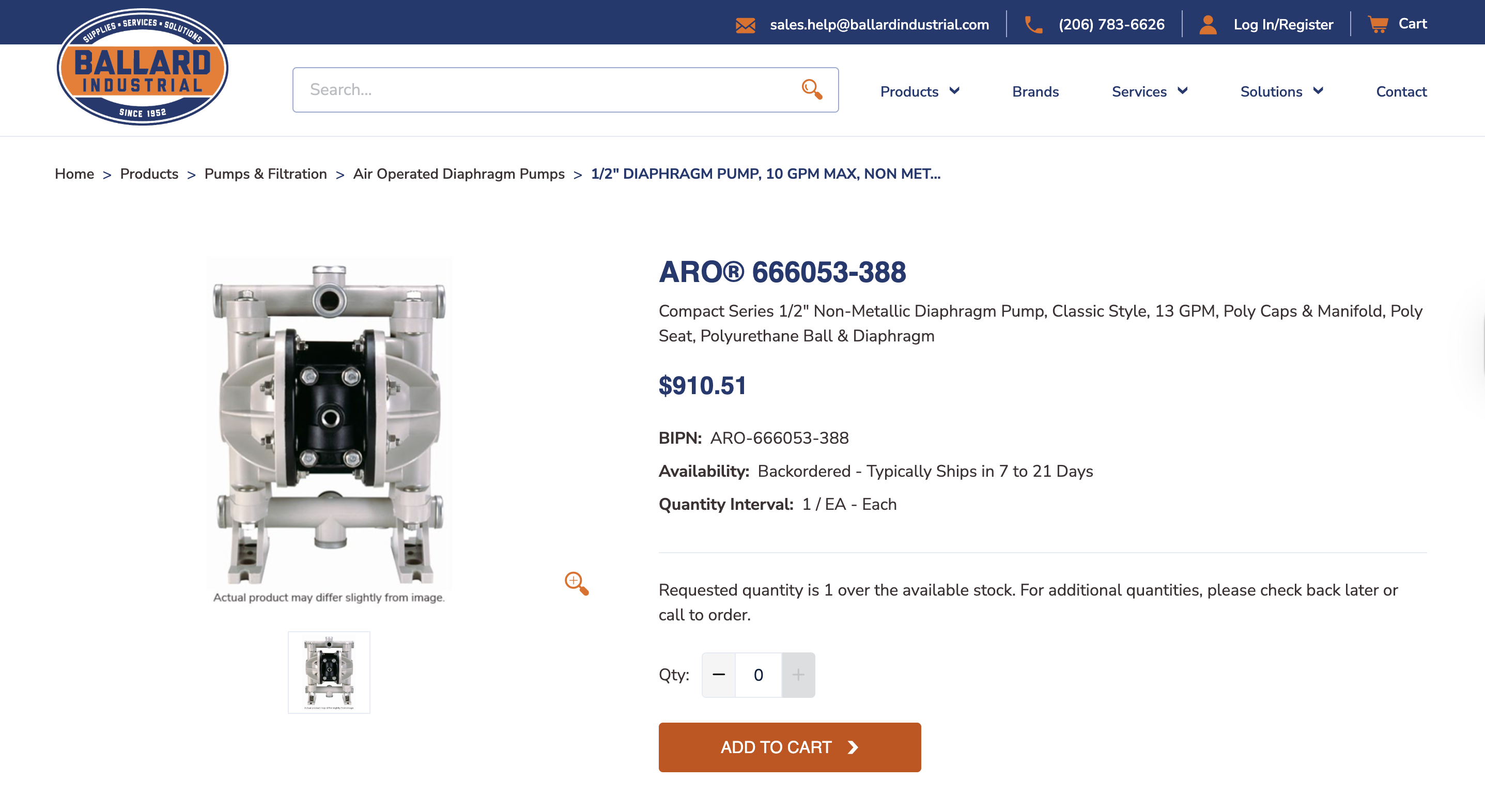
Many B2B eCommerce sites implement customer-specific or tiered pricing to reward volume purchases and negotiated contracts. Ballard Industrial, a 70-year-old industrial supplier, upgraded to BigCommerce B2B Edition and took advantage of its native tiered pricing features. Ballard can now offer special B2B pricing based on customer tiers and purchase quantities, all managed automatically in the platform. This capability was invaluable – Ballard’s team set up different pricing levels for different customer groups, ensuring bulk buyers automatically get volume discounts and contract clients see their negotiated rates. The result is a more streamlined pricing process and a better experience for Ballard’s B2B customers.
3. Request for quote/Hide price
Request for quote (RFQ) and Hide price features are essential in B2B eCommerce, enabling businesses to manage complex pricing negotiations and control price visibility. The RFQ functionality allows buyers to request personalised quotes, fostering negotiation and tailored offers, while Hide price options restrict price visibility until buyers meet certain criteria, preserving confidentiality and competitive advantage. These features should offer:
-
Price visibility management: Merchants configure their platforms to hide prices on certain products or for specific customer groups until buyers log in, meet qualification standards, or submit a request. This helps protect sensitive pricing and motivates buyers to engage directly with sales teams.
-
Request for quote submission: Buyers can submit detailed RFQs through the website, specifying quantities, configurations, or special requirements. The system captures these requests and routes them to sales teams for review and personalised pricing.
-
Custom quote generation: Sales teams analyse RFQs and prepare tailored quotes that reflect negotiated pricing, terms, and conditions. These quotes are communicated back to the buyer through the platform, enabling negotiation and order finalisation.
Real-world example:
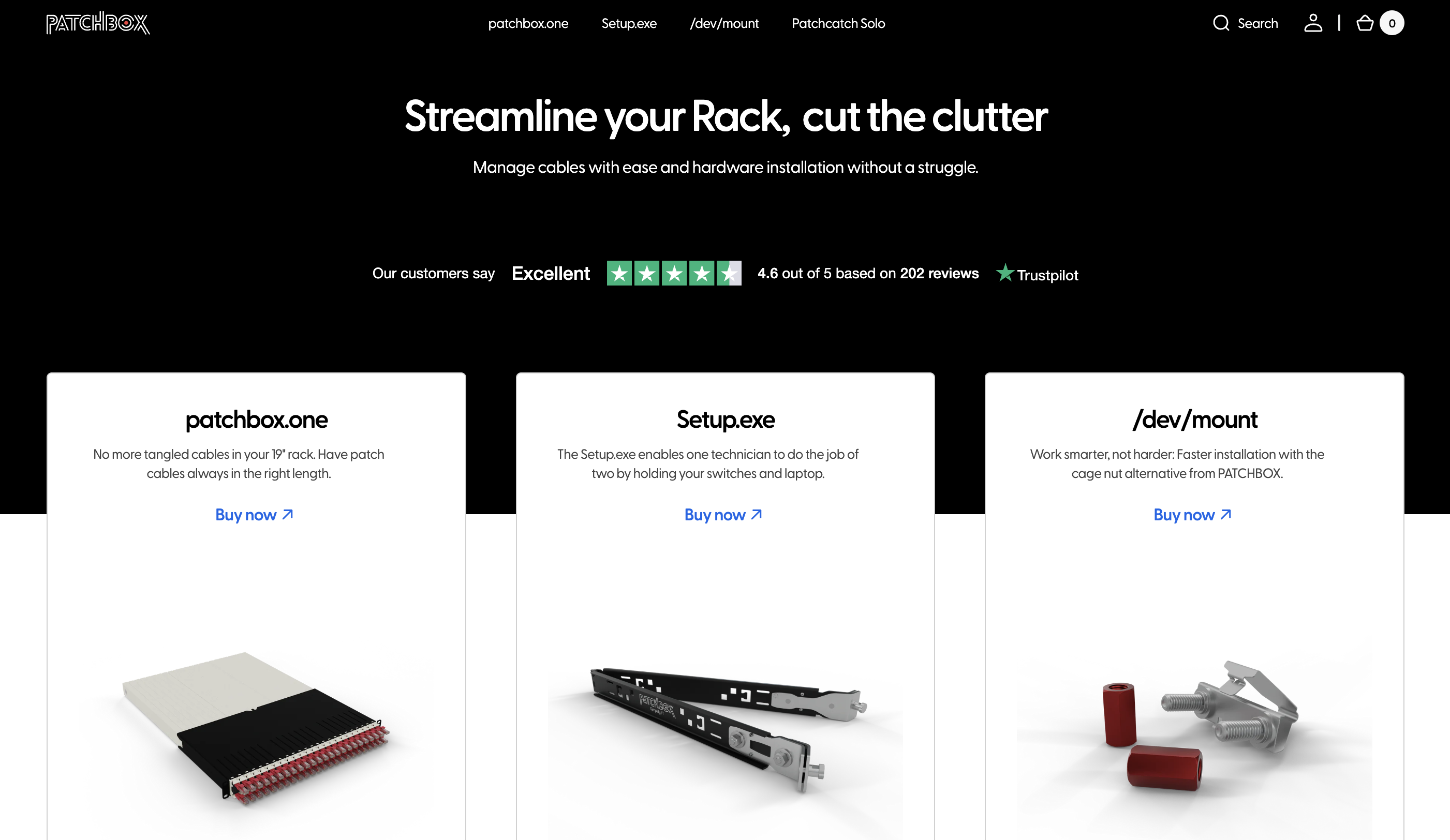
PATCHBOX, a specialist hardware supplier, implemented Shopify Plus B2B tools to manage bulk orders and quote requests. As part of their B2B site, PATCHBOX allows buyers to hide prices and click “Request a Quote”—ideal for high-volume or customised orders. This encourages engagement without publicising pricing and streamlines negotiation directly on the platform.
4. Bulk ordering and adding multiple products to the cart
Bulk ordering is a crucial feature in B2B eCommerce that effectively addresses the challenge of complex workflows and multiple buyers. Since B2B customers regularly need to reorder large quantities of various products simultaneously to keep their operations running smoothly, bulk ordering streamlines these multifaceted purchasing processes. Modern B2B sites therefore offer bulk ordering tools that let customers add multiple products (or large quantities) to the cart in one go (through CSV uploads, quick order forms, etc.).
Bulk ordering capabilities enable buyers to add many products to their cart in one session, often by uploading order templates, selecting multiple SKUs, or using customised forms. The system may include options like quantity sliders, multi-selection checkboxes, and quick add-to-cart buttons directly from product listings or catalogues.
Real-world example:
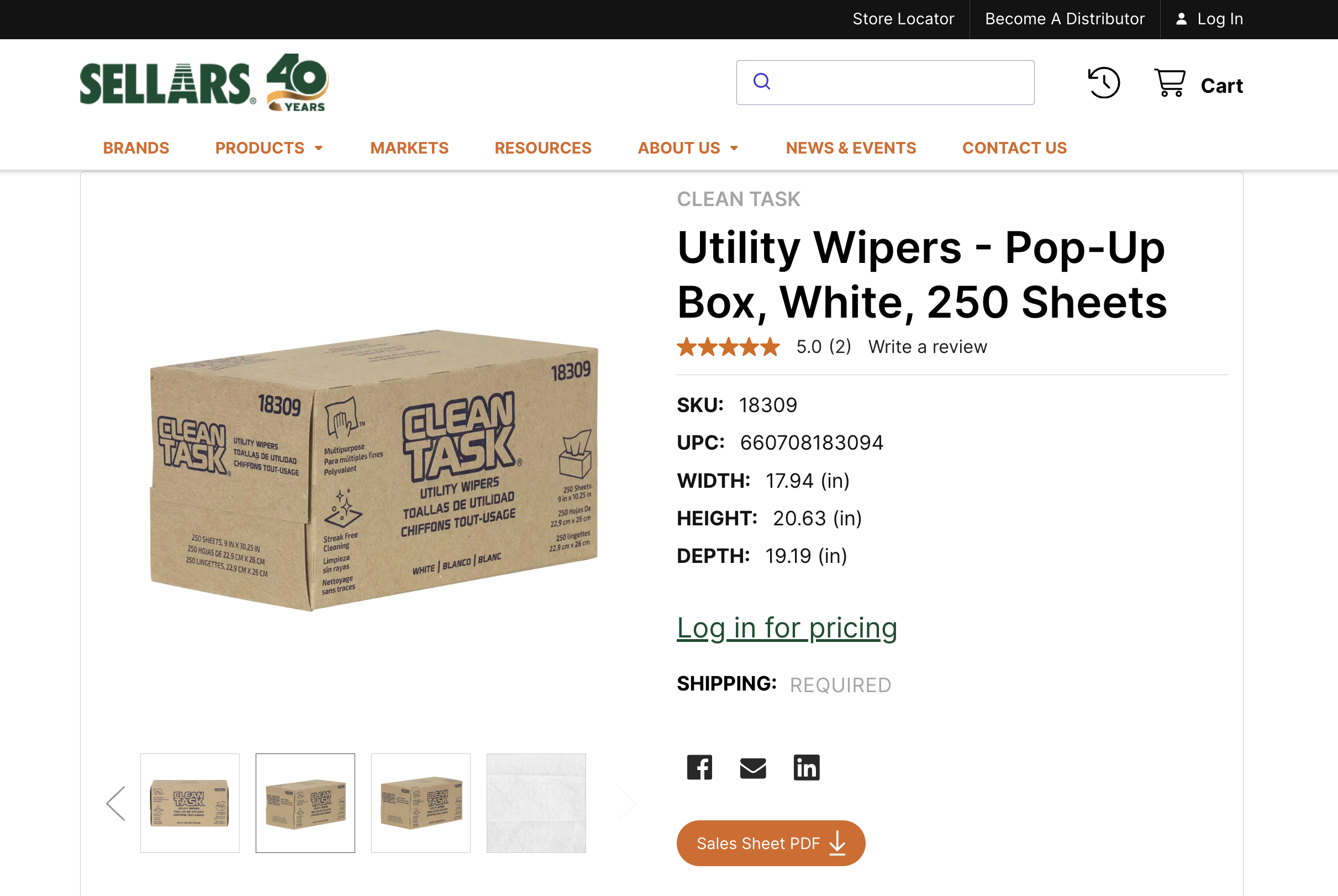
For instance, Sellars Absorbent Materials, an industrial wipes manufacturer, migrated to BigCommerce B2B Edition specifically to streamline bulk purchasing. Sellars leveraged features like bulk ordering (alongside customer-specific pricing and account logins) to make large orders fast and error-free. According to Sellars’ Head of eCommerce, bulk ordering was “essential for us”, allowing the brand to better serve their clients.
5. Quick reorder
Quick reorder is a powerful feature designed to save time for B2B buyers who regularly purchase the same products. It allows customers to replicate previous orders with minimal effort, improving convenience and increasing order frequency by simplifying the purchasing cycle.
The feature typically provides buyers with easy access to past order history or favourite lists. With a single click, customers can add previously ordered items—including quantities and configurations—directly to their cart. The system may allow modifications before checkout and synchronise this capability with backend inventory and pricing data to ensure accuracy.
Real-world example:
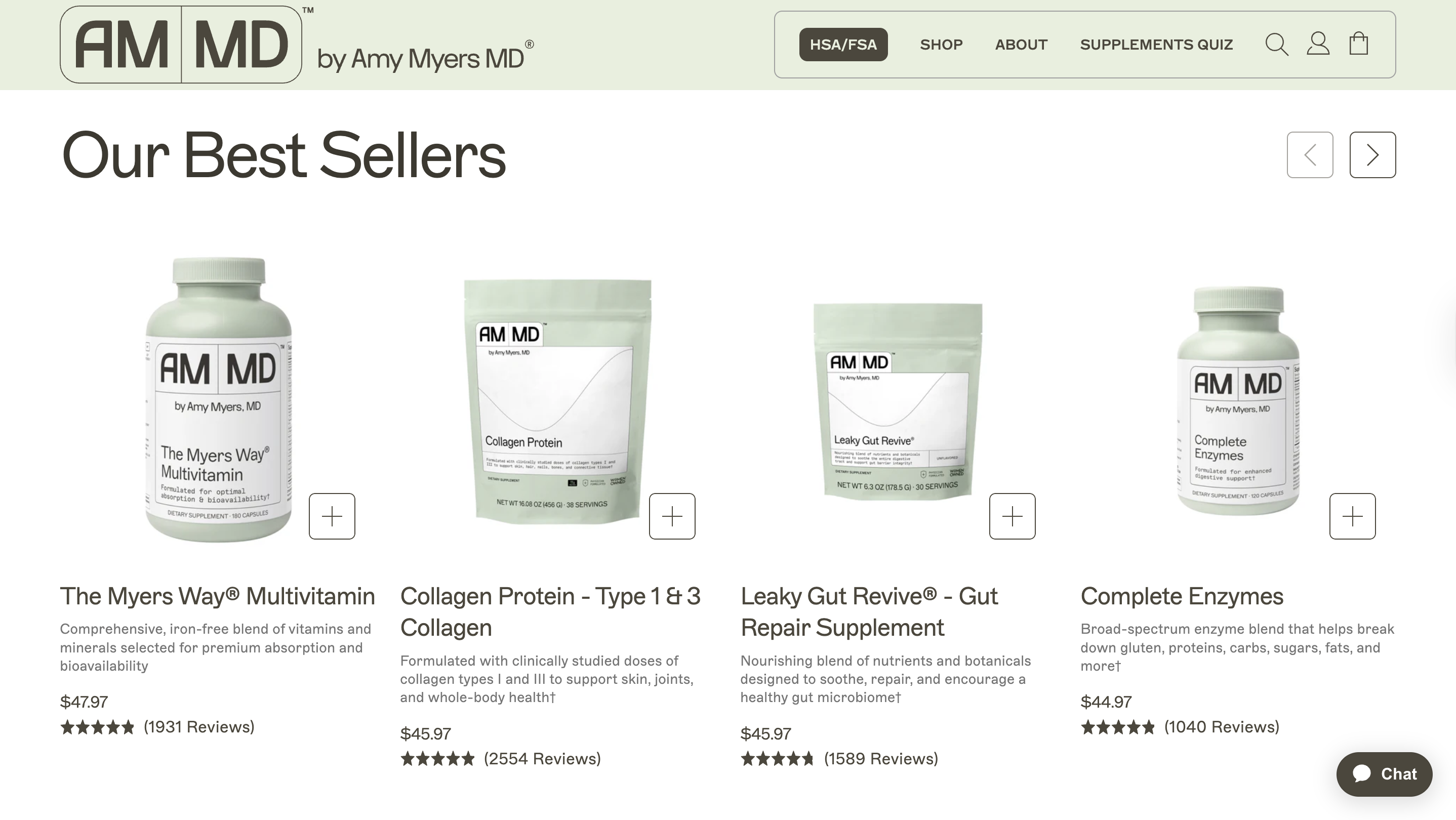
Amy Myers MD offers a compelling example of how a DTC store can effectively incorporate B2B features, including quick reorder capabilities that address the needs of wholesale customers. Amy Myers MD provides B2B buyers with access to a dedicated wholesale portal, where registered business customers can easily log in and quickly reorder products they have previously purchased, streamlining repeat purchases and reducing order time. This quick reorder function solves a common B2B challenge by simplifying complex workflows involving multiple buyers, who often need to replenish stock regularly with minimal hassle.
6. Company accounts and approval flows
Company account management and approval workflows are essential B2B features that support complex organisational purchasing processes. They ensure compliance with internal procurement policies, control spending, and streamline order approvals within multi-user companies.
B2B platforms allow businesses to create company accounts with multiple users assigned different roles and permissions. Purchase requests submitted by employees can be routed through approval hierarchies before final submission. These workflows include automated notifications, tracking, and conditional logic to handle different approval scenarios. Integration with ERP or finance systems helps reconcile approved orders with budgets and policies.
Real-world example:
Barbeques Galore — Australia and New Zealand’s leading BBQ and outdoor living retailer — implemented a robust B2B solution to streamline their wholesale operations with secure company account management and approval workflows. Each wholesale customer is set up as a company account with dedicated user groups. New users joining a company are automatically assigned to the appropriate customer group, inheriting the correct pricing and product permissions.
BigCommerce’s built-in order approval process allows company staff to add items to a shared cart that must be reviewed and approved by an authorised manager before checkout. Barbeques Galore’s team can monitor approval statuses, export company activity reports, and manage price list assignments—all from a centralised backend.
7. Tax breakdown at checkout
Accurate tax calculation and clear tax breakdowns are essential for B2B eCommerce, where transactions must comply with complex sales tax, VAT, and exemption regulations across different jurisdictions. In comparison with B2C, B2B sales often involve tax exemptions or differing tax treatments depending on product type and customer status.
Integrated tax engines automatically calculate applicable taxes based on the buyer’s location, product categories, and tax laws. At checkout, the platform displays a clear tax breakdown, showing amounts for sales tax, VAT, and any exemptions applied. This ensures transparency and compliance, while reducing manual errors and refund disputes. Systems often link with external tax rate databases or APIs to stay current with regional tax changes.
Real-world example:
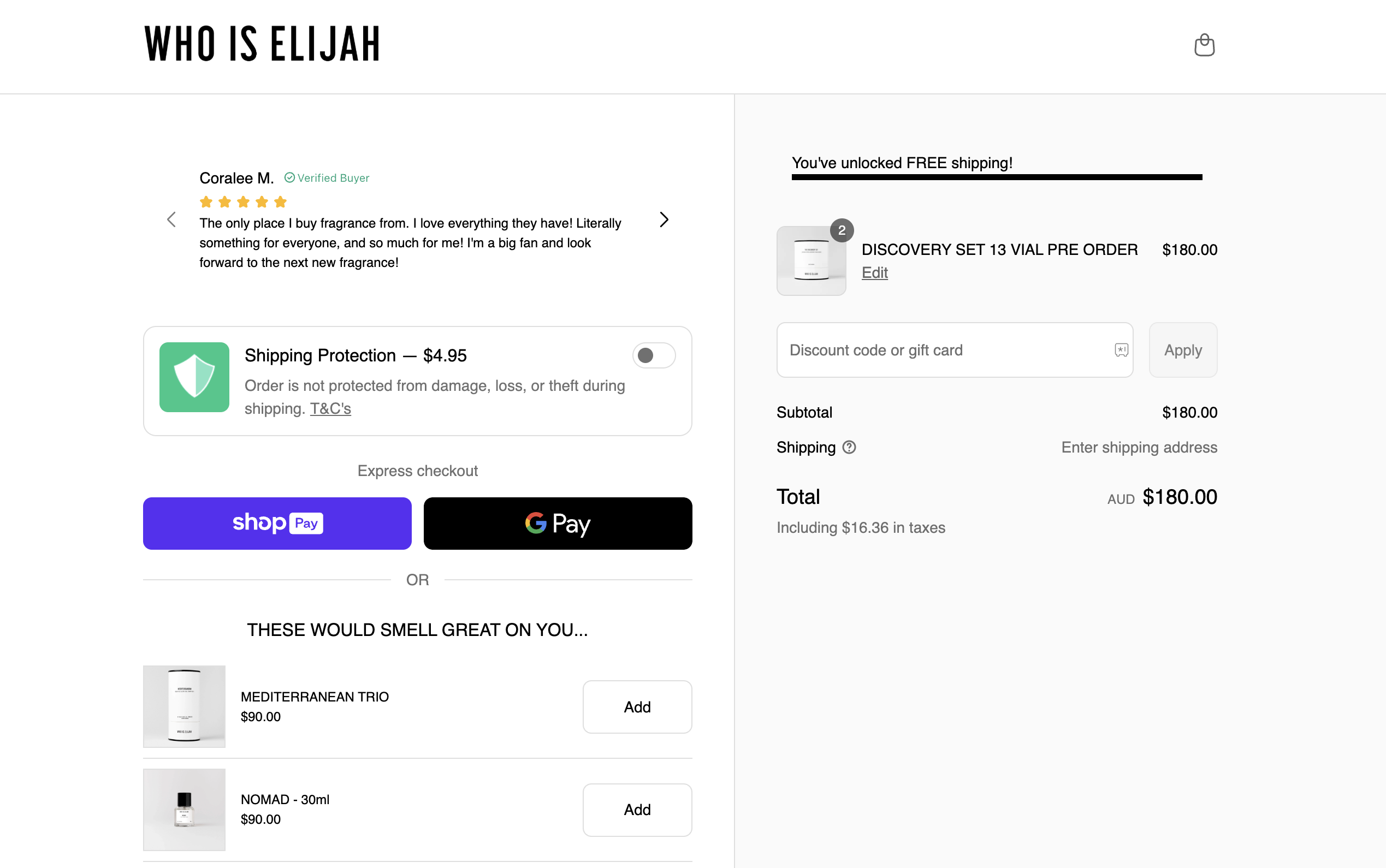
WHO IS ELIJAH’s international expansion highlights effective tax localisation tailored to each region, including individual U.S. state taxes. Their checkout dynamically calculates and applies the correct taxes per state, clearly displaying these charges to enhance transparency and compliance. This functionality supports the brand’s growth into multiple markets by ensuring accurate tax handling without manual intervention, improving the buying experience across regions.
8. System integration
B2B eCommerce rarely stands alone – integration with ERP, CRM, inventory management, accounting, and shipping systems is often a must-have feature. For example, a B2B online store may sync inventory levels from an IMS, pushing online orders into an ERP for fulfilment, and connecting CRMs to pass customer data. These integrations provide real-time data synchronisation, improve accuracy, and streamline workflows from order placement through fulfilment.
The B2B eCommerce platform connects via APIs or middleware to core business systems. This integration synchronises customer data, product availability, pricing, order status, invoicing, and shipping information. It enables automated updates of order details and financial entries, providing visibility across departments and minimising manual data entry or errors.
Real-World Example:
A strong case is Ballard Industrial, which connected its BigCommerce store to its existing ERP system for real-time data exchange. Ballard integrated a middleware called BisTrack (linked to their ERP) to sync pricing and inventory in real time. As prices of raw materials changed daily, this integration automatically updated product prices on the storefront. When a customer adds items to their cart, the site calls the ERP in real time to verify and adjust prices before checkout. The result is up-to-date pricing 24/7 without manual updates.
9. Self-service portal
Self-service portals empower B2B buyers and account managers by providing direct access to order management, invoices, quotes, and support—reducing reliance on sales reps and increasing operational efficiency.
Buyers log into personalised portals where they can view order history, track shipments, download invoices, submit quotes, and initiate returns or service requests. Portals often include customisable dashboards and role-based access controls to accommodate different user permissions within a company.
To complement these self-service capabilities, integrating multi-channel customer support ensures that buyers can still get help when needed. This may include live chat, email, phone, or ticketing systems, all linked to CRM and order data for real-time resolution. Support teams can instantly view relevant account details, past communications, and order statuses, enabling faster and more accurate assistance.
Real-world example:
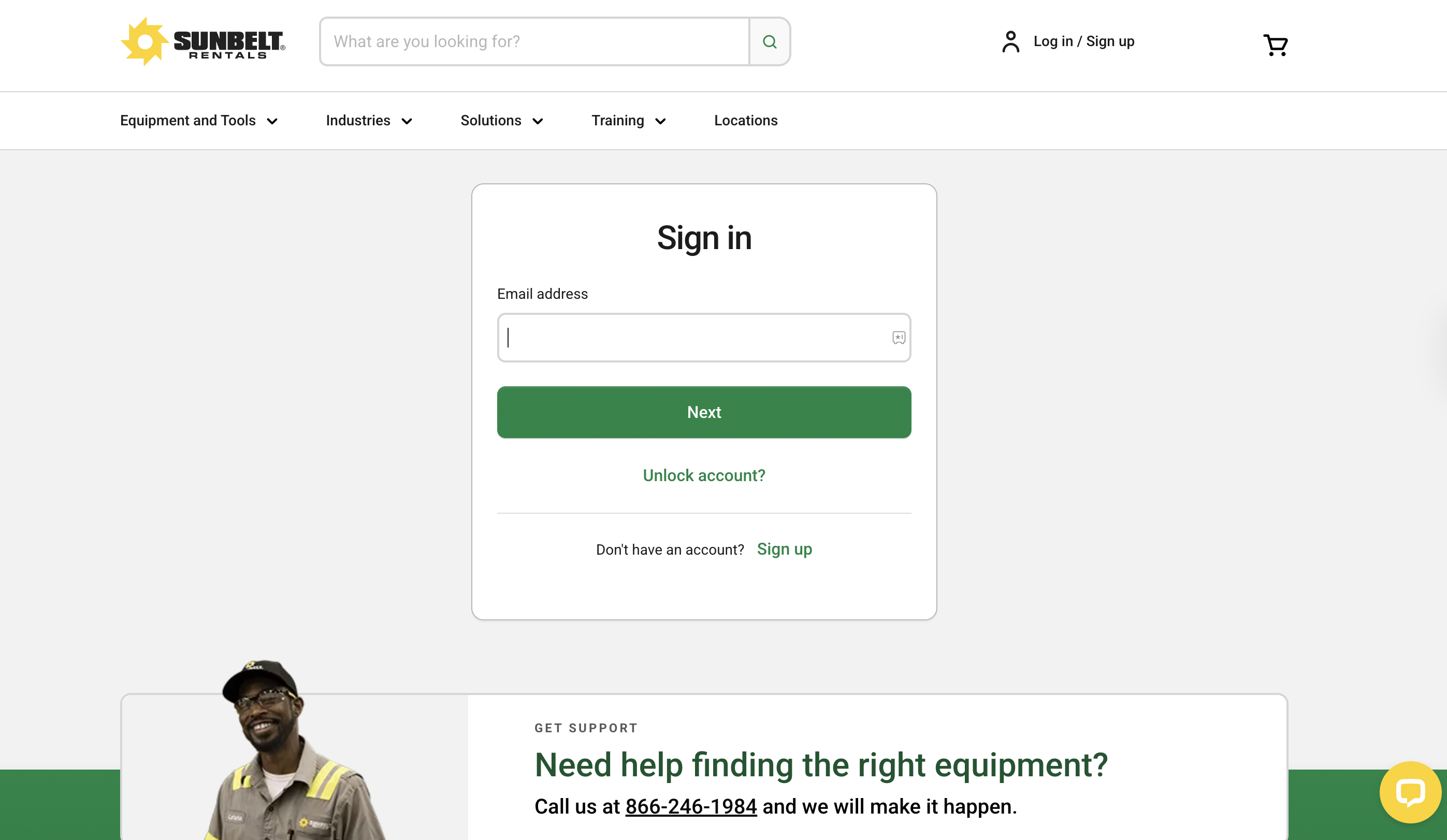
Sunbelt Rentals, one of North America’s largest equipment rental companies, transformed its digital experience with Adobe Commerce to support a full-featured self-service B2B portal. Previously reliant on phone-based ordering and manual account handling, Sunbelt launched a scalable eCommerce site that enabled customers to:
-
Browse products and rental equipment with real-time availability
-
Place and manage rental orders directly online
-
Track order status and view invoices within their account
-
Manage company-level access with roles and permissions
This self-service capability empowered large B2B customers—such as construction firms and facilities managers—to complete their purchasing journeys independently without relying on sales reps or call centres. The result was a more scalable, efficient B2B channel.
10. Analytics
Advanced analytics provide B2B businesses with critical insights into buyer behaviour, sales performance, inventory trends, and operational KPIs to inform strategic decisions and improve overall efficiency.
The eCommerce platform collects and analyses data across customer segments, product categories, purchasing patterns, and sales cycles. Dashboards and reports offer visual insights on revenue, average order value, site usage, and more. Integration with BI tools and CRM data can enhance predictive analytics and forecasting capabilities.
Real-world example:
Al Ghandi Electrical & Automation (AGEA), a leading B2B electrical equipment provider in the Middle East, significantly enhanced its operations and customer engagement by leveraging advanced analytics tools. They harnessed the platform’s analytics capabilities to:
-
Track key customer metrics daily, including acquisition rates, account growth, order volumes, and conversions.
-
Analyse user behaviour within their AGEA Shop portal to optimise product assortments, promotions, and site layout for improved customer experience.
-
Correlate sales representative activities, such as quote creation and custom order support, with actual deal wins, which enabled smarter team training and more effective resource allocation.
11. Company credit card support with flexible payment options
B2B buyers increasingly expect to pay online with corporate credit cards or purchasing cards. Supporting company credit cards enables B2B buyers to complete purchases using corporate payment methods, accommodating organisational procurement policies and simplifying payment reconciliation.
B2B platforms offer flexible payment options through gateways that accept corporate credit cards with enhanced authorisation, spending limits, and approval workflows as needed. Some platforms also support virtual cards or purchasing cards (P-Cards) integrated with expense management systems, helping companies track and control spending more effectively.
Beyond card payments, it’s also important to support net term arrangements with partial upfront payment — for example, 30% upon order confirmation and the remaining balance within 30 or 60 days. This flexibility helps buyers manage budgets more effectively while ensuring sellers maintain steady cash flow.
Real-world case study:
A case study from Visa highlights a large B2B workwear supplier that began accepting credit cards through a new customer portal. Initially, this $8B supplier hesitated to accept cards due to fees. With Visa’s guidance, they enabled credit card payments (with net-30 terms) on their B2B portal – accelerating their time-to-cash by 15 days.
The results were impressive: the supplier’s card payment volume increased by ~60% once they offered that option. Moreover, by leveraging commercial card programs, their effective cost of acceptance dropped below that of checks/ACH. This case shows that by supporting corporate credit cards (and likely offering features like saved cards per company, or purchase order + card mix), B2B sellers can both improve customer convenience and speed up their receivables.
12. Multi-location shipping
Multi-location shipping allows B2B buyers to ship orders to multiple destinations within a single transaction, reflecting the complex logistics needs of many businesses that operate across sites or branches.
At checkout, buyers specify different shipping addresses per line item or for grouped products. The system calculates shipping costs per destination, applies relevant taxes, and generates packing slips accordingly. Integration with logistics providers enables real-time freight quotes and delivery scheduling.
Real-world example:
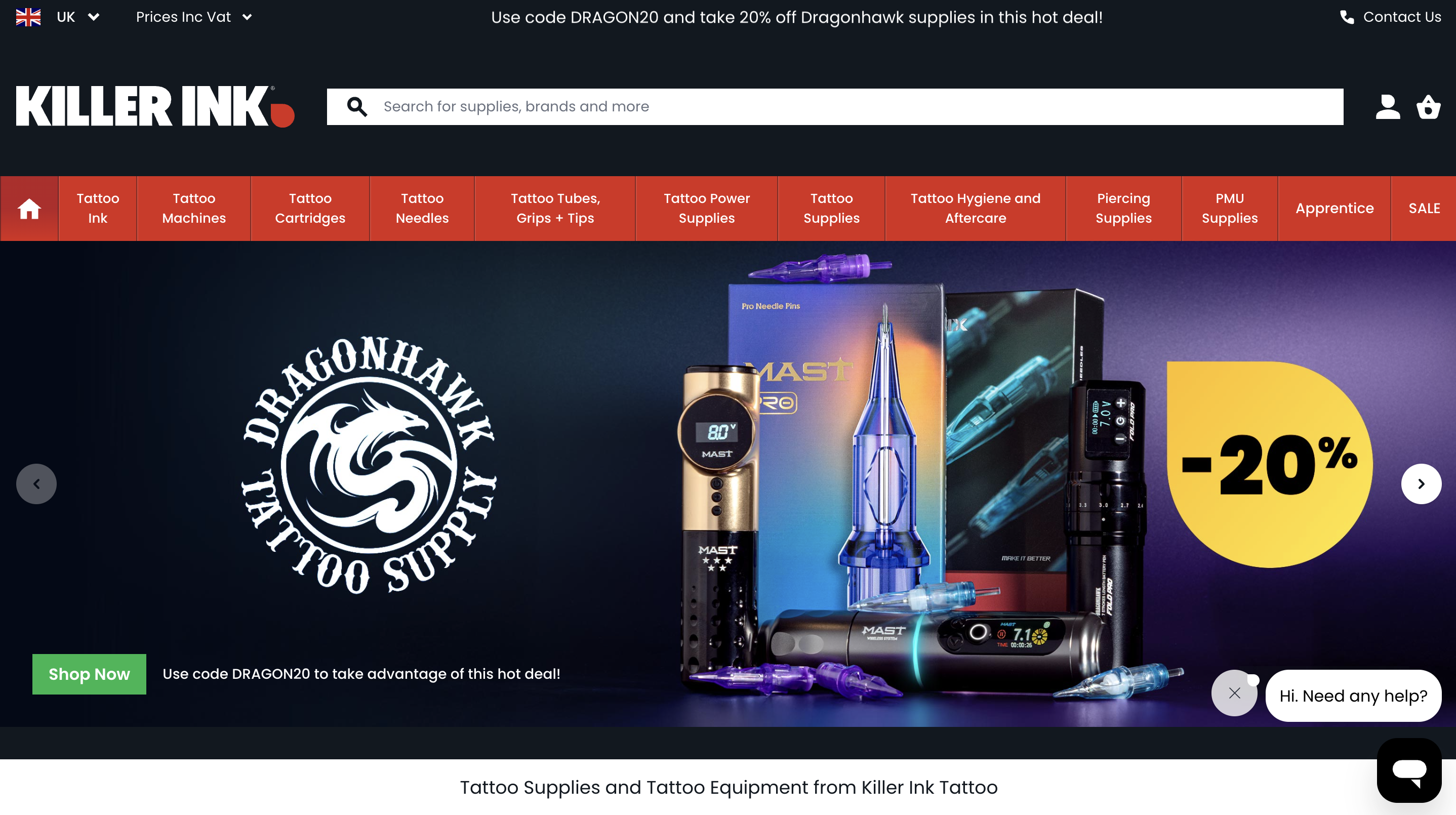
Killer Ink, a global supplier of tattoo ink and supplies, expanded its operations across multiple countries by implementing multi-location shipping to efficiently manage stock and fulfil orders from separate warehouses in the UK and Germany. This approach allows them to independently control inventory and shipping from each location. Orders are intelligently routed and fulfilled from the warehouse nearest to the customer, reducing delivery times and shipping costs. These capabilities were enabled using the eCommerce platform’s built-in features, ensuring a seamless customer experience without disrupting the existing user interface.
13. Multi-Location Inventory Management
Managing inventory across multiple warehouses or fulfilment centres is critical for B2B businesses to meet demand efficiently and reduce shipping times. The eCommerce system integrates with inventory management software to track stock levels by location in real time, ensuring customers and sales teams always see accurate availability. During order processing, the system allocates products from the nearest or most appropriate warehouse, balancing availability with shipping costs and delivery times.
Real-world example:
Killer Ink expanded its operations across multiple countries by implementing multi-location shipping to efficiently manage stock and fulfil orders from separate warehouses in the UK and Germany. This approach allows them to independently control inventory and shipping from each location. Orders are intelligently routed and fulfilled from the warehouse nearest to the customer, reducing delivery times and shipping costs. These capabilities were enabled using the eCommerce platform’s built-in features, ensuring a seamless customer experience without disrupting the existing user interface.
14. Multi-Language and Currency Support
Supporting multiple languages and currencies enables B2B eCommerce platforms to cater to international buyers, providing localised shopping experiences and simplifying global trade. Platforms detect or allow buyers to select their preferred language and currency. Prices convert automatically based on current exchange rates, and translated content ensures clarity. Payment gateways and tax calculations adjust according to regional requirements and currency standards.
Real-world example:
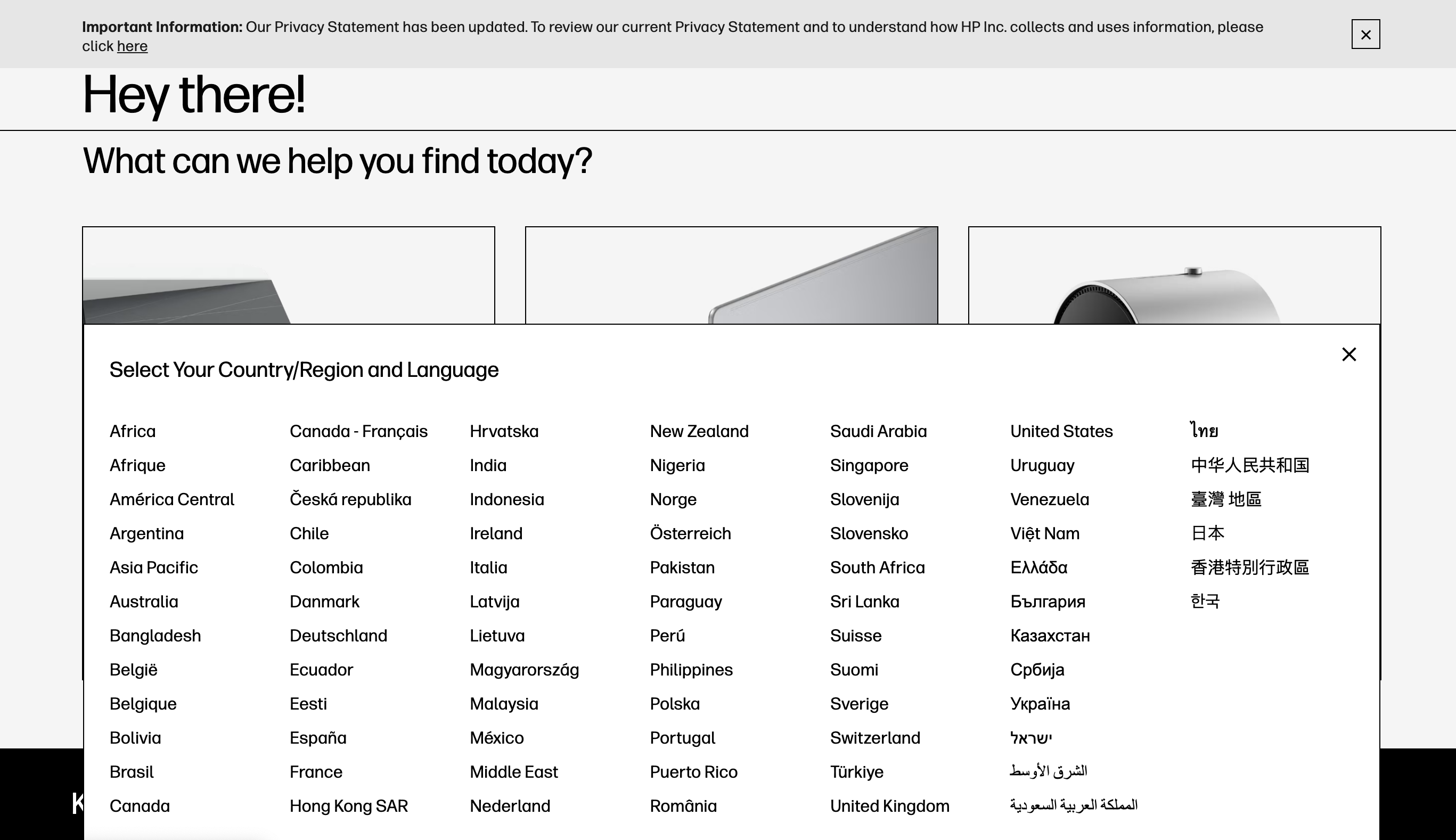
A prime example is HP (Hewlett-Packard) in the Asia-Pacific region. HP launched five regional B2B stores on Magento for China, Hong Kong, India, Thailand, and Indonesia, each with localised language, currency, and offerings. The Asia-Pacific team faced significant monetary, cultural, and linguistic differences across markets, so each Magento storefront was tailored accordingly – different payment methods, local currency pricing, and translations in Chinese, Thai, etc. Despite these differences, HP managed all stores from one platform, maintaining a unified brand while respecting local requirements.
15. Customer segmentation management
Customer segmentation management allows merchants to organise their customer base into distinct groups based on factors such as industry, purchase history, geographic location, company size, or buyer role. For example, a wholesale buyer may see a different product range and pricing than a retail customer. Segmentation can be updated automatically based on purchase patterns or customer data. This segmentation empowers businesses to provide more relevant experiences, tailored pricing, customised catalogues, and targeted marketing efforts.
By adding this feature, merchants can:
-
Create multiple customer segments or tiers
-
Assign specific catalogues, pricing, and promotions to each segment
-
Support for dynamic segmentation based on customer behaviour or attributes
Real-world example:
WHO IS ELIJAH needed to manage both B2B and D2C customer segments within a single platform. They consolidated their wholesale buyers and retail customers onto one unified website, effectively integrating B2B and direct-to-consumer operations. The platform’s B2B capabilities allowed them to create distinct experiences: retail shoppers access standard pricing and checkout flows, while business buyers log into a dedicated B2B portal featuring custom catalogues and net payment terms. This unified solution improved operational efficiency by eliminating the need for separate systems, maintained consistent branding, and still provided tailored experiences for each customer segment.
16. Customer account management
Customer account management is a core feature that provides buyers and businesses with a secure, centralised platform to manage their profiles, orders, payments, and communication history. It is especially crucial in B2B contexts where multiple users from the same company often need role-based access.
This feature provides businesses with:
-
Role-based permissions and multi-user support
-
Access to order history, invoices, and payment methods
-
Profile management, including billing/shipping addresses and contact info
Real-world example:
Sellars Absorbent Materials leveraged their platform’s built-in account management to improve their operations. The business set up customer accounts for their clients, each with its authorised buyers and custom pricing, without custom development. The native account management features (combined with pricing and bulk order tools) allowed Sellars to streamline their processes dramatically. Customers can log into their dedicated accounts to see past orders, track current orders, and manage their details, reducing the burden on Sellars’ support team.
17. Quote request management/Assign sale reps for the quote request
Quote request management streamlines the process of submitting, tracking, and responding to custom pricing or product inquiries, a common B2B practice. Assigning specific sales representatives ensures personalised service and efficient follow-up.
When a buyer submits a quote request, the system routes it to the appropriate sales team based on criteria like geography, product line, or customer segment. Sales reps receive notifications and can manage communications directly within the platform, generating and sending customised quotes. The buyer can track the status and communicate until finalising the order.
Flow of a quote request submission:
-
Online RFQ form submission with product details and quantities
-
Automated routing of quote requests to designated sales reps
-
Status tracking and communication tools within the platform
Real-world case study:
Selco Builders Warehouse — a leading UK supplier to construction trades — launched a mobile and web portal to streamline project quoting and sales engagements. Key features include:
-
Tradespeople create project-specific materials lists via the portal or app and instantly request quotes from their local branch.
-
Notifications alert assigned branch reps when a new quote arrives. Reps can review, adjust pricing or quantities, and send personalised quotes directly from the platform.
-
Customers receive the quote via email and can confirm approval online—connecting the full RFQ workflow digitally.
18. Order management
Order management is a comprehensive feature that oversees the entire sales fulfilment process—from order placement to delivery and returns. It is key in ensuring accuracy, timely processing, and customer satisfaction in complex B2B transactions.
Once an order is placed, it enters the order management system, which verifies stock availability, updates inventory levels, and triggers fulfilment tasks. Throughout the process, both buyer and seller can view real-time order statuses. The system also handles returns and refunds according to business rules.
With the order management feature, B2B companies have:
-
Centralised dashboard for order monitoring and status updates
-
Support for order modifications, cancellations, and returns
-
Integration with inventory, shipping, and accounting systems
Real-world case study:
Pilgrim — a Canadian jewellery retailer — streamlined its entire order fulfilment process by adopting Shopify’s all-in-one order management and delivery solution.
-
The team can view, filter, and sort orders within Shopify’s centralised dashboard.
-
They purchase and print shipping labels directly from the admin, including bulk label printing and preset packaging/shipping options.
-
Custom saved views allow them to organise orders by delivery status, tags, or shipping method—ensuring high visibility and fast processing.
19. Minimum/maximum order quantity
Minimum and maximum order quantity controls help businesses enforce purchase limits aligned with production capacity, profitability goals, or contract terms. This feature ensures orders are viable and meet business requirements.
Merchants set minimum and maximum order quantities within the platform for specific SKUs or categories. When buyers add products to their carts, the system checks quantities against these limits and prompts corrections if needed. This prevents small orders that may not cover costs or overly large orders that exceed supply capabilities.
Real-world case study:
Piksters implements a custom solution that enforces orders to be placed in multiples of a specified minimum quantity using an “increment by” logic tied to the selected minimum. This function also ensures these quantity rules are consistently synchronised between their online storefront and ERP system.
Conclusion
Choosing and implementing the right B2B eCommerce website features is crucial for providing personalised experiences, simplifying complex workflows, and boosting operational efficiency. Features such as custom catalogues, customer segmentation, seamless order management, and multi-location support enable businesses to better meet buyer needs and scale successfully. Therefore, it’s important to select the best B2B eCommerce platform that offers a comprehensive set of B2B capabilities designed to fuel your business growth, optimize operations, and elevate the customer experience in today’s highly competitive market.
If you’re looking for guidance on selecting the ideal B2B eCommerce platform with full of B2B-specific features or enhancing your existing platform, reach out to the On Tap team today. With 19 years of industry experience and as a proud member of B2BEA, our B2B eCommerce consultant team are ready to help you elevate your online business and unlock new growth opportunities.
FAQs
1. What are some essential features of a B2B ecommerce platform?
Key features include custom catalogues and pricing, bulk ordering, flexible payment terms, multi-user company accounts, real-time inventory, self-service portals, advanced search, and ERP/CRM integration.
2. What is the difference between B2B and B2C eCommerce features?
B2B platforms support bulk orders, custom pricing, company accounts, and integration with ERP/CRM systems, while B2C focuses on single-purchase flows and consumer marketing features.
3. Which payment options should a B2B eCommerce site offer?
Common options include purchase orders, credit terms, ACH transfers, wire transfers, multiple currencies for global trade, and net terms with partial upfront payment (for example, 30% on order and the balance within 30 or 60 days).
4. Can a B2B eCommerce platform offer both B2B and B2C sales?
Yes. Some platforms support hybrid models, letting you run B2B and B2C channels from the same backend while tailoring features for each. For example, you can use customer segmentation to show different catalogues, pricing, and checkout flows to wholesale and retail buyers. Multi-language and currency support can serve both audiences globally, while order management and inventory control ensure smooth operations across channels.