

According to IMARC, the global DTC (direct-to-consumer) market is projected to grow at a CAGR of 17.30% from 2025 to 2033, reflecting the steady rise of this business model. With the rapid expansion of eCommerce, the shift toward DTC has become increasingly common as businesses find it easier to launch and manage direct models online.
In this article, we’ll explore everything manufacturers need to know about DTC eCommerce, from the fundamentals of the model and its potential to the challenges it poses. We’ll also share practical tips and case studies to show what makes businesses successful. By the end, you’ll have a clearer view of whether moving into DTC eCommerce is the right choice for your company.
What is DTC eCommerce?
DTC (Direct-to-Consumer) eCommerce is a business model in which manufacturers sell products directly to customers through their own websites. This approach bypasses traditional intermediaries, such as retailers, wholesalers, and distributors. With this model, brands gain complete control over the entire customer journey. They manage product presentation, pricing strategies, inventory and fulfilment, packaging and shipping, marketing communications, and the overall shopping experience.
For example, TEMPLESPA is a science-led luxury skincare brand that produces its products in-house. In addition to supplying B2B clients such as hotels and professional spas, TEMPLESPA also sells directly to consumers through its website, enabling the brand to maximise profitability.
Differences between DTC eCommerce and other eCommerce models
To gain a more comprehensive understanding of this model, let’s compare it with other models.
DTC eCommerce vs B2B eCommerce
While B2B centres on bulk sales where the business is the consumer, DTC breaks products into smaller units where the individual is the consumer. This section will compare the two models. The goal is to help B2B businesses see the differences and understand what DTC requires.
|
Aspects |
DTC eCommerce |
B2B eCommerce |
|
Target audience |
Individual end consumers |
Business, organisations, institutions |
|
Buyer decision maker |
A single individual or household |
Multiple stakeholders (procurement, finance, managers, etc) |
|
Sales cycle |
Minutes to days. A customer can move from discovery (social media ad, influencer post) to checkout in a single session. Brand image, reviews, social proof, and emotional triggers (e.g., urgency, exclusivity) strongly influence purchasing. |
Weeks or months. The cycle, carried out by multiple stakeholders, typically includes initial outreach, needs analysis, negotiation, and contract signing before fulfilment. Decisions are rational, data-driven, and risk-averse. |
|
Order size and frequency |
Smaller basket sizes, more fragmented, with variability depending on seasonality, trends, or promotions. |
Large, bulk purchases, often recurring under contract or long-term agreements. Demand tends to be steady and predictable. |
|
Average order value (AOV) |
Typically lower AOV due to smaller, individual purchases. However, it maximises profitability per unit by breaking bulk products into smaller SKUs for consumers. |
Significantly higher AOV. Maintain high-volume contracts with predictable revenue. |
|
Pricing model |
Transparent and fixed. Brands rely on promotions, limited-time offers, and bundling to encourage purchases rather than negotiations. |
Flexible and negotiated. Common models include volume discounts, tiered pricing, and custom quotes. Contracts may fix prices for specific periods. |
|
Logistic operations and customer fulfilment |
Requires handling a high volume of smaller orders. Efficient last-mile delivery, flexible shipping options (same-day/next-day), and easy returns are critical. |
Fulfilment centres and logistics are optimised for large shipments (pallets, bulk orders) delivered on scheduled timelines. |
|
Customer relationship |
Transactional by nature but increasingly built around loyalty and personalisation. Brands need to use loyalty programs, personalised offers and community-building to keep consumers engaged. |
Relationship-driven, with dedicated support teams and ongoing service to retain long-term contracts. Success depends heavily on trust and reliability. |

DTC eCommerce vs B2C eCommerce
People often confuse B2C with DTC since both involve selling directly to consumers. In fact, DTC is a type of B2C. Among various types of B2C models, the two most common are: the retailer model, where manufacturers sell through retailers who then sell to customers; and DTC, where manufacturers sell directly to customers. To understand this more clearly, let’s compare DTC and retailer-based B2C eCommerce in the table below.
|
Aspects |
DTC eCommerce |
B2C eCommerce |
|
Type of merchants |
The manufacturer acts as the merchant, selling products directly to customers. |
The manufacturer sells to a retailer, who then becomes the merchant and sells to the end customer. |
|
Profit margin |
Higher for the manufacturer due to no intermediaries. |
Lower margins for the manufacturer, as retailers take a cut before selling to customers. |
|
Customer relationship and data |
The manufacturer owns the customer relationship and first-party data (emails, purchase history, browsing behaviour). |
The retailer owns the customer relationship and most customer data; the manufacturer/wholesaler remains upstream. |
|
Logistic operations and customer fulfilment |
The manufacturer manages direct fulfilment and returns for individual customers. |
The retailer handles last–mile delivery and returns. The manufacturer ships bulk to retailers or distribution centres. |
|
Reach and distribution |
To sell products in DTC, manufacturers must attract customers to their own website and build an audience from scratch. This requires significant marketing and branding effort. |
Products sold through retailer-based B2C eCommerce gain immediate access to the retailer’s existing customer base, both online and offline. This requires minimal marketing effort from the manufacturer. |
In short, as a manufacturer:
-
DTC eCommerce is best suited for manufacturers that want complete control over their customer relationships, margins, and brand experience.
-
Retailer-based B2C eCommerce is ideal for manufacturers who want to reach individual customers without managing customer relationships directly. It provides immediate market access and scale, making it suitable for newer brands seeking exposure or for brands that prioritise broad distribution over direct customer ownership.
Potential and challenges of DTC eCommerce
Now that you have a clear understanding of the DTC model, let’s explore its potential and the challenges manufacturers may face when adopting this approach. This will help evaluate whether it is the right fit for your business.
Potential of DTC eCommerce
Catching up with evolving customer needs
Demand for better pricing: According to VML Future Shopper 2024, 56% of global consumers say that a “better price” would encourage them to buy directly from brands. This highlights the ongoing relevance of the DTC model. By selling directly to consumers, brands can eliminate intermediaries and reduce markups, allowing them to offer more competitive prices. As a result, DTC is particularly well-suited to meet customer demand for better value.
Demand for meaningful brand connections: In addition, VML Tomorrow’s Commerce 2025 reveals that 63% of global consumers now prefer brands that connect with a purpose beyond simply selling products or services. This indicates that consumers still expect brands to have a clear story - reflecting the brand’s personality, narrative, and commitments. Companies that sell only through intermediaries may struggle to convey this effectively. The DTC model allows customers to reach the brand’s website, where the story, business philosophy, and brand message can be communicated most clearly.
Demand for authentic products: Another growing factor is product authenticity. With counterfeit goods becoming more common, consumers increasingly want the assurance of buying genuine products directly from the brand. The DTC model offers this control, ensuring product quality and reducing the risks of fake or mixed goods that may appear when selling through intermediaries.
Unlocking faster innovation and agility
DTC eCommerce gives brands the agility to innovate faster by launching new products directly, gathering immediate feedback, and iterating without relying on retailer approval. With complete control of digital storefronts, brands can also deliver personalised shopping experiences through tailored promotions, bundles, and dynamic content. This flexibility also supports rapid experimentation with pricing, packaging, and campaigns, enabling businesses to adapt quickly to shifting consumer trends and market conditions.
Enabling easier global expansion
DTC also creates new opportunities for international expansion. Unlike traditional retail, which often requires partnerships with local distributors or regional retailers, the DTC model allows manufacturers to reach customers worldwide directly. With the growth of eCommerce platforms, localised payments, and advanced cross-border logistics, even smaller brands can reach new markets without large upfront retail investments. This accessibility makes DTC not only a profitable model but also a scalable path for brands aiming to compete on an international stage.

Challenges of DTC eCommerce
Ensuring platform scalability and performance
DTC eCommerce requires platforms that handle peak traffic, deliver personalised shopping experiences, and support sales across social and marketplace channels. For businesses used to B2B, these requirements can feel entirely new. A rigid or outdated platform may limit scalability, slow down operations, and make it difficult to keep pace with fast-changing consumer expectations.
If a company runs both B2B and DTC on the same platform, the demands are even higher. The platform must be flexible enough to support both models effectively, and the internal team needs the capability to manage and optimise them side by side. As a result, upgrading or re-platforming often becomes a critical but complex step in building a successful DTC channel.
Handling logistics and customer fulfilment operations
Beyond running the eCommerce website, brands must also manage the physical side of operations through logistics. They are fully responsible for order processing, inventory, packaging, shipping, and handling returns. Unlike in B2B, where shipments are often bulk orders sent to a few distributors or partners, DTC requires handling a high volume of smaller, individual orders with much tighter delivery expectations. Scaling these processes efficiently while keeping delivery times short is a major challenge, particularly for smaller brands.
On top of that, today’s consumers expect fast, affordable, and transparent delivery, along with hassle-free returns, requiring customer service teams to respond instantly. Balancing these demands while maintaining profitability makes logistics and fulfilment one of the toughest hurdles in DTC eCommerce.
Reducing customer acquisition costs (CAC) in a competitive market
For DTC brands, marketing remains a major challenge, as customers are often accustomed to buying through retailers and may not realise the brand sells directly. As a result, DTC brands must invest heavily in digital marketing to build awareness and compete head-to-head with retailers, marketplaces, and other DTC players. This makes both customer acquisition and retention significantly more difficult.
How to know if your B2B business is ready to expand into DTC?
DTC offers clear benefits but requires significant investment and carries risks. In addition to overcoming the challenges outlined above, companies must also build internal readiness - ranging from organisational capabilities to operational foundations. The following indicators can help evaluate whether your business is well-positioned for a successful shift:
-
Clear consumer demand: Evidence that end-users are actively seeking to purchase your products directly, such as market signals, inbound inquiries, or online interest. This ensures that your DTC channel is addressing real demand rather than creating it from scratch.
-
Gross margin strength: Healthy margins are essential for DTC, as a significant portion of revenue typically goes into marketing and awareness, especially in the early stages. With thin margins, there’s little room left to cover fulfilment, R&D, technology, and other costs, making profitability difficult to sustain.
-
Technology investment capacity: The resources and willingness to invest in technology, from eCommerce platforms and CRM to marketing automation and fulfilment systems, that form the backbone of a scalable DTC business.
-
Marketing and service capabilities: Teams or partners with expertise in consumer acquisition, engagement, and customer service. Unlike B2B, success in DTC requires continuous interaction, fast response times, and a personalised customer experience.
-
Channel strategy clarity: A well-defined approach to balancing existing B2B operations with new DTC channels. This includes managing pricing, product assortment, and communication strategies to avoid channel conflict.
-
Business cultural agility: A business mindset that embraces experimentation, rapid iteration, and consumer-centric KPIs. Entering DTC requires the flexibility to test, learn, and pivot quickly in response to consumer behaviour.
By assessing these readiness signals, B2B businesses can make informed decisions on whether now is the right time to expand into DTC.

5 key tips for a successful DTC eCommerce business
After evaluating and confirming that DTC is the right model for your business, the next step is to explore practical strategies for building a successful and sustainable DTC eCommerce operation in the long term.
1. Choose a suitable DTC eCommerce platform for long-term growth
Choosing the right platform is the first step in your DTC journey, as it forms the foundation for your operations and growth. Since switching to platforms later can be costly and time-consuming, it’s essential to get it right from the start. Let’s explore some tips to make your choice easier below.
Evaluate deployment and architecture models:
Your deployment and architecture choices shape speed to market, flexibility, and resource needs. Depending on your priorities, you can choose from different deployment models (SaaS, open-source, PaaS) and architecture approaches (monolithic, headless, composable, microservices). Each option comes with its own trade-offs in terms of scalability, maintenance complexity, integration capabilities, and long-term agility.
Look for key capabilities:
-
Customisation & scalability: Ability to tailor the storefront and scale as your business grows.
-
App & extension ecosystem: Access to tools for reviews, loyalty programs, and advanced analytics.
-
Support & community: Reliable 24/7 support and an active community for best practices and troubleshooting.
-
B2B & DTC management: Capability to support both B2B and DTC sales models within a single platform, enabling businesses to manage bulk orders, contract pricing, and multi-user accounts for B2B clients while also providing seamless, personalised shopping experiences and fast checkout flows for DTC customers.
Explore top DTC platforms:
-
Shopify: Shopify is a hosted SaaS platform that helps DTC brands launch quickly with minimal technical effort. It is valued for speed, scalability, and strong integrations, but costs can rise (especially due to premium themes, apps and customisation required to run the digital store effectively), and backend flexibility remains limited (even with the high-priced Plus license).
-
Magento: Magento is an open-source platform suited to businesses with strong technical teams. It offers full control and customisation, though it requires self-management of hosting, security, and scaling, which can become complex and costly.
-
BigCommerce: BigCommerce is a SaaS solution that balances ease of use with flexible architecture. It provides built-in DTC features and analytics, but has fewer apps and design options than open-source alternatives.
-
WooCommerce: WooCommerce is an open-source eCommerce platform for WordPress that turns sites into highly customisable stores. It offers low entry costs and full data control, but ongoing maintenance, plugin management, and scalability demands can add significant complexity.
Unsure which models best fit your DTC eCommerce business? Reach out for our eCommerce consultation service now to connect with our team of 400 experts, backed by 19 years of eCommerce experience.
2. Building a unified ecosystem with seamless third-party integration
Once a standalone store is in place, DTC brands need to focus on unifying their data to ensure efficient operations. Without integration, fragmented systems can lead to inventory mismatches, ineffective customer communication, and increased costs. A connected ecosystem creates a single source of truth and streamlines workflows. Key platforms need to integrate, including:
-
CRM (Customer Relationship Management): Centralise customer data across sales, marketing and support channels.
-
ERP (Enterprise Resource Planning): Sync financials, procurement, and production with your eCommerce operations. Ensure real-time visibility into costs, margins, and profitability.
-
PIM (Product Information Management): Manage product content consistently across the website, marketplace, and partners.
-
WMS (Warehouse Management System): Automate inventory updates, picking, packing, and returns. Reduce human error and improve fulfilment speed.
-
ESP (Email Service Provider): Connect customer data to deliver personalised emails and campaigns. Enable automated triggers like abandoned cart, post-purchase follow-ups, and win-back flows.
-
Marketplace & other sales channels: Ensures consistent inventory, pricing, and order fulfilment across multiple sales platforms.
Notes: The third-party systems themselves must be capable of handling both DTC and B2B data models. They should also work seamlessly with website-driven data flows to manage and orchestrate information effectively across inventory, pricing, and customer touchpoints.
Ensure these systems integrate seamlessly through On Tap’s integration services and API-first integration flow. With our solution, integrations can be set up within days, without requiring any code development on your website.
3. Build strong logistics and fulfilment operations
A major advantage for many DTC brands is expanding from existing B2B operations, allowing them to repurpose mature logistics systems instead of starting from scratch. By leveraging B2B strengths, they can:
-
Use existing supplier and distribution networks for consistent availability and faster fulfilment.
-
Adapt warehouse capacity by dedicating zones for DTC orders.
-
Repurpose freight contracts to secure better last-mile delivery.
-
Simplify complex B2B returns into customer-friendly DTC policies.
-
Scale fulfilment infrastructure to manage consumer demand spikes.
-
Apply rigorous B2B quality standards to end-consumer products.

4. Adopt a customer-centric approach
In the DTC model, the customer is at the centre of everything, as you’re not just selling a product, you’re building a direct relationship. Therefore, key elements of a customer-centric approach in DTC eCommerce are:
-
Personalised shopping experiences: Use first-party data (purchase history, browsing patterns, preferences) to recommend products, offer tailored discounts, and create dynamic website content. This makes customers feel understood and valued.
-
Superior customer service: Provide responsive, multi-channel support (live chat, email, social) and seamless self-service options like order tracking and easy returns. Good service is often the deciding factor in whether customers return.
-
Loyalty and retention programs: Create membership benefits, rewards, or exclusive early access to new products to encourage repeat purchases and strengthen brand affinity.
-
Customer feedback loop: Actively collect reviews, surveys, and direct feedback to improve products and services. In DTC, this agility lets brands iterate quickly and stay aligned with evolving customer needs.
5. Invest in digital marketing and branding
Once your value proposition and branding are clearly defined, it’s time to invest more in digital marketing to attract and engage customers on your DTC website. Key strategies include:
-
Brand storytelling and positioning: Communicate authenticity and values, highlight unique propositions, and ensure consistency across all touchpoints to build trust and differentiation.
-
Community building: Use your brand story to foster loyalty, advocacy, and long-term engagement.
-
Email and content marketing: Nurture leads with personalised emails, newsletters, and engaging content to increase conversions and retention.
-
Search engine optimisation (SEO): Optimise your website and content to improve organic search visibility, attract relevant traffic, and reduce reliance on paid ads.
-
Social media marketing: Leverage platforms like Instagram, TikTok, and Facebook to showcase products, tell your brand story, and engage with your audience directly.
-
Paid advertising: Use search ads, display ads, and social media campaigns to reach targeted customer segments and drive traffic to your online store.
-
Influencer partnerships: Collaborate with influencers whose followers align with your target audience to build credibility and expand reach.
Simplify this task with On Tap’s digital marketing services. Backed by extensive experience across multiple eCommerce platforms, our team is ready to support your business with key aspects such as SEO, PPC management, and content marketing.
Top DTC eCommerce case studies to learn from
TEMPLESPA
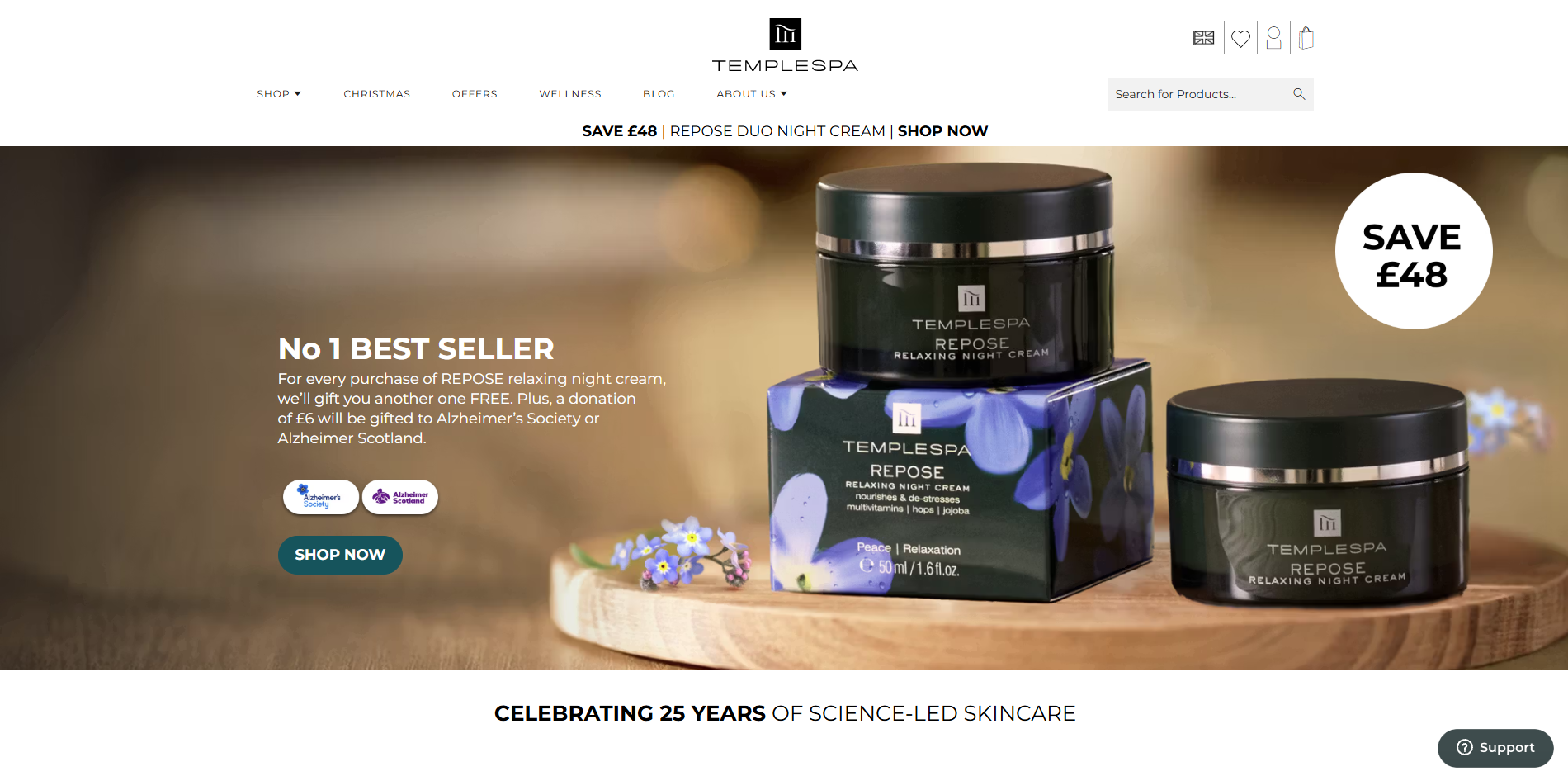
TEMPLESPA is a science-led luxury brand that blends premium ingredients with advanced technology to create exceptional products, delivering “a spa wherever you are.” With over 25 years of experience in British skincare, the brand has established a strong reputation and a premium image among its customers. In addition to B2B, TEMPLESPA has also embraced a DTC model to maximise profitability.
Challenge: As TEMPLESPA continues to grow and scale, the brand requires a stronger website UX that can deliver a smoother, more engaging customer journey. By enhancing usability and performance, the site will be better positioned to drive higher satisfaction, stronger conversion rates, and improved SEO results.
The solution: On Tap, a full-service eCommerce agency, helped TEMPLESPA by using Hyvä to carry out a research-led, benefit-focused UX redesign:
-
Shifted product pages to highlight customer outcomes and benefits (e.g., clearer skin, relaxation) with supporting video.
-
Integrated user-generated content, such as testimonials and reviews, to build credibility.
-
Optimised performance with faster load times and smoother rendering.
-
Enhanced mobile-first UX with continuous scrolling, improved navigation, and clearer calls-to-action.
-
Refined SEO and accessibility to improve visibility and inclusivity.
The results:
-
+2.7% increase in add-to-cart sessions.
-
Largest Contentful Paint (LCP): improved from 5.2s → 1.8s.
-
Cumulative Layout Shift (CLS): reduced from 0.25 → 0.01.
-
+18% increase in mobile conversions.
-
Strong positive feedback from both TEMPLESPA and customers, praising the site as more persuasive, informative, and trustworthy.
-
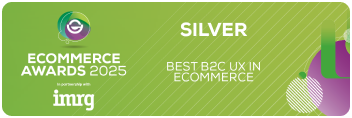
Honoured to receive the Silver Award for Best B2C UX in eCommerce at the 2025 eCommerce Awards.
Read the full TEMPLESPA case study here: TEMPLESPA’s mobile conversions improvement and TEMPLESPA’s website performance optimisation.
Nanoleaf
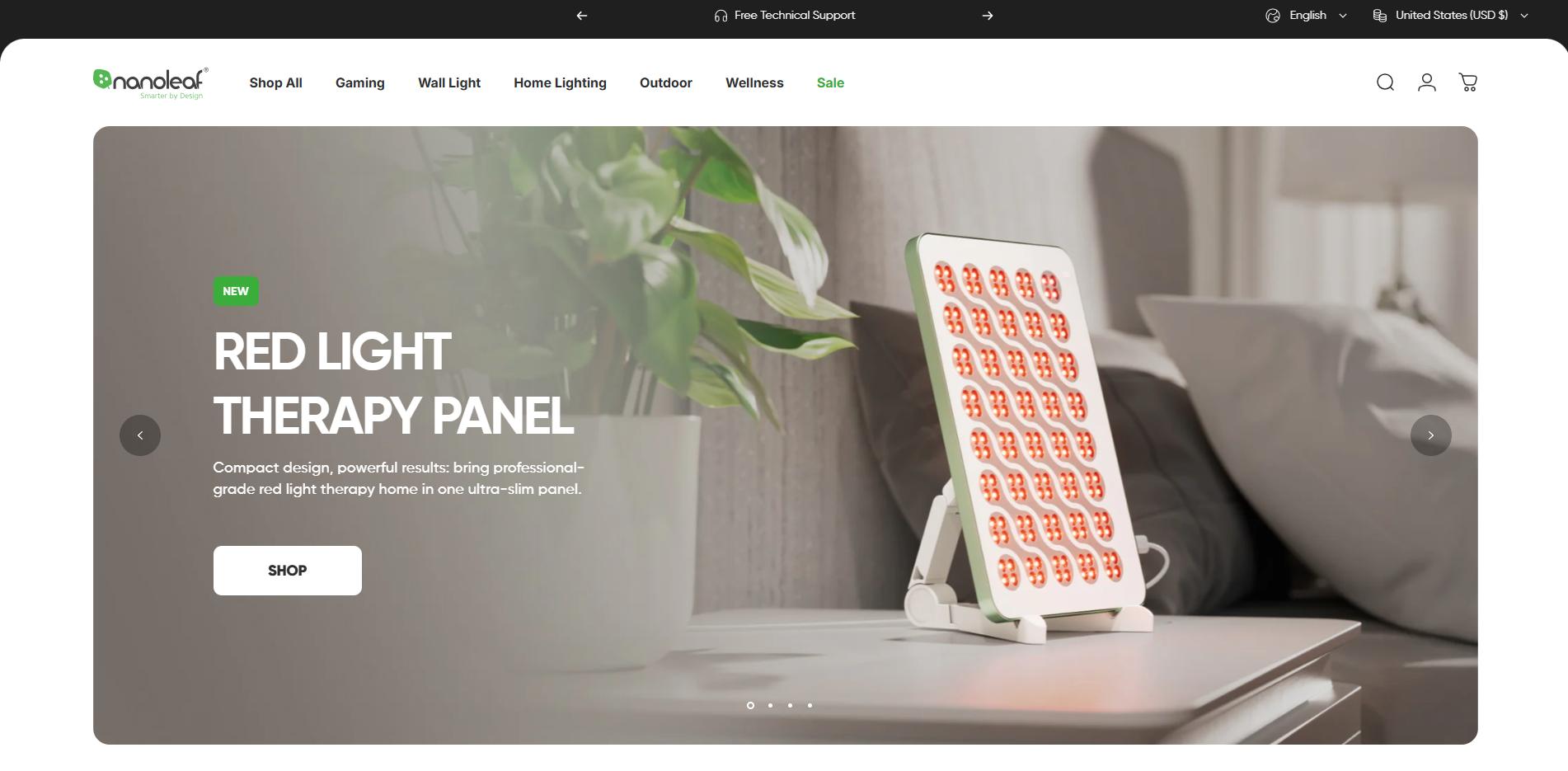
Founded in 2012 by three engineers, Nanoleaf is a global consumer electronics company specialising in innovative LED lighting and smart home design. Renowned for its personalised, cutting-edge products, the brand continues to push boundaries in the smart home space. In addition to selling through retailers and distributors in a B2B model, Nanoleaf also leverages DTC to optimise its profitability.
Challenge: Nanoleaf had long depended on retailers and distributors to expand its brand presence. While this approach was effective in building credibility during the early stages, it also revealed significant limitations. To reduce reliance on third-party channels and improve profitability, the company began shifting its focus toward DTC sales. This strategic move also drove increased investment in developing its own eCommerce platform.
Solution: By using Shopify Plus, Nanoleaf:
-
Built a customer-focused global buying experience, offering localised currencies, faster shipping, and transparent duties/taxes.
-
Adopted Shopify Flow to automate digital marketing, particularly email campaigns.
-
Used headless commerce to create custom storefronts with rich media while relying on Shopify Plus’ backend for checkout and operations.
-
Integrated Microsoft Dynamics 365 ERP through Shopify Plus, streamlining data aggregation, management, and decision-making while improving shipping speeds.
Results: Nanoleaf has gained positive results with:
-
DTC became Nanoleaf’s most profitable channel, even after fulfilment costs.
-
82% faster business intelligence data gathering.
-
45% more efficient item data management.
-
25% quicker shipping to customers.
Conclusion
In summary, this article has outlined the key aspects of DTC eCommerce, including its model, potential, challenges, and best practices for success. With these insights, your business is better positioned to take the next step. That said, executing effectively requires specialised expertise to ensure efficiency, minimise wasted resources, and deliver strong results.
At On Tap, we bring 19 years of industry experience and a team of 400 dedicated specialists to support you with an end-to-end website development service. From strategic planning to deployment and long-term ongoing support, we work closely with you to build a strong foundation for growth, enhance customer experience, and drive measurable results. Contact us today to unlock the full potential of DTC eCommerce and position your business for sustainable success.