
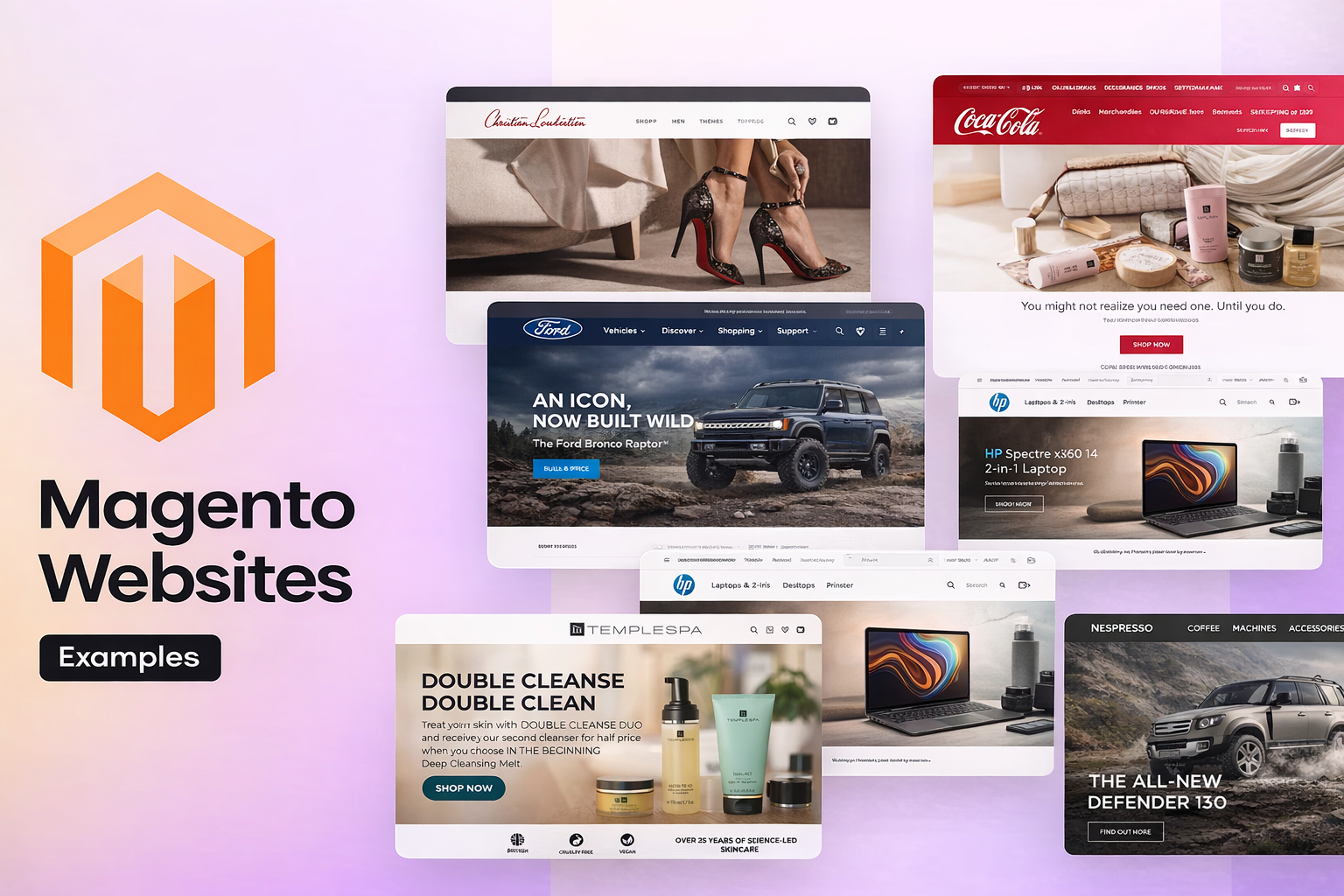
Magento (Adobe Commerce and Magento Open Source) is a proven platform used by tens of thousands of eCommerce sites worldwide. According to BuiltWith data, there are 90,000+ total Magento sites, including well-known global brands. While most eCommerce platforms can handle basic online selling, far fewer are trusted by businesses operating large catalogues, complex buying journeys, and multi-market storefronts. Magento stands out in these environments because it offers the flexibility, control, and architectural depth required to deliver tailored UX, advanced merchandising logic, and scalable performance at the enterprise level.
The websites below are high-revenue Magento stores with strong UX/UI design, used by well-known brands across fashion, beauty, FMCG, automotive, and technology. If you are evaluating Magento, these examples provide practical reference points for what a high-quality Magento implementation looks like in practice.
|
Industry |
Website |
Business model |
Approx. SKU scale* |
Recognition |
|
Fashion / Apparel |
B2C |
~500–1,000 |
Hundreds of boutiques globally, an iconic luxury footwear brand |
|
|
B2C |
~1,000–2,500 |
Global performance apparel brand, ~USD 650M annual revenue |
||
|
B2C |
~600–1,200 |
Global fashion brand with stores and ecommerce across 60+ countries |
||
|
Beauty & Personal Care |
B2C |
~800–2,000 |
International DTC beauty brand shipping to 70+ countries |
|
|
B2C |
~200–600 |
Premium skincare brand stocked in spas and hotels worldwide, ~USD 30–40M revenue |
||
|
B2C |
~300–700 |
Global luxury fragrance brand operating in 40+ markets, acquired by Puig at €1B+ valuation |
||
|
FMCG / Food & Beverage |
B2C |
~200–500 (merchandise only) |
Operating in 200+ countries, USD 45B+ annual revenue |
|
|
B2B + B2C |
~300–800 |
Distributed in 150+ countries, with a strong hospitality presence |
||
|
B2C |
~300–600 (capsules, machines, accessories) |
Operating in 80+ markets, 14M+ global customers, CHF 6B+ annual revenue |
||
|
Automotive |
B2C |
~300–700 |
Operating in 170+ markets, (£23B+ annual revenue) |
|
|
B2C |
~1,000–3,000 |
USD 170B+ annual revenue, one of the world’s largest manufacturers |
||
|
B2C |
~300–700 |
Global premium automotive brand, part of Jaguar Land Rover, with a presence in 100+ markets |
||
|
Technology & Electronics |
B2B + B2C |
~2,000–5,000 |
USD 50B+ annual revenue, operating in 170+ countries |
|
|
B2B + B2C |
~1,500–4,000 |
USD 60B+ annual revenue, #1 global PC vendor, 180+ markets |
||
|
B2B + B2C |
~1,500–3,500 |
Global electronics brand, USD 15B+ annual revenue |
*SKU scale is indicative and intended to reflect catalogue complexity, not exact product counts.
Fashion & apparel websites
Christian Louboutin
Website: https://www.christianlouboutin.com/
About
Founded in 1991, Christian Louboutin operates hundreds of boutiques worldwide and sells directly to consumers online across multiple regions.
What sets their frontend experience apart
Supports assisted luxury purchasing alongside online checkout
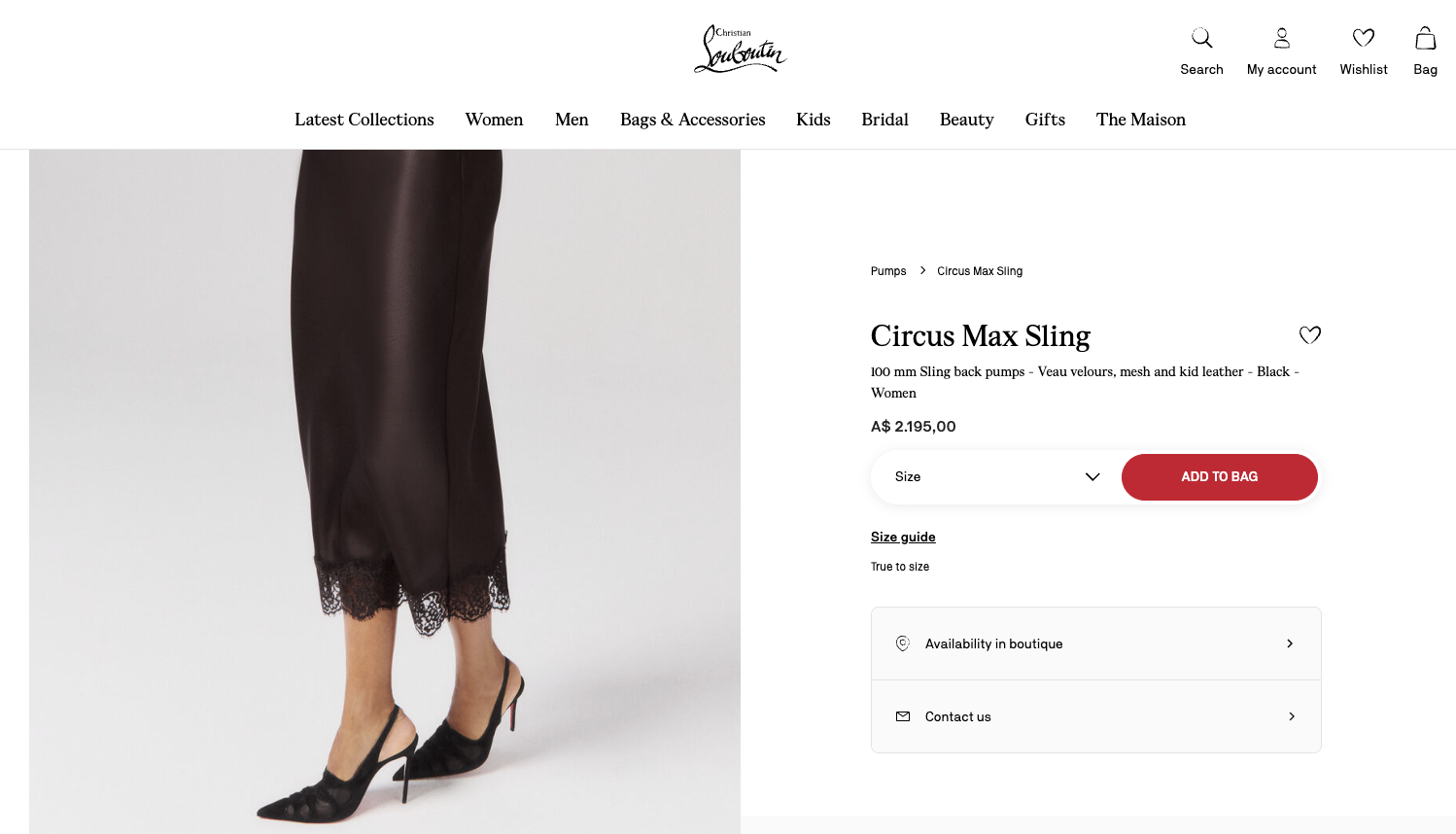
Product pages surface assisted purchase options such as Order by phone and Availability in boutique alongside standard eCommerce actions.
This makes alternative buying paths visible without disrupting the online flow. Magento enables this by allowing store availability information and assisted actions to be presented alongside add-to-cart, so digital and boutique-supported purchasing can coexist within the same storefront.
Christian Louboutin’s website illustrates how luxury eCommerce works best when it supports boutique-led purchasing journeys, reinforces trust, and protects brand equity rather than forcing online conversion. For a deeper look at how luxury brands approach eCommerce differently, explore our guide on luxury eCommerce strategy.
Helly Hansen
Website: https://www.hellyhansen.com/
About
-
Norwegian outdoor and performance brand founded in 1877.
-
Reported substantial revenue (e.g., ~650M USD in 2019) and a global eCommerce presence.
What sets their frontend experience apart
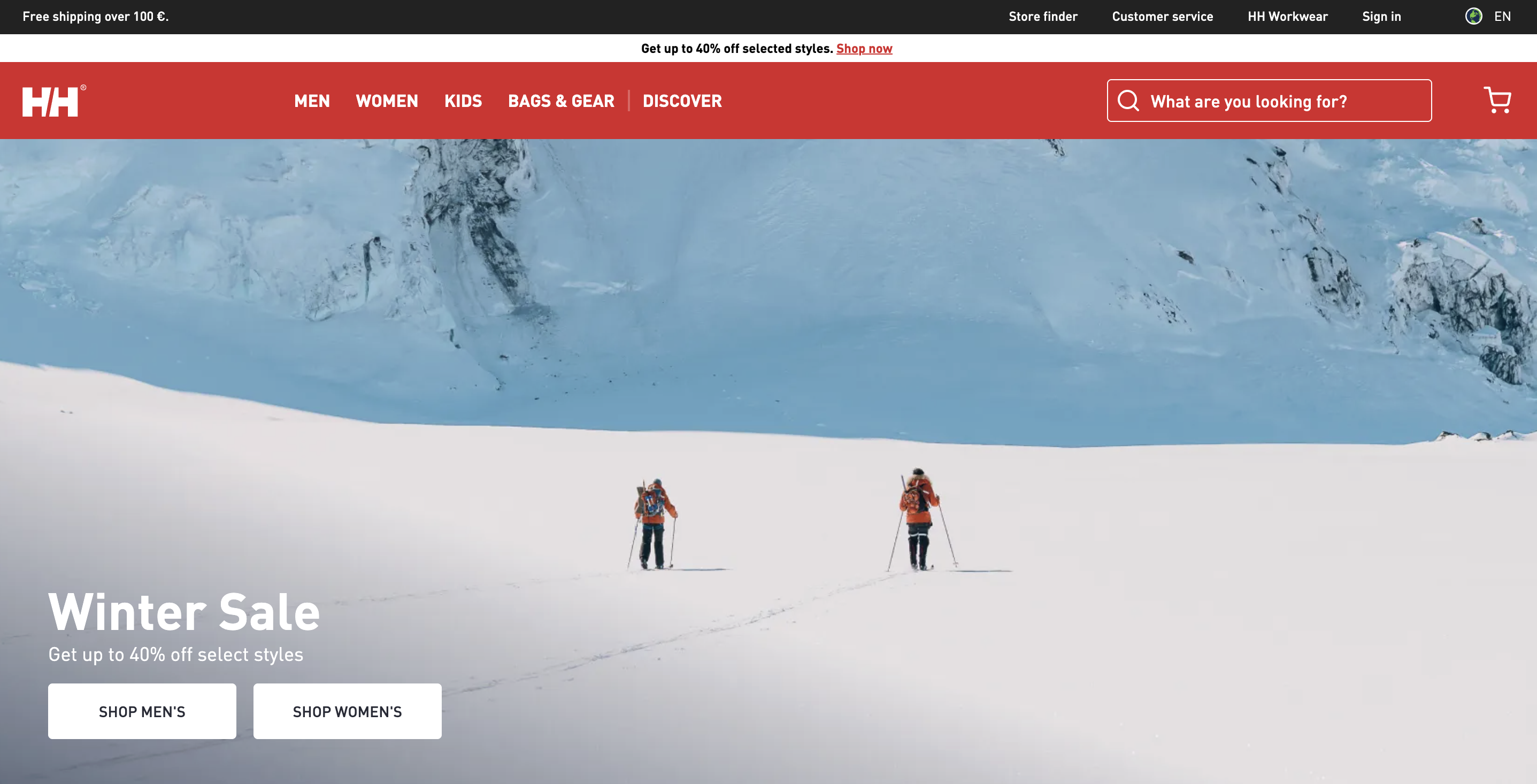
Uses activity-based navigation to align products with how customers shop
Rather than categorising products purely by type (e.g., jackets, pants), Helly Hansen organises browsing around outdoor activities and conditions such as hiking, skiing, sailing, and workwear.
This aligns navigation with real-world use cases instead of forcing users to think in product hierarchies first.
Magento supports this by letting brands define rich, activity-level category trees and attribute-driven filters, enabling shoppers to reach relevant products through contextual entry points rather than traditional linear menus.
Paul Smith
Website: https://www.paulsmith.com/us
About
Paul Smith is a British fashion brand operating in 60+ countries, with 130+ physical stores globally and a long-established international eCommerce presence. Paul Smith is widely recognised as one of the UK’s most successful independent fashion brands, with reported annual revenues historically in the £300 - 400 million range before the pandemic.
What sets their frontend experience apart
Uses homepage imagery to communicate brand character, not just promote products
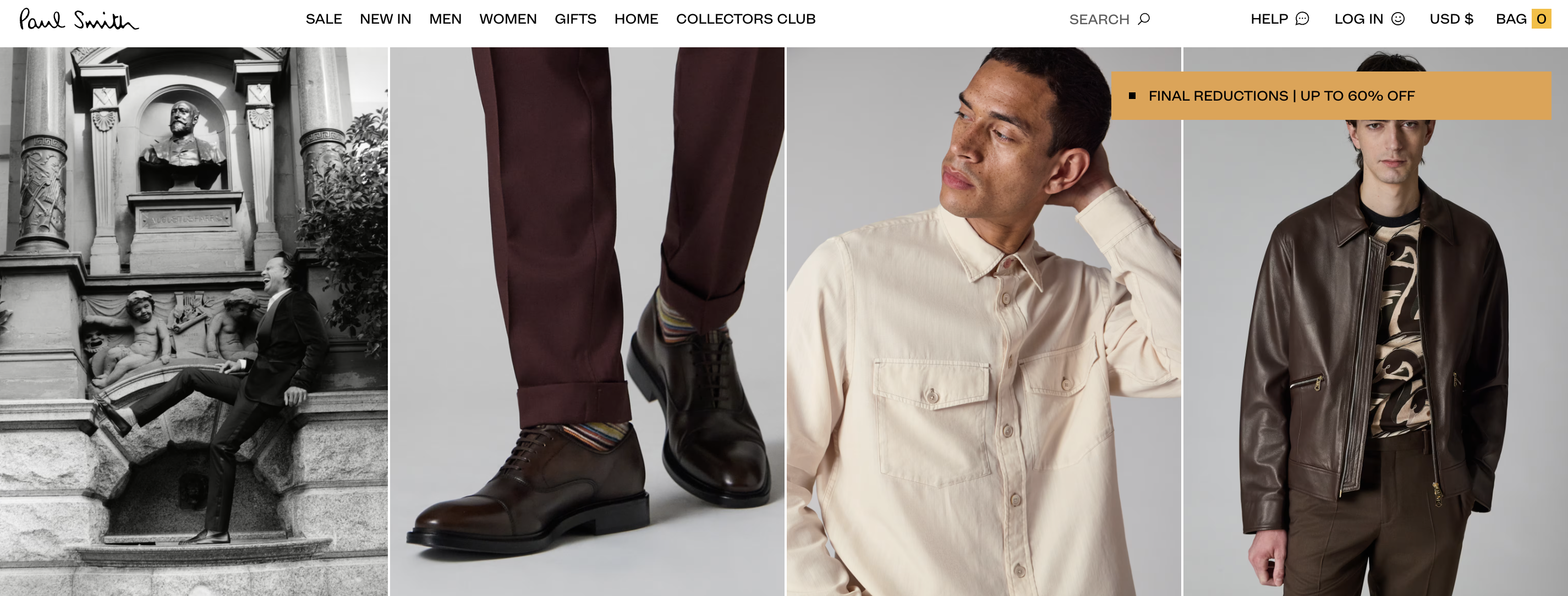
The Paul Smith homepage relies heavily on large, expressive imagery to introduce collections and seasonal ranges.
-
Visuals emphasise colour, texture, and styling rather than dense promotional messaging.
-
Product presentation feels editorial and design-led, setting expectations for the brand before users interact with listings.
This approach helps establish brand tone immediately. Magento supports this by allowing homepage layouts to be built around flexible content sections, so imagery-led storytelling can sit at the top of the shopping journey without constraining catalogue structure.
Beauty & personal care websites
TEMPLESPA
Website: https://www.templespa.com/
About
TEMPLESPA is a British luxury skincare and spa brand with 25+ years of heritage, founded around 2000 by Mark and Liz Warom. The brand is stocked in high-end retailers, spas, hotels, and boutique destinations worldwide, with an estimated annual revenue of around USD 35 million, reflecting a strong position in the premium beauty segment.
What sets their frontend experience apart
Combines imagery and video within the same visual frame to communicate product experience
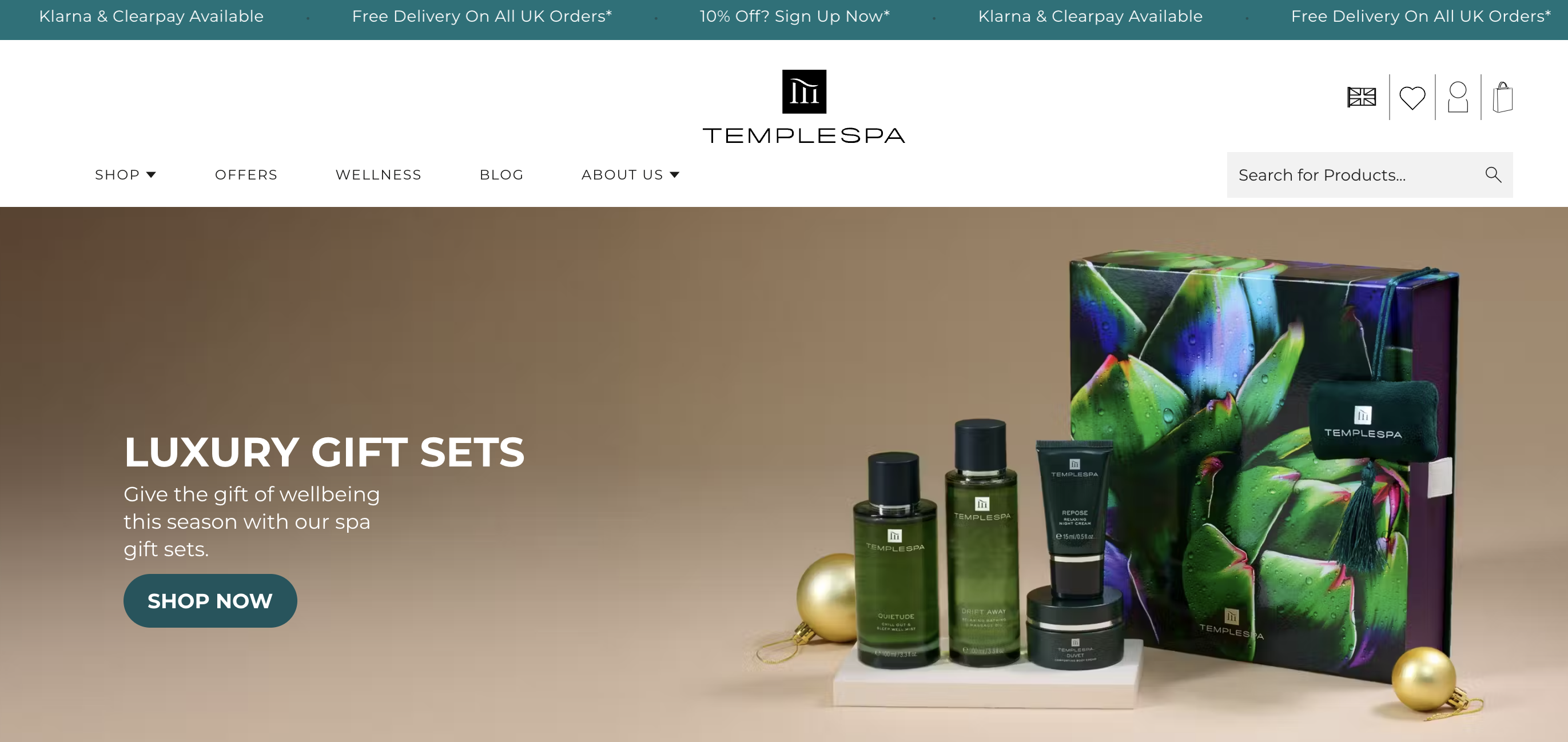
TEMPLESPA places static imagery and video side by side in a single content frame, instead of separating them into different sections or pages.
-
Static imagery communicates texture, packaging, and premium positioning.
-
Video demonstrates application, movement, and ritual context.
-
Both media types are visible at the same time, so users do not need to switch states to understand the product.
This reduces the friction between seeing and understanding how a product is used. Magento supports this by allowing mixed media components to be embedded within the same content block, so brands can combine presentation and demonstration without fragmenting the layout.
|
Implementation insight: Aligning UX, brand storytelling, and performance TEMPLESPA’s current website was optimised by On Tap after the brand identified performance and usability issues that were beginning to affect conversion, particularly on mobile. Rather than redesigning the brand experience, the focus was on ensuring the site’s structure could support this style of browsing more efficiently. On Tap rebuilt the frontend using Hyvä theme, a lighter, modern Magento frontend designed for speed and simplicity, and made targeted adjustments to navigation and templates to better reflect how customers explore rituals, collections, and products. This approach improved responsiveness across critical mobile journeys and resulted in a +18% uplift in mobile conversion within three months, without changing TEMPLESPA’s brand positioning or commercial model. Explore Hyvä development services to see how we accelerate site performance and customer experience on Magento with a lightweight, conversion-focused frontend. |
Sigma Beauty
Website: https://www.sigmabeauty.com/
About
-
Founded in 2009, Sigma Beauty is a digitally native beauty and cosmetics brand that operates a direct-to-consumer model.
-
Sigma Beauty operates at a tens-of-millions USD revenue scale, shipping to over 70 countries, typical of established, international DTC beauty brands.
What sets their frontend experience apart
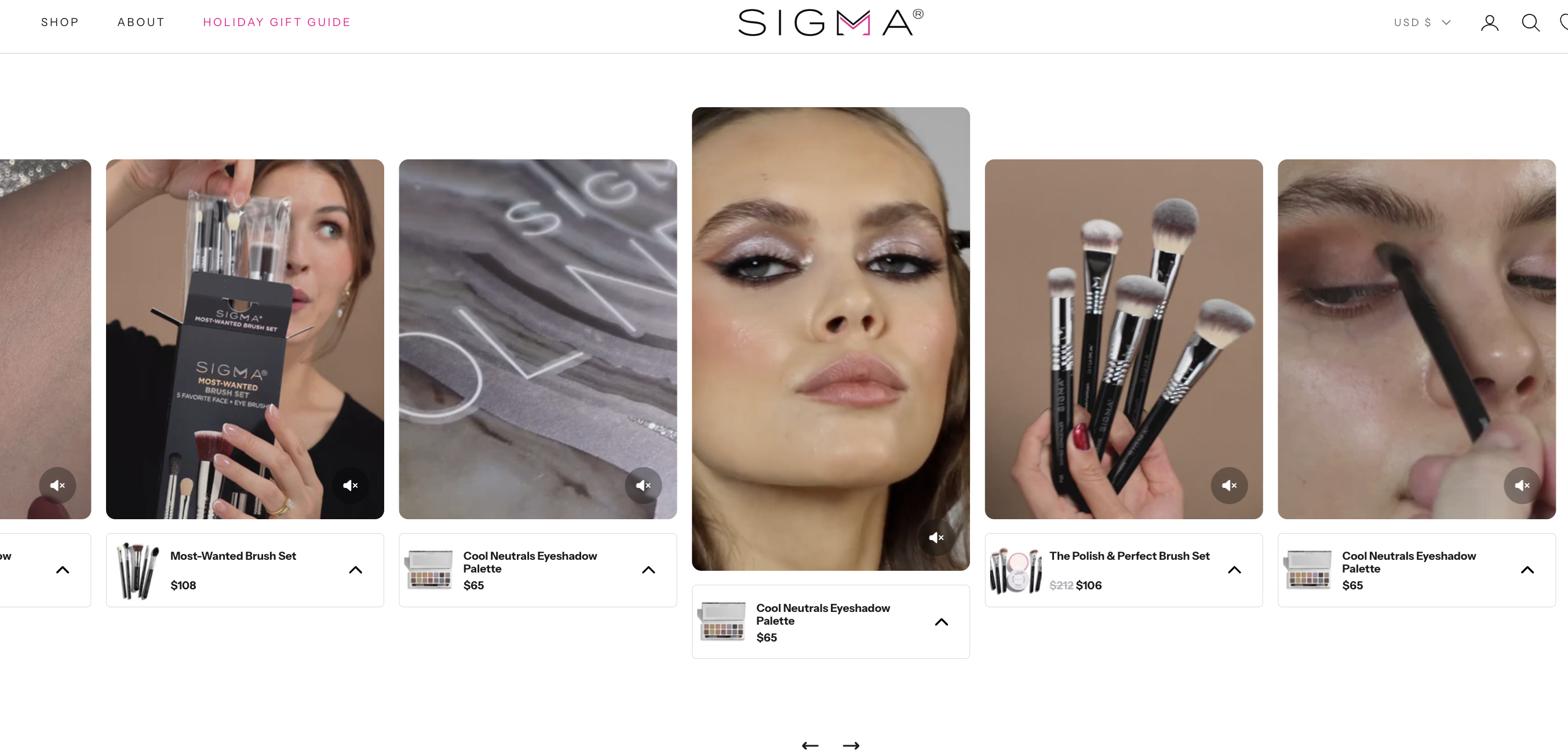
Uses short-form video to show products in real use, not just static swatches
Sigma Beauty integrates short, vertical videos directly into product browsing and discovery areas.
-
Videos show products being applied on real skin and faces, including true colour payoff, texture, and finish. Some videos demonstrate how the tool is used, not just what it looks like, helping shoppers understand function and result.
-
Each video is paired with direct product links, allowing users to add the featured item to the cart without leaving the browsing context.
This allows shoppers to move from seeing the product in action to purchasing it immediately, reducing friction between inspiration and checkout.
Magento supports this by enabling rich media content to be combined with product references and add-to-cart actions, so video becomes a functional part of the shopping journey rather than a separate marketing asset.
Byredo
Website: https://www.byredo.com/
About
Byredo is a Swedish luxury brand specialising in fragrance and beauty, founded in 2006. With a global presence in 40+ markets, the brand is recognised as a leader in the prestige fragrance segment. Acquired by Puig in 2022, Byredo is valued at €1B+.
What sets their frontend experience apart
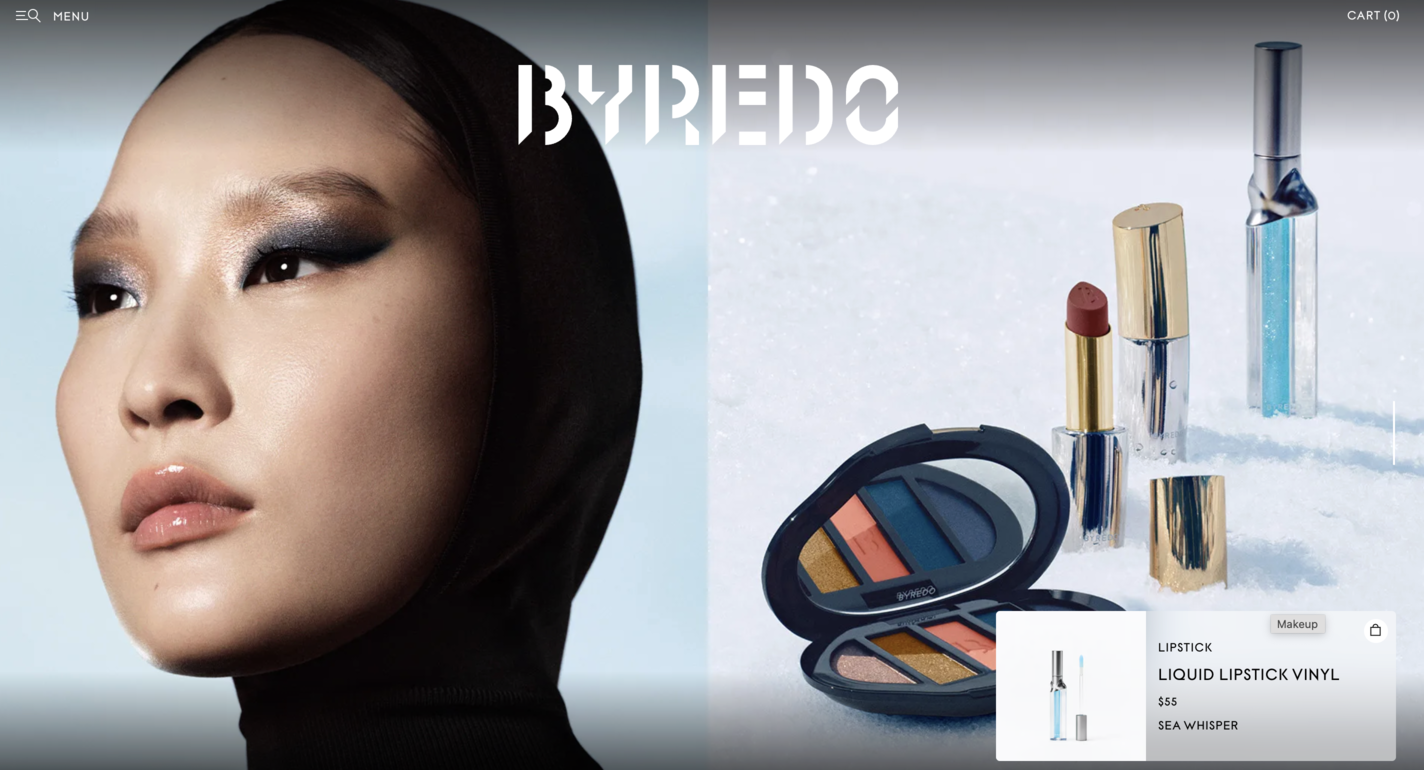
Uses shoppable homepage banners as category entry points
On the homepage, Byredo presents full-width visual banners, each representing a distinct product category (for example, fragrance, body care, or candles).
-
Each banner introduces a category through mood-led imagery rather than text-heavy navigation.
-
On hover, products from that category appear directly within the banner, including product name and price.
-
Users can move from category discovery to product consideration without navigating to a separate listing page first.
This turns the homepage into an interactive category gateway, combining brand storytelling with immediate commercial context.
Magento supports this by allowing category-linked products and pricing to be surfaced inside CMS-driven homepage components, so category discovery and commerce can coexist within the same visual space.
FMCG & food and beverage websites
Coca-Cola
Website: https://www.coca-cola.com/
About
-
Founded in 1892, Coca-Cola is one of the world’s largest FMCG brands, operating across more than 200 countries.
-
Its online ecosystem intentionally separates two commerce models. World of Coca-Cola focuses on experience-based purchases such as tickets, reinforcing brand heritage and cultural relevance. The Coca-Cola Store focuses on product commerce, selling official branded merchandise, collectables, and lifestyle products.
What sets their frontend experience apart
Organises the site around campaign-led sections instead of product browsing
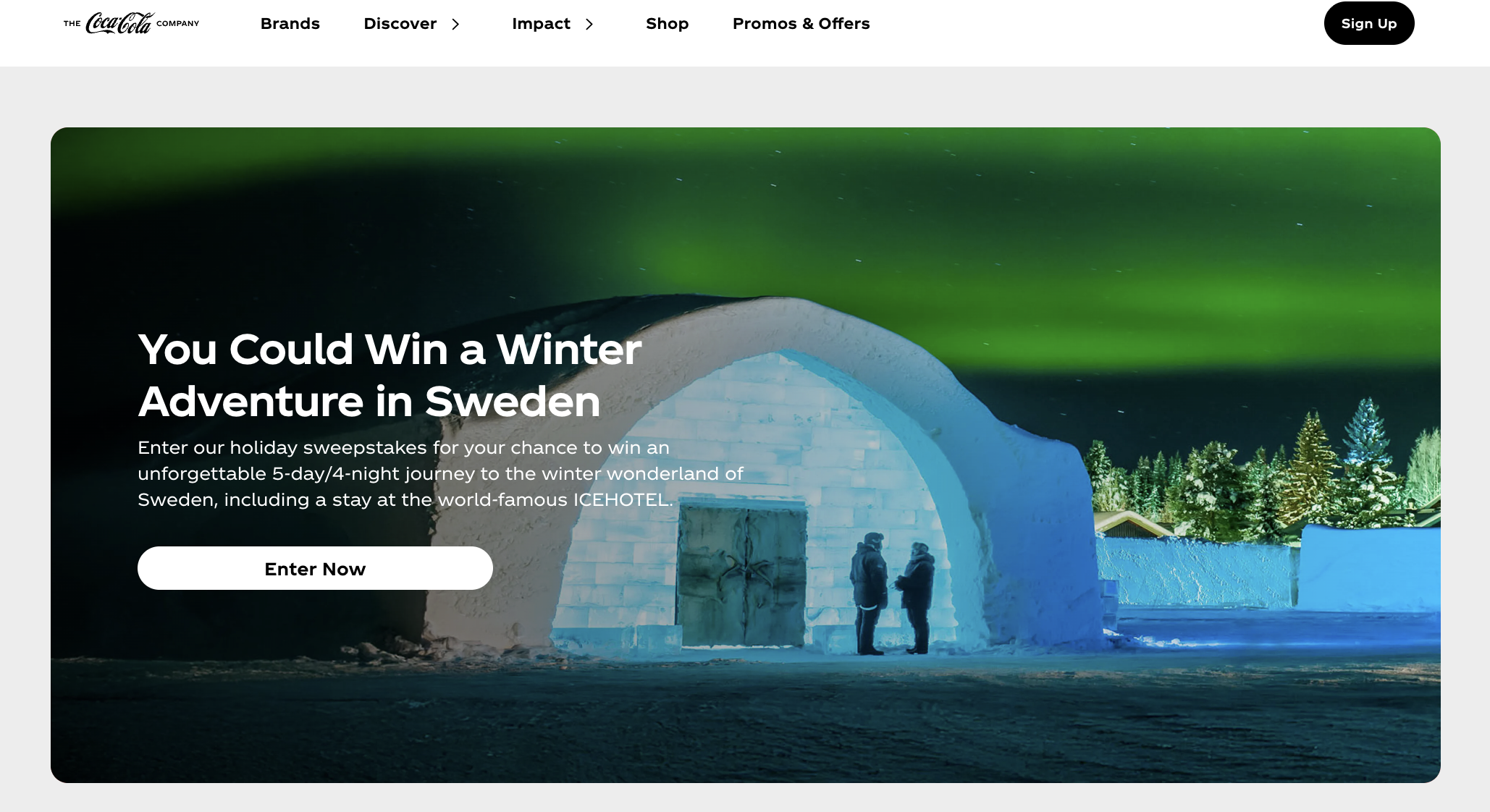
The Coca-Cola US homepage is built from large, campaign-led sections rather than product listings or category navigation.
-
Beverages appear only within campaign or lifestyle contexts, not as items to browse or compare.
-
There are no product grids, filters, or product detail pages for drinks on the main site.
-
Movement through the page happens by scrolling through campaign sections, not by selecting products or categories.
This makes sense as most visits to FMCG brand sites are campaign-driven. The site reflects how users actually arrive and what they expect to engage with.
Magento supports this approach by allowing campaign content and layouts to be updated frequently without changing the underlying commerce setup.
Monin
Website: https://www.monin.com/
About
Founded in 1912, Monin is a global producer of flavoured syrups, sauces, and beverage ingredients. The brand serves both consumer and professional markets, with a strong presence in hospitality, cafés, and foodservice, alongside direct online sales.
What sets their frontend experience apart
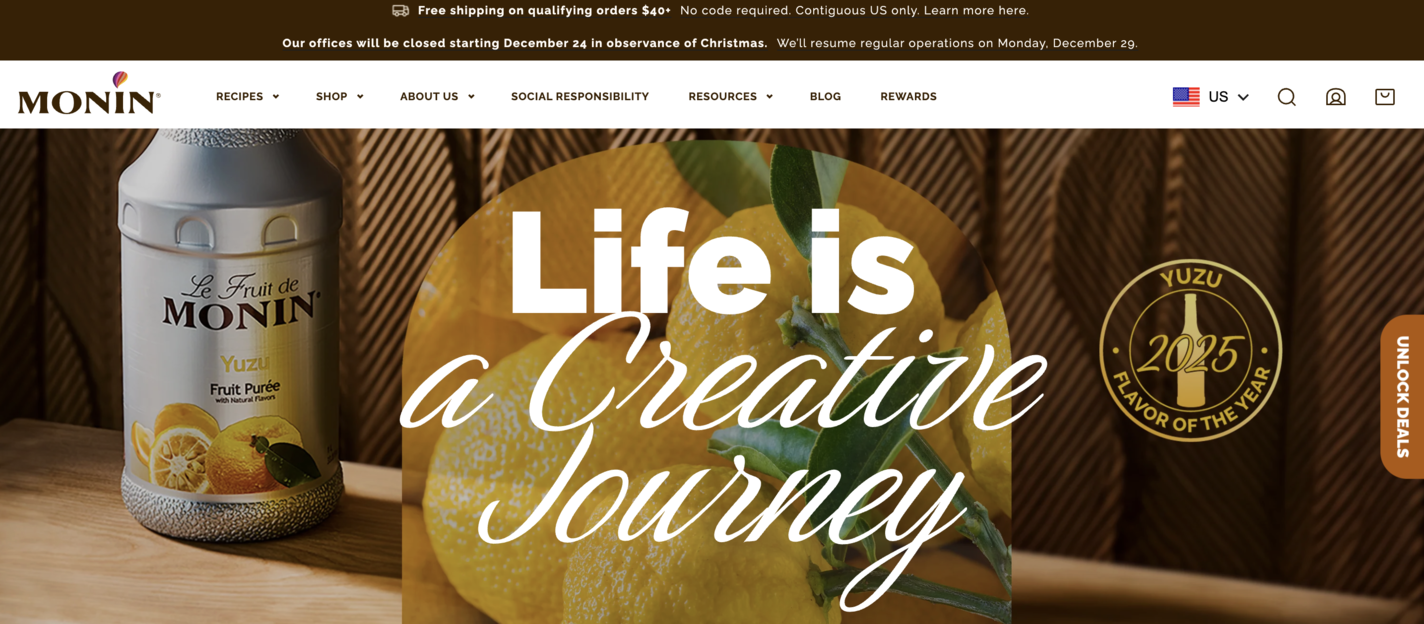
Presents inspiration and recipes up front to guide product use
-
The site incorporates Recipes and Inspiration links directly in the main navigation, not tucked away or hidden.
-
Recipes include ideas for teas, coffees, cocktails, frappés, smoothies, and culinary applications, which help users see how flavours can be used before they shop.
By teaching users what they can make instead of only showing product listings, Monin turns browsing into guided exploration, which can increase engagement and eventual conversions.
Magento makes it possible to connect content pages directly to relevant products and curated collections, so brands can guide customers from discovery to purchase within a single, continuous experience rather than separating content and shopping into different areas.
Nespresso
Website: https://www.nespresso.com/
About
-
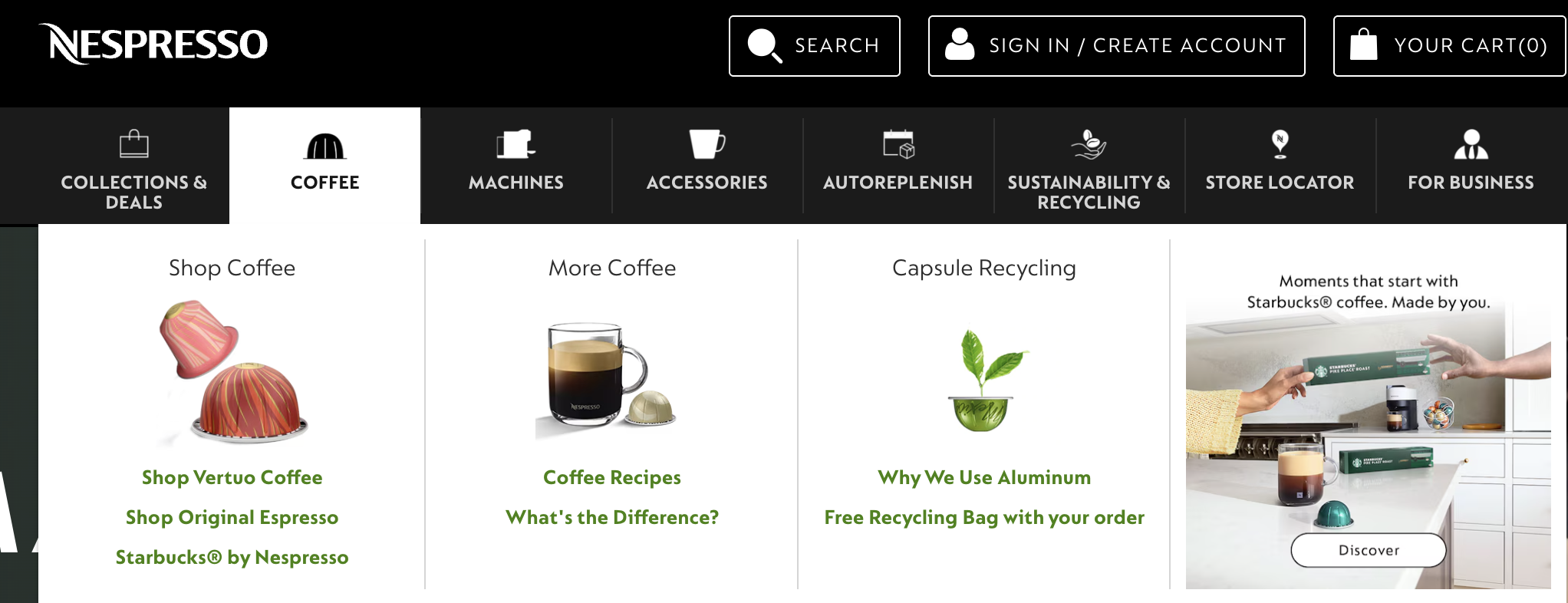
Nespresso is a global coffee brand operating a direct-to-consumer model across coffee capsules, machines, and accessories. The brand operates in 80+ markets worldwide and serves over 14 million customers globally, with annual revenues exceeding CHF 6 billion as part of the Nestlé Group.
-
Unlike campaign-led FMCG brand sites, Nespresso’s website functions as a core transactional channel, supporting large-scale direct sales of consumable products alongside machines and accessories.
What sets their frontend experience apart
Structure product discovery around system compatibility before product choice
The Nespresso site requires users to choose their coffee system (for example, Original or Vertuo) early in the browsing journey.
-
Capsules are clearly separated by the machine system, preventing incompatible products from appearing together.
-
Once a system is selected, all product listings, filters, and recommendations are constrained to that context.
-
Users are never asked to evaluate compatibility at the product level.
This removes a major source of friction in consumable ecommerce, where compatibility errors can lead to returns or dissatisfaction.
Magento supports this by allowing catalogue visibility and navigation to be controlled based on predefined product relationships, so only compatible products are surfaced at each stage of browsing.
Automotive & mobility brands
Land Rover
Website: https://www.landrover.com/
About
Founded in 1948, Land Rover is a global premium automotive brand operating in 170+ markets as part of Jaguar Land Rover. The brand reported £23.1 billion in revenue (FY2023), with a strong focus on luxury vehicles and ownership experiences delivered through a global dealer network.
What sets their frontend experience apart
-
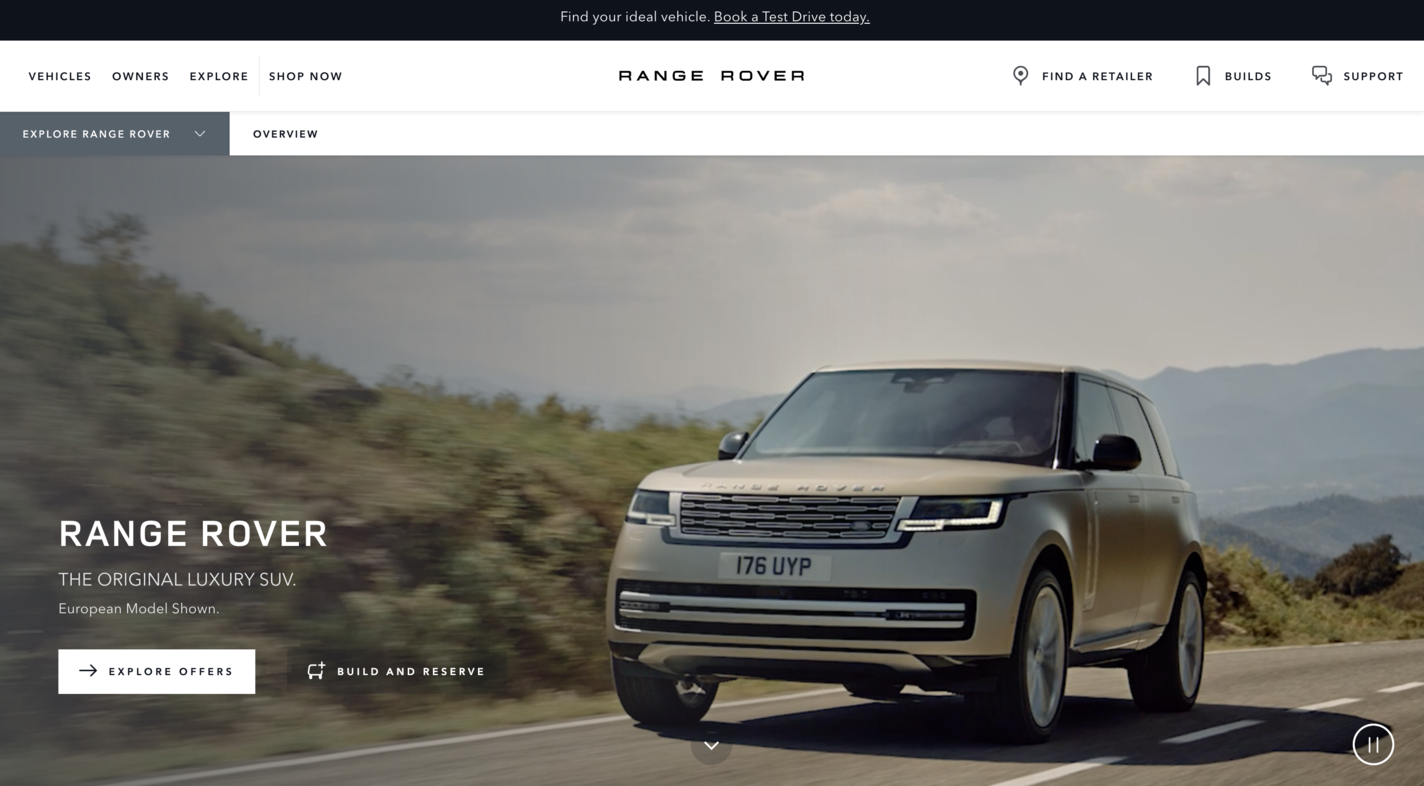
Highlights the luxury brand narrative alongside product detail: The site integrates refined visuals, craftsmanship detail, and lifestyle messaging with vehicle information, reinforcing brand positioning as premium and aspirational.
-
Explains complex features through interactive visuals: Product pages use clickable hotspots on high-resolution imagery to reveal feature explanations, making advanced design and technology easier to understand without long spec lists.
Magento’s flexibility allows content and product data models to drive experiences such as configurators or interactive feature explanations, integrating media assets with structured information.
Ford
Website: https://www.ford.com/
About
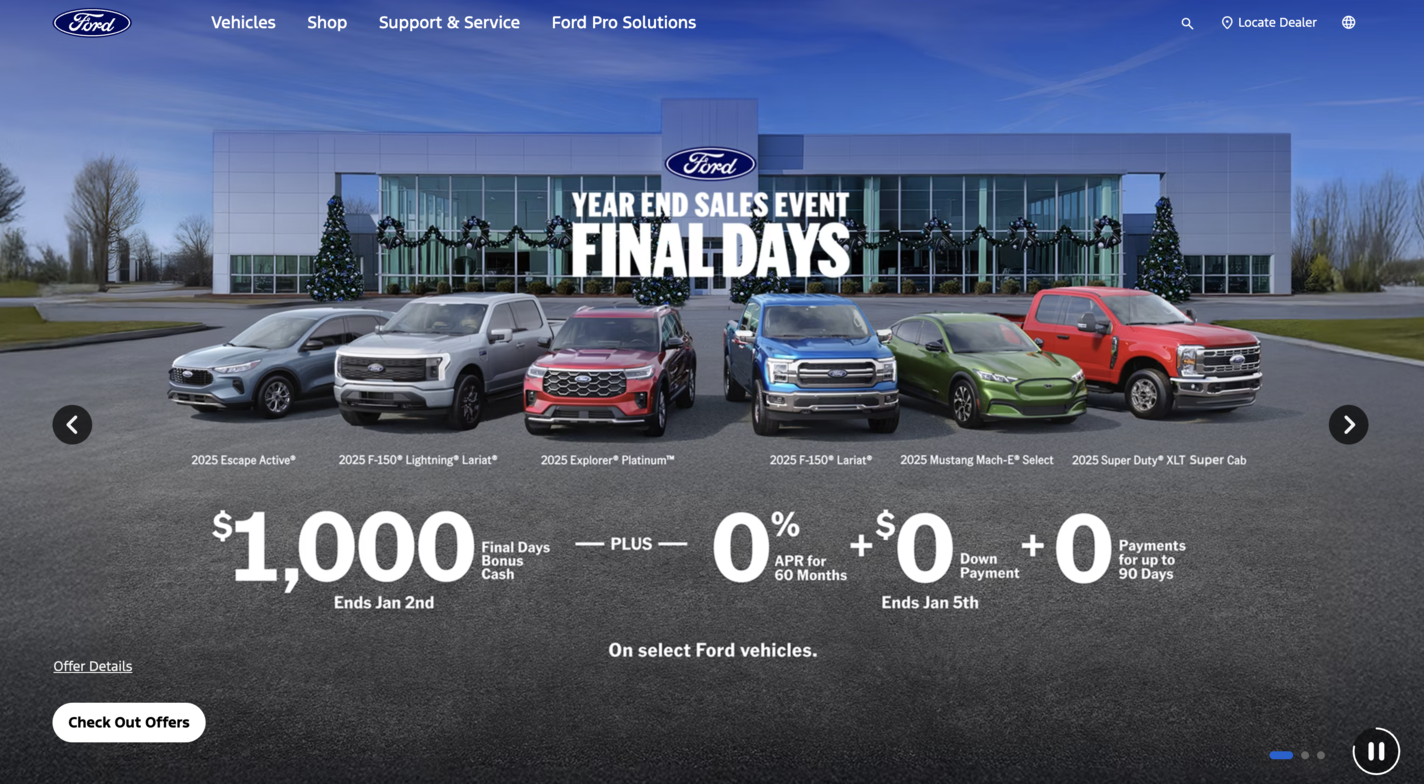
Founded in 1903, Ford is one of the world’s largest automotive manufacturers, operating in 125+ markets. Unlike luxury automotive brands, Ford’s eCommerce presence is more utility-driven, supporting accessories, parts, and ownership services at scale, alongside dealer and service networks.
What sets their frontend experience apart
-
Supports vehicle-specific parts discovery: Users can filter accessories by vehicle year and model or use account features that help match parts to specific vehicles, reducing uncertainty about fitment.
-
Acts as a central hub for vehicle ownership actions: Beyond vehicle exploration, the site clearly supports ownership-related tasks such as accessing offers, finding services, and navigating to parts and accessories, positioning digital as a practical extension of ownership rather than a showroom.
Magento supports complex product options and dependencies, allowing selectable attributes (engine, drivetrain, packages) to be presented step-by-step with real-time price updates and inclusion rules.
Jaguar
About
Jaguar is a British premium automotive brand operating across 100+ markets worldwide as part of Jaguar Land Rover.
What sets their frontend experience apart
Uses immersive, interactive storytelling to highlight vehicles
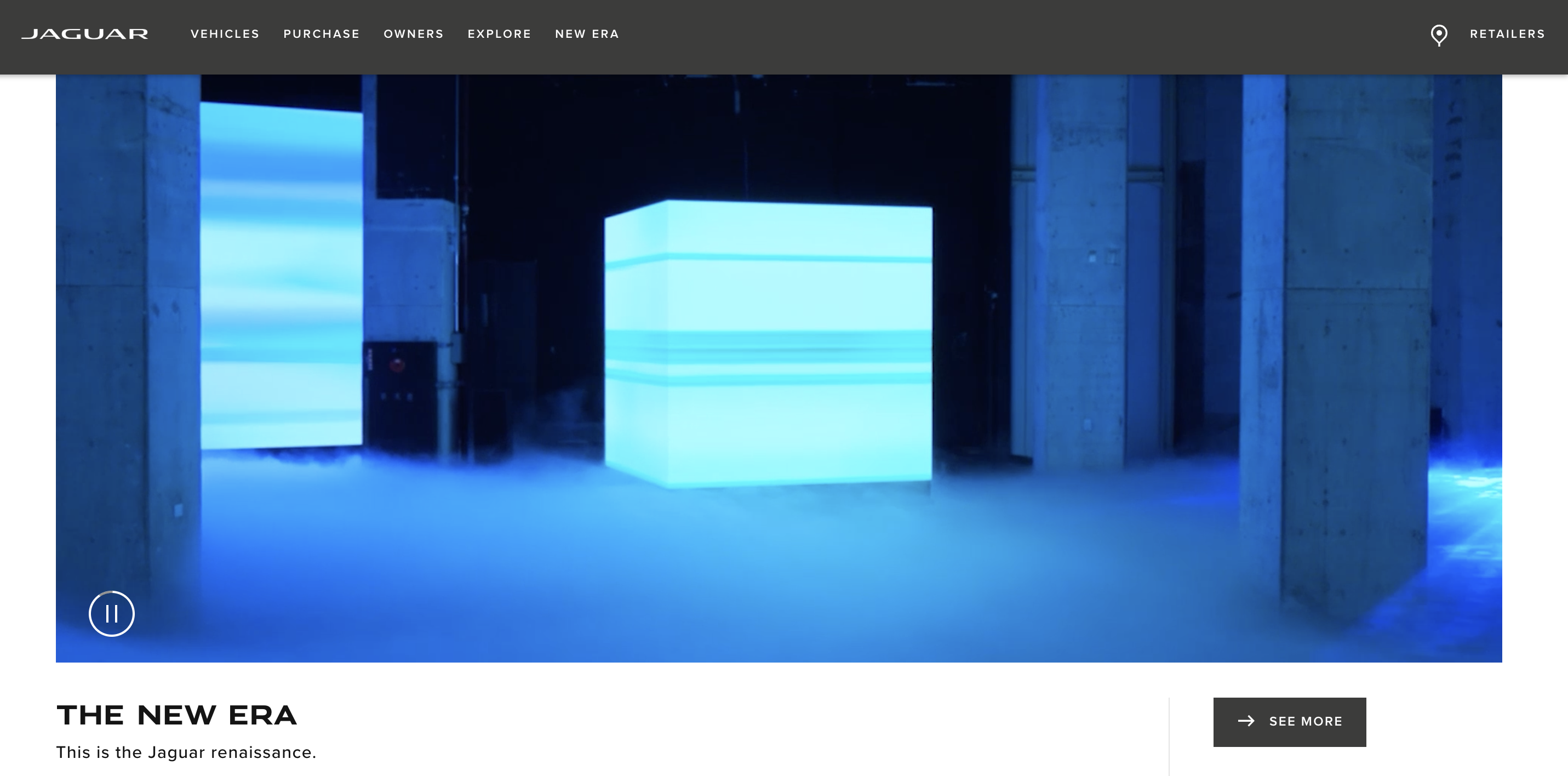
Jaguar’s homepage and product sections rely heavily on full-screen, high-resolution imagery and video to create an immersive experience that draws users into the world of Jaguar.
-
High-quality visuals are used to highlight the performance, design, and luxury of the vehicles, setting the brand’s premium tone.
-
Interactive videos and scrolling transitions reveal more about the vehicle’s features without requiring users to click through multiple pages.
-
Image and video galleries are embedded within key sections (e.g., performance, design), enabling deep product engagement directly from the navigation menu.
This approach uses visual cues and immersive media to reinforce Jaguar's luxury positioning rather than just selling the product outright.
Magento supports this by allowing rich media integration (videos, galleries, high-res images) directly within the shopping journey, providing seamless, story-driven discovery.
Technology & electronics brands
HP
Website: https://www.hp.com/
About
Founded in 1939, HP is a global technology company operating at enterprise scale, with annual revenue exceeding USD 50 billion and a presence in 170+ countries.
What sets their frontend experience apart
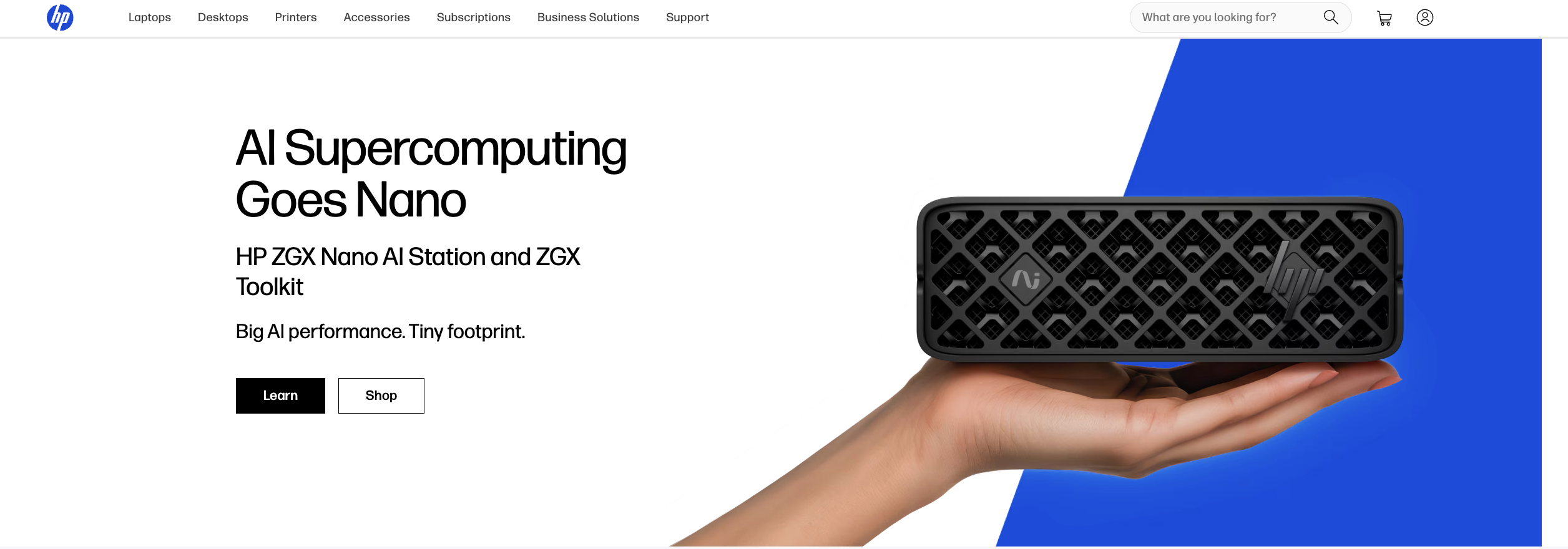
Supports both one-time purchases and subscription-based buying
Alongside standard product sales, HP offers subscription-based models such as printer plans that bundle hardware, consumables, and services into recurring payments.
This is feasible as Magento supports both one-time purchases and subscription models, enabling hardware, consumables, and services to be sold either as standalone products or as recurring plans within the same commerce setup.
Lenovo
Website: https://www.lenovo.com/
About
Founded in 1984, Lenovo is one of the world’s largest technology companies and a global leader in personal computing. Lenovo has ranked #1 in global PC market share for multiple consecutive years, shipping 60+ million PCs annually, and operates in 180+ markets worldwide.
What sets their frontend experience apart
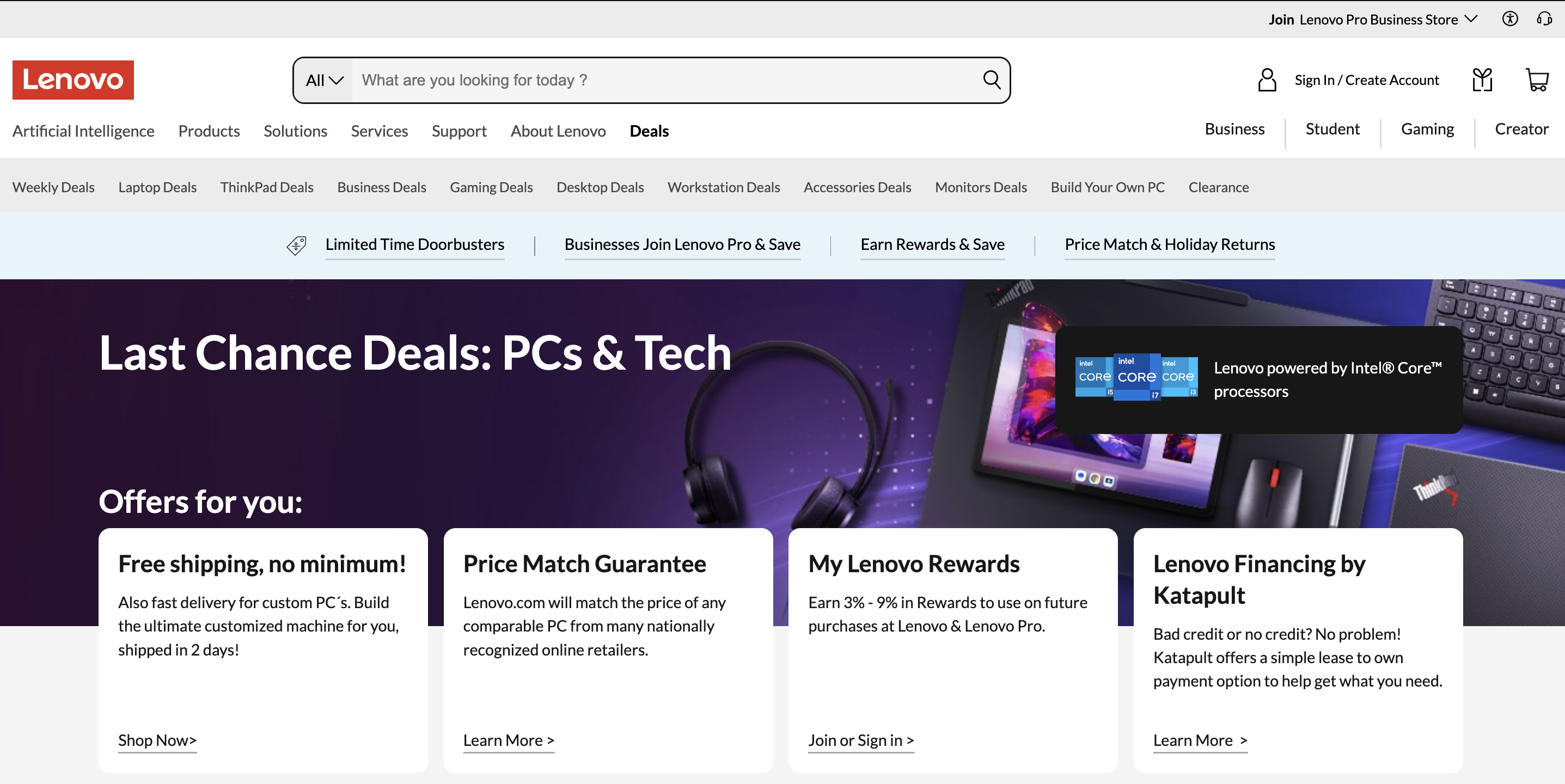
Clear options for product customisation
The site presents product customisation in a step-by-step format, allowing users to choose options such as processor, storage, and memory. Each selection dynamically updates the price, making it easy for customers to see how their choices affect the final cost.
Magento supports products with multiple selectable options and dependencies (such as hardware upgrades or service add-ons), applying pricing rules automatically so changes in configuration are reflected accurately in the final price.
ASUS
Website: https://www.asus.com/us/store/Asus
About
ASUS is a Taiwanese multinational technology company and a leading global manufacturer of PCs and electronics. As of 2024, ASUS was the fifth-largest personal computer vendor worldwide by unit sales, with a roughly 9% market share in the global laptop market and a strong position in the motherboard and components segments.
What sets their frontend experience apart
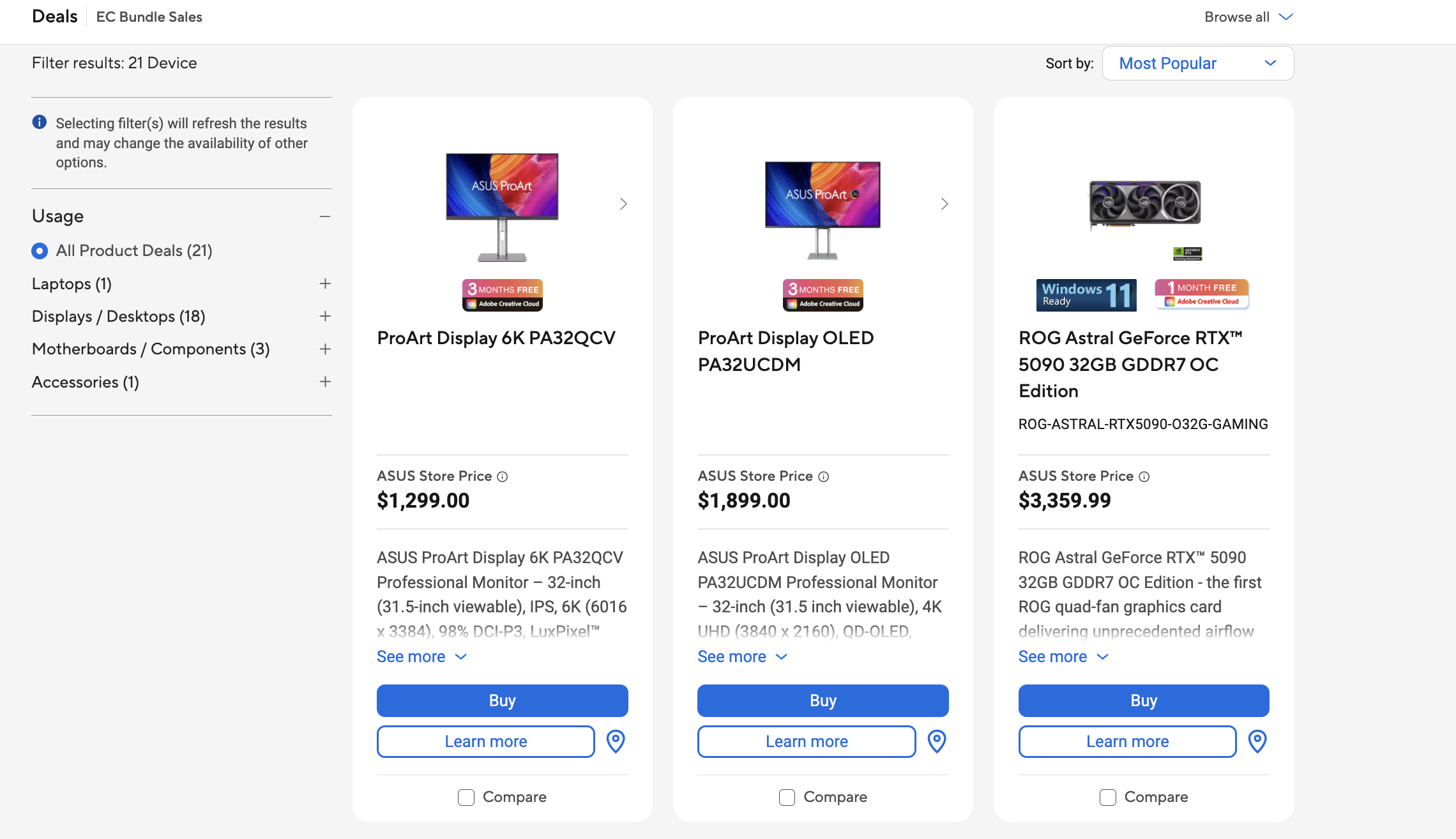
Organises a large catalogue with intuitive filters and sorting
ASUS offers a vast range of products (laptops, components, accessories, handheld devices) and uses clear product categorisation to help users navigate.
-
Filters for device type, specs, and price are displayed prominently in the sidebar, reducing choice paralysis.
-
Visual hierarchies (large product cards, clean image-first layouts) make it easy to identify key product classes (e.g., Laptops, Motherboards, Mobile Devices).
-
Price, rating, and promotional cues are directly visible in category grids, aiding fast comparison.
Magento enables this by supporting attribute-driven filtering and configurable listing templates, so users can discover products by type, specification, or use case without overwhelming the page with unnecessary options.
Summary: Why these Magento websites can deliver highly optimised frontends at scale
Although the Magento websites featured in this article differ significantly in visual design, they are all built on the same core Magento platform, which is designed to support complex catalogue structures, advanced storefront logic, and high levels of customisation while remaining stable, performant, and controllable at scale.
-
Customised user journeys and design flexibility: With Magento’s deep customisability, merchants can create bespoke frontend experiences that match user expectations and business goals. Whether it's a unique product page layout or a custom checkout flow, Magento enables merchants to design and implement tailored workflows and UI elements. This ensures that the frontend experience is directly aligned with how customers interact with the store.
-
Enhanced frontend flexibility in product discovery and navigation: Magento allows merchants to design and organise product discovery journeys without restrictions. Its flexible category structure and customisable product attributes enable merchants to create tailored product hierarchies, define relationships between products, and customise filtering options. This flexibility ensures seamless navigation and guided discovery that aligns with specific business models and customer needs.
-
Stable, fast-performing sites during peak traffic and large catalogues: Magento’s built-in features, like advanced caching and scalable architecture, ensure that websites remain responsive and fast, even with large product data sets or high traffic volumes. Whether handling thousands of SKUs or experiencing traffic spikes during peak shopping periods, Magento’s optimised performance ensures that the frontend remains stable and user-friendly.
-
Monitor every customer touchpoint continuously: Merchants running high-performing Magento stores keep a close eye on speed and reliability at all times. Doing this manually, however, quickly becomes resource-heavy and incomplete. Tools like AuditIQ make the process proactive and scalable. It continuously tracks page speed, Core Web Vitals, real-user experience and technical health end-to-end, so broken flows, slow pages and checkout issues are caught before they turn into lost conversions. Beyond performance, AuditIQ eCommerce monitoring tool also covers security, configuration changes, SEO & GEO audit and technical health, giving you complete visibility from a single dashboard.
In practice, these capabilities only translate into strong frontend experiences when combined with high development standards. How product data is modelled, how frontend layers are structured, and how performance is governed over time determine whether Magento remains flexible and reliable as the site evolves. This is why the choice of Magento development partner has a direct impact on frontend quality and long-term scalability.
On Tap supports Magento merchants operating with complex requirements across industries, from premium brands to high-volume catalogues and multi-market setups. Our strengths include:
-
Two decades of hands-on Magento experience spanning complex builds, replatforming projects, and ongoing optimisation, helping merchants make the right Magento decisions from the start through our Magento development services.
-
UX and UI optimisation built into delivery: Frontend performance, usability, and clarity are treated as part of the development process. Our dedicated UX/UI specialists will work closely with you to understand customer behaviour, user journeys, and business goals. Design decisions are made to support how customers browse, compare, and purchase in practice, ensuring the frontend experience is not only visually aligned with the brand but also usable and commercially effective.
-
Carbon, our rapid deployment system for Magento and Adobe Commerce, enables stores to launch in weeks rather than months with a high-converting storefront from day one. Built on top of Hyvä, Carbon combines a fast, conversion-focused frontend with a wide range of proven B2C and B2B functionality out of the box, while still retaining the flexibility to extend and customise as business requirements evolve.
-
Evergreen – keeping your Magento store up to date without upgrade disruption. Adobe regularly releases security patches and feature updates. For most Magento stores, applying these updates later becomes costly and disruptive.
Evergreen is On Tap’s approach to solving that problem. After the first project, we deliver all future minor and security upgrades for free, and in cadence with Adobe release cycles. This helps merchants stay secure and compatible as the platform evolves, without repeated upgrade projects or unexpected costs.
Contact us to discuss your Magento build, migration, or redevelopment with a team that has delivered complex Magento projects for nearly two decades.