

According to the B2B eCommerce Site Search Trends Report 2025 by Algolia, 84% of B2B eCommerce leaders say AI has shifted from a “nice-to-have” to a critical tool, with 9 out of 10 recognising its importance in their long-term strategy. This data shows that AI is rapidly becoming a defining trend, drawing significant attention from B2B eCommerce players. To stay competitive and meet rising customer expectations, companies should start exploring AI and applying it to their eCommerce websites.
In this blog, we will cover the key areas where AI makes the most significant impact, along with 9 specific use cases and a clear roadmap for implementation. By the end, you will know how to apply AI strategically to future-proof your B2B eCommerce business.
Why do B2B eCommerce businesses need to prioritise AI adoption today?
B2B purchasing behaviours have shifted significantly in recent years, and AI is accelerating that transformation. Forrester reports that since late 2024, 89% of B2B buyers have already adopted generative AI, and adoption is expected to continue growing. They also noted that AI has become a top self-guided information source across every stage of the B2B buying journey. This data shows AI is no longer a differentiator but a baseline shaped by a digital-native era, directly shaping B2B buyers. For businesses, adopting AI is essential to meet evolving customer demands.
On the competitive side, other B2B rivals are also moving fast. Research from Sana Commerce (2024) reveals that 81% of B2B companies are already leveraging AI, and 79% planning to increase their AI investment in the future. This means AI adoption in B2B becomes a critical step to remain competitive. Companies that delay risk falling behind as competitors use AI to boost efficiency, personalise experiences, and simplify buying.
Taken together, both rising customer demand and intensifying industry competition make AI adoption a strategic imperative for B2B companies. Yet, according to McKinsey, most B2B sellers are still in the early stages of generative AI adoption. Only 19% of B2B decisions are already fully implementing generative AI use cases for B2B buying and selling, with another 23% still in development or experimenting with its applications. This creates a window of opportunity: early adopters can set new benchmarks, strengthen customer relationships, and build a competitive edge before the market becomes saturated.
Key area of AI adoption in B2B eCommerce
Let’s now look at the specific applications of AI in B2B eCommerce websites. There are two key areas where AI is most commonly leveraged, including:
Personalised shopping and intelligent self-service for a better customer experience
According to Forrester’s Q1 2025 B2B Buyer and Consumer Personalisation Survey, nearly 75% of consumers and B2B buyers want the organisations they interact with to know when, where, and how they prefer to receive personalised experiences. In addition, a report by Spryker and Statista shows that self-service portals rank as the second most preferred channel for B2B buyers, highlighting the continued demand for convenience.
These insights indicate a strong demand for hyper-personalisation in B2B eCommerce, where B2B customers can transact efficiently, save time, and enhance productivity. This also explains why B2B eCommerce businesses are increasingly focused on this area. By leveraging AI for dynamic pricing, personalised product recommendations, and automated quote generation, companies can deliver a more intuitive and engaging customer experience.
Automation of B2B order management processes for optimising merchant operations
B2B order management involves large and varied orders, multi-level approvals, real-time inventory tracking, and multi-channel order handling. This complexity creates a clear need to reduce errors, accelerate processing, optimise resources, and improve customer experience.
To address this demand, many businesses have adopted automation. According to Salesforce, many order-related processes in eCommerce have already been automated. For example, order status monitoring and reporting are fully automated in 32% of businesses and mostly automated in 48%. This data shows that automation is now a must-have capability for any enterprise. Today, with the integration of AI, automation can drive more intelligent automation workflows across the entire operation. For example, it can automate routing orders through the proper approval channels, reconcile payments with invoices, or trigger logistics updates. These capabilities help reduce bottlenecks and ensure smoother, faster operations for merchants.
Overall, these are the two AI applications most commonly prioritised in B2B eCommerce. They bring clear benefits, from enhancing customer experience to streamlining merchant operations. In the next section, we will look at specific use cases that show how these benefits can be achieved, along with other AI applications for reference.

9 essential AI use cases to boost B2B eCommerce success
In practice, AI offers numerous use cases that businesses can apply to their digital store and operations. Below are 9 key use cases commonly adopted across the B2B eCommerce industry. Let’s explore them in more detail.
1. AI for personalising B2B product description and marketing content
Generative AI enables you to produce high-quality, personalised content at scale, saving time while maintaining brand consistency and relevance. By leveraging data such as product attributes, customer segments, and industry context, AI can deliver accurate messaging that resonates with your specific B2B audience. Below are key content types that generative AI can support:
-
Product descriptions: Automatically generate clear, detailed product descriptions using existing data such as SKU attributes, technical specifications, and use cases. AI can also incorporate SEO keywords relevant to B2B search intent.
-
Personalised emails and outreaches: AI can draft cold emails, re-engagement messages, and upsell offers tailored to each customer’s industry, purchase history, geographic region, company size, or job role. It also adjusts tone, formality, and structure based on the recipient's profile.
-
Blog articles: AI tools can suggest blog topics based on trending B2B keyword searches, seasonal demand, or content gaps identified in competitor sites. Drafts are written using technical language, tone, and structure aligned with your industry.
-
Landing pages: Dynamically generate or personalise landing page content for specific B2B accounts. AI can create page headlines, subheadings, and call CTAs tailored to the visitor’s company profile or campaign segment.
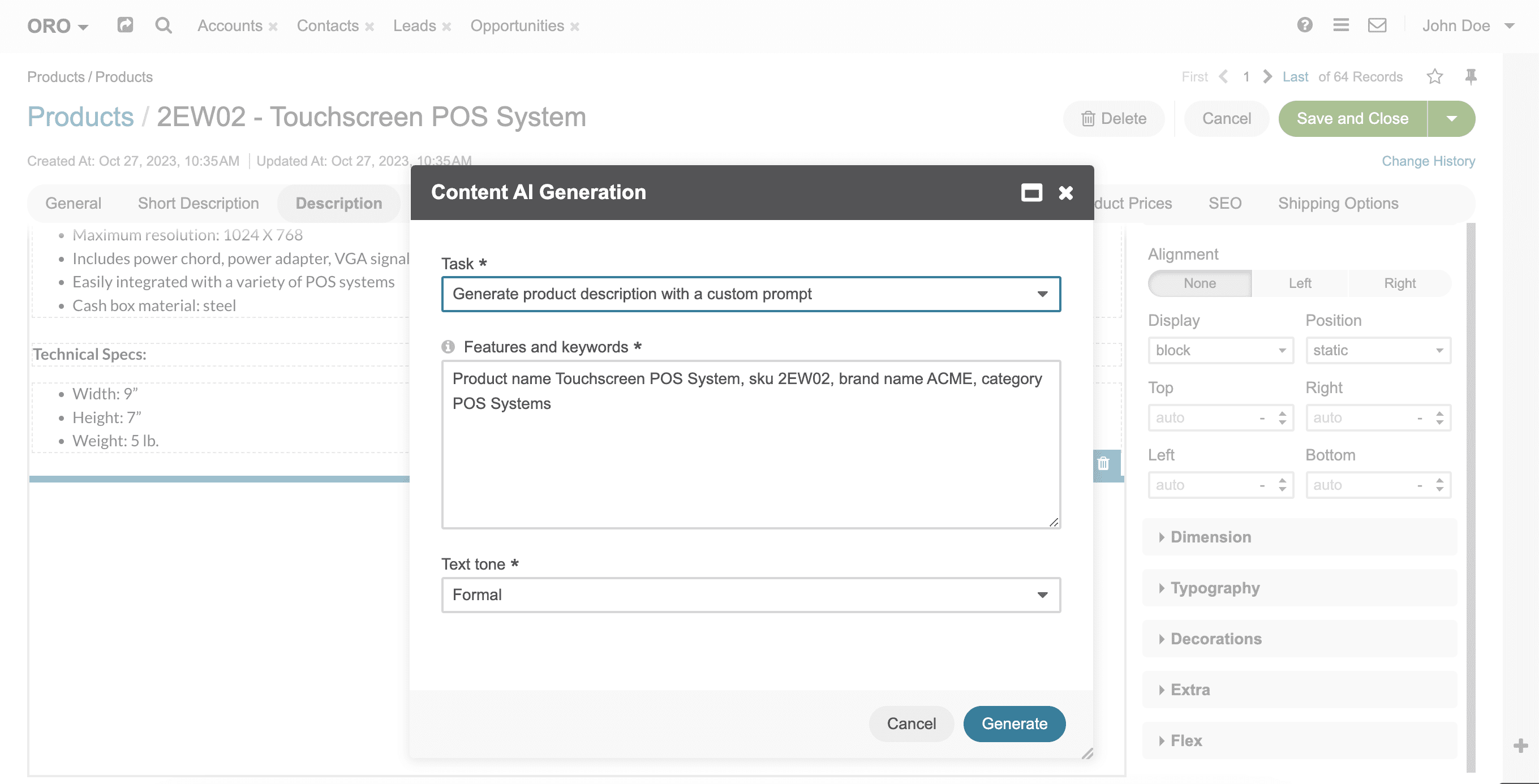
Several eCommerce platforms now offer AI-powered tools to streamline content creation and marketing. For example, OroCommerce’s AI-powered engine seamlessly integrates Generative AI into PIM systems, enabling accurate and dynamic content at scale. Similarly, Shopify provides Shopify Magic, a tool that delivers AI-driven content creation features, helping businesses generate product and campaign content faster while maintaining a consistent tone across online stores. Additionally, Adobe GenStudio, an AI solution for Adobe Commerce, assists in creating on-brand campaign content, leveraging AI to maintain consistency while enhancing creativity across marketing materials. Meanwhile, Aitoc’s ContentAI module for Magento 2 is also a suitable option, as it uses OpenAI to automatically generate content for any product attribute.
2. AI-powered product recommendations for bulk and repeat orders
AI-driven engines help optimise personalised customer experiences and boost upsells, cross-sell in bulk and repeat orders. It uses data like browsing history, click patterns, past purchases, time spent on product pages, and abandoned carts to predict what the customer is most likely to be interested in next. This creates a dynamic, individualised shopping experience. Some of the product recommendations types in B2B are:
- “Frequently bought together”: AI leverages association rule learning or market basket analysis to identify combinations of products that are commonly purchased together in the same transaction by similar users or companies.
Example: When a B2B buyer orders bulk paper cups from a wholesale packaging supplier, the system may automatically suggest lids, napkins, and takeaway bags, items frequently purchased together by cafés and food service chains. - “Complete your purchase with…”: AI identifies contextual needs based on the customer’s cart contents, project-specific logic, and historical orders from similar buyers completing comparable tasks. This encourages customers to add related items or accessories to complete a project or bundle.
Example: A B2B buyer ordering bulk shirts for a corporate uniform program might be prompted to add matching trousers, belts, or jackets to complete the whole outfit package. - “You might also be interested in…”/ “Similar products”: AI analyses the behaviour of users with similar purchasing patterns (collaborative filtering) along with product attributes (content-based filtering) to suggest items that match the customer’s inferred preferences.
Example: A B2B buyer browsing or purchasing bulk smartphones could recommend other phones from the same brand or product line, based on their current or previous onsite behaviour.
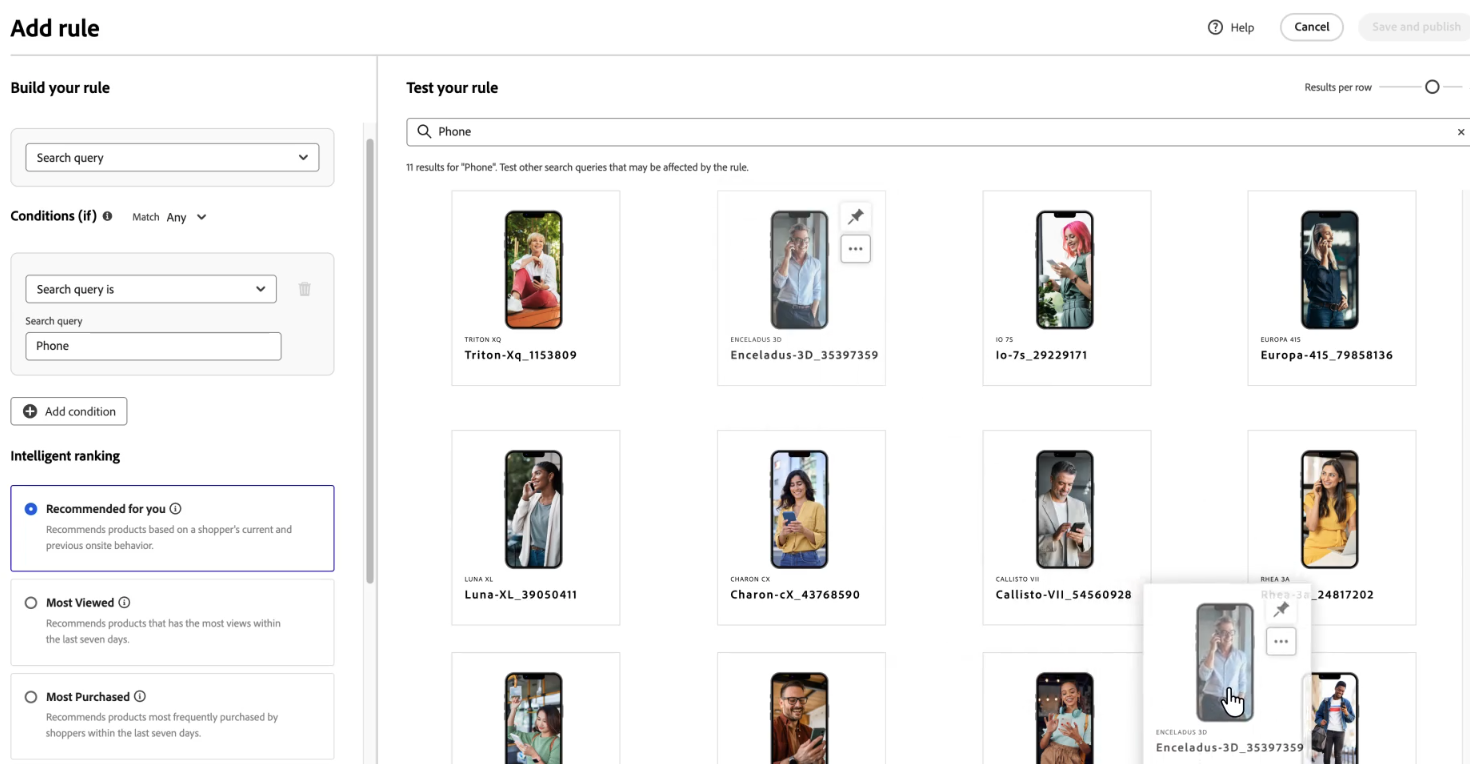
Several leading eCommerce platforms are already embedding AI into their ecosystems to enhance customer experience. For instance, we have AI-powered Adobe Commerce Live Search and AI-powered Oro Commerce recommendations. They use real-time data to deliver personalised and highly relevant product recommendations throughout the shopping journey. These advancements demonstrate how AI is becoming an integral part of modern platforms, helping companies optimise search, boost conversions, and create more imaginative buying journeys.
3. AI-driven dynamic pricing for B2B eCommerce
In B2B, pricing is more complex than in B2C because it often involves bulk orders, negotiated contracts, tiered discounts, and long-term customer relationships. AI-powered dynamic pricing systems continuously monitor multiple real-time signals. These include order volumes, customer behaviour, historical buying patterns, inventory levels, and competitor pricing. The system then automatically adjusts prices and maximises revenue. How it works in practice:
-
Market trend monitoring: AI analyses broader market signals, such as industry demand fluctuations, competitor pricing or commodity price changes, to adjust B2B prices accordingly. By factoring in these variables, AI helps businesses refine pricing strategies while maintaining price stability for customers.
-
Volume and surge pricing: During periods of high demand for certain products, AI can suggest discounts for bulk orders. This maximises revenue while maintaining strong relationships with key clients.
-
Channel-specific pricing: Prices can be adjusted differently for eCommerce portals or marketplaces. This ensures margins are protected while capturing additional volume in high-traffic channels.
-
Customer segment-based pricing: AI tailors pricing strategies according to different customer segments, such as long-term clients, new buyers or high-value customers. For example, loyal customers with consistent order history may receive preferential pricing tiers or exclusive discounts to strengthen retention, while new customers might be offered introductory prices to encourage adoption. This ensures fairness, strengthens relationships, and maximises lifetime value across segments.
-
Dynamic quote generation: AI can suggest optimised quotes automatically by considering historical pricing, customer-specific agreements, tiered pricing models, and demand trends, rather than relying solely on fixed templates. This is especially valuable for bulk orders, where pricing often depends on volume tiers, negotiated discounts, and delivery commitments.
Notice: For B2B, price changes can cause misunderstandings, as many companies have fixed contract or agreement prices. Any adjustments should be applied only to customers without existing deals.
By leveraging AI-powered dynamic pricing, B2B businesses can continuously optimise prices based on demand, client types, inventory levels and market trends. This helps maximise revenue and profit margin. In addition, it eliminates the need for manual adjustments across thousands of SKUs and clients, saving time and reducing errors. For practical implementation, you can explore apps like Dynamic Pricing AI Intelis on Shopify and Spresso on BigCommerce to see how AI-driven pricing tools automatically optimise pricing strategies. This can help you evaluate and apply similar solutions to your own eCommerce website.
4. AI-powered workflow for large and complex orders
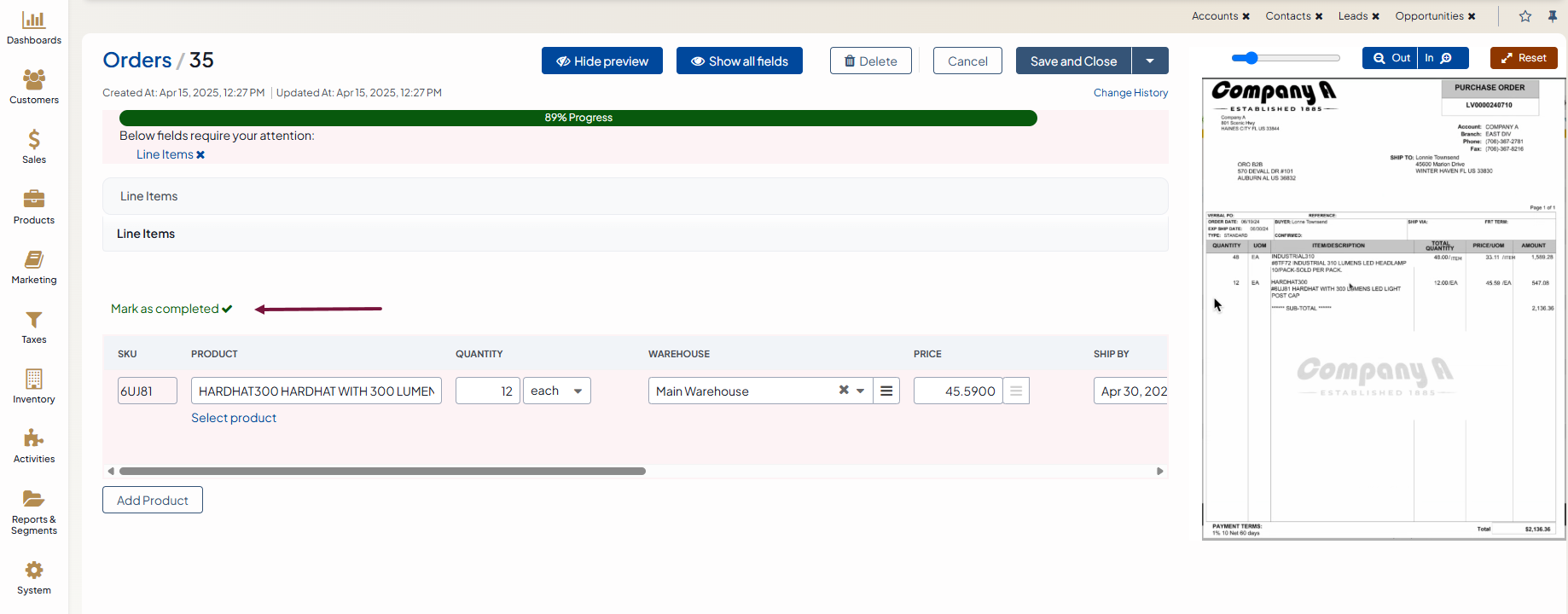
Orders placed on a B2B eCommerce website are often large and complex, involving multiple SKUs, custom pricing, and varied delivery requirements. Processing these orders manually is time-consuming and prone to errors, making automation essential for accuracy and efficiency. Automation becomes even more powerful when combined with AI, which can enhance the workflow by intelligently handling tasks such as:
-
Automate complex order handling: AI can intelligently process large and complex orders on B2B eCommerce websites, going beyond simple rule-based automation by learning from past order patterns to handle exceptions more accurately.
-
Validate order details intelligently: Instead of only checking static rules, AI can detect anomalies such as unusual SKU combinations, pricing inconsistencies, or atypical customer behaviour, reducing errors and false positives.
-
Innovative invoice processing: AI can adapt invoice generation based on context, such as partial shipments, bundled products, or multi-site orders, minimising manual corrections.
-
Automated order confirmation emails: AI-powered automation can instantly send confirmation emails after each order, ensuring accuracy in details like SKUs, pricing, and delivery schedules. This eliminates delays and reassures customers that their orders are being processed smoothly.
Several platforms and apps now support these use cases, including AI Smart Order by OroCommerce and MESA on Shopify. By implementing AI-driven order processing, businesses can achieve faster fulfilment, fewer errors, consistent pricing, improved cash flow, and more scalable workflows.
5. AI solutions for B2B logistics optimisation
B2B businesses often manage multiple warehouses, complex supply chains, and high-volume orders across diverse client bases. AI-powered logistics systems analyse data such as historical sales, warehouse capacity, inventory levels, traffic conditions, delivery schedules, and carrier performance to optimise operations. These systems can:
-
Display real-time shipping rates from multiple carriers, including your own or discounted partners.
-
Plan delivery routes and schedules, ensuring bulk shipments reach clients faster and at a reasonable price.
-
Adapt in real time to disruptions such as traffic delays, sudden order surges, or inventory shortages.
Example: A wholesale electronics supplier serving regional retailers can leverage AI to balance inventory across warehouses. When a retailer submits a large order for components, the system identifies the closest warehouse with sufficient stock. It then assigns the most efficient carrier route at the lowest cost. This approach ensures timely delivery, reduces logistics expenses, and enhances customer satisfaction.
For reference, consider exploring the Shipifi AI app on Shopify, which helps display real-time shipping rates at checkout from multiple carriers. It allows you to connect your own carriers or access discounted shipping quotes. Moreover, consider customising AI features to suit your specific logistics optimisation needs, depending on your industry and the outcomes you want to achieve.
6. AI solutions for accurate B2B customer demand and inventory forecast
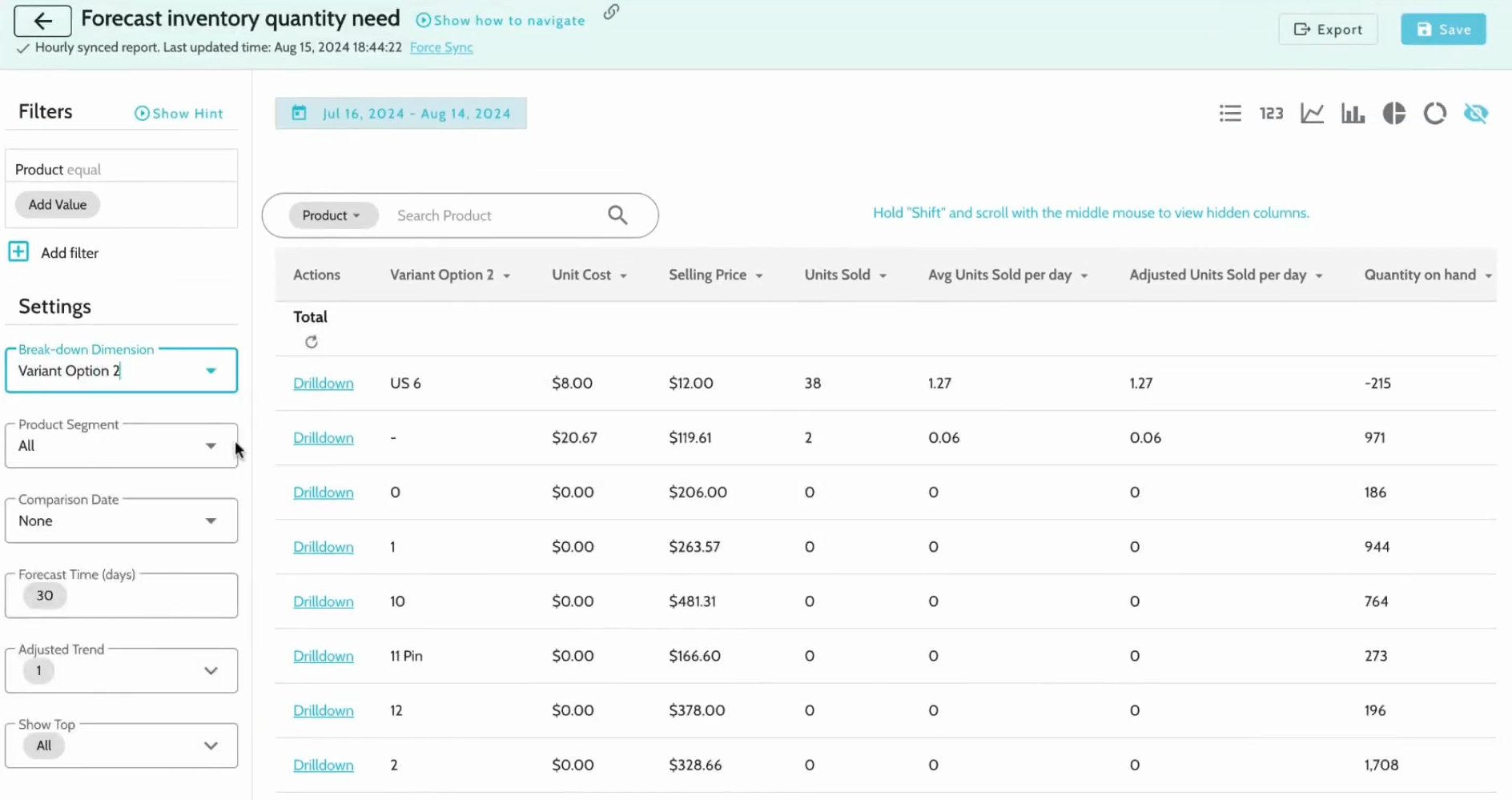
Instead of relying on manual estimates or outdated spreadsheets, modern B2B eCommerce websites using AI-powered systems can help businesses in analysing data. These data points include:
-
Historical sales data: Transaction history, order frequency, and volume.
-
Seasonality and trends: Identifying recurring patterns based on time of year, holidays, and market trends.
-
External factors: Integrating data from weather forecasts, economic indicators, and news events that may impact demand.
-
Customer-specific behaviour: Analysing individual customer ordering patterns and purchase history to provide personalised forecasts.
Based on these forecasts, the system automatically recommends optimal reorder points and quantities. This helps B2B sellers:
-
Prevent stockouts: Ensure critical products are always in stock to avoid lost sales and customer dissatisfaction.
-
Reduce overstocking: Minimise holding costs and free up capital by preventing the accumulation of excess inventory.
-
Forecast sales and revenue: Gain better visibility into expected revenue and plan production, marketing, and sales strategies more effectively.
-
Optimise cash flow and operational efficiency: Maintain a balance between inventory investment and order fulfilment, supporting large-volume B2B transactions.
This feature is especially valuable in the B2B space, where businesses often deal with large-volume orders and must maintain a careful balance between availability and cash flow. With AI-assisted forecasting, companies gain tighter control over inventory planning, allowing them to operate leaner, faster, and more profitably.
To implement this use case in practice, you can explore the Assist Inventory Management app on Shopify or BigAI Predictive Analytics on BigCommerce. These tools integrate directly into its platform to provide data-driven insights for smarter inventory decisions and improved operational efficiency. By leveraging these tools, eCommerce businesses can better align supply with demand, minimise waste, and ensure products are available when customers need them.
7. AI-powered optimisation for more innovative B2B segmentation
B2B stores often manage multiple buyers within a single company account, each with different roles, permissions, and purchasing behaviours. Store administrators also manage various internal segments, making manual oversight time-consuming and prone to errors.
To address this challenge, AI can streamline this workflow by automatically analysing buyer behaviour, purchase history, and role-based patterns to suggest optimal segmentation. It can flag inconsistencies, recommend access adjustments, and help administrators prioritise high-value accounts or frequent purchasers. This improves workflow efficiency, role management accuracy, targeted recommendations and reduced administrative burden.
To implement this technology in your B2B business, you can explore apps that help your eCommerce website enhance customer management on your eCommerce site. For example, on Shopify, the Predflow app uses AI to create automated, eCommerce goal-based customer segments, while the LXRinsights app leverages AI-powered scoring to identify and rank your most valuable customers.
8. AI chatbots for B2B customers and sales team support
When applying AI chatbots in eCommerce, businesses can leverage them for both customer interactions and internal sales support. Let’s explore these use cases in more detail below.
Chatbots for B2B customers
AI chatbots serve as intelligent virtual assistants for B2B customers, providing instant, 24/7 support. Powered by machine learning and trained on your business’s data, these chatbots can quickly respond to common inquiries such as:
-
Answering product-related questions (specifications, availability, compatibility)
-
Providing order status updates and shipment tracking
-
Assisting with returns, refunds, and the exchange process
-
Guiding buyers through complex catalogues or product searches
-
Recommending complementary or alternative products
-
Assisting with account management tasks (password resets, profile updates)
For more advanced needs, such as custom product requests, technical specifications, or large-volume quotes, the chatbot can be trained to recognise intent. It then automatically routes the inquiry to the appropriate consultation specialist, ensuring a seamless handoff with context preserved.
Many eCommerce platforms have now introduced AI-powered assistants to help merchants enhance customer interactions. You can explore solutions like Shopify Magic’s AI assistant, Adobe GenAI’s AI assistants, and OroCommerce’s AI Smart Agent. These technologies surpass simple chatbots, providing advanced capabilities to assist customers and support sales teams more effectively.
Private AI chatbots for B2B sales support
B2B sales teams often juggle complex product catalogues, long sales cycles, and highly negotiated deals. An AI-powered sales enablement platform, built on a private, secure ChatGPT instance, can act as a 24/7 digital sales assistant. It ensures reps have the correct information, insights, and customer context at their fingertips without compromising sensitive data. Key capabilities include:
-
Instant access to product and pricing data: Reps can query the AI for up-to-date product specs, compatibility information, or real-time inventory. The AI integrates with ERP and CRM systems to instantly provide personalised pricing based on customer contracts.
-
Automated proposal and quote drafting: Generate first-draft proposals, quotes, and tender responses that follow brand tone and compliance rules.
To apply both use cases, consider exploring OnTap’s AI chatbot. Our powerful AI can handle public-facing interactions for customers as well as private support for staff. By leveraging all the internal data sources, businesses can ensure faster customer care while also optimising the workload for sales teams.
9. AI for risk, compliance, and fraud detection
In the complex landscape of B2B transactions, order values are often high, terms vary by customer, and regulatory requirements differ by region. AI-powered systems play a critical role in managing risk, ensuring compliance, and detecting fraudulent activity before it impacts your business. To be specific, let’s explore the details below.
Fraud detection in B2B transactions
AI and machine learning models can be trained to identify suspicious patterns across thousands of data points in real time. These can include:
-
Unusual order quantities or frequency from known accounts
-
Inconsistencies in billing vs. shipping addresses
-
Repeated failed payment attempts or account access anomalies
-
New customers placing high-value orders without a purchasing history
By automatically flagging anomalies and enforcing pre-set risk thresholds, AI can alert internal teams or block transactions before losses occur. This is especially important in high-value B2B environments, where fraud can lead to significant financial and operational disruptions.
Contract review and compliance automation
AI-powered natural language processing (NLP) tools can assist legal and procurement teams. They do this by automating the review and validation of contracts, agreements, and regulatory documents. Key features include:
-
Clause detection & validation: Identifies missing or non-compliant clauses in supplier or customer contracts.
-
Risk flagging: Highlights problematic terms (e.g. unrealistic SLAs, liability exposure, or jurisdiction mismatches).
-
Version comparison: Tracks changes between document versions to streamline the negotiation process.
-
Regulatory alignment: Ensures contracts meet relevant industry standards (e.g. GDPR, ISO, FDA, ESG compliance).
This reduces legal review time, increases accuracy, and helps enforce consistent contract standards across B2B customers. Since fraud prevention is an essential requirement for virtually every eCommerce website, there are numerous AI-powered apps and solutions you can explore. For example, on Shopify, you can use apps like SEON Fraud Prevention and NoFraud Fraud Protection, both leveraging AI to detect fraud and prevent chargebacks. On Adobe Commerce, the Stripe app with Stripe Radar applies AI trained on data across all transactions to fine-tune fraud protection through custom rules and insights on suspicious charges. Leveraging these solutions enables eCommerce businesses to reduce risk, safeguard customer trust and ensure a more secure shopping experience.
Challenges and risks of using AI in B2B eCommerce
Despite AI’s tremendous benefits, implementing AI in B2B eCommerce also comes with challenges and risks. Let’s take a closer look at these challenges and how businesses can respond to them effectively.
-
Integration with legacy systems: Outdated or heavily customised ERP systems (e.g., Epicor, Infor) often create major bottlenecks. This makes it challenging to integrate critical elements such as customer-specific pricing, branch-level inventory, and EDI workflows. Many eCommerce projects fail because ERP integration is underestimated, with businesses assuming an “ERP portal” alone is enough. In reality, full integration can cost hundreds of thousands of dollars and demands long-term planning, covering caching, headless setups, and batch synchronisation.
→ Solution: Develop a robust, long-term integration strategy that accounts for system architecture, scalability, and data consistency across all platforms. It is recommended to work with experienced partners and plan iterative phases to reduce disruption.
→ Pro Tips: For a smoother process, explore On Tap’s integration service and API-first Integration Flow, which delivers multi-endpoint integrations in a fraction of the usual time.
-
Data and security concerns: AI in B2B eCommerce relies on sensitive customer, transaction, and product data. This increases the risk of unauthorised access or data breaches.
→ Solution: Implement robust data protection measures such as encryption and anonymisation. Ensure strict compliance with regulations like GDPR and CCPA to safeguard client and business information. -
Ethical and bias issues: AI algorithms in B2B eCommerce can inadvertently introduce biases in pricing, product recommendations, or lead scoring. This may result in unfair treatment of customers or partners.
→ Solution: Regularly audit AI models for fairness and transparency. Use diverse datasets and involve cross-functional teams in development to minimise bias and maintain client trust. -
Skills shortage and employee resistance: In the B2B workforce, there is still a shortage of professionals skilled in AI, machine learning, and data analytics. Employees may also fear job displacement or resist adopting new technologies.
→ Solution: Invest in training and upskilling existing staff. Additionally, foster a culture of innovation by clearly communicating AI benefits. Finally, involve employees in the adoption process and provide reassurance about their job roles. -
Buyer adoption: Many traditional B2B buyers still prefer interacting with sales reps rather than using self-service portals. As a result, businesses may face slower adoption of digital tools.
→ Solution: Design AI-driven systems that are intuitive, streamlined and easy to use. This will prevent overly complex setups at the start, which could overwhelm users. In addition, business consultation teams should guide buyers through the benefits and uses of AI-implemented solutions.

Practical guide to AI implementation in B2B eCommerce
To apply the powerful use cases above to your B2B eCommerce website, consider the following key points when implementing AI.
1. Evaluate your AI readiness
Before implementing AI, it’s crucial to determine whether your organisation is well-prepared for adoption. Consider readiness in four critical areas:
-
Alignment with business goals: Clearly define the problems AI should address, such as minimising stockouts or enhancing personalised buying experiences. Engage all stakeholders to ensure there is a shared, measurable objective driving the AI initiative.
-
Data preparedness: Structured, accurate data is critical in B2B eCommerce, where transactions are larger and more complex. Ensure your datasets, including purchase orders, client histories, pricing agreements, and product catalogues, are clean and up-to-date. Importantly, focus on segment-level personalisation rather than individuals, grouping buyers by role, department, industry, or geography. This allows AI to detect meaningful behavioural patterns and generate recommendations that apply effectively to the entire group.
-
Team and workflow capabilities: Build a cross-functional team with representatives from sales, operations, IT, or data analytics. Identify processes like quote generation, inventory allocation, or pricing approvals that involve multiple handoffs; these are prime candidates for AI-driven automation to increase efficiency. Remember, AI is an acceleration tool, not a replacement. It processes large datasets, identifies patterns, and automates repetitive tasks, allowing your teams to focus on critical, strategic, and decision-driven activities.
-
Technology infrastructure: Confirm that your B2B eCommerce platform and supporting systems can integrate AI solutions through APIs. A well-prepared tech stack enables seamless AI deployment and adoption across complex B2B workflows. The platform should be designed as a “digital branch,” not just a place to enter part numbers and quantities. It should be a full-featured online presence with PIM, CMS, and AI-powered search to serve and retain customers.
By thoroughly evaluating these factors, B2B eCommerce businesses can establish a solid foundation for AI, ensuring initiatives are strategic, feasible, and impactful.
2. Choose the right technology and partner
-
Evaluate AI tools: Assess available AI solutions based on scalability, compatibility with your existing systems, and the level of vendor support they provide. Ensure that the tools can grow with your business and integrate smoothly into your current B2B eCommerce platform.
-
Decide on implementation approach:
-
Build in-house: Offers maximum customisation and control but requires substantial technical expertise and investment.
-
Partner with an experienced agency: Accelerates deployment with expert knowledge and proven frameworks.
-
Hybrid approach: Combine in-house oversight with external expertise for a balance between flexibility and efficiency.
Backed by 19 years in eCommerce and 400 experts skilled in AI adoption, On Tap is well-positioned to support your digital store transformation. Explore our eCommerce consultation to lay the foundation for sustainable growth and collaboration today!
3. Start with a pilot project
-
Prototype development: Begin with small-scale AI projects to test feasibility and gather insights.
-
Iterative improvement: Use feedback from pilot projects to refine AI models and strategies before full-scale implementation. Starting early is crucial. Every day of delay loses valuable customer data that your competitors could capture. Early adoption of AI and segmentation creates a lasting competitive advantage.
4. Train your employees
Proper training ensures employees understand how to use AI tools effectively and leverage their full benefits. Key focus areas include:
-
Tool familiarisation: Employees require hands-on experience with AI-powered features, such as chatbots, recommendation engines, or analytics dashboards. This reduces errors, increases confidence, and ensures smooth daily operations.
-
Understanding benefits: Employees are more likely to adopt AI when they understand its benefits, such as faster response times, improved personalisation, and data-driven insights. This understanding also promotes strategic use.
-
Practical application: Businesses should let employees apply AI insights to daily workflows and customer interactions. This ensures the technology enhances productivity and maximises ROI from AI investments.
-
Customer guidance: Businesses should train employees to assist customers in using AI-driven features when needed, improving overall user experience.
-
Digital literacy across the organisation: Success requires more than IT skills; teams across sales, operations, and management must understand and embrace AI.
This approach empowers your team to adopt AI fully, maximise operational efficiency, and deliver better outcomes for your B2B eCommerce platform.
Not sure how to train effectively? On Tap’s customised training service offers a range of courses for decision-makers on AI strategies in eCommerce, helping businesses upskill their workforce more efficiently.
5. Monitor performance and optimise continuously
After deployment, always ensure that the technology is regularly reviewed and updated to meet evolving customer needs. This includes:
-
Continuous optimisation: Use insights from performance data to fine-tune AI models, workflows, and strategies. Iterative improvements help maintain competitiveness as business needs and market conditions evolve.
-
Leverage proven resources and communities: Always engage with industry organisations and expert agencies, such as the B2B eCommerce Association, Gartner, Forrester, and On Tap. These organisations provide case studies, best practices, and real-world examples of successful AI applications. Participation allows your team to learn from peers, avoid common pitfalls, and stay updated on emerging trends.
Continuous optimisation should also cover the health of the store itself. AI tools and integrations can introduce performance or security regressions. AuditIQ eCommerce monitoring tool continuously tracks Core Web Vitals, JS errors, security, and server health 24/7, so issues that appear after AI features go live are flagged before they affect high-value B2B orders or customer experience.
Conclusion
Overall, AI has become a must-have tool for B2B eCommerce to stay competitive in today’s market. Businesses that do not adopt it risk falling behind in current competition and becoming outdated for the future. This article has covered everything you need to know, from exploring key areas and use cases to guiding implementation. With this guidance, your B2B business can confidently begin its AI journey.
However, to implement AI strategically and for the long term, it is always recommended that B2B businesses collaborate with an experienced agency. As a member of the B2B eCommerce Association, On Tap, a B2B eCommerce agency, offers end-to-end solutions and AI services designed to give enterprises a market edge. Contact our consultation team today to explore your future with AI.