 Best full-service eCommerce agency 2026



According to DynamicWeb, in 2025, 85% of B2B organisations had eCommerce portals, a significant increase from 68% in the previous year, underscoring the widespread digital adoption across the industry. This shift marks the rapid acceleration of B2B online commerce, accompanied by emerging technologies and evolving market trends. As the market continues to expand to meet rising customer expectations, B2B businesses must stay ahead of these trends to maintain a competitive edge, enhance customer satisfaction, and optimise operational efficiency.
In this article, we will highlight 8 of the most impactful B2B eCommerce trends shaping the future of the industry, from AI and hyper-personalisation to omnichannel strategies and beyond, providing insights for businesses to consider and apply in practice. We also outline 5 practical steps for evaluating these trends effectively for B2B companies to drive long-term growth and success.
Top 8 B2B eCommerce trends for 2026+
As technology accelerates and industries evolve, B2B eCommerce is shifting toward more personalised, sustainable, and customer-centric experiences. These changes are driven by rising buyer expectations and the demand for smarter, more efficient digital operations. Here are the top 8 trends shaping 2026 and beyond - and how your business can use them to stay ahead.
1. Hyper-personalisation application for deeper B2B customer connections
Trend overview:
Hyper-personalisation is the practice of delivering highly tailored content, products, and pricing to each B2B customer based on their unique profile and behaviour. It goes beyond basic account-based marketing to use advanced analytics (often AI-driven) and real-time data to customise the buying experience for individual decision-makers.
Today’s B2B buyers expect that level of personalisation. According to Forrester’s Q1 2025 B2B Buyer and Consumer Personalisation Survey, nearly three-quarters of consumers and B2B buyers want the organisations they interact with to know when, where, and how they prefer to receive personalised experiences. This reflects an unprecedented demand for deeper customer understanding, one that B2B companies must address to stay competitive.
While implementing this trend requires significant effort, many businesses still choose to adopt it because a clear and measurable ROI backs it. In the same Forrester survey, both B2B experience leaders and B2B rising laggards reported gains in cost savings, revenue, customer lifetime value, and conversion rates from personalisation at scale. Notably, 79% of leaders said their cost savings exceeded expectations, and 40% of rising laggards reported the same.
How B2B businesses can leverage this trend:
The data shows that whether a business is a newcomer or a seasoned player, personalisation delivers measurable results. In this context, to avoid falling behind competitors, your organisation should start adopting advanced personalisation now. By tailoring experiences to the behaviour, needs, and pain points of each role in the B2B buying process, your organisation can maximise effectiveness. The following examples illustrate how hyper-personalisation can be applied in practice:
-
Personalised site content: Upon login, users see a homepage customised with account-specific banners, messaging, and promotions. AI-powered logic selects dynamic content based on order history, browsing behaviour, and segmentation, providing a “smart” storefront experience for every user.
-
Advanced search personalisation: Search experiences go beyond keyword matching by using past behaviour and intent to show filtered, role-relevant results and frequently purchased items, reducing friction and improving product discovery.
-
Personalised catalogue: Each business account views a tailored catalogue based on contract terms, permissions, and industry requirements, ensuring they only see relevant products and pricing, streamlining decision-making and compliance.
-
Tailored product recommendations: Recommendations are driven by real-time behaviour and historical data to increase order size and product discovery.
-
Tailored payment and shipping options: Support B2B-specific needs like Net term (30/60), payment options (ACH, wire) and shipping options (multi-destination, freight carrier, scheduled)
-
Requisition list and quick reorder: Frequent B2B buyers save time using requisition lists and 1-click reorder based on past purchases, ensuring fast and error-free repeat ordering.
-
Subscription programs: Offers recurring deliveries on custom schedules. Buyers can modify quantities, intervals, and shipping methods, supporting reliable, automated procurement workflows.
-
Personalised promotions & discounts: Promotions and discounts are customised based on account type, segment or role-specific needs. This ensures offers feel relevant, increasing the likelihood of conversion and long-term customer loyalty.
Discover more insights on B2B personalisation strategies and implementation best practices in our blog: B2B eCommerce personalization: Definition, benefits, 6 key strategies and 9 must-have features
Note: If these advanced features are not available on your current B2B eCommerce platform, it’s worth considering custom development to integrate them into your website. This approach ensures that the features are tailored precisely to the needs of both your customers and your business.

2. AI implementation in B2B eCommerce for data-driven growth
Trend overview:
In B2B eCommerce, AI encompasses technologies such as machine learning, natural language processing, and generative AI, which enable predictive analytics, personalised experiences, and intelligent automation. According to a survey by Master B2B, 89% of B2B practitioners believe that AI and machine learning for digital customer experience will have a significant impact on B2B eCommerce over the next 3 to 5 years, starting from 2025. Furthermore, a 2024 research from Sana Commerce reveals that 81% of B2B businesses are already using AI, with 79% planning to increase their AI investment in the future.
Before the adoption of AI, B2B merchants relied heavily on manual processes, such as static product catalogues, rule-based segmentation, and human-led sales, which limited efficiency and responsiveness. Buyers often faced generic shopping experiences, limited customer support, and repetitive transactions that didn’t reflect their specific needs.
However, with the implementation of AI, both merchants and buyers experience a transformative shift. Leveraging real-time updates, predictive analytics, and intelligent automation, AI enhances customer experience, streamlines operations, reduces costs, minimises errors, and directly contributes to business growth. According to McKinsey, since 2024, B2B commercial teams that combine personalised customer experiences with generative AI are 1.7 times more likely to increase market share compared to those that do not, and this figure is expected to grow in the coming years.
How B2B businesses can leverage this trend:
Given this context, businesses should consider integrating AI into their B2B eCommerce websites. Here are some AI use cases in B2B eCommerce that you can explore:
-
Intelligent product recommendations: Leverage AI to deliver personalised product suggestions based on customer behaviour, order history, and specific industry demands, such as recommending complementary accessories or replenishment items for the B2B customer segment.
-
Customer insights through advanced analytics: Utilise machine learning to uncover behavioural patterns, anticipate future purchasing trends, and inform data-driven decisions that refine business strategy through enhanced customer understanding.
-
AI-driven sales enablement: Empower sales teams with intelligent tools, such as ChatGPT interfaces trained on proprietary data, to surface key insights, analyse customer interactions, and improve productivity.
-
Intelligent customer support: Implement AI-powered chatbots, trained on your unique product and service data, to manage high volumes of B2B complex inquiries, order tracking, and support issues around the clock, enhancing service quality while easing operational demands.
-
Automated content creation: Use generative AI to efficiently produce high-quality content, including product descriptions, blog articles, and marketing emails, ensuring accuracy, relevance, and alignment with your brand and audience.
-
Workflow automation: Automate repetitive tasks such as order processing, inventory updates, invoice generation, and customer notifications to improve operational efficiency, reduce manual errors, and free up internal teams to focus on higher-value activities.
Turn these trends into actual action and results with the power of On Tap’s AI for digital commerce today!

3. Self-service capabilities and hybrid sales support in a B2B digital store for a flexible buying experience
Trend overview:
As B2B buyers increasingly expect speed and convenience, many organisations are turning to self-service as a core part of their customer experience strategy. B2B self-service is a customer experience approach where business clients use digital platforms to complete transactions and manage services independently.
Strong market data backs this shift. A report by Spryker and Statista finds that self-service portals are the second most preferred channel for B2B buyers throughout the entire buying journey, highlighting the continued demand for convenience. In addition, according to the 2025 B2B eCommerce Trends report from Dynamic Web, an average of two-thirds (66%) of firms are increasing their investment in customer portals.
Before the rise of B2B self-service tools, the buying process relied heavily on sales representatives. Customers had to contact a sales rep for even the most basic tasks, such as requesting a quote, checking product availability, placing orders, or tracking shipments. This dependence often led to slower response times, limited flexibility, and added friction in the buying journey, particularly outside of business hours or across different time zones. Today, with the adoption of self-service capabilities, B2B buyers can perform these tasks independently through digital platforms, anytime, anywhere. According to the same report by DynamicWeb, 41% of B2B businesses say the benefits of self-service portals include increased sales revenue and improved customer satisfaction.
How B2B businesses can leverage this trend:
With this trend, it becomes fundamental for B2B businesses to have a self-service customer portal equipped with all the features customers need, ensuring their purchasing experience is as seamless and convenient as possible. A standard self-service portal typically includes the following features:
-
View past orders, invoices, and shipment tracking
-
Easily place repeat orders with a single click
-
Access downloadable product specifications and compliance documentation
-
Submit and manage Requests for Quotation (RFQs)
-
Manage account settings, including user and role creation, role-based permissions, billing options, and shipping information. This ensures that each B2B user sees only what’s relevant to their role, such as procurement, finance, warehouse, or admin. Admins can manage team permissions centrally, improving security and streamlining access to information.
While self-service is essential, sales representatives remain equally important, especially for more complex or high-value transactions. Your business must invest in training business consultants to handle advanced inquiries and provide expert guidance. A hybrid model that combines self-service efficiency with personalised sales support is key to meeting the diverse needs of modern B2B buyers.


4. B2B omnichannel adoption for seamless customer journey
Trend overview:
Omnichannel is the ability for customers to engage with a business through multiple channels, such as websites, social media, email, live chat, or in-person, while enjoying a consistent and connected experience.
The same survey by Master B2B found that 52% of B2B practitioners believe omnichannel customer experience will significantly influence B2B eCommerce in the next 3–5 years from 2025. Notably, it ranked as the second most important trend in the survey, just after AI. This is unsurprising, given that since 2024, B2B customers have used an average of ten interaction channels in their buying journey (McKinsey). The top touchpoints are company websites, in-person sales, and video conferencing, with others like social media, email, mobile apps, e-procurement portals, and online chat also common. This creates a challenge but also opportunities for B2B businesses. The question is no longer whether to be present on multiple platforms, but how to maximise each one while keeping the customer experience seamless.
For example, B2B buyers might discover your brand through a LinkedIn post, request pricing via email, watch a YouTube demo, speak to a rep in a video call, and then complete the order on your eCommerce portal. If these channels feel disconnected, have different pricing, inconsistent messaging, and varying levels of service, the buyer’s trust erodes quickly.
How B2B businesses can leverage this trend:
In response to this shift, B2B businesses must adopt an omnichannel engagement strategy, delivering a seamless, consistent, and personalised experience across all touchpoints. This ensures buyers receive relevant, timely interactions regardless of the channel they choose, ultimately improving trust, satisfaction, and conversion rates. Some strategy to leverage:
-
Using a holistic media approach: Establish a strong, consistent presence across all key media channels, including the website, social media, email marketing, and paid advertising. While each channel should reflect its unique context, all brand communications must stay aligned in tone, messaging, and value proposition to reinforce a unified brand experience at every touchpoint.
-
Unified product messaging across channels: Ensure that product descriptions, benefits, technical specs, and availability remain synchronised across your website, marketplaces, digital catalogues, and printed materials. B2B clients should not receive conflicting information, regardless of where they look.
-
Seamless online and offline integration: B2B buyers may research online but finalise purchases through a sales rep, or vice versa. Your CRM, eCommerce, and sales systems should be connected to provide full visibility into the buyer’s journey, enabling personalised follow-ups and eliminating repetitive handovers. With buyer actions synced across systems, a typical scenario could be: A procurement officer adds items to a digital cart, and the assigned sales rep is instantly notified with full context. The rep follows up with tailored recommendations, turning a digital interaction into a larger order.

5. Third-party and company-owned marketplace for channel diversification
Trend overview:
A B2B marketplace is an online platform where multiple sellers offer products or services to business buyers in one central location, making it easier for buyers to compare, purchase and manage orders.
According to the 2025 Hokodo survey, B2B marketplaces rank as the second most frequently utilised channels for business purchases, with 66% of respondents reporting their use. As a result, many B2B companies are moving beyond reliance on direct sales by expanding through third-party platforms such as Amazon Business, Alibaba, or Thomasnet, or by launching their company-owned marketplaces that aggregate complementary products and partner offerings. This model enhances the customer experience, broadens product assortments, and generates new revenue streams without the need to increase inventory.
How B2B businesses can leverage this trend:
With this trend gaining momentum, B2B companies should consider expanding into marketplaces. However, it is essential to ensure that the products and services offered on these platforms meet the same high standards as those sold through their own eCommerce websites, and that the business can manage multi-channel orders efficiently. To achieve this, companies should focus on:
-
Marketplace and sales channel integrations: Ensure your B2B eCommerce website integrates seamlessly with external marketplaces. This allows for efficient order syncing, real-time inventory updates, and consistent pricing across channels.
Learn more: Unify data and processes instantly with On Tap’s System integration service and API-first integration flow. Our fully managed iPaas solution automates and simplifies data flows between your eCommerce, ERP, WMS, CRM, marketing tools, marketplace & sales channel, and more.
- Unified order management: Whether an order comes from your direct site, a third-party marketplace, or a vendor in your marketplace, all transactions should be tracked in one place. This enables streamlined processing, fulfilment routing, and customer service.

6. Modern architecture deployment in B2B eCommerce for agility
Trend overview:
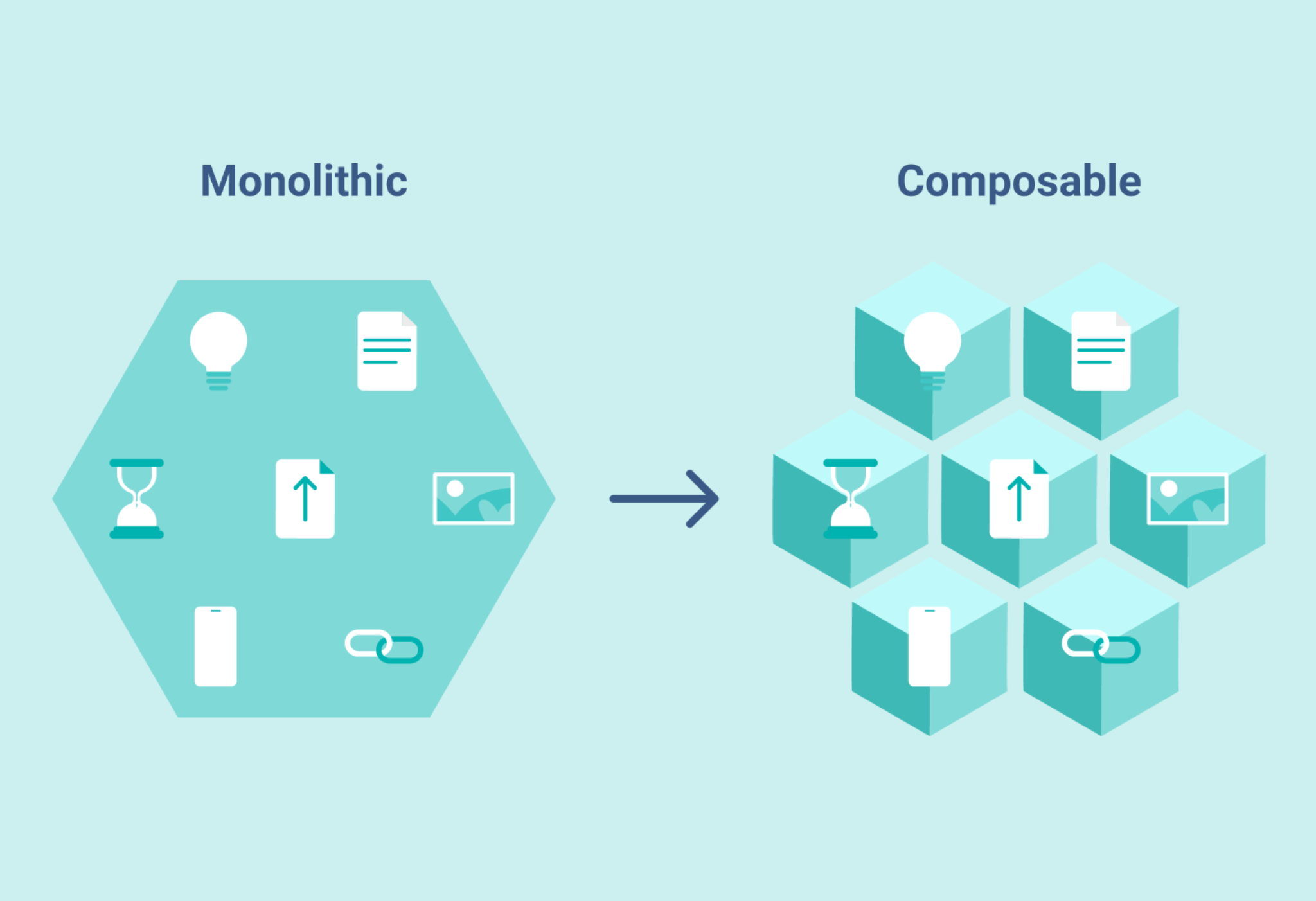
Modern architecture is a flexible, modular approach to building digital commerce systems that allows businesses to quickly adapt, integrate, and innovate without being tied to a single, rigid platform. According to alokai report, since 2024, 80% of eCommerce enterprise companies have considered or have already moved towards composable architecture. Data reflects the accelerating shift toward modern commerce solutions. This trend is expected to continue in 2026 and beyond, as the demand for greater customisation and flexibility could outpace monolithic platforms.
How B2B businesses can leverage this trend:
To remain competitive, B2B organisations should begin moving toward a modern architecture. Below are some examples of modern architectures your business can consider adopting. The specific needs of your organisation and your customers should guide the choice of architecture:
-
Headless architecture: Headless commerce separates the frontend (what users see) from the backend (where data and logic live). This gives developers the freedom to build custom user interfaces for different devices, portals, or customer segments, without being restricted by the limitations of the eCommerce platform. For B2B, this allows for tailored experiences for buyers, sales reps, and procurement teams across multiple channels (e.g., web, mobile, IoT).
-
Composable architecture: Composable commerce is an approach where businesses assemble their eCommerce stack using best-of-breed components rather than relying on one large, all-in-one platform. Think of it as choosing the best CMS, search engine, PIM, and checkout service and connecting them through APIs. This is ideal for B2B companies with complex workflows or region-specific needs, because each component can be replaced or updated independently.
-
Microservice architecture: Microservice architecture breaks down your eCommerce system into small, modular services that each handle a specific function (e.g., pricing, inventory, checkout). Each service runs independently, so it can be scaled, updated, or fixed without affecting the rest of the system. This is especially useful in B2B, where specific processes (like custom pricing or approvals) need unique logic or scaling.
These architectural styles are not mutually exclusive and are often combined into broader frameworks. For example, MACH architecture stands for Microservices, API-first, Cloud-native, and Headless. It represents a modern, enterprise-grade architectural approach designed for agility, scalability, and innovation. MACH emphasises modularity and open integration, making it well-suited for B2B businesses looking to create future-proof digital ecosystems. With MACH, companies can easily connect to ERP, CRM, or other legacy systems, deliver personalised omnichannel experiences, and iterate faster in competitive markets.
7. High-level security and regulation in the B2B website to build trust
Trend overview:
As B2B eCommerce becomes ubiquitous and handles larger transactions, the importance of security and compliance has grown tremendously. In 2026+, B2B companies will continue to invest heavily in cybersecurity measures to ensure constant monitoring and incident response planning. A sharp rise in threats drives this trend: According to the Merchant Risk Council report, in 2025, 98% of eCommerce merchants experienced one or more types of fraud in the past 12 months, highlighting that ensuring security and preventing breaches remains a global challenge, a recurring trend that businesses cannot afford to overlook year after year.
Strengthening security and regulatory compliance is critical not only for smooth operations but also for building long-term customer trust and loyalty. Especially in high-value, long-term partnerships like B2B, businesses must take a proactive approach to ensure protection and resilience.
How B2B businesses can leverage this trend:
To address rising security demands, companies must comply with key regulations, such as GDPR, CCPA, PCI-DSS, and SOC 2, to ensure legal alignment and customer confidence, especially in cross-border trade. In addition, adopting a security-by-design approach, embedding safeguards from the start, reduces risks and strengthens system resilience. This includes implementing enterprise-grade SSL/TLS encryption, PCI-DSS-compliant payment gateways with tokenisation and fraud detection, and strong access controls like role-based access control (RBAC), multi-factor authentication (MFA), and single sign-on (SSO), while communicating policies and certifications to reinforce transparency and trust.

8. AR/VR integration for a smarter B2B buying experience
Trend overview:
AR and VR are immersive technologies that overlay digital content onto the real world (AR) or create fully virtual environments (VR). These technologies are gaining traction in the B2B space: 48% of British B2B manufacturers will prioritise strategic investment in AR and VR technologies in 2025 (akeneo), showing that B2B businesses are also starting to pay greater attention to these technologies.
Before the adoption of AR and VR, B2B purchasing processes heavily relied on in-person meetings, physical product demonstrations, and static visuals, making the evaluation process time-consuming and less efficient. With the integration of AR/VR technologies, buyers can now experience products virtually, leading to faster, more confident, and better-informed decisions. This is especially valuable in B2B contexts, where purchases are often high-volume and require thorough visualisation to avoid costly mistakes later on.
How B2B businesses can leverage this trend:
To capitalise on this trend, B2B businesses should evaluate integrating AR and VR solutions tailored to their customers’ needs and workflows, thereby future-proofing their eCommerce strategies. Here are some use cases to consider:
-
Interactive 2D product visualisation: Allow B2B buyers to view products in 3D, rotate them, zoom in on features, or explore configurations. This helps buyers understand technical details and assess fit or compatibility before purchase.
-
AR-based product placement: AR lets buyers place virtual models of equipment or furniture in their physical space using mobile devices or tablets. This is especially useful in logistics, warehousing, construction, or office planning.
-
Virtual showrooms and booths: VR-based digital showrooms replicate the in-person B2B trade show experience. B2B buyers can "walk through" a virtual environment, interact with product displays, and engage with sales reps remotely, perfect for cross-border business or when physical demos are impractical.
-
Remote training and product demo: Complex machinery or tools often require onboarding. VR can be used to simulate use cases, maintenance procedures, or training scenarios in a virtual environment.
- Customisation in real-time: Combining AR/VR with configuration tools enables buyers to explore variations in colour, size, features, or components in an immersive environment, thereby improving confidence in high-ticket decisions.

5 steps to evaluate B2B eCommerce trends for business sustainable growth
Not every trend fits every business. Before jumping into implementation, B2B companies must assess if a new technology or strategy truly aligns with their operational needs, customer behaviour, and long-term goals. Here’s a framework to guide that evaluation:
1. Align with business objectives
The first and most critical filter is determining whether a trend directly supports your business goals, whether short-term KPIs or long-term strategic direction. Start by asking:
-
Does this trend solve a clear pain point for our business or customers?
-
Can it unlock new value, like speed, efficiency, customer satisfaction, or revenue growth?
-
Will it give us a competitive edge in our industry or market segment?
For instance, if your B2B business faces lengthy procurement cycles, automation and AI-powered quote generation may be more pertinent than investing in immersive VR tools. If customer acquisition is a priority, trends like marketplace selling or omnichannel marketing may provide greater leverage.
Once the opportunity is identified, perform a cost vs. ROI analysis:
-
What is the estimated implementation and maintenance cost?
-
What resources (tech, talent, time) are required?
-
What’s the measurable business impact it can bring (e.g., revenue uplift, reduced churn, lower support cost)?
Also, consider future scalability:
-
Will this solution still support your business as it grows?
-
Can it adapt to evolving customer expectations, new business models, or geographic expansion?
-
Does it integrate well with your long-term digital roadmap?
A common pitfall is investing in short-term fixes that don’t scale or align with broader objectives. To align trends with your business, your evaluation process should be strategic, not reactive. Stay curious, but also disciplined: only adopt innovations that map clearly to value creation, for your teams, your customers, and your future.
2. Understand your B2B buyers’ expectations
To evaluate whether a trend aligns with your buyers' expectations, you need to understand their current behaviour and future needs deeply. To get these insights, you can use both qualitative and quantitative research methods:
-
Customer surveys: Ask about their preferred buying channels, pain points, and digital expectations.
-
On-site behaviour analytics: Monitor how users interact with your B2B eCommerce platform, and whether they abandon mobile sessions. Do they use filters or search heavily?
-
CRM and order data: Track buying patterns, frequency, and preferences to identify opportunities for automation or personalisation.
-
Customer interviews or focus groups: Speak directly with buyers and procurement teams to understand their internal workflows and unmet needs.
-
Feedback from your consultation team: Sales reps often know firsthand what customers complain about, ask for, or struggle with. They can surface recurring requests (e.g., “I wish I could reorder this faster” or “Do you have a mobile app?”) that hint at readiness for a specific trend.
-
Support tickets and chat logs: These are gold mines for understanding friction points or frequently requested features.
Tips: Different personas within the same customer organisation will have different needs. A procurement officer may prioritise self-service and pricing visibility, while an engineer might care more about technical documentation or product comparisons. Similarly, digital maturity varies by industry, so segmenting this feedback ensures your trend adoption is aligned and relevant.
3. Watch your competitors and industry
Keeping a close watch on your industry and direct competitors is essential to determine whether a trend is emerging as a true differentiator or simply becoming a baseline requirement to remain competitive. This requires proactive tactics like:
-
Run competitive audits every quarter. Evaluate competitors’ websites, digital touchpoints, and product features.
-
Subscribe to industry reports from a top research company or a highly experienced agency (e.g., Gartner, Forrester, Digital Commerce 360, On Tap) to stay ahead of B2B tech trends.
-
Monitor customer feedback mentioning competitors: Are customers referencing features you don’t yet offer?
-
Attend B2B eCommerce conferences or webinars to benchmark against peer innovations and network with thought leaders.

4. Assess internal capabilities
Before adopting any new B2B eCommerce trend, it’s crucial to assess whether your organisation has the internal resources and readiness to support it, not just during implementation, but also in the long run. A trend may be exciting, but without the proper foundation, it could lead to wasted time, poor execution, or unexpected costs.
If your team is already stretched thin or lacks experience in these areas, trying to handle everything in-house can be both risky and inefficient. This is where collaborating with external experts becomes a strategic advantage. Partnering with a specialised agency can fast-track adoption, reduce risks, and ensure long-term scalability.
With 19 years of proven eCommerce experience and a global team of 400+ experts, On Tap can help your business leverage trends for maximum impact. Explore our eCommerce consultancy services for more details.
5. Pilot, measure and optimise
When introducing a new trend or capability into your B2B eCommerce strategy, jumping straight into full-scale rollout is risky. A more innovative approach is to pilot in a controlled environment, validate the impact, and scale with confidence. Before committing significant resources, test the trend in a limited scope:
-
Choose a specific product line, customer segment, or region for the trial.
-
Clearly define the objectives of the pilot, e.g., faster reordering, improved user satisfaction on the payment site.
-
Set a specific timeframe (e.g., 4-8 weeks) to gather enough data for meaningful insights.
During the pilot, rely on quantitative and qualitative metrics to evaluate success:
-
Performance KPIs: Look at conversion rates, cart size, repeat orders, bounce rates, or usage frequency, depending on the initiative.
-
Operational impact: Monitor efficiency improvements, error reduction, or support tickets (e.g., did automation reduce manual work for your team?).
-
Customer feedback: Use post-purchase surveys, interviews, or feedback forms to understand how the change impacts the buying experience.
Leverage specialised tools to gain deeper insights:
-
A/B testing for comparing the new experience with the original
-
Heatmaps or session recordings for behavioural insights
-
CRM and analytics platforms to track user journeys and ROI
Use the results to refine the experience, address any weaknesses, and then scale the initiative across your broader operations with greater certainty and lower risk.
Conclusion
In summary, this article has introduced the 8 most impactful B2B eCommerce trends, outlined ways your business can benefit from them, and provided guidance on identifying which trends are the best fit for your operations. With this knowledge, you can begin exploring new opportunities and work toward implementing them in your B2B eCommerce website.
The journey to staying ahead of trends and integrating them effectively into your business can be challenging. It is always advisable to work with an experienced agency in the field. As a member of the B2B eCommerce Association, On Tap delivers comprehensive end-to-end eCommerce solutions across leading platforms, including Shopify, Adobe Commerce, BigCommerce, and more. Explore our best B2B eCommerce solutions and contact us today to get started with our team.