 Best full-service eCommerce agency 2026


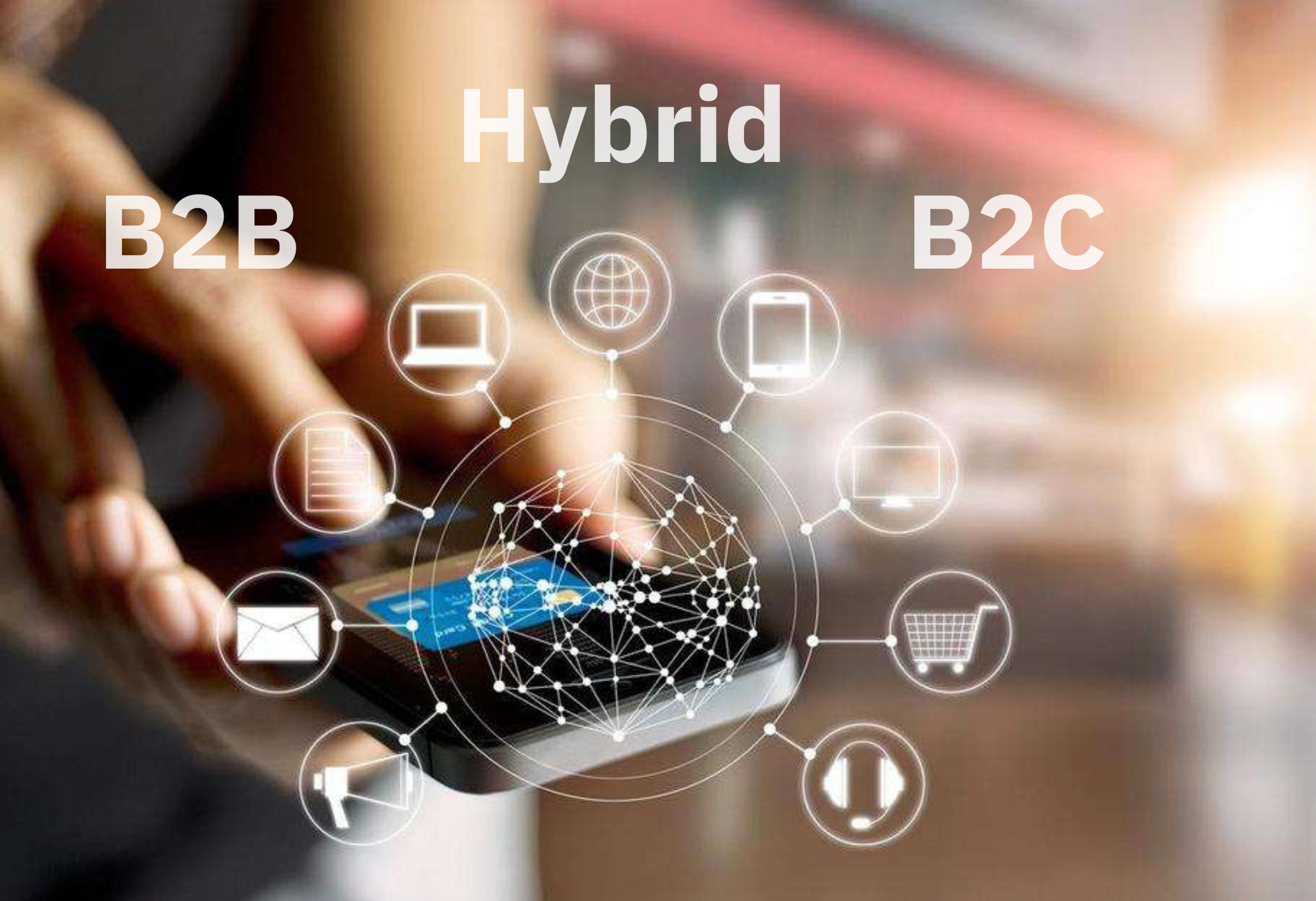
According to Mordor Intelligence, the B2B eCommerce market is projected to grow at a CAGR of 14.5% from 2025 to 2030. The B2C eCommerce market is expected to expand even faster, with a CAGR of 16.94% over the same period. Both segments show strong potential, offering exciting opportunities for newcomers and established businesses alike. Whether you are a startup exploring which model to pursue or a business considering expanding, pivoting, or combining your existing operations, understanding the landscape is essential.
This article explores the key differences between B2B and B2C eCommerce across essential business areas, with a particular focus on technical aspects. The insights provided will help you make informed decisions about whether to adopt or expand the model that best supports your growth strategy.
What is B2C eCommerce?
B2C (business-to-consumer) eCommerce is the process of selling products or services directly from a business to an individual consumer. It typically involves low-volume orders, fixed pricing, and faster purchase decisions carried out by a single individual. Buying decisions are influenced by both rational factors, such as price and product features, as well as emotional factors, including brand perception and personal preference.
Example: An office supplies company operates an online store serving individual consumers such as office workers, students, and others. Shoppers can browse single items such as pens, notebooks, or desk organisers, add them to their cart, and complete purchases instantly.
What is B2B eCommerce?
B2B (business-to-business) eCommerce is the process of selling products or services from one business to another through an online sales website. In this model, the buyers are members of a company who access the online store via authorised user accounts under their company profile. Depending on their roles, users can place orders, request quotes, track shipments, and make payments.
Unlike B2C, B2B often involves large orders, negotiated pricing, and longer decision cycles. With many stakeholders on both sides involved in a single purchase cycle or order, B2B workflows are more complex than B2C. Buying decisions are generally rational and data-driven, focusing on return on investment, cost efficiency, and long-term benefits.
Example: A spa chain uses a B2B eCommerce platform to source skincare products, essential oils, and equipment. On the buyer side, procurement executives search for trusted suppliers, therapists review product specifications to ensure treatment quality, and finance teams handle approvals for bulk purchases. On the supplier side, account managers negotiate pricing, warehouse staff manage inventory, and logistics teams coordinate delivery. All of these stakeholders interact through the same platform.
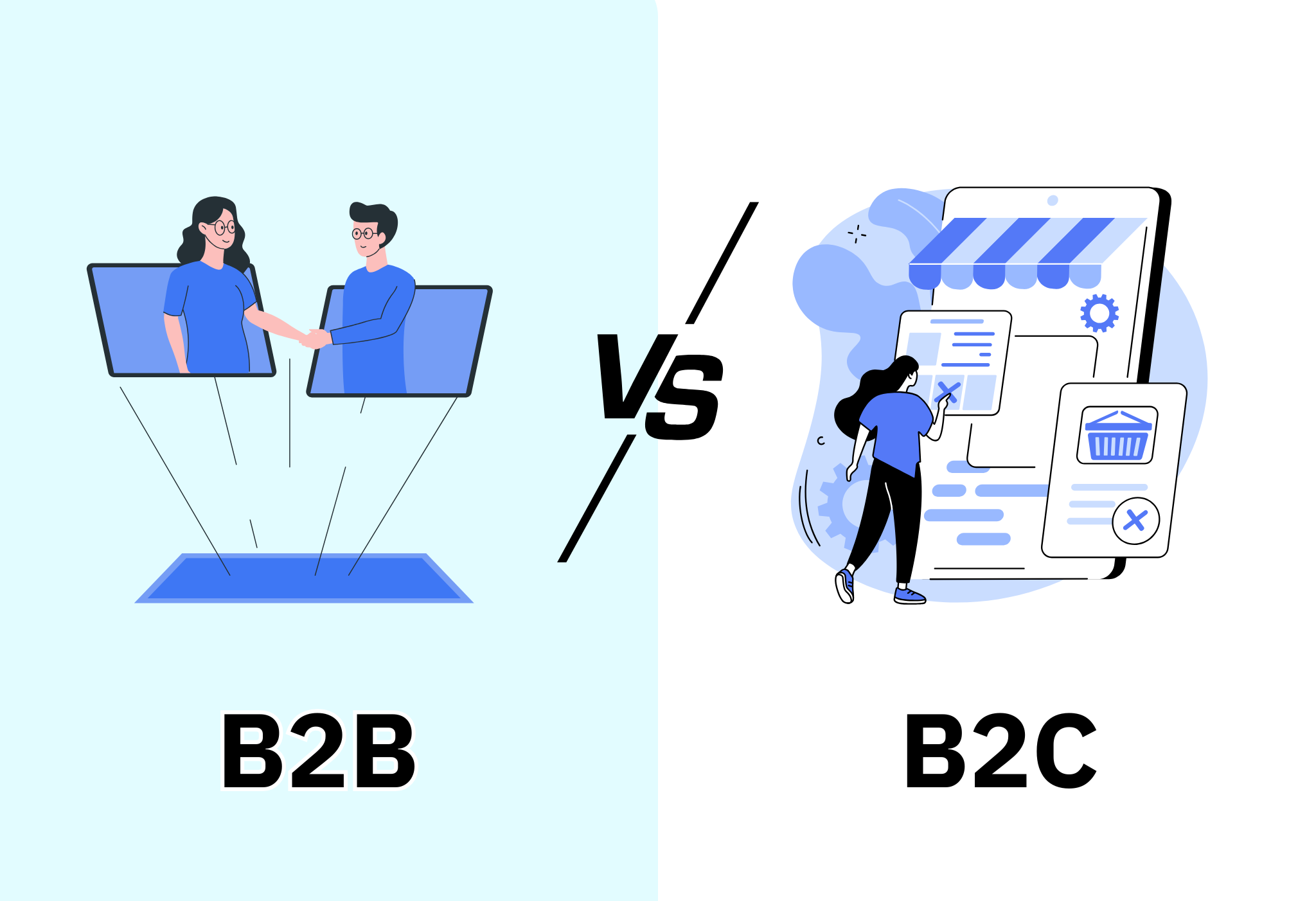
Key differences between B2B and B2C in eCommerce
The main difference between B2B and B2C eCommerce lies in the target audience. While B2B eCommerce serves other businesses that place bulk orders, B2C eCommerce focuses on individual consumers who usually make smaller purchases. These distinct customer types shape the technical foundations needed to build and run each eCommerce model. For a detailed breakdown of these differences and the technology required by each model, see the sections below.
|
Aspect |
B2B eCommerce |
B2C eCommerce |
|
Order Management |
Large, high-value, recurring orders; negotiated pricing; custom catalogues; multi-stakeholder approvals. |
Smaller-value, high-frequency orders; peak-season spikes; simple one-time payments; fast checkout. |
|
Inventory Management |
Bulk stock across warehouses; sometimes tracked at the component level; integrated with ERP/Supply Chain; long forecasting cycles. |
Finished goods in smaller lots; diverse SKUs; focus on fast-moving/seasonal products; simpler tracking. |
|
Logistics Management |
JIT/scheduled deliveries; freight & palletised loads; complex branch routing; costly reverse logistics. |
Fast, flexible shipping; last-mile delivery focus; parcel-level fulfilment; simplified returns. |
|
Integration |
Deep, tightly coupled with ERP, CRM, PIM, accounting, and WMS; supports complex workflows and compliance. |
High-performance, scalable integrations with ERP, marketplaces, and carriers; prioritises speed and reach. |
|
Marketing |
Education-driven; long-form, data-rich content; formats include whitepapers, case studies, webinars; authoritative tone. |
Emotion-driven; short-form, visual content; formats include social media, influencer campaigns, lifestyle blogs; casual tone. |
1. Order management capability
Order in B2B eCommerce:
-
Large in volume and high in value.
-
Frequent reorders.
-
Negotiated pricing means.
-
Custom catalogues tailored to different business accounts.
-
Purchase approvals and multiple stakeholders are involved in one order workflow.
Order in B2C eCommerce:
-
Smaller in value but highly frequent.
-
High order volume during peak seasons (e.g., holidays or sales events).
-
Straightforward one-time payments with fewer dependencies.
-
Limited customisation needs compared to B2B.
Because of these differences, B2B eCommerce platforms require:
-
Role-based management: Multi-user accounts with granular roles and permissions (e.g., requester, buyer, approver, finance, procurement admin) and delegated access so companies can control who sees pricing and places orders.
-
Approval workflows: Configurable, multi-level approval workflows with spend thresholds, conditional routing, notifications, and a full audit trail to support procurement policies and internal governance.
-
Bulk ordering:
-
Quick order forms: Enable users to quickly add multiple products by entering SKUs or product codes, with the option to bulk paste SKUs or product lists for faster order creation.
-
CSV bulk upload: Allows businesses to upload product lists in CSV format to place large orders at once, making it ideal for recurring or high-volume purchases.
-
Saved order templates: Provides predefined templates for frequently purchased products, helping users save time by reusing order configurations instead of starting from scratch.
-
Reorder lists: Automatically generates lists based on past purchases, enabling one-click reordering for commonly bought items.
-
Subscriptions & auto-replenishment: Let users set up recurring orders with automated scheduling to ensure essential products are restocked and prevent stockouts.
-
Custom pricing and negotiation:
-
Volume-based pricing: Pricing can vary depending on the customer’s tier or each customer’s specific agreement.
-
Bulk pricing: Large orders often trigger automatic discounts, with rates adjusted by the business to incentivise higher quantities.
-
Dynamic pricing: Prices may shift in response to supply chain fluctuations, raw materials, or competitor activity.
-
Request for Quotation (RFQ): The buyer selects products, quantities, or custom requirements and submits a request through the online platform. In B2B, the quotation process can take considerable time as the sales team reviews the request, checks product availability, and evaluates pricing, followed by negotiations that often go back and forth. This is why the platform must ensure accuracy and reliability at every step, so the process is not delayed by errors.
-
Flexible payment options:
-
-
Flexible payment terms: Instead of paying upfront, B2B buyers frequently use invoicing, net 30, or net 60 terms.
-
Multiple payment options: Platforms may support purchase orders, bank transfers, credit lines, and integration with corporate procurement systems.
-
Learn more in our blogs, where we dive deeper into must-have B2B eCommerce website features for online success, and explore the top 10 B2B eCommerce platforms to help your business grow and scale.
Meanwhile, B2C eCommerce platforms need to have the following features:
-
Single-user accounts for individual shoppers: Each account is designed for a single customer, focusing on simplicity and ease of use. Users can manage personal information, saved addresses, payment methods, order history, and preferences to create a seamless and personalised shopping experience.
-
Fixed pricing: Products are sold at a set retail price, with occasional promotions or discounts applied equally to all customers.
-
Convenient payment options: One-click or guest checkout to reduce friction.
-
Multiple shipping options for individuals: Provide a range of choices to match customer preferences, including standard, express, same-day or next-day delivery, BOPIS (buy online, pick up in store), and click-and-collect lockers.
-
Customer engagement tools: B2C buyers are often driven by emotion and impulse, so your eCommerce platform should be designed to deliver engaging, memorable shopping experiences. Key features include:
-
Loyalty and rewards programme: Built-in loyalty programs with tiered rewards, points management, promo codes, coupons, and gift card functionality to encourage repeat purchases.
-
Gamification: Support for engaging mechanics like spin-to-win, achievement badges, and limited-time challenges.
-
Reviews and ratings: Native review and rating functionality with moderation tools, verified purchaser badges, and support for user-generated content such as photos and videos.
With these requirements, it is clear that developing an eCommerce website demands substantial effort, specialised expertise, and is often a time-consuming process. To shorten this process, consider exploring Carbon B2C and Carbon B2B - a solution that accelerates website development by applying all best practices for each model. With these solutions, a fully operational site can be launched in just a few weeks. Developed by On Tap, an agency with 19 years of eCommerce experience and a team of 400 specialists, they combine speed with expert-driven quality.
2. Inventory management capability
Inventory in B2B eCommerce:
-
Multiple warehouses or distribution centres.
-
Inventory is often monitored at the component or element level.
Inventory in B2C eCommerce:
-
Focus on finished products that are ready for immediate sale.
-
Diverse SKUs in smaller quantities, often driven by fast-moving consumer goods and seasonal demand spikes.
-
Focused on availability at the store or warehouse level without deep component-level control.
In B2B eCommerce, the inventory management system must support granular control and advanced configurability. This includes multi-warehouse visibility, component-level stock tracking, and the ability to link raw materials or semi-finished goods with final product assembly. Seamless integration with ERP and procurement systems is critical to synchronise stock data across the supply chain and to honour contractual agreements with business buyers. By contrast, in B2C eCommerce, the inventory management system focuses on agility and simplicity. It should provide accurate real-time updates across multiple sales channels, automate stock replenishment for fast-moving SKUs, and handle seasonal peaks efficiently without requiring deep customisation.
To ensure your server can handle growth, your hosting must be scalable and reliable. Consider exploring On Tap’s hosting service, which delivers auto-scaling, zero downtime, and proactive monitoring.
3. Logistics management capability
Logistics in B2B eCommerce:
-
Just-in-time (JIT) or scheduled deliveries, often tied to production cycles or supply chain contracts that require precise scheduling.
-
Complex fulfilment needs, including freight shipping, palletised loads, and specialised handling beyond simple parcel delivery.
-
Multi-branch buyers require fulfilment systems to decide which branch receives goods from which warehouse, with dynamic reallocation if delivery locations change.
-
Reverse logistics are more complex, as returns, replacements, or recalls involve higher costs and coordination.
Logistics in B2C eCommerce:
-
Consumer-focused logistics handling diverse SKUs in smaller quantities.
-
Fast and flexible shipping, with customers expecting same-day or next-day delivery options and real-time order tracking.
-
Strong focus on last-mile delivery efficiency to ensure smooth home delivery.
-
Simplified returns with customer-friendly processes that encourage loyalty and repeat purchases.
For B2B eCommerce, the logistics management system must provide advanced scheduling, routing, and freight handling capabilities. It should integrate tightly with ERP and supply chain tools to align logistics with production cycles, inventory levels, and contract obligations. The eCommerce platform itself needs to support complex shipping rules, multi-branch delivery logic, and account-level fulfilment preferences, ensuring that logistics workflows adapt dynamically to buyer requirements.
By contrast, in B2C eCommerce, the logistics management system prioritises automation, last-mile optimisation, and carrier integrations to deliver fast and reliable service. The eCommerce platform must handle high transaction volumes, provide real-time shipping options at checkout, and integrate with third-party delivery networks for tracking and returns. Simplified return flows should be native to the platform, reducing friction for customers and improving retention.
4. eCommerce systems integration requirement
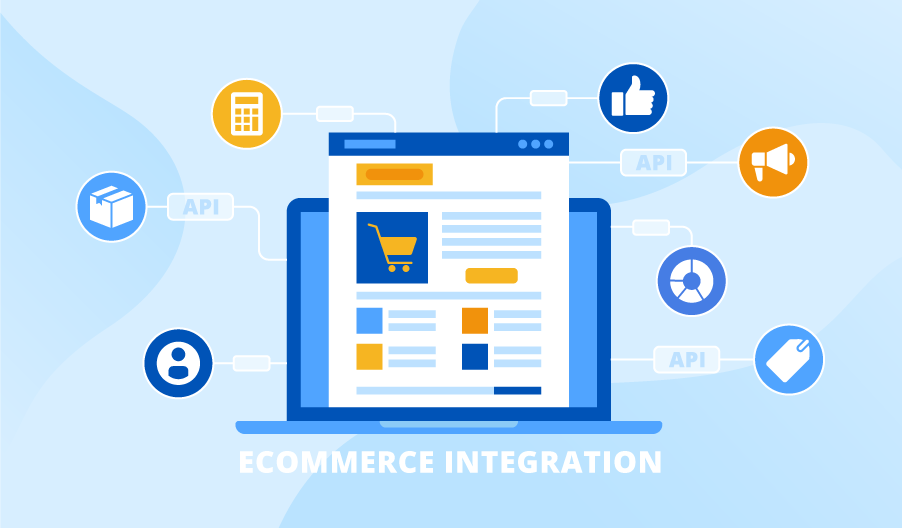
The key differences stem from each model’s workflow, which determines the specific systems that need to be integrated into the website for optimisation.
Integration in B2B eCommerce:
-
ERP (Enterprise Resource Planning): Deepest priority. It handles pricing agreements, procurement approvals, tax rules, and bulk invoicing. Tight integration is needed to avoid errors in complex workflows.
-
CRM (Customer Relationship Management): The system helps track company-level accounts, manages multiple roles in each customer account, and organises contracts and negotiations.
-
PIM (Product Information Management): Must manage large volumes of technical specifications, compliance documents, and rules for complex product configuration.
-
Accounting: Complex invoicing and accounts payable. Must handle multi-line-item invoices and different tax/duty rates based on location/legal entity.
-
WMS (Warehouse Management System): Focuses on managing large, freight-based shipments (Full Truckload/LTL), specific delivery windows, and communicating supplier part numbers or custom labelling instructions.
-
Marketplace: Less common, but growing. Focus on vertical/industry-specific marketplaces where price is usually customised or gated.
Integration in B2C eCommerce:
-
ERP (Enterprise Resource Planning): High priority. Focus is on fast, high-volume inventory updates (one-way or near real-time) and simple financial data transfer (invoices, revenue) for standard, fixed-price transactions.
-
CRM (Customer Relationship Management): B2C CRM is lighter than B2B. Manage individual customer data for personalised marketing segmentation, loyalty program management, and tracking customer service history for quick resolution.
-
PIM (Product Information Management): Ensure consistent product information, prioritise rich product descriptions and high-quality images/videos.
-
Accounting: Handles a high volume of single, instant transactions and feeds aggregated daily sales data into the ledger. Focus on the reconciliation of payment gateway fees.
-
WMS (Warehouse Management System): Focuses on integrating with shipping carriers (FedEx, UPS, etc.) for real-time rate calculation, tracking updates, and handling small, individual package logistics.
-
Marketplace: High priority. Deep integration with general platforms like Amazon, eBay, and TikTok Shop to maximise reach. Requires constant, real-time sync of low inventory and standardised pricing.
In summary, B2B requires deep, tightly-coupled integrations across ERP, CRM, PIM, accounting, and WMS to manage complex workflows, multi-stakeholder processes, and high-value transactions. B2C prioritises high-performance, scalable integrations to support rapid, high-volume transactions, seamless order fulfilment, and broad marketplace connectivity.
Pro Tips: Integrating all these systems into your digital store can be a demanding task that requires significant expertise. With On Tap’s integration service and API-first integration flow, your systems can connect seamlessly without the need for complex development.
5. eCommerce marketing and content management capability
Marketing in B2B eCommerce:
-
Marketing focus: Demonstrating measurable value, efficiency, and cost savings through educational/ informational campaigns.
-
Content strategy:
-
Long-form, data-rich, and industry-specific.
-
Formats include whitepapers, case studies, product demos, webinars, and research reports.
-
The tone is authoritative and professional.
Marketing in B2C eCommerce:
-
Marketing focus: Inspiring impulse or need-based purchases by appealing to desires and identity.
-
Content strategy:
-
Short-form, visually engaging, and entertaining.
-
Formats include product photography, videos, influencer content, lifestyle blogs, and social media campaigns.
-
Tone is casual, personal, and storytelling-driven.
To meet these needs, B2B platforms often require marketing automation tools capable of handling complex segmentation, lead nurturing, and gated content for multiple stakeholders. B2C platforms prioritise tools for real-time content delivery and dynamic personalisation to engage large volumes of individual consumers efficiently.
Simplify this marketing process with On Tap’s digital marketing service. With deep expertise in eCommerce, our team delivers creativity, strategy, and data-driven insights to help you excel in SEO, PPC management, and content marketing.
Similarities between B2B and B2C eCommerce
While B2B and B2C eCommerce have distinct requirements and strategies to approach, there are several areas where they overlap, reflecting broader trends in digital commerce.
- Focusing on the customer: Regardless of the model, customers must remain at the core of every business strategy. All activities should be aligned with customer pain points and demands, with personalisation playing a key role in enhancing the experience on the website.
Notes: Especially in B2B eCommerce, where the traditional model still shapes customer behaviour, many buyers remain accustomed to offline communication. Therefore, when developing a website, it is important to allocate sufficient resources to customer adoption to maximise effectiveness. Explore our ebook Driving Customer Adoption: A Profitability Guide for B2B eCommerce to discover best practices for success. - Leveraging latest technology: Both B2B and B2C eCommerce must continuously adopt new technologies such as AI, AR, and VR to stay ahead of trends. Platforms should be able to adapt to these innovations, while businesses themselves need to remain aware of and responsive to their impact.
- Ensuring omnichannel consistency: Companies in both models use multiple channels to engage their audience, including email, social media, paid advertising, and marketplaces. It is essential to ensure consistent messaging across all channels.
- Security and compliance: Whether serving businesses or individual consumers, maintaining strong data security and complying with privacy regulations (like GDPR or CCPA) is essential. Both models must invest in secure payment gateways, fraud prevention tools, and data protection practices.
How to determine the right eCommerce model for your business?
Now that we’ve explored the different models, let’s wrap things up by figuring out which eCommerce model is the best fit for your business.
For start-up businesses
When launching an eCommerce business, startups need to choose a model that best drives revenue, growth, and market positioning. The right choice ensures the business can capture opportunities efficiently while scaling sustainably. Key criteria to consider include:
-
Product type and order patterns: Assess whether your products are naturally suited for bulk purchases, like raw materials or components, or for individual retail consumption.
-
Pricing and sales cycle: Evaluate if your business can sustain longer, and negotiate B2B sales cycles with contract-based agreements. If not, a B2C model with fixed prices and faster transactional purchases may be more practical. Understanding this helps plan cash flow, staffing, and customer support requirements.
-
Operational and complexity: Determine whether your team can handle the complexities of B2B operations, such as managing multiple stakeholders, coordinating bulk shipments, or processing recurring orders. If resources are limited, focusing on B2C with simpler order fulfilment may be more feasible.
-
Technology and investment requirements: Assess the platforms, integrations, and systems required to support your chosen model. B2B operations typically need ERP integration, advanced inventory management, and account-based sales systems. B2C can launch with simpler eCommerce platforms but must still support growth and customer experience.
For startups, the decision is business-driven: choose the model that maximises revenue potential, aligns with market demand, and enables scalable operations. Starting with the right model ensures efficient resource allocation and positions the business for sustainable growth.
For businesses expanding into another model
For companies already operating in either B2B or B2C, expanding into the other side of eCommerce usually means creating a hybrid model that serves both business buyers and individual consumers. This shift requires careful evaluation. Businesses need to ensure they have the right market conditions, resources, and infrastructure to support both models without affecting current operations.
-
Market demand: Expansion should be driven by clear demand signals, such as existing customers requesting a new purchasing format, competitors successfully tapping into the other model, or market research showing untapped revenue potential. Without validated demand, diversification risks stretch your business too thin.
-
Operational readiness: A hybrid model introduces parallel workflows. Large, contract-driven B2B orders must run alongside fast-moving B2C transactions. Businesses must balance different shipping methods, service levels, and customer support expectations while keeping the brand experience consistent.
-
Technology infrastructure: Platforms for hybrid eCommerce must support both models effectively. B2B features like ERP integration and account-based access need to coexist with B2C tools such as marketing automation, personalisation, and streamlined checkout. Proper integrations are crucial to ensure data flows smoothly across both sides.
-
Financial and resource capacity: Running a hybrid model requires investment in technology, staff, and marketing. Resources must be allocated carefully. This prevents overstretching and ensures both B2B and B2C operations are handled well.
-
Timing and strategy fit: Adopting a hybrid model works best when the existing business is stable enough to absorb added complexity. Expanding too early may strain operations, while delaying too long could allow competitors to capture hybrid opportunities first.
For established businesses, expanding often results in a hybrid eCommerce structure that combines B2B and B2C. The key question is not just whether to expand. It is whether the business is ready to integrate the two models in a way that strengthens strategy and delivers value to all customer segments.
Still unsure whether your business is suited to combining both models on one platform? Consider our eCommerce consultancy service. With a team that has various experiences in multi-eCommerce platform projects throughout 19 years in the market, we are ready to guide you through every step of your digital journey.
Conclusion
This article has provided you with everything you need to know about B2B, B2C, and hybrid eCommerce, including key business aspects, as well as the technologies each requires. With these insights, you can confidently make informed decisions about launching or expanding the model that best aligns with your business growth strategy. However, to build an effective digital store, it is always recommended to partner with an experienced agency.
With strong expertise across platforms such as Shopify, Magento, Adobe Commerce and BigCommerce, On Tap is always ready to support merchants in developing complete end-to-end eCommerce websites. Explore both our B2B and B2C solutions to learn more about our services. To take the next step, contact our specialists to book a meeting and let us better understand your needs today!