

Wholesale eCommerce is transforming how businesses operate, offering faster, more efficient transactions and streamlined distribution online. For established traditional wholesalers, it provides new ways to optimise operations and expand reach. For businesses exploring wholesale for the first time, it opens the door to new markets and growth opportunities, making it easier than ever to enter the B2B space.
To help businesses navigate this evolving landscape, this article covers the essentials of wholesale eCommerce you need to know. This includes its key benefits and challenges, guidance on starting a business, platform selection, and an illustrative case study.
What is wholesale eCommerce?
Wholesale eCommerce is the process of selling goods in bulk quantities from one business to another, such as retailers or distributors, through an online store. For example, a skincare wholesaler might list 1,000 units of a facial serum on its eCommerce website, offering tiered pricing based on order volume. A beauty retailer places a bulk order to replenish inventory across multiple store locations, and the manufacturer fulfils it seamlessly through the website.
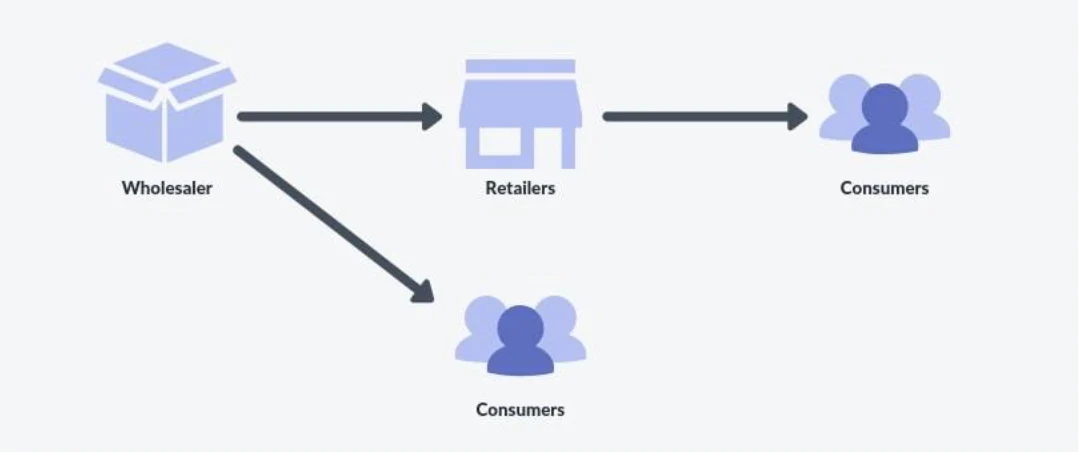
In some cases, wholesale eCommerce can also include direct-to-consumer (DTC) sales, allowing businesses to expand their reach and optimise sales operations. Traditionally, wholesalers relied on multiple layers of intermediaries to reach end users. With wholesale eCommerce, that model evolves: businesses can now bypass some of those middle layers and sell directly to both B2B buyers and end customers through a single, streamlined digital platform. This not only expands their market reach but also improves margins and strengthens customer relationships. The decision to add a DTC channel will depend on each company's goals and capabilities.
Differences between wholesale eCommerce and retail eCommerce
2B wholesale eCommerce is often compared to retail eCommerce, as both models operate in the digital commerce space but serve different types of customers and business objectives. Both approaches offer distinct, valuable benefits, making them worth considering for new businesses. To provide a more precise understanding, the section below compares the two models, highlighting their main differences, advantages, and disadvantages.
|
Criteria |
Wholesale eCommerce |
Retail eCommerce |
|
Target audience |
Businesses such as retailers, resellers, and other wholesalers. |
Individual end consumers purchasing for personal use. |
|
Order volume and value |
Bulk orders with higher average order value (AOV); often include Minimum Order Quantities (MOQs). |
Small-quantity orders with lower AOV; usually one-off or occasional purchases. |
|
Pricing model |
Tiered or volume-based pricing, negotiated or custom prices, may require an account login to view. |
Fixed, transparent pricing; discounts are usually promotional and time-limited. |
|
Inventory |
Large stock levels planned for bulk shipments; focus on supply contracts |
Smaller, faster-moving stock replenished based on consumer demand. |
|
Logistics |
Freight, pallets, or container loads; scheduled deliveries; complex supply chain. |
Parcel delivery to consumers: simpler handling and packaging. |
|
Payment |
Flexible terms (e.g., Net 30, Net 60); multiple B2B payment methods; often relationship-based. |
Upfront payment at checkout via cards, digital wallets, or BNPL services. |
|
Pros |
- Higher revenue per order - Long-term client relationships - Predictable, recurring sales |
- Larger customer pool - Easier to start and manage with faster sales cycles |
|
Cons |
- More complex pricing and order management, as well as customer relationship management - Requires strong logistics and inventory control |
- Lower order value and margins - Less predictable repeat sales |
Target audience
-
Wholesale eCommerce:
-
Primarily serves business customers, including retailers and resellers.
-
The decision-making process is often formal, involving multiple stakeholders, procurement teams, and approval chains.
-
The sales cycle is often long
-
Retail eCommerce:
-
Serves end consumers purchasing goods for personal use.
-
Buying decisions are usually individual and driven by personal preferences, promotions and impulse.
-
Shorter sale cycle with minimal negotiation
Order volume and value
-
Wholesale eCommerce:
-
Orders are placed in bulk quantities to meet business needs, often with Minimum Order Quantities (MOQs).
-
High average order value (AOV), often multiple times greater than in retail transactions.
-
Orders may be recurring, tied to long-term supply contracts.
-
Retail eCommerce:
-
Orders are smaller in volume and value, typically one-off purchases or small quantities.
-
Seasonal or promotional peaks are common but less predictable in terms of volume consistency.
Pricing model
-
Wholesale eCommerce:
-
Tiered or volume-based pricing, larger orders receive bigger discounts.
-
Custom or negotiated pricing for different customer segments.
-
Prices may not be publicly displayed; access often requires account registration or approval.
-
Retail eCommerce:
-
Fixed prices are visible to all shoppers.
-
Discounts are typically promotional and time-limited rather than volume-based.
-
Price transparency is high, with easy comparison across competitors.
Inventory, logistics and payment
-
Wholesale eCommerce:
-
Inventory: Must manage significant stock levels and plan for bulk shipments.
-
Logistics: Often involves freight, pallets, or container loads with scheduled deliveries, requiring strong supply chain coordination and longer lead times.
-
Payment: Flexible payment terms are standard, such as Net 30, Net 60, or instalment plans, to support business cash flow. Payment options may include bank transfers, ACH, credit terms, or even escrow arrangements, often negotiated based on buyer relationships and order history.
-
Retail eCommerce:
-
Inventory: Smaller, faster-moving stock replenished based on consumer demand.
-
Logistics: Typically fulfilled via parcel carriers directly to end consumers, with less complex handling.
-
Payment: Payment is usually upfront at checkout, using methods like credit/debit cards, digital wallets, or buy-now-pay-later services.
Potential and challenges of wholesale eCommerce
To better understand wholesale eCommerce, let’s explore the potential it offers businesses as well as the challenges they need to prepare for before investing in this model.
Potential of wholesale eCommerce
-
Driving a scalable revenue model: Wholesale eCommerce enables businesses to tap into a revenue model that grows naturally with customer demand. As B2B buyers purchase in bulk, the average order value is significantly higher than in B2C transactions. In addition, by moving these transactions online, wholesalers can process more orders at scale, reduce manual handling, and streamline the path from inquiry to payment. This scalability allows companies to expand into new markets without proportionally increasing operational costs.
-
Securing long-term sales growth with data-backed strategies: In B2B, the long sales cycle often translates into recurring orders from established clients, making revenue forecasting more reliable. This stability becomes even stronger with an eCommerce platform, which serves as a rich source of actionable insights. By tracking metrics such as order volume, purchase frequency, and revenue contribution, wholesalers can identify their most valuable accounts and tailor pricing, promotions, loyalty programs, and marketing campaigns to retain them. Advanced analytics further enhance this advantage by enabling accurate bulk order forecasting. Using historical sales data and market trends, businesses can anticipate demand spikes, optimise inventory levels, and negotiate better terms with suppliers in advance.
-
Staying ahead of the strong growth trend in B2B transformation: The wholesale sector is undergoing a digital transformation as more B2B buyers shift away from traditional purchasing methods, such as in-person meetings, phone calls, and fax orders, in favour of online transactions. In fact, according to Hokodo report, in 2025, 74% of B2B customers say they use eCommerce websites for business purchases, surpassing traditional methods like telesales (9%). Wholesale eCommerce also enhances adaptability to key market trends, including AI-driven product recommendations, predictive inventory management, and cross-border eCommerce capabilities. This shift opens the door to staying ahead of industry trends, differentiating from competitors, meeting the evolving needs of customers, and optimising operational efficiency.
Challenges of wholesale eCommerce
-
Keeping up with robust technology and logistics systems: Successful wholesale eCommerce depends heavily on reliable technology and an efficient logistics network. As customer demand increases and technology continues to evolve, businesses must maintain or upgrade their systems to ensure that core functions, such as real-time inventory tracking, automated order processing, and integration with shipping and freight services, run seamlessly. In B2B, logistics are often more complex than in B2C, involving larger shipment sizes, special handling requirements, and strict delivery timelines. Any weaknesses in technological infrastructure or logistics capacity can quickly lead to delays, stockouts, and customer dissatisfaction.
-
Protecting sensitive business data: As wholesale eCommerce becomes more digitised and interconnected, the volume of sensitive data shared online will continue to grow, from corporate purchasing records and negotiated pricing to confidential trade agreements. Because these transactions often involve large sums and long-term partnerships, they present attractive targets for sophisticated cyberattacks and AI-driven fraud. For wholesalers, a single breach could result not only in major financial losses but also in disrupting supply chain relationships, undermining buyer confidence, and causing lasting damage to the brand’s reputation.
-
Adoption for customer and internal team: Implementing a wholesale eCommerce platform can be challenging for both new and established businesses. Customers accustomed to traditional ordering methods may need guidance to navigate online ordering, pricing structures, and account-specific catalogues. At the same time, internal teams must be trained to manage the platform efficiently, handle multi-step approvals, configure custom workflows, and support customers digitally. Ensuring smooth adoption on both sides is critical for realising the full benefits of wholesale eCommerce.
To be fully prepared for these challenges, wholesale businesses are strongly advised to partner with an experienced eCommerce agency or consultant from the very beginning. This collaboration enables both parties to map out a clear, long-term growth strategy from day one, ensuring the business is set up for success.
How to know if wholesale eCommerce is suitable for you
Considering all the comparisons, along with the potential opportunities and challenges highlighted, it’s clear that wholesale eCommerce is complex and demanding but offers significant potential. Therefore, it is best suited for businesses that already have the resources and readiness to operate at a larger scale. This model is worth exploring if your company has:
-
Financial capacity: You can invest in initial inventory, warehousing, logistics, and a specialised eCommerce platform without straining cash flow.
-
Operational infrastructure: Your team and systems can handle larger, more complex orders, from processing to fulfilment.
-
Market fit: You operate in an industry where bulk purchasing, negotiated contracts, or repeat orders are the norm.
-
Geographic reach: You are prepared to serve customers beyond your immediate area, potentially across national or international markets.
-
Customer relationship approach: You have the resources and strategy to maintain long-term, trust-based relationships with B2B buyers.
If your business meets most of these criteria, wholesale eCommerce can become a powerful growth engine, opening opportunities for higher revenue, expanded reach, and stronger market positioning.
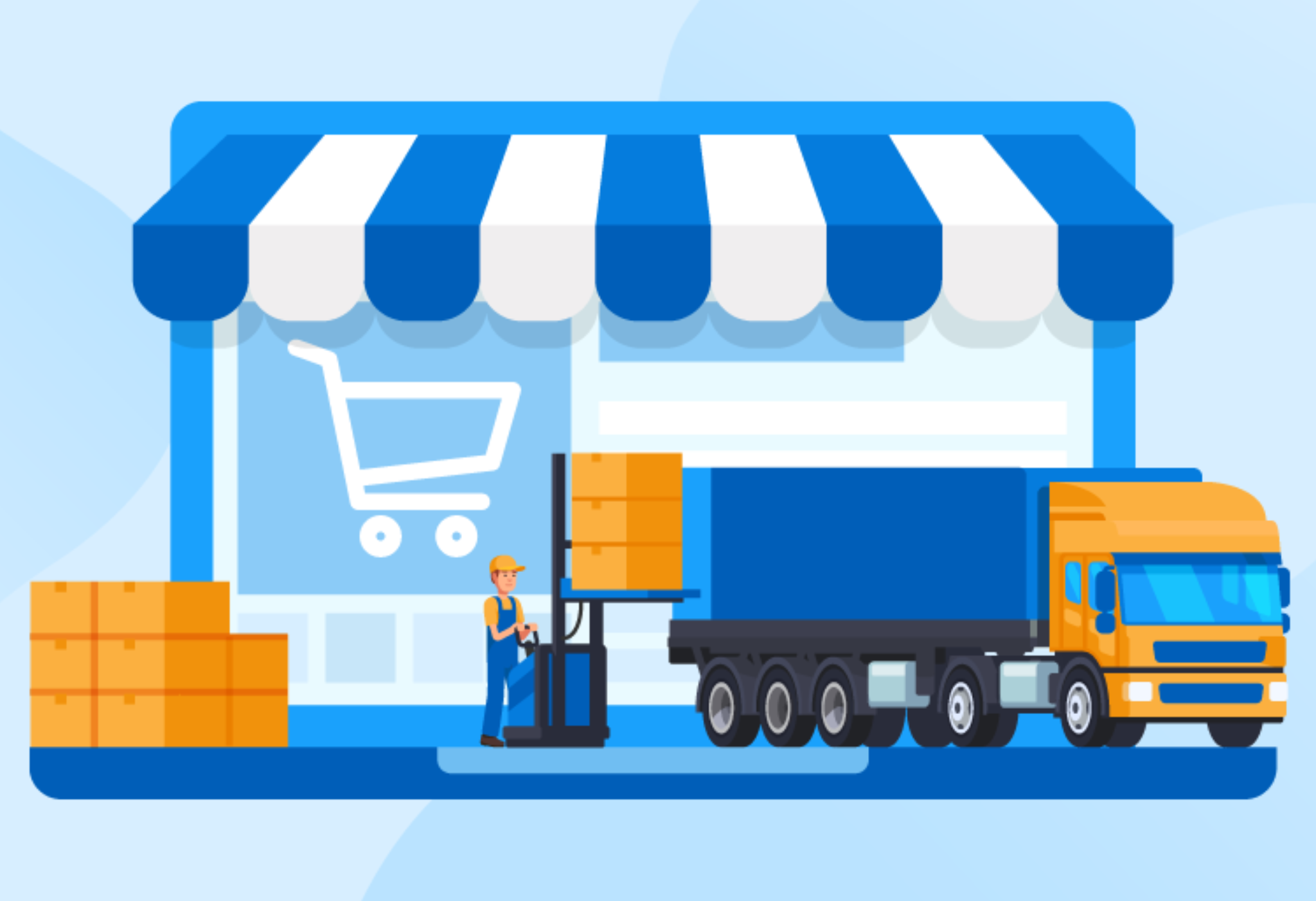
7 steps to start building a wholesale business
Once you have a solid understanding of how wholesale works and have determined whether this model is a good fit for your business, along with the opportunities and challenges it may bring, it’s time to explore how to start a wholesale business. Below are the key stages in building a wholesale eCommerce business. Let’s walk through them step by step.
1. Identify your market and customers
Before launching your wholesale eCommerce business, it’s essential to define your target audience clearly. You should focus on:
-
Target customer type: Decide if you will sell to retailers, distributors, or some other niche markets.
-
Purchasing behaviour: Understand order frequency, typical quantities, preferred delivery timelines, and payment expectations.
-
Market demand: Research overall demand for your products, including seasonal trends and market fluctuations.
-
Competitive landscape: Study your competitors’ product offerings, pricing strategies, and unique selling points.
-
Pricing position: Analyse the market’s pricing range to determine how to stay competitive while protecting your margins.
By mapping out these elements, you’ll have a clear understanding of who you serve, how to meet their needs, and how to position your wholesale eCommerce business for success.
2. Decide on your product offering and pricing structure
Once you understand your target market, the next step is deciding what you will sell and how you will price it. This involves:
-
Product selection: Choose products that match customer needs, demand trends, and repeat-order potential. Factor in sourcing, logistics, storage, and profitability.
-
Product range strategy: Decide between a focused or broad range, and consider complementary items to boost order value.
-
Pricing framework: Set a base price that covers costs and margins, use tiered or volume discounts, and offer special rates for loyal or high-volume buyers. Monitor competitors, adjust for market shifts, and allow negotiation room without hurting profits.
By setting a clear product and pricing strategy from the start, you create a foundation for predictable revenue, strong customer relationships, and sustainable growth.
3. Set up your operations
A strong operational foundation ensures you can handle wholesale order volumes smoothly and reliably. Focus on three key areas:
-
Sourcing & storage: Partner with dependable suppliers, set clear lead times, and choose suitable warehousing solutions (in-house, 3PL, or hybrid) that can handle your product scale.
-
Inventory & order management: Use an inventory system to track stock in real time, prevent shortages, and process bulk orders efficiently from confirmation to delivery.
-
Logistics & fulfilment: Collaborate with carriers experienced in handling large shipments, provide flexible delivery options, and monitor costs and service quality to ensure customer satisfaction.
With these elements in place, your wholesale eCommerce operations will be equipped to meet demand consistently and support long-term growth.
4. Organise payment and terms
Transparent and flexible payment arrangements are also key essentials for building trust in wholesale eCommerce. Here are the key areas you need to consider:
-
Payment methods: Offer options that suit B2B buyers, such as bank transfers, credit cards, digital payments, or invoicing systems.
-
Payment terms: Define whether you require full upfront payment, partial deposits, or net terms (e.g., Net 30, Net 60). Ensure these align with your cash flow needs while remaining competitive in your market.
-
Policies & safeguards: Establish written agreements, set credit limits for offered terms, and utilise secure payment gateways to safeguard sensitive financial data.
Well-structured payment options make it easier for customers to commit to large orders while keeping your business financially stable.
5. Build your online presence
After making all the key business decisions, it’s time to focus on your digital presence, which is the core of a wholesale eCommerce business. Make sure to:
-
eCommerce website: Develop a professional, user-friendly site that clearly displays your product catalogue, pricing, and ordering process. Include features tailored for B2B buyers, such as bulk order tools, account logins, and downloadable product sheets. For wholesale operations, it’s also essential to integrate your eCommerce site with other systems like ERP, CRM, and supply chain management tools. These integrations help ensure efficient inventory management and end-to-end visibility, challenges that wholesalers face every day.
-
Brand credibility: Use high-quality visuals, detailed product descriptions, and customer testimonials to build trust and encourage large-order purchases.
-
Marketing channels: Promote your business through the platforms where your target customers are most active, such as LinkedIn, industry-specific forums, trade shows, B2B marketplaces, etc.
Build a top-notch online presence from the very start with our On Tap’s eCommerce development and digital marketing service today! Backed by 19 years of experience, we’re committed to helping you achieve lasting results.
6. Invest in professional customer service
Excellent service is key to retaining wholesale customers and encouraging repeat business. This included:
-
Onboarding: Make it easy for new buyers to register, understand your ordering process, and access your catalogue or pricing. Provide clear guidance or a dedicated account manager during their first orders.
Learn more: Discover key strategies to overcome challenges in boarding for B2B eCommerce website: 5 best B2B customer onboarding practices and 6 tips for eCommerce businesses
-
Ongoing support: Offer responsive communication channels for order inquiries, technical issues, or post-sale assistance.
-
Relationship building: Maintain long-term connections through regular check-ins, exclusive offers, and personalised recommendations based on buying patterns.
7. Monitor and improve
Continuous evaluation ensures your wholesale eCommerce business stays competitive and profitable.
-
Track performance: Monitor key metrics such as sales volume, average order value, repeat purchase rates, and order fulfilment times.
-
Listen to customers: Collect feedback to identify pain points, improve service, and refine your product offering.
-
Optimise processes: Use data to adjust pricing, streamline operations, and enhance marketing strategies for better results.
Regular monitoring and strategic improvements help you adapt to market changes, strengthen customer relationships, and achieve long-term growth.
How to choose a suitable wholesale eCommerce platform
In building a wholesale eCommerce business, one of the most critical steps is choosing the right platform. This decision can be challenging, and since switching platforms later can be time-consuming and costly, it's essential to make the right choice from the beginning. In the following section, we’ll explore the key factors to consider when selecting a platform that aligns with your wholesale business needs.
Look for wholesale-focused features
The first step in choosing a platform is to ensure it supports wholesale-specific features, such as:
-
Customer-specific catalogues: Allow different customers (retailers, distributors, or end customers) to see customised product catalogues based on their company account.
-
Tiered pricing & volume discounts:
-
Define pricing tiers (e.g., discounts at 100, 500, 1,000 units) to encourage bulk purchases
-
Customer-specific pricing: Display unique prices only after the customer logs in.
-
Automated discount rules: Automatically apply volume-based discounts in real time.
-
Bulk ordering tools
-
Quick order forms: Let buyers enter SKUs and quantities rapidly.
-
Bulk add-to-cart: Add multiple items with preset quantities in one go.
-
Saved order templates: Allow customers to reuse past orders with one click.
-
Minimum order quantities (MOQs): Enforce MOQs and reward larger orders with incentives.
-
Recurring orders: Offer subscription-based ordering for regular bulk needs.
-
Self-service account portals
-
Enable downloadable invoices and payment tracking
-
Show real-time inventory levels
-
Integrate real-time shipment tracking with carrier updates
-
Flexible payment options
-
Net terms: Support Net 30 or Net 60 terms for approved customers.
-
Accepted payment types: ACH, wire transfers, B2B Buy Now Pay Later (BNPL), and corporate cards.
-
Shipping flexibility options
-
Discounted shipping: Offer volume-based or tiered shipping discounts.
-
Free shipping thresholds for large orders.
-
Carrier integration: Work with freight and LTL (less-than-truckload) carriers for oversized shipments.
-
Flexible delivery options: Include multi-location shipping, delivery windows, and in-store or warehouse pickup.
-
Back-end system integrations (ERP, CRM, WMS, supply chain management, accounting tools) to streamline operations, ensure accurate data flows and manage the complex workflow of wholesale sales.
Pro Tip: Make this process smooth and easy with On Tap’s integration service and API-first integration flow. This ensures your systems stay connected and your business runs without friction.
-
Automation capabilities
-
Order workflows: Automate confirmations, shipping updates, stock alerts, and follow-ups for inactive accounts.
-
System sync: Keep inventory, orders, and invoices updated through integrations.
-
AI capabilities
-
Product recommendations: Use AI to suggest relevant products or bundles based on buyer behaviour.
-
Demand forecasting: Optimise inventory using AI predictions.
-
Chatbots: Deploy AI-driven chatbots for 24/7 support on orders and products.
-
Content generation: Leverage AI to create product descriptions and other content based on internal data.
➤ Learn more: Discover the full potential of AI and how to implement it to create a direct, positive impact on your eCommerce website with our AI services.
Always verify whether these features are built-in or require third-party apps, plugins, or custom development, as this affects both long-term costs and maintainability.
For a deeper dive into must-have B2B eCommerce features, visit our blog: B2B eCommerce website features: Essential elements for B2B online success
Choose the deployment and architecture model based on business needs
Choosing the right platform involves more than just comparing features. The underlying technical foundation, including the deployment model and architecture model, also plays a critical role, especially when planning for long-term growth and scalability. These factors impact everything from flexibility and performance to integration capabilities and ongoing maintenance. Below are some key considerations to keep in mind:
Deployment model:
-
SaaS (Software as a Service) platforms: The cloud-based solutions hosted and managed by the provider, allowing wholesalers to launch quickly without complex infrastructure or heavy maintenance. Benefits include fast setup, automatic updates, built-in security, and reduced IT costs, ideal for businesses seeking a scalable, low-tech-involvement option.
-
Open-source platforms: The self-hosted solution offers full access to source code for deep customisation and complete control, making them suitable for complex wholesale needs. Ideal for businesses with advanced requirements and technical capacity, this option requires in-house or external technical support for setup, updates, and maintenance.
-
PaaS (Platform as a Service) platforms: The cloud-hosted platforms where the provider manages the underlying infrastructure, security, and core services. At the same time, businesses retain control over building, customising, and deploying their own applications and workflows. This makes PaaS an ideal middle ground between fully managed SaaS and fully self-hosted open-source solutions.
Architecture:
-
Monolithic architecture: All-in-one system where front-end, back-end, and database are tightly integrated. Easy to deploy and manage, ideal for wholesalers with simple needs. Offers fast implementation and centralised control, but can be limiting as complexity grows or when expanding across channels.
-
Headless architecture: Separates front-end from back-end, enabling customised experiences for different markets while maintaining a centralised core. Gives flexibility to personalise without overhauling the back-end.
-
Composable architecture: “Build your stack” model using best-in-class services via APIs for functions like search, checkout, or PIM. Highly flexible and scalable, this solution is suited for larger or fast-growing wholesalers needing agility and advanced capabilities.
-
Microservice architecture: Breaks the platform into independent services (e.g., inventory, pricing, orders) that can be developed and scaled separately. Offers maximum flexibility and resilience but requires substantial technical expertise, making it best suited for enterprise-level wholesalers with complex operations.
To choose the right platform, businesses should assess their strategic goals and operational readiness. Key factors include growth plans, budget, custom workflows, scalability, system integration, and in-house technical capabilities.
Pro Tip: Run a pilot store or test project with real products and wholesale workflows before making a final decision. This helps validate how well the platform supports bulk ordering, flexible payment options, and shipping operations tailored to your specific business needs.
Explore top wholesale eCommerce platforms
To help guide your selection process, here are several reputable eCommerce platforms commonly used by wholesale businesses:
-
Shopify Plus: This is the enterprise-level version of Shopify, offering native, fully integrated B2B functionality. It comes with several out-of-the-box features tailored for wholesale, such as customer-specific catalogues, quantity rules, and volume-based pricing. What sets Shopify Plus apart from other eCommerce platforms is its fully hosted, SaaS-based infrastructure, which prioritises speed, ease of use, and scalability, making it ideal for wholesalers seeking a quick and reliable go-to-market option without heavy development overhead.
-
Adobe Commerce: Adobe Commerce, previously known as Magento Commerce, is a robust and highly customisable eCommerce platform built to handle the complexities of B2B transactions. It stands out with advanced multi-step approval workflows and a robust request-quote process, features that go beyond standard platform capabilities. Additionally, its high level of customisation allows businesses to tailor the platform to their unique B2B needs, making it especially strong for wholesalers with complex pricing structures and dynamic customer relationships. Adobe provides flexibility in deployment to meet different business requirements. Companies can either choose the on-premise edition, offering full control and customization, or opt for the cloud-based edition, which delivers scalability, security, and reduced maintenance.
-
BigCommerce: BigCommerce is a SaaS eCommerce platform renowned for its flexibility and ease of use, catering to businesses at various stages of growth, including wholesalers. It provides a dedicated Enterprise Plan that includes a comprehensive suite of native B2B features such as custom price lists, SKU-level customer pricing, and advanced quote management tools. Thanks to its hosted infrastructure, prebuilt integrations, and intuitive admin dashboard, businesses can typically launch within weeks, depending on complexity. This makes BigCommerce a compelling option for wholesalers to consider.
There are many other eCommerce platforms on the market that wholesale businesses can consider, each with its own strengths and capabilities. Check out our blog for more insights: 10 best B2B eCommerce platforms for growth and scaling your business.
Wholesale eCommerce case study: Brooklinen
To provide clearer insight, consider the example of Brooklinen. The brand, known for offering high-quality bed sheets at accessible price points, successfully established itself as a DTC business targeting digitally native customers. As part of its broader growth strategy, Brooklinen is now seeking to expand into wholesale online.
The challenge: Brooklinen's wholesale orders had traditionally been handled manually via calls and emails, resulting in inefficiencies, friction, and the absence of self-service options for business buyers. This order-driven, rather than customer-driven, approaches limited scalability and growth potential.
The solution: To resolve those challenges, Brooklinen adopted Shopify Plus’s B2B capabilities, launching a dedicated wholesale store managed within the same admin as their DTC operations. Key features and improvements include:
-
Self-serve ordering for wholesale buyers.
-
Personalised experiences, including custom pricing, products, and payment methods.
-
Better insights and automation for repeat purchases (e.g., reorder reminders based on purchase history).
-
Maintained DTC-like branding and UX for their B2B storefront.
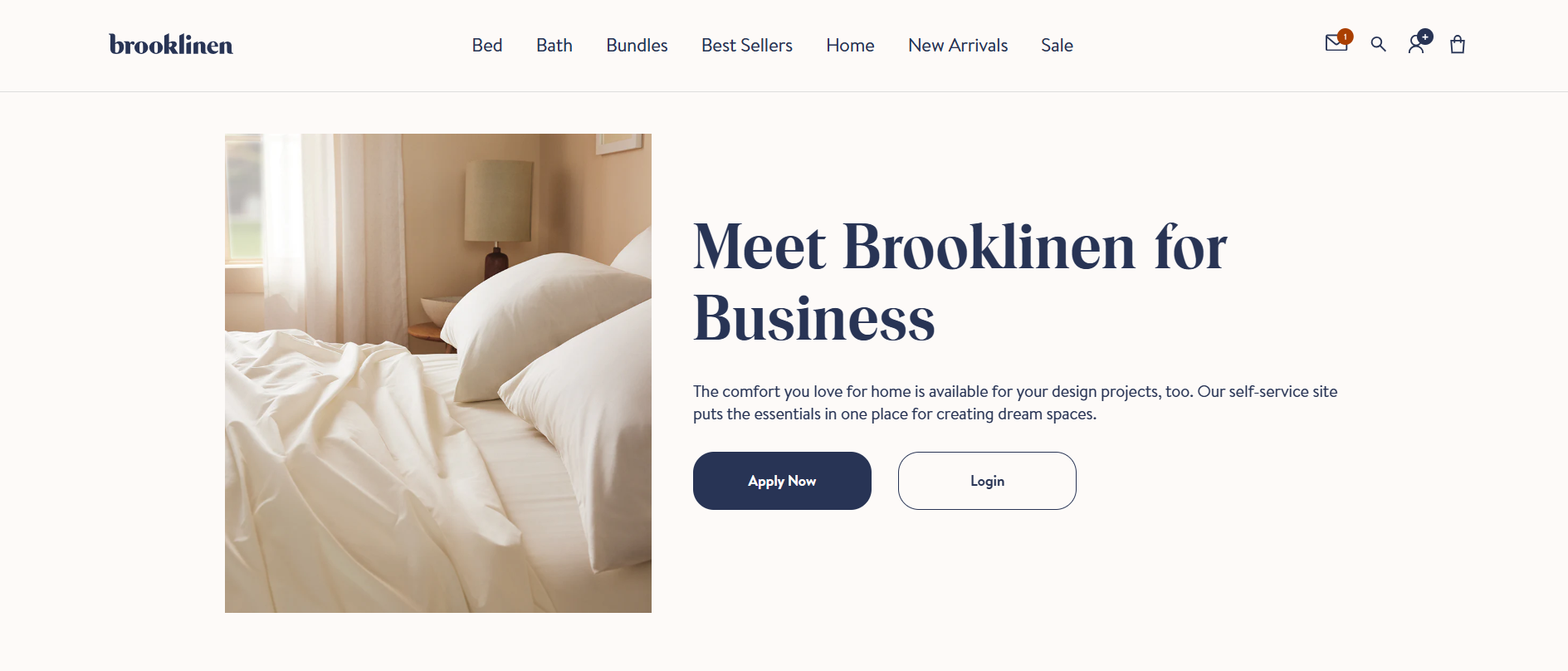
The results: With this strategy, Brooklinen achieved impressive results:
-
80% more time is now spent building customer relationships rather than handling manual orders.
-
B2B buyers can self-manage accounts and orders, reducing internal workload.
-
Created a consistent, high-quality buying experience across DTC and B2B.
-
Streamlined back office, freeing the team to focus on strategic growth.
Conclusion
In short, this article has provided you with all the essential information you need to begin your wholesale eCommerce journey. It covers key benefits and challenges, steps to launch a wholesale business, and guidance on choosing the right eCommerce platform.
To ensure a strong start and sustainable growth, it is always advisable to collaborate with an experienced eCommerce agency. As a proud member of the B2B eCommerce Association, On Tap - A full service B2B eCommerce agency, delivers comprehensive, end-to-end solutions, from expert consultation to customised development. Explore our B2B service and contact us today to get started with our team.